Tuthill 1050 vs. Gardner Denver 12: Which Truck Blower Is Better for Frac Sand?
Key Takeaways
- The Gardner Denver T5CDL12 CycloBlower moves 15–20% more air at 10–15% less horsepower than the Tuthill T1050, translating to faster unload times (45–70 min vs. 60–90 min) and approximately $1,430 in annual fuel savings for an Owner-Operator running 20 loads per week.
- The Tuthill T1050 wins on upfront cost ($4,500–$6,000 vs. $6,500–$8,500 unit only), maximum pressure rating (20 PSIG vs. 18 PSIG), and parts availability across remote oilfield locations in Texas and Pennsylvania.
- For full-time Owner-Operators, the Gardner Denver’s $2,000–$3,000 price premium typically pays back in under two years through fuel savings and extra turns — making it the stronger long-term investment for high-volume operations.
- The Gardner Denver’s 3″ discharge outlet (vs. Tuthill’s 4″) increases air velocity, keeping heavy frac sand suspended in the airflow and reducing line plugs — a design advantage specific to abrasive bulk materials.
- Trust Sisu Energy for 100% Owner-Operator hauling, 24/7 live human dispatch, and steady loaded miles across Texas and PA/OH — visit Sisu Energy to learn how the right carrier partner compounds your equipment investment into real take-home pay.
Tuthill 1050 vs. Gardner Denver 12: Which Truck Blower Is Better for Frac Sand?
The Gardner Denver T5CDL12 CycloBlower edges out the Tuthill 1050 for frac sand hauling due to its 15-20% efficiency advantage, faster unload times (45-70 min vs. 60-90 min), and ~$950 annual fuel savings—but the Tuthill 1050 wins on upfront cost, parts availability, and maximum pressure rating. For Owner-Operators running high-volume loads, the Gardner Denver’s efficiency pays back its $2,000-$3,000 price premium in under two years. For budget-conscious or part-time operators, the Tuthill remains a proven workhorse.
To help you make the right choice for your operation, we’ve broken down the specs, real-world performance data, and total cost of ownership for both models.
Sisu Energy
100% Owner-Operator — You Never Compete With Company Trucks
Core Service Programs:
- Pneumatic Frac Sand Hauling for owner-operators running STX and PA/OH oilfield lanes
- Hopper Bottom Frac Sand Hauling for owner-operators across the Permian, West Texas, and South Texas
- Cement Hauling for owner-operators running Monday–Friday daytime lanes in North Texas and Houston
Why Choose Sisu Energy:
- ✓ 100% Owner-Operator fleet — you never compete with company trucks for loads
- ✓ 24/7 live human dispatch with a fair rotary load distribution system
- ✓ No escrow, no fuel card fees, and minimal deductions
- ✓ Weekly direct deposit, paid every Friday
- ✓ Fuel program with a 10–12% discount off market rate
- ✓ Fast, streamlined onboarding — no orientation required
Market Context: Pneumatic Blowers in Frac Sand Operations
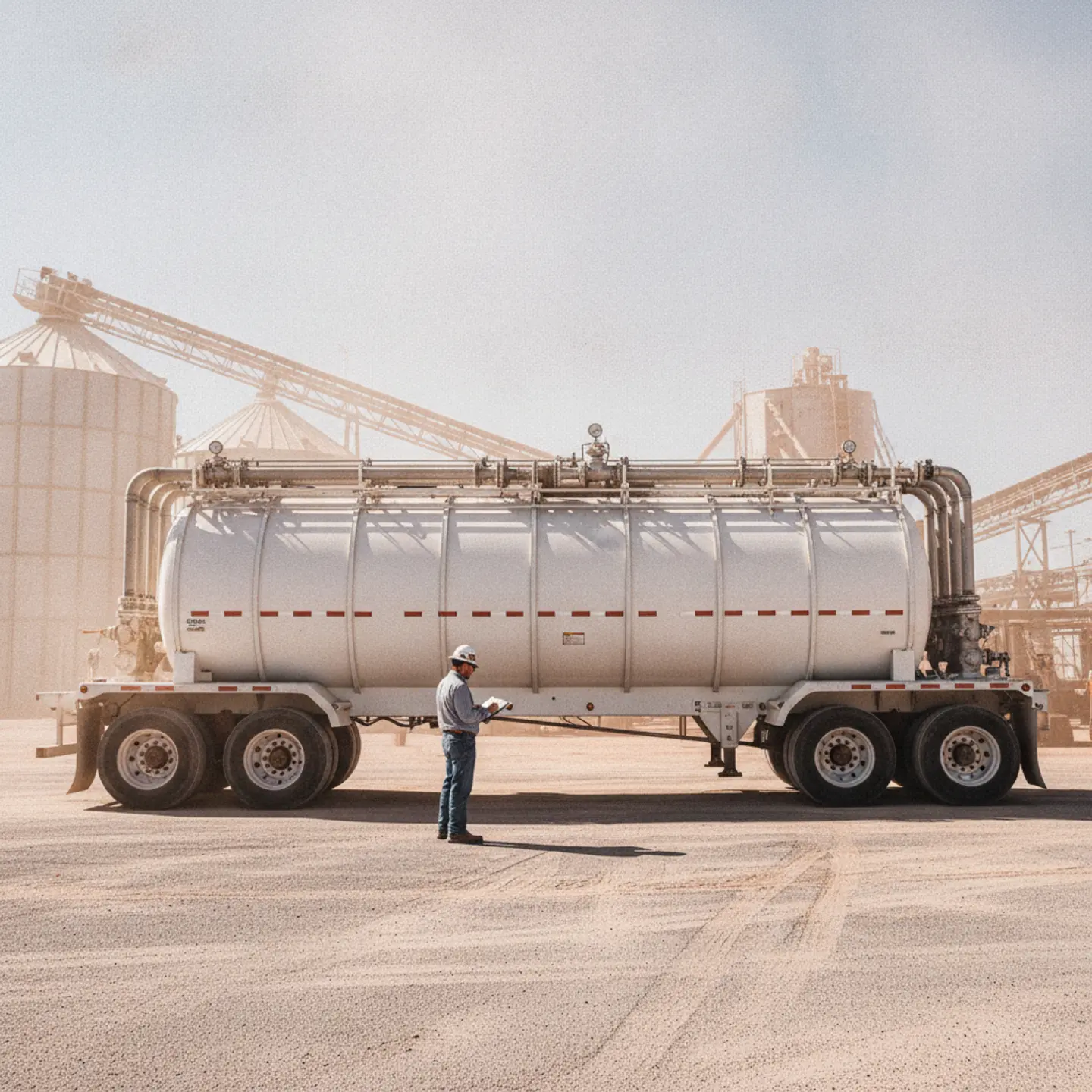
The North American dry bulk market runs on roughly 25,000–30,000 active pneumatic tankers, and frac sand represents a significant share of that volume — especially in the Eagle Ford, Marcellus, and Utica plays where pneumatic delivery is the standard. That’s a large, active market for both new and replacement blower units, and the blower you bolt to your truck has a direct line to your bottom line.
Frac sand — particularly Northern White sand common in the PA/OH plays — is sharp, angular silica. It’s abrasive in ways that cement and plastic pellets simply aren’t, and it accelerates wear on internal blower components faster than most other materials. That abrasiveness makes reliability and efficiency the two variables that matter most when choosing a blower for this application.
For an Owner-Operator, the economics come down to three levers: unload time (faster unloads = more turns per day), fuel consumption (blower efficiency directly reduces diesel burn during the 45–90 minute blow-off), and downtime risk (a single missed load costs $600–$1,000+ in lost revenue before you even count the repair bill). The blower you choose affects all three — every day you’re on the road.
Two technologies dominate this space. Straight-lobe (Roots-type) blowers — like the Tuthill T1050 — are the traditional design: simple, robust, and widely supported. Helical screw blowers — like the Gardner Denver T5CDL12 CycloBlower — use intermeshing screw rotors that compress air internally, producing higher efficiency, lower discharge temperatures, and significantly less noise. Over the past five years, helical screw units have taken meaningful market share in new equipment orders. The question is whether that efficiency premium is worth the price difference for your specific operation. If you’re weighing the broader cost of getting into pneumatic hauling, the full pneumatic blower system pricing breakdown covers installation costs alongside the unit price.
Tuthill 1050 vs. Gardner Denver T5CDL12: Specifications & Performance
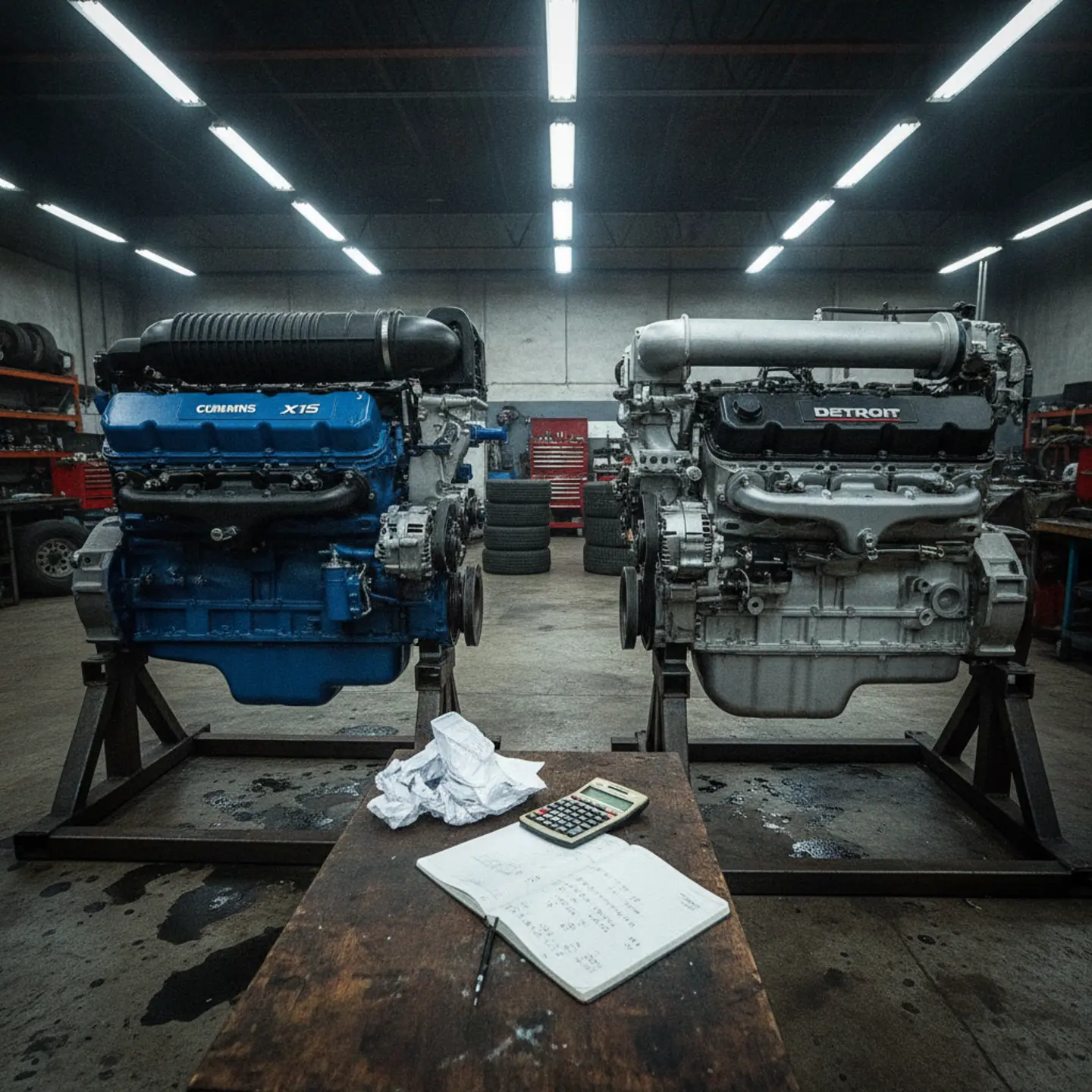
At the same operating point — 2,500 RPM, 16 PSIG — the Gardner Denver T5CDL12 moves approximately 15–20% more air while requiring 10–15% less horsepower. That’s the core of the efficiency argument, and it’s rooted in engineering, not marketing. The Tuthill T1050 tops out at 920 CFM and draws roughly 55 BHP at 16 PSIG. The Gardner Denver reaches 1,060 CFM at the same pressure while drawing only ~48 BHP. The helical screw’s internal compression is simply more thermodynamically efficient than the Roots-type’s external compression against system pressure.
The Tuthill’s higher max pressure rating — 20 PSIG vs. the Gardner Denver’s 18 PSIG — sounds like a meaningful advantage, but frac sand operations typically run 12–16 PSIG. You’re rarely going to need that extra headroom. What you will notice every single load is the Gardner Denver’s 120 lb weight advantage: 305 lbs vs. 425 lbs. That’s 120 lbs of additional payload capacity on every run.
Why the 3″ Discharge Matters for Sand
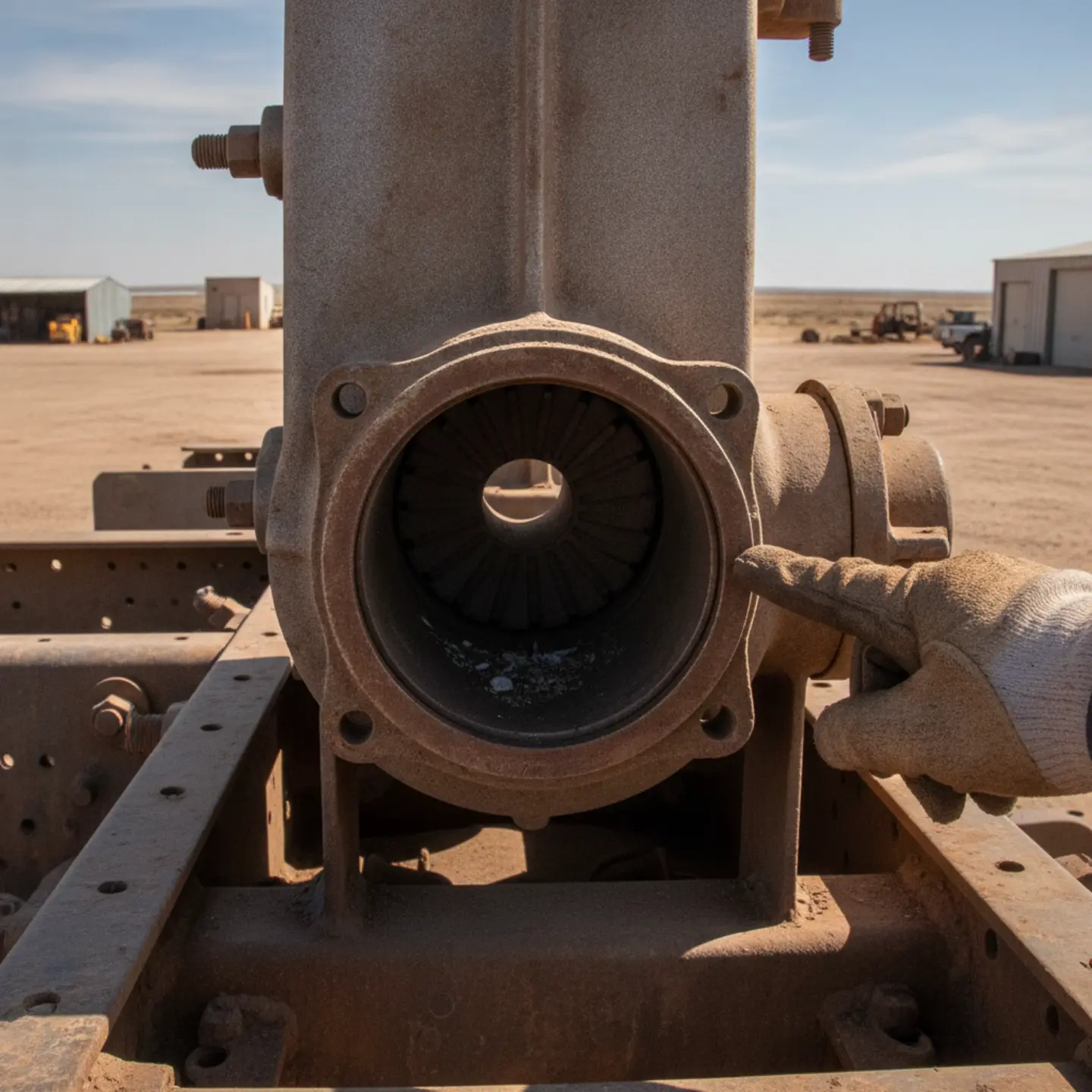
The Gardner Denver’s 3″ outlet (vs. Tuthill’s 4″) increases air velocity, which keeps heavy sand suspended in the airflow and prevents line plugs — a common problem in pneumatic sand hauling. This is a design advantage specific to the material and application, not just a spec difference. Installers must use the correct pipe size to match the blower’s design.
Head-to-Head Specs: Tuthill T1050 vs. Gardner Denver T5CDL12
| Specification | Tuthill T1050 | Gardner Denver T5CDL12 | Advantage |
|---|---|---|---|
| Technology | Straight-Lobe (Roots) | Helical Screw | Gardner Denver (Efficiency) |
| Max Airflow (CFM) | 920 | 1,060 | Gardner Denver |
| Max Pressure (PSIG) | 20 | 18 | Tuthill (Rarely Needed) |
| Weight (lbs) | 425 | 305 | Gardner Denver (+Payload) |
| BHP @ 16 PSIG / 2,500 RPM | ~55 BHP | ~48 BHP | Gardner Denver (Fuel) |
| Inlet / Outlet | 4″ / 4″ | 4″ / 3″ | Gardner Denver (Sand Velocity) |
| Warranty | 18 months / 12 months | 12 months | Tuthill |
| Approx. New Price (Unit Only) | $4,500–$6,000 | $6,500–$8,500 | Tuthill (Lower Cost) |
| Parts Availability | Excellent | Good | Tuthill |
Pricing & Total Cost of Ownership
Purchase price is only the beginning. A fully installed Tuthill T1050 — blower, PTO, driveline, cooler, and piping — runs $10,000–$14,000. The Gardner Denver T5CDL12 fully installed lands at $12,000–$17,000. That’s a real gap, but it’s not the whole picture. If you’re buying used, a 3–5 year old Tuthill typically runs $1,500–$3,000; a comparable Gardner Denver holds value better at $3,000–$5,000.
Annual maintenance costs are similar for both units — roughly $300–$500 per year in parts for oil changes, seals, and bearings. The Gardner Denver’s non-contacting rotors theoretically reduce internal wear over time, but either unit will need attention if it ingests abrasive material past a compromised air filter. High-quality filter maintenance isn’t optional for sand service — it’s the difference between a long-lived blower and an expensive rebuild.
The fuel savings calculation is where the Gardner Denver makes its financial case. Running 20 loads per week with 1-hour unload times, the Gardner Denver’s 5 BHP efficiency advantage saves approximately 5 gallons per week. At current Texas diesel prices of approximately $5.50/gallon, that’s ~$1,430 per year in fuel savings — money that goes directly to take-home pay. Add one or two extra turns per week from faster unload times, and the payback period on the $2,000–$3,000 price premium drops well under two years.
Pro Tip: Calculate Your Payback Period
Before choosing between the two, run the numbers for your specific operation. If you’re running 20+ loads per week, the Gardner Denver’s fuel savings and faster unload times often pay back the $2,000–$3,000 price premium in 18–24 months. Use the fuel savings estimate ($1,430/year) and your average loads per week to model your break-even point.
Downtime risk is the wildcard in any cost-of-ownership analysis. A single day of blower failure costs an Owner-Operator $1,000+ in lost revenue before the repair bill. The Tuthill’s broad parts network — available at truck stops and specialty shops across Texas and Pennsylvania — is a genuine operational advantage when you’re 80 miles from the nearest city. The Gardner Denver’s modern design aims for longer service intervals, but when it does need work, you need a qualified mechanic who knows helical screw systems. Know where your nearest authorized service hub is before you need it. To understand how blower choice fits into the broader economics of the job, the real numbers behind Owner-Operator frac sand hauling breaks down the full picture.
Real-World Performance: Unload Time & Operator Feedback
Specs on paper are one thing. What operators actually report in the field is another — and on this one, the data aligns with the engineering. A 24-ton frac sand load takes 60–90 minutes to unload with a Tuthill 1050 and 45–70 minutes with a Gardner Denver T5CDL12. That 15–20 minute difference per load can mean one extra load every two to three days — real money when rates are running $621–$1,000 per load.
Operator consensus from forums and oilfield trucking groups is consistent. The Tuthill 1050 gets called a “workhorse” — and that’s earned. It’s mechanically simple, parts are everywhere, and everybody knows how to work on one. The primary complaints are noise, weight, and slower blow-off times. Drivers who’ve run both units consistently report that the Tuthill is louder and heavier, and that the extra unload time adds up over a week.
The Gardner Denver T5CDL12 draws consistent praise for being “significantly quieter” and “noticeably faster.” Drivers who’ve made the switch report 15–30 minute unload reductions per load and lower fuel burn they can feel at the pump. The helical screw’s lower discharge temperature also reduces the load on your cooler system and extends component life across the whole pneumatic setup. The primary concerns: higher upfront cost and finding a qualified mechanic in a remote location when something goes wrong.
Watch Out: Parts Availability in Remote Locations
If you’re hauling in remote Permian or PA/OH locations, the Tuthill 1050’s broader parts network can be a lifesaver. A Gardner Denver breakdown in the middle of nowhere may require a tow to a specialized service center. Always have contact info for Gardner Denver authorized service hubs (Odessa, Houston) saved before you need it.
One consistent finding across both units: frac sand abrasiveness accelerates wear on internal components faster than smoother materials. Sharp, angular silica will find any weakness in your air filtration system and exploit it. Whether you’re running a Tuthill or a Gardner Denver, your air filter maintenance schedule is non-negotiable. A blower that’s ingested abrasive material may look fine on the outside and be near the end of its life on the inside. If you’re evaluating a used unit, have it professionally inspected for rotor-to-case clearance and bearing wear before you commit. For context on how your truck choice intersects with blower selection, the Peterbilt vs. Kenworth comparison for frac sand covers PTO compatibility and driveline considerations.
Regulatory, Safety & Technical Requirements
Your blower choice doesn’t change your compliance obligations — but it does affect how your system performs within those requirements. FMCSA and DOT regulations don’t govern blower model selection; the entire truck-trailer combination must meet federal standards, PTO and driveline components must be properly guarded, and all pneumatic systems require a certified pressure relief valve (PRV) set below the tank’s maximum allowable working pressure. That PRV is non-negotiable at any well site — it must be functional and certified every time you roll in.
In Texas, TxDOT has no blower-specific rules, but the added weight of your blower system — unit, cooler, piping — must be factored into your weight distribution to comply with bridge law and axle weight limits. The Gardner Denver’s 120 lb weight advantage over the Tuthill is a real operational benefit here: lighter blower means more legal payload capacity on every load.
OSHA’s silica dust regulations apply to anyone handling frac sand, and pneumatic conveying generates airborne silica — a serious respiratory hazard. Your blower choice doesn’t change the hazard, but a system that maintains consistent pressure and minimizes leaks contributes to better dust control at the discharge point. Drivers must have a current Respiratory Fit Test and appropriate PPE on every well site. Beyond the blower, operating in the oilfield requires PEC/Safeland certification and H2S Awareness — standard requirements that apply regardless of which unit you’re running. If you’re newer to the oilfield side of trucking, the best oilfield trucking training programs for 2026 covers what certifications you’ll need and where to get them.
Top Truck Blowers for Frac Sand: Tuthill 1050 vs. Gardner Denver T5CDL12 Compared
Tuthill T1050: The Proven Workhorse
The Tuthill T1050 is a USA-made, straight-lobe (Roots-type) positive displacement blower from Tuthill Transfer Systems. It’s been a fixture on pneumatic tankers for decades, and its reputation is earned. The design is mechanically simple — two lobes rotating in a casing, trapping and moving air without internal compression. That simplicity means fewer failure points, easier diagnosis, and parts available at distributors across every major oilfield region in Texas and Pennsylvania.
At $4,500–$6,000 unit-only and $10,000–$14,000 fully installed, the Tuthill is the lower-cost entry point. Its 18-month warranty (from date of shipment) is longer than the Gardner Denver’s 12-month coverage. The tradeoffs are real: it’s heavier (425 lbs), louder, less efficient, and slower to unload. But for a budget-conscious Owner-Operator just getting into pneumatic hauling, or for an operator running part-time in areas where parts availability is a genuine concern, the Tuthill T1050 is a proven, dependable choice.
Best for: Budget-conscious Owner-Operators, part-time haulers, operators in remote areas where parts availability is critical, and drivers prioritizing lower upfront cost over long-term efficiency.
Gardner Denver T5CDL12 CycloBlower: The Efficiency Leader
The Gardner Denver T5CDL12 CycloBlower uses a helical screw design — a main screw rotor meshing with a smaller gate rotor — to achieve internal air compression before discharge. The result is a blower that moves more air (1,060 CFM max) at lower horsepower draw (~48 BHP at 16 PSIG), runs significantly quieter, produces lower discharge temperatures, and weighs 120 lbs less than the Tuthill. That weight savings goes directly to payload capacity on every load.
At $6,500–$8,500 unit-only and $12,000–$17,000 fully installed, the Gardner Denver commands a real premium. Its distributor network is strong but more specialized — major service hubs in Odessa and Houston serve the oilfield market, but you need to know where they are before you need them. The 12-month warranty is shorter than the Tuthill’s. But for a full-time Owner-Operator running 20+ loads per week, the efficiency advantage compounds into serious money: faster turns, lower fuel burn, and better resale value when it’s time to upgrade.
Best for: High-volume Owner-Operators, drivers running 20+ loads per week, operators prioritizing fuel efficiency and faster turns, and anyone making a long-term equipment investment in pneumatic frac sand hauling. For context on how transmission choice interacts with blower PTO performance, the manual vs. automatic transmission guide for PTO blower setups is worth a read before you finalize your configuration.
Why Sisu Energy Is the Right Choice for Frac Sand Owner-Operators
Choosing the right blower is a business decision. So is choosing the right carrier. Sisu Energy is built 100% Owner-Operator first — zero company trucks, zero internal competition for loads. When you run with Sisu, your equipment choice is your business decision, and we back it with steady, loaded miles across our six hauling divisions in Texas and Pennsylvania/Ohio.
Whether you’re running a high-efficiency Gardner Denver T5CDL12 and chasing maximum turns, or you’re running a budget-conscious Tuthill T1050 while you build your operation — Sisu’s 24/7 live human dispatch (not an app, not a chatbot) matches your equipment to loads that maximize your efficiency. Our rotary load distribution system means every driver in the Pack gets a fair shot at the work. No favorites, no politics.
Sisu drivers in high-volume divisions can build strong take-home through steady loaded miles, minimal deductions, and a fuel program with a 10–12% discount off market rate. That number is built on the compounding effect of steady loaded miles, minimal deductions, no escrow holds, weekly Friday direct deposit, and a fuel program with a 10–12% discount off market rate. Every dollar your blower saves in fuel, every extra turn your faster unload time earns — those dollars land in your pocket, not ours. Your success is our success.
Frequently Asked Questions
Is the Gardner Denver CycloBlower Worth the Extra Money for Just Hauling Frac Sand?
For a full-time Owner-Operator, the math often works out. The fuel savings of over $1,400 per year — based on 20 loads per week at current Texas diesel prices — combined with the ability to turn one or two extra loads per week can pay back the $2,000–$3,000 price premium in under two years. Beyond the financial case, the Gardner Denver runs significantly quieter and with less vibration, which reduces driver fatigue on long unload cycles. If you’re running pneumatic frac sand as your primary income, the efficiency advantage compounds into real money over the life of the unit.
I Found a Used Tuthill 1050 for Cheap. Is It a Good Buy for Starting Out?
A used Tuthill 1050 can be a cost-effective way to get into pneumatic hauling — they’re mechanically simple, parts are easy to find anywhere in Texas or Pennsylvania, and a good unit will run reliably for years. The critical step before buying is a professional inspection: check rotor-to-case clearance and bearing wear, because a unit that’s been running frac sand without proper air filtration may look fine externally but be near the end of its service life internally. A $2,000 blower that needs a $3,000 rebuild isn’t the deal it appears to be. Have it inspected before you commit.
Do I Need a Cooler for My Blower System?
Yes — for continuous-duty applications like unloading frac sand, an air-to-air or air-to-oil cooler is essential for both the Tuthill and the Gardner Denver. Overheated discharge air can damage trailer components, and an overheated blower will have a dramatically shorter service life. The Gardner Denver’s inherently lower discharge temperatures reduce the thermal load on your cooler, but they don’t eliminate the need for one. Budget for a quality cooler as part of your complete blower system installation, not as an optional add-on.
What RPM Should I Run My Blower at for Sand?
The target is generating the required pressure — typically 12–16 PSIG for frac sand — at the lowest effective engine RPM, which saves fuel and reduces wear. For a Tuthill T1050, that operating range is typically 2,600–3,000 RPM. For a Gardner Denver T5CDL12, you can often achieve equivalent or better airflow at 2,200–2,600 RPM, which contributes directly to the fuel savings advantage. Your specific PTO ratio and driveline setup will determine your optimal operating point — consult your installer or a qualified blower technician to dial in the right configuration for your truck.
Why Should I Choose Sisu Energy Over Other Frac Sand Carriers?
Sisu Energy is 100% Owner-Operator first — no company trucks competing for your loads, no escrow holds, and weekly Friday direct deposit. We operate six hauling divisions across Texas and Pennsylvania/Ohio with 24/7 live human dispatch that matches your equipment efficiency to loads that maximize your turns and take-home pay. Whether you’re running a high-efficiency Gardner Denver or a budget-conscious Tuthill, Sisu supports your business decisions and your success. No hidden fees, no games — just steady loaded miles and a carrier that’s built around your profitability. Apply today and join the Pack — take control of your future with Sisu Energy.
Ready to Put Your Blower to Work on Steady Frac Sand Miles?
You’ve done the research on your equipment — now pair it with a carrier that’s built around your success. Sisu Energy runs 100% Owner-Operator, pays weekly every Friday, and keeps you loaded with no company trucks competing for your freight. Whether you’re running a Gardner Denver or a Tuthill, we’ll route you to work that maximizes your turns and your take-home.
*Sisu Energy LLC contracts exclusively with independent Owner-Operators. Earnings vary by division, miles, fuel costs, and individual business factors, and no specific income is guaranteed. Programs, lease rates, and requirements are subject to change. Please contact Sisu Energy directly for current opportunities and division details.