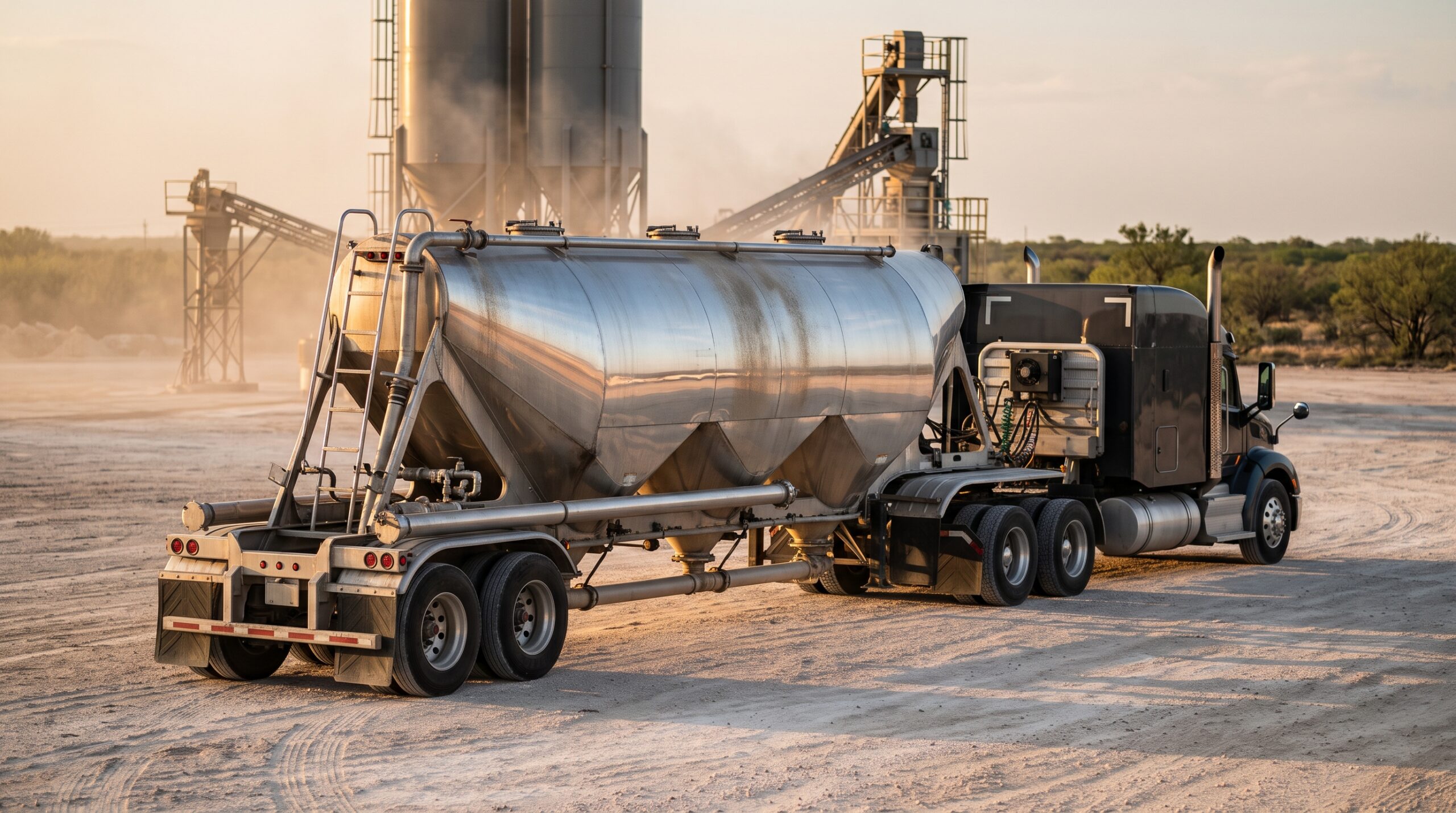
Manual vs Automatic Transmission For PTO and Blower For Pneumatic Frac Sand Hauling
- Blowers require a consistent 1,200–1,800 RPM window to generate the 900–1,200 CFM and 12–18 PSI needed for efficient frac sand offload — your transmission choice directly determines how easily you hold that window.
- Manual transmissions (Eaton Fuller 13- and 18-speed) offer ultimate RPM control and $8,000–$15,000 lower upfront cost, but demand skilled clutch engagement and constant throttle attention during every offload cycle.
- Automatic transmissions (Allison 4000/4500 series) use electronic PTO governors to hold RPM automatically, reducing driver fatigue and offload variability — but require robust cooling packages and $7,000–$15,000+ rebuild costs if heat management is neglected.
- A 30-minute reduction in offload time on short-haul Permian Basin routes can enable 1–2 additional turns per day, translating to $2,000–$4,000+ in additional weekly gross revenue — offload efficiency is a direct earnings lever.
- Trust Sisu Energy for 100% Owner-Operator hauling, 24/7 live human dispatch, and zero company truck competition — visit Sisu Energy to learn how the Pack maximizes your take-home pay.
Manual vs Automatic Transmission For PTO and Blower: Which Is Better for Pneumatic Frac Sand Hauling?
The choice between manual and automatic transmissions for pneumatic frac sand hauling depends on your priorities: manual transmissions offer ultimate RPM control and lower upfront costs, while automatics provide consistent blower performance, reduced driver fatigue, and electronic PTO governors that maintain optimal engine speed automatically. For Owner-Operators prioritizing efficiency and ease of operation, automatics (especially Allison 4000/4500 series) are increasingly the industry standard. For experienced drivers who value mechanical control and familiarity with hand throttle operation, manual transmissions (Eaton Fuller 13- or 18-speed) remain viable and cost-effective. The real differentiator is your truck’s cooling capacity, PTO ratio specification, and your personal driving style.
Understanding the mechanical, operational, and financial implications of each transmission type is essential to maximizing your take-home pay and equipment longevity in the high-stakes Permian Basin and Eagle Ford pneumatic hauling market.
Sisu Energy
100% Owner-Operator — You Never Compete With Company Trucks
Core Service Programs:
- Pneumatic Frac Sand Hauling for owner-operators running STX and PA/OH oilfield lanes
- Hopper Bottom Frac Sand Hauling for owner-operators across the Permian, West Texas, and South Texas
- Cement Hauling for owner-operators running Monday–Friday daytime lanes in North Texas and Houston
Why Choose Sisu Energy:
- ✓ 100% Owner-Operator fleet — you never compete with company trucks for loads
- ✓ 24/7 live human dispatch with a fair rotary load distribution system
- ✓ No escrow, no fuel card fees, and minimal deductions
- ✓ Weekly direct deposit, paid every Friday
- ✓ Fuel program with a 10–12% discount off market rate
- ✓ Fast, streamlined onboarding — no orientation required
How PTO and Blower Systems Work in Pneumatic Frac Sand Hauling
Before you can evaluate transmissions, you need to understand what the blower actually demands from your drivetrain. A Power Take-Off (PTO) transfers engine power to the pneumatic blower, converting rotational energy into compressed air that fluidizes frac sand for offload. The PTO bolts to the transmission — or in live-PTO configurations, directly to the engine crankshaft — and channels power via a U-jointed driveshaft to the blower’s input shaft.
Rotary lobe blowers (Gardner Denver, Tuthill, Roots) compress ambient air and deliver it into the trailer’s aeration system. That pressurized air fluidizes the sand so it flows like a liquid through the discharge lines and into the wellsite’s sand king. For a typical 20–25 ton frac sand load, offload durations range from 20 to 45 minutes depending on wellsite conditions, line length, and — critically — how consistently you maintain blower performance throughout the cycle.
RPM Windows and Throttle Control During Offload
Blowers require a specific RPM window — typically 1,200–1,800 RPM — to generate the optimal 900–1,200 CFM and 12–18 PSI needed for efficient frac sand offloading. Drop below that threshold and you get reduced material flow, increased offload time, and the real risk of plugged discharge lines. Every plugged line costs you time, and time is turns — and turns are your paycheck.
Manual transmissions require the driver to use a foot or hand throttle to hold RPM steady throughout the offload cycle. Automatic transmissions with electronic PTO governors automatically maintain a pre-set engine RPM, removing that constant attention demand. That single difference — who or what holds the RPM — is the core of the manual vs. automatic debate for pneumatic work.
Many Owner-Operators struggle with maintaining consistent RPM during offload cycles, especially on older wells with variable backpressure. Whether you’re using a hand throttle on a manual or relying on an automatic’s governor, the goal is the same: keep the blower in its sweet spot (1,200–1,800 RPM) to maximize efficiency and minimize offload time.
Manual Transmission Interface: Control, Engagement, and Operational Demands
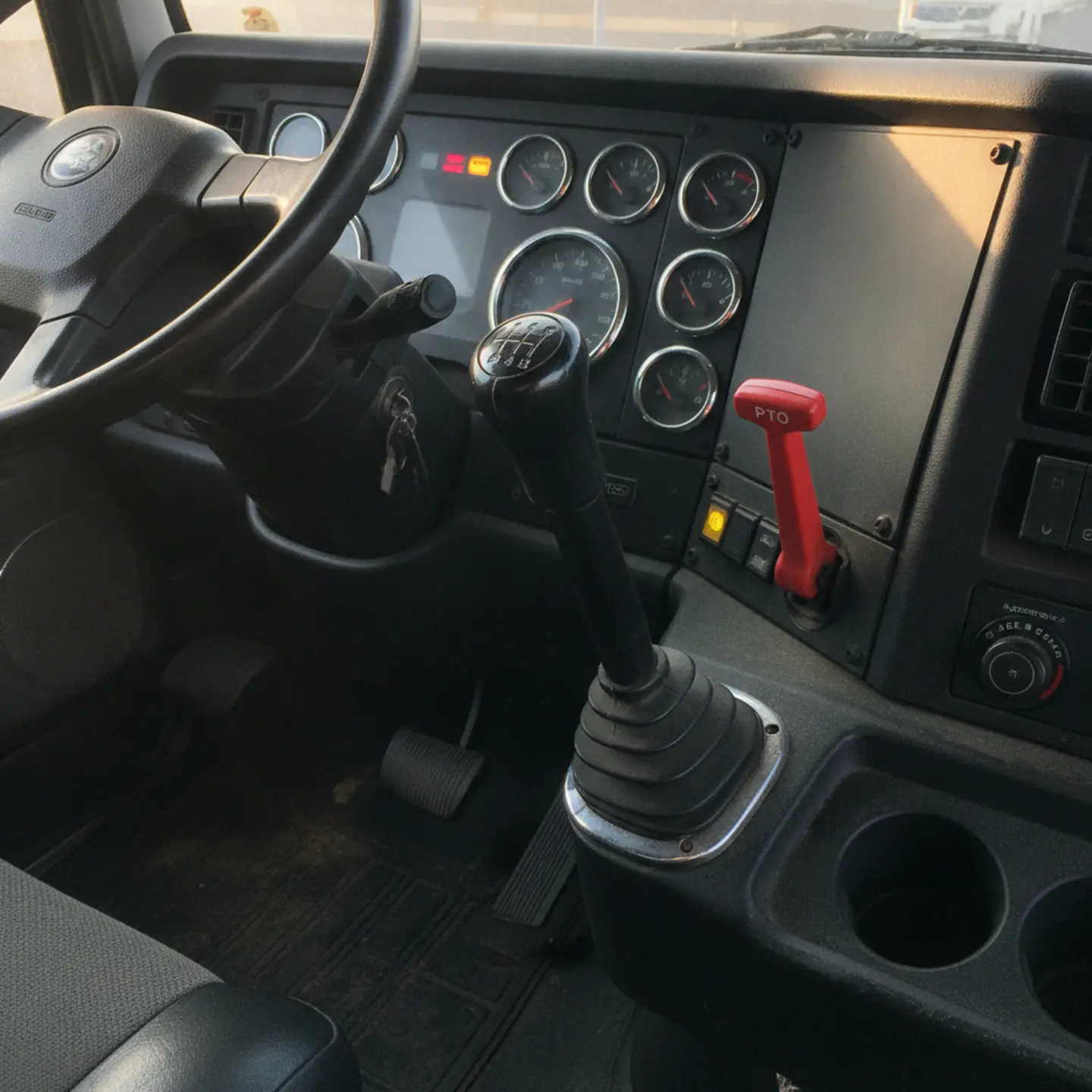
On an Eaton Fuller 10-, 13-, or 18-speed, PTO engagement is a multi-step process: place the truck in neutral, depress the clutch, engage the PTO switch, and smoothly release the clutch. Experienced drivers often pre-select a specific internal transmission gear — typically 5th through 8th depending on PTO ratio — before engaging the PTO to achieve optimal blower input speed at a comfortable engine RPM without over-revving.
Once the PTO is engaged, a hand throttle allows the driver to set and hold a specific engine RPM, freeing the foot and enabling sustained RPM management throughout the offload. This gear-selection and throttle discipline is a learned skill. Drivers who master it can run tight, efficient offloads. Drivers who rush it — especially across four or five turns a day — pay for it in equipment wear.
Clutch Engagement Protocols and PTO Shock Loading
Proper engagement requires a slow, smooth clutch release after the PTO is engaged. Harsh or rapid engagement shocks the PTO system — accelerating wear on the PTO itself and the clutch simultaneously. Improper technique during multiple daily offloads is a leading cause of premature clutch failure in manual transmission pneumatic operations.
Clutch wear is the primary maintenance cost on a manual: replacement runs $2,500–$4,500+ every 150,000–300,000 miles depending on driver technique and duty cycle. Manual transmissions cost $8,000–$15,000 less upfront than automatics and carry fewer parasitic losses in neutral — but that savings evaporates fast if clutch engagement is rushed on a high-turn day.
Harsh, rapid, or improper clutch engagement on manual transmissions is a leading cause of premature clutch failure and PTO damage. Rushing through multiple daily offloads or failing to smoothly release the clutch can cut your clutch lifespan in half, turning a $2,500–$4,500 replacement into a $5,000+ emergency repair and lost revenue.
Automatic Transmission Interface: Electronic Control, Consistency, and Heat Management
Allison automatics — particularly the 3000, 4000, and 4500 series — are specifically engineered for robust PTO operations. The driver engages the PTO via a dashboard switch in neutral, and the transmission’s electronic controls manage smooth engagement without manual clutch manipulation. Allison’s Continuous Power Take-Off (CPTO) feature ensures full engine power is delivered to the PTO when the vehicle is stationary, making these transmissions purpose-built for sustained auxiliary power applications like blower work.
The game-changer for pneumatic hauling is the electronic PTO governor. Set your target RPM on the dash, and the engine’s ECU maintains it automatically — adjusting throttle in real time to compensate for backpressure changes at the wellsite. Across five offloads a day, that consistency compounds into faster, more predictable turn times and significantly less driver fatigue.
Heat Buildup, Fluid Degradation, and Preventive Maintenance
The tradeoff is heat. Even in neutral during PTO operation, the torque converter generates internal friction. Sustained high-RPM blower runs — especially in West Texas summer heat — can push transmission fluid temperatures into dangerous territory if the truck’s cooling system isn’t up to the task. Elevated fluid temperatures accelerate breakdown of lubricating and cooling properties, leading to premature internal wear and seal failures.
Trucks spec’d for automatic PTO work need robust cooling packages: larger radiators, dedicated transmission oil coolers, and synthetic transmission fluid rated for severe service. Fluid and filter changes every 75,000–150,000 miles in high-PTO vocational service are non-negotiable. Skip that maintenance and you’re looking at a $7,000–$15,000+ rebuild — significantly more than any clutch replacement on a manual. Factory PTO prep packages from Peterbilt, Kenworth, and Freightliner typically include the correct transmission output gear, dash switches, and electronic programming to ensure seamless Allison PTO engagement.
If you’re running an automatic, check your transmission fluid temperature gauge regularly during extended blower runs. If it creeps above 200°F, take a break or reduce engine RPM. Investing in a robust transmission oil cooler during truck spec is one of the best preventive maintenance decisions you can make for long-term reliability and resale value.
Manual vs Automatic: Comparison Table and Operational Impact
| Factor | Manual (Eaton Fuller 13/18-Speed) | Automatic (Allison 4000/4500) |
|---|---|---|
| RPM Control | Driver-managed via hand/foot throttle — precise but demands constant attention | Electronic PTO governor maintains pre-set RPM automatically |
| PTO Engagement | Multi-step: neutral → clutch → PTO switch → smooth release | Dashboard switch in neutral; electronic controls manage engagement |
| Driver Fatigue | Higher — sustained throttle attention required across all offloads | Lower — governor handles RPM, driver monitors gauges |
| Upfront Cost | $8,000–$15,000 less than comparable automatic | $8,000–$15,000 premium over manual |
| Primary Maintenance Cost | Clutch replacement: $2,500–$4,500+ every 150K–300K miles | Fluid/filter service: $500–$1,000+ every 75K–150K miles |
| Major Failure Cost | Transmission rebuild: $5,000–$10,000+ | Transmission rebuild: $7,000–$15,000+ |
| Heat Risk | Lower — fewer parasitic losses in neutral | Higher — torque converter generates heat during extended PTO runs |
| Resale Value | Declining market appeal as industry shifts to automatics/AMTs | Higher resale value; broader buyer pool |
| Skill Requirement | High — experienced drivers maximize performance; inexperienced drivers accelerate wear | Lower — consistent performance regardless of driver experience level |
| Best Fit | Veteran drivers who value mechanical control; cost-sensitive spec decisions | Drivers prioritizing consistency, comfort, and multi-turn efficiency |
Regulatory Compliance and Safety Considerations for Pneumatic Frac Sand Hauling
Dry frac sand is not classified as a hazardous material under DOT regulations, but a Class A CDL with Tank (N) endorsement is typically required due to the pneumatic tanker’s design as a closed, cylindrical vessel. Texas requires overweight permits for loads exceeding 80,000 lbs GVW — and pneumatic tankers loaded with 20–25 tons of frac sand clear that threshold easily. TxDOT axle weight limits (20,000 lbs single axle, 34,000 lbs tandem) apply, and Permian Basin and Eagle Ford counties often layer on their own designated truck routes, road bonds, and seasonal weight restrictions. For a deeper look at the full licensing picture, the CDL requirements guide for frac sand hauling covers endorsements and training in detail.
Transmission type doesn’t directly affect regulatory compliance — but proper truck specification absolutely does. Adequate axle ratings, correct cooling packages, and verified PTO ratio documentation are essential for obtaining necessary permits and maintaining OEM warranty coverage.
OSHA Crystalline Silica and Pneumatic System Advantages
OSHA’s crystalline silica standard (29 CFR 1910.1053) has been fully enforced since 2021 and mandates engineering controls, work practice controls, and respiratory protection where exposure thresholds are exceeded. Pneumatic systems are recognized as a primary engineering control — the closed system dramatically reduces driver silica exposure compared to open-top hopper bottom operations. That’s one of the most underappreciated safety advantages of pneumatic hauling.
Drivers must remain in designated safe zones during offload, wear appropriate PPE (hard hat, safety glasses, FR clothing, steel-toe boots), and maintain clear communication with wellsite personnel. H2S certification and respiratory protective equipment may be required in certain basins. Automatic transmissions’ ability to maintain steady RPM via electronic governor can reduce total time spent at the wellsite per offload — a marginal but real safety benefit.
Market Trends, Equipment Costs, and Owner-Operator Earnings Impact
The trucking industry is trending decisively toward automatic and automated manual transmissions (AMTs) in new vocational truck orders. Major OEMs — Peterbilt, Kenworth, Freightliner, Mack — are increasingly offering integrated PTO solutions with automatics and AMTs as the default for vocational applications. Manual transmissions remain viable for experienced Owner-Operators, but their share of new orders is declining as the driver pool trends younger and the industry prioritizes reduced skill barriers.
The earnings math on offload efficiency is straightforward. Short-haul Permian Basin rates run $300–$450 per load at 4–5 turns per day. A 30-minute reduction in offload time per turn can enable 1–2 additional loads daily — translating to $2,000–$4,000+ in additional weekly gross revenue. Productive Permian Basin pneumatic tanker Owner-Operators can realistically gross $2,500–$4,500+ per week ($130,000–$230,000+ annually at full utilization), with net take-home typically between $2,900–$5,900 per week after all expenses. The load rates vs. turns breakdown shows exactly how turn count compounds into weekly earnings.
Long-haul operations ($600–$1,000+/load, 1–2 turns/day) benefit more from reliability and reduced downtime than from marginal offload time improvements — which shifts the calculus toward whichever transmission you can maintain most cost-effectively over a 3–5 year horizon. For a full picture of the real numbers behind pneumatic hauling profitability, the Owner-Operator frac sand real numbers breakdown is worth reading before you spec your next truck.
Transmission Market Trends and Resale Value
Automatic transmissions typically command $8,000–$15,000 higher resale values than equivalent manual-equipped trucks as the industry shifts away from manuals. AMTs like the Eaton Endurant and Detroit DT12 fall between the two — offering electronic PTO engagement similar to a true automatic while retaining the mechanical gear train of a manual. Experienced Owner-Operators report a generational split: veteran drivers often prefer manuals for control; newer drivers and those prioritizing comfort opt for automatics or AMTs. Neither preference is wrong — the right answer depends on your experience, your truck’s cooling spec, and your preferred hauling lane.
Why Sisu Energy Is the Right Choice for Pneumatic Frac Sand Owner-Operators
Sisu Energy operates as a 100% Owner-Operator carrier with zero company trucks. That means you never compete with a company driver for the next load. Whether you’re running a manual 18-speed Eaton Fuller or an Allison automatic, you’re not fighting your own carrier for miles — every load in the rotary distribution system is yours to earn on equal footing.
With six hauling divisions across Texas and Pennsylvania/Ohio, Sisu gives you flexibility that matches your equipment and your life. Prefer manual transmission work in the Permian? Run WTX Hopper Bottom or STX Pneumatics. Want to transition to automatics or explore a different region? You can move within the Pack without starting over at a new carrier. That kind of operational flexibility is rare — and it’s built into how Sisu is structured.
24/7 live human dispatch with rotary load distribution means consistent, loaded miles without the guesswork of load-matching apps. No escrow. Weekly Friday direct deposit. Fuel cards with no fees and a 10–12% discount off market rate. Transparent deductions with no hidden surprises. Low-cost insurance programs and IRP plate support round out a package designed to maximize your net income — regardless of what transmission is behind your engine. For Owner-Operators who want to understand exactly what independent contractor status means for their business, the independent contractor frac sand tax and business guide covers the financial side in plain language.
Join Our Pack today and take control of your pneumatic hauling future.
Frequently Asked Questions
Which transmission holds RPM better during blower operation, a manual or an automatic?
An automatic transmission with an integrated electronic PTO governor holds RPM more consistently during blower operation. The truck’s engine control unit automatically adjusts throttle to maintain a pre-set RPM, reducing driver fatigue and preventing the dips or surges that can occur with manual foot or hand throttle control. Manual transmissions rely entirely on driver skill to maintain steady RPM — which is achievable with experience, but demands constant attention across every offload cycle.
Can automatics burn up on extended PTO runs for frac sand offloading?
Yes — automatics can experience damaging heat buildup during extended, high-RPM PTO operation if the truck’s cooling system (especially the transmission oil cooler) is inadequate or if fluid maintenance is neglected. The torque converter generates internal friction even in neutral, and sustained blower runs push fluid temperatures higher than typical over-the-road driving ever would. Modern Allison transmissions are robust, but elevated temperatures degrade fluid and accelerate internal wear. Proper truck spec with vocational cooling packages and regular synthetic fluid changes are non-negotiable for long-term reliability.
What gear should I be in during a frac sand offload with an Eaton Fuller 18-speed?
The transmission itself is in neutral during PTO operation — but experienced drivers often pre-select a middle to upper-middle gear (typically 6th to 8th gear in low range, depending on the specific PTO ratio) before engaging the PTO. This pre-selection helps achieve the optimal PTO output speed for the blower at a comfortable engine RPM — typically 1,200–1,600 RPM — without over-revving the engine. The exact gear preference varies by truck spec, PTO ratio, and blower model, so developing your own “sweet spot” through experience is part of mastering manual PTO operation.
How does transmission choice affect resale value for oilfield pneumatic trucks?
Transmission choice significantly impacts resale value as the trucking industry trends toward automation. Trucks equipped with automatic or automated manual transmissions (AMTs) generally command higher resale values and have broader market appeal than manual transmission trucks — particularly for vocational applications where the buyer pool increasingly expects electronic controls. This broader appeal is driven by reduced driver skill requirements and the perception of easier operation, which matters to fleet buyers and independent operators alike when evaluating used equipment.
Why should I choose Sisu Energy over other pneumatic frac sand carriers?
Sisu Energy is built 100% Owner-Operator first with zero company trucks, meaning you retain complete control over your equipment decisions and maximize take-home pay with no internal competition for loads. With 24/7 live human dispatch, no escrow, weekly Friday direct deposit, and transparent deductions, Sisu ensures you know exactly what you’re earning and when. Whether you run a manual 18-speed or an Allison automatic, Sisu’s dispatch team understands your truck’s capabilities and matches you with loads that align with your preferred schedule and equipment. Apply Today and take control of your pneumatic hauling future.
Ready to Run Pneumatic Frac Sand With the Right Carrier?
Whether you’re running a manual 18-speed or an Allison automatic, your transmission choice matters — and so does your carrier. Sisu Energy is 100% Owner-Operator, with 24/7 live dispatch, no escrow, and weekly Friday pay built to maximize what you take home from every turn.
*Sisu Energy LLC contracts exclusively with independent Owner-Operators. Earnings vary by division, miles, fuel costs, and individual business factors, and no specific income is guaranteed. Programs, lease rates, and requirements are subject to change. Please contact Sisu Energy directly for current opportunities and division details.