OEM vs. Aftermarket Truck Blowers: Tuthill T1050 vs. Eurus Bulkmaster 6800
- The Tuthill T1050 retails for $7,800–$9,500 new; the Eurus Bulkmaster 6800 runs approximately $5,716 — a $2,000–$3,800 price gap that narrows fast if downtime enters the equation.
- The Tuthill’s bi-lobe design is the proven industry workhorse with universal parts availability at hundreds of distributors nationwide; the Eurus uses a tri-lobe design that runs quieter but has a smaller parts network and less long-term field data.
- A single day of lost pneumatic hauling revenue costs an Owner-Operator $621–$1,000+ — if an aftermarket blower fails just 2–3 days sooner than a Tuthill, the upfront savings evaporate.
- Rebuilt Tuthill units are available in the $3,000 range, making a quality OEM rebuild a third option that can close the price gap while preserving the Tuthill parts ecosystem advantage.
- Trust Sisu Energy for 100% Owner-Operator hauling, 24/7 live human dispatch, and weekly Friday direct deposit with no escrow — built for drivers who make smart, business-first equipment decisions.
Tuthill T1050 vs. Eurus Bulkmaster 6800: Which Blower Is Worth It for Your Pneumatic Rig?
The Tuthill T1050 is the proven, industry-standard choice with universal parts availability and a four-decade track record — but the Eurus Bulkmaster 6800 offers a $3,000+ price advantage and quieter tri-lobe operation for Owner-Operators willing to trade parts accessibility for upfront savings. The real answer depends on your risk tolerance, service area, and how much a single day of downtime costs your business.
To make the right call, you need to understand the total cost of ownership — not just the sticker price — and how each blower performs in the abrasive, high-heat world of frac sand hauling.
Sisu Energy
100% Owner-Operator — You Never Compete With Company Trucks
Core Service Programs:
- Pneumatic Frac Sand Hauling for owner-operators running STX and PA/OH oilfield lanes
- Hopper Bottom Frac Sand Hauling for owner-operators across the Permian, West Texas, and South Texas
- Cement Hauling for owner-operators running Monday–Friday daytime lanes in North Texas and Houston
Why Choose Sisu Energy:
- ✓ 100% Owner-Operator fleet — you never compete with company trucks for loads
- ✓ 24/7 live human dispatch with a fair rotary load distribution system
- ✓ No escrow, no fuel card fees, and minimal deductions
- ✓ Weekly direct deposit, paid every Friday
- ✓ Fuel program with a 10–12% discount off market rate
- ✓ Fast, streamlined onboarding — no orientation required
Why Blower Replacement Is a High-Stakes Decision in Frac Sand Service
Scope this correctly before you price anything: we’re talking about truck-mounted, PTO-driven positive displacement blowers — the unit bolted to your tractor that pressurizes the trailer tank during unloads. This is not a trailer component. It’s your most critical piece of working equipment, and in frac sand service, it takes a beating.
In heavy frac sand duty, blowers see a replacement or major rebuild cycle of roughly 3–5 years, or 4,000–6,000 operating hours — significantly shorter than in non-abrasive applications. Fine silica dust is relentless. It bypasses air filters, acts as a lapping compound inside the blower housing, and steadily widens the clearances between lobes and casing. The result: reduced efficiency, higher fuel burn, and an accelerating march toward failure.
For an Owner-Operator running pneumatic loads, a blower failure isn’t a maintenance inconvenience — it’s a revenue emergency. Pneumatic frac sand loads in South Texas and PA/OH can gross $621–$1,000+ per load, and a single day of downtime wipes out that earning potential entirely. That’s the financial context every dollar of your blower decision has to be measured against.
OEM supply has improved since 2022, but the price gap between OEM and quality aftermarket alternatives has widened enough that the Eurus Bulkmaster 6800 is now a legitimate conversation — not just a budget shortcut. Understanding what you’re actually buying with each option is the whole game. For a full breakdown of what installation adds to your total cost, see this breakdown of pneumatic blower installation costs.
Tuthill T1050 vs. Eurus Bulkmaster 6800: Head-to-Head Specs
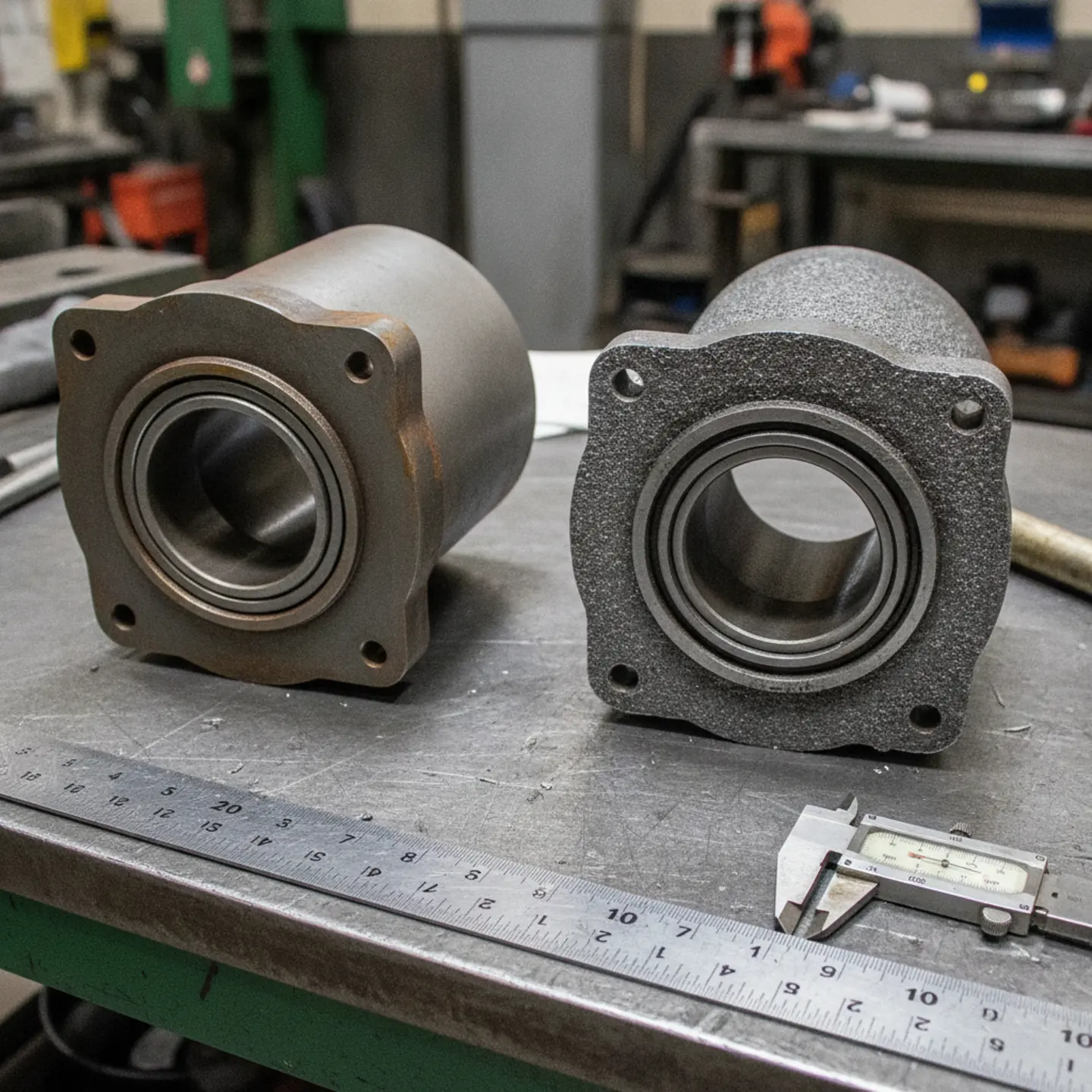
Both blowers are designed for the same application — PTO-driven pneumatic bulk hauling — and the Eurus is explicitly marketed as a drop-in replacement for the Tuthill T850, T855, T1050, and T1055. That means identical mounting foot dimensions, shaft height, and port locations. You unbolt one, bolt in the other, reconnect the driveline and plumbing, and go. Installation time and cost are comparable for both.
Where they differ is in design philosophy. The Tuthill T1050 uses a bi-lobe (two-lobe) rotor design — simpler, proven over four decades, and highly rebuildable. The Eurus Bulkmaster 6800 uses a tri-lobe (three-lobe) design, which produces less air pulsation per revolution, translating to lower operating noise and potentially reduced vibration stress on bearings over time.
| Specification | Tuthill T1050 (OEM) | Eurus Bulkmaster 6800 (Aftermarket) |
|---|---|---|
| Lobe Design | Bi-Lobe (Two-Lobe) | Tri-Lobe (Three-Lobe) |
| Max CFM | 920 CFM | ~941 CFM (claimed) |
| Max Pressure | 20 PSI continuous | 20 PSI continuous |
| Port Size | 4″ Inlet / 4″ Outlet | 4″ Inlet / 4″ Outlet |
| Weight | ~425 lbs | ~440 lbs |
| Drop-In Compatible | N/A (OEM standard) | Yes — replaces T850/T855/T1050/T1055 |
| Noise / Pulsation | Higher (bi-lobe characteristic) | Lower (tri-lobe advantage) |
| Rebuildability | Excellent — widely supported | Limited — less established |
Pricing & Total Cost of Ownership: The Real Math
The sticker price is where most Owner-Operators start the comparison — and it’s a legitimate starting point. A new Tuthill T1050 runs $7,800–$9,500 from distributors. The Eurus Bulkmaster 6800 is listed at approximately $5,716 online. That’s a real $2,000–$3,800 gap before you touch a wrench.
But the unit price is only part of the story. Installation labor in Texas oilfield regions runs $125–$175/hour, and a blower swap typically takes 4–6 hours — adding $500–$1,050 in shop time. Gaskets, couplings, and plumbing can tack on another $200–$500. Both blowers cost roughly the same to install, so that cost is a wash. Where the math gets interesting is warranty and downtime risk.
Tuthill’s warranty is 18 months from shipment or 12 months from installation. Eurus typically offers 12 months — and Owner-Operators running abrasive materials like frac sand should verify in writing whether that coverage applies to their application. A warranty exclusion for abrasive service on a $5,716 purchase is a material risk.
There’s also a third option worth considering: a rebuilt Tuthill unit. Quality rebuilt T1050s are available in the $3,000 range, which closes the price gap with the Eurus while keeping you inside the Tuthill parts ecosystem. If you can source a reputable rebuild, that’s often the smartest play for a budget-conscious Owner-Operator who still wants OEM parts availability on the road.
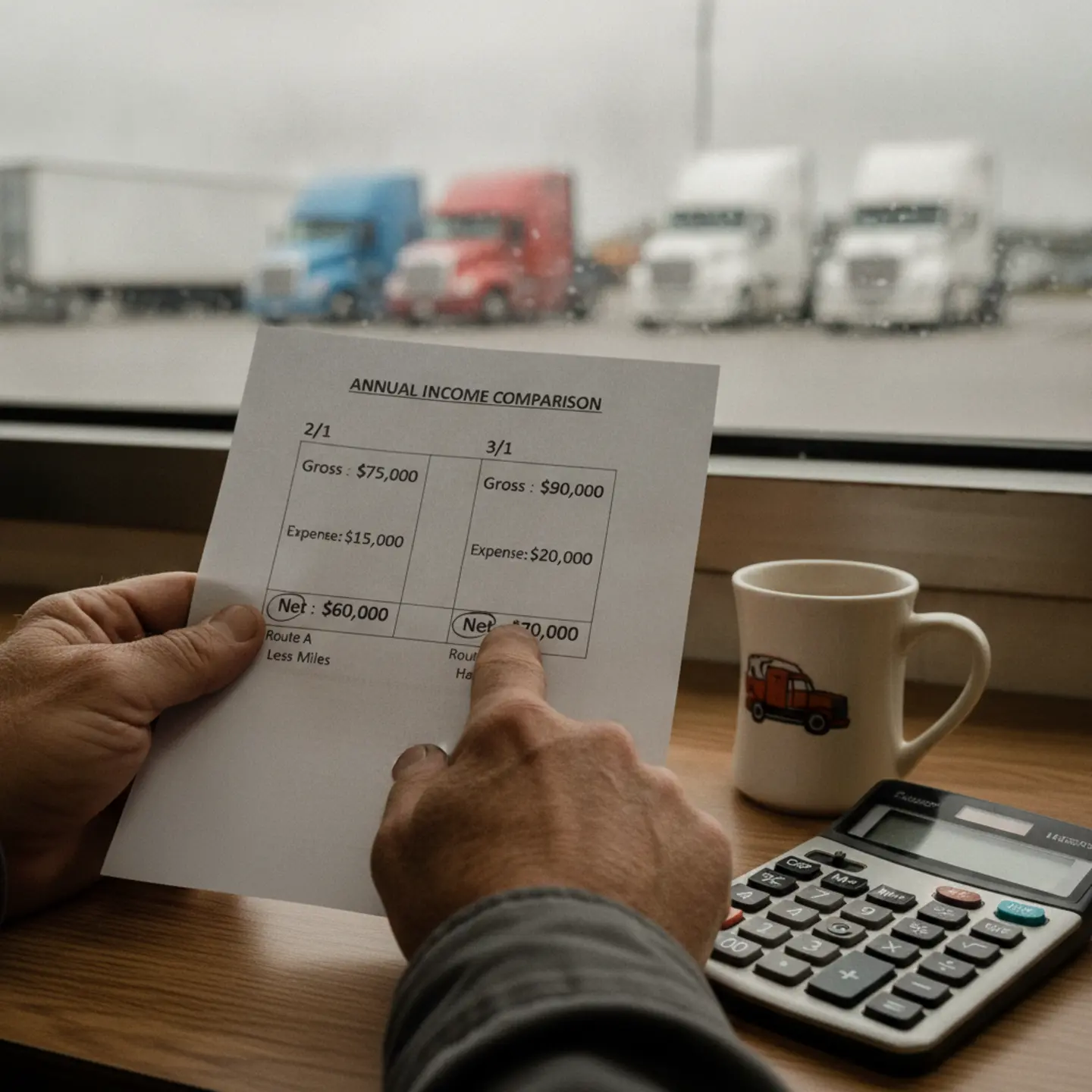
You’re weighing $3,000 in upfront savings against the risk of downtime in a market where every day counts. That’s the right calculation — and it’s exactly why experienced drivers know their service area, their parts network, and their backup plan before they commit to an aftermarket blower.
| Cost Factor | Tuthill T1050 (New OEM) | Eurus Bulkmaster 6800 | Rebuilt Tuthill |
|---|---|---|---|
| Unit Price | $7,800–$9,500 | ~$5,716 | ~$3,000 (range) |
| Installation Labor | $500–$1,050 | $500–$1,050 | $500–$1,050 |
| Parts & Plumbing | $200–$500 | $200–$500 | $200–$500 |
| Warranty | 18 mo. ship / 12 mo. install | ~12 months (verify abrasive coverage) | Varies by rebuilder |
| Parts Availability | Universal — hundreds of distributors | Dealer network only | Universal — same as new Tuthill |
| Core / Resale Value | Strong — established market | Weak — less mature secondary market | Moderate |
Parts Availability & Downtime Risk: The Hidden Cost of Going Aftermarket
This is where the Tuthill’s premium earns its keep — and where the Eurus decision requires honest self-assessment about where you run.
Tuthill parts — seal kits, bearing kits, gears, rotor assemblies — are stocked at hundreds of distributors across the country. In Texas oilfield hubs like Odessa, San Antonio, Laredo, and the Houston metro, you can typically source common Tuthill service parts same-day. That matters at 2 a.m. when a seal blows and you’re sitting on the side of a caliche road with a load to deliver.
Eurus parts flow primarily through their dealer network — distributors like TankTruckPartsUSA.com. In a major metro, that might mean a one-day turnaround. In a remote West Texas location or a rural PA/OH well pad, it could mean multi-day lead times, a tow, shop time, and missed loads stacking up. That’s not a knock on Eurus — it’s a structural reality of a newer entrant with a smaller distribution footprint.
A single missed day of pneumatic hauling can cost $621–$1,000+ in lost revenue. If an aftermarket blower fails just 2–3 days earlier than a Tuthill, the $3,000 price savings evaporates. Factor downtime risk into your TCO calculation, not just the unit price.
Experienced Owner-Operators who run aftermarket blowers in remote areas treat this risk proactively: they carry spare seal kits and bearing kits as insurance. It adds a small cost but dramatically reduces the exposure. If you’re disciplined about that, the Eurus becomes a more defensible choice. If you’re not, you’re gambling your $3,000 in savings against a much larger downtime bill.
Abrasion, Seals & Bearings: How Frac Sand Destroys Blowers
Frac sand doesn’t just wear blowers — it systematically dismantles them. Fine silica particles, small enough to bypass most air filtration, enter the blower housing and act as a lapping compound. Every revolution widens the clearance between the lobes and the casing. As that gap grows, the blower loses efficiency — it has to spin faster to generate the same pressure, which accelerates thermal stress and wear. It’s a self-reinforcing failure cycle.
Studies confirm that PD blowers in abrasive material service see a 30–40% reduction in service life compared to those moving non-abrasive products like plastic pellets. A blower that runs 10 years in food-grade service might be done in 3–5 years hauling frac sand. That’s not a defect — it’s physics.
The primary failure points in frac sand service are predictable: driveshaft and gear-end seals fail from the combination of heat and silica dust; bearings succumb to thermal cycling and constant vibration; lobe surfaces score from abrasion. This is why seal and bearing condition should be part of every scheduled maintenance check, not just a reactive repair.
The Eurus tri-lobe design may offer a marginal advantage here — fewer pulsations per revolution means slightly less vibration stress on bearings over time. Whether that translates to meaningfully longer bearing life in real frac sand service is an open question; the user base is still too small for definitive long-term data. The Tuthill bi-lobe, by contrast, is simpler in design and has decades of documented rebuild history — mechanics know exactly what they’re working with. If you want to understand how transmission type affects your PTO-driven blower setup, this comparison of manual vs. automatic transmission for PTO blower rigs is worth reading before you make your next equipment decision.
Field Reputation & Long-Term Reliability: What Drivers Actually Say
Spec sheets tell you what a blower is designed to do. Forum threads and shop conversations tell you what it actually does when the sand is flying and the clock is running.
The Tuthill T1050’s reputation is about as settled as it gets in this industry. Drivers and mechanics consistently describe it as the industry workhorse — tough, predictable, and simple to work on. Its biggest real-world advantage isn’t the specs; it’s that everyone knows it. Any competent truck mechanic in Texas has worked on a Tuthill. Any parts counter within 100 miles of an oilfield hub stocks Tuthill seals. That familiarity has real dollar value when something goes wrong at an inconvenient time.
The Eurus Bulkmaster 6800 is earning its reputation more gradually. Early adopters report that it performs as advertised — delivers comparable airflow and pressure, and runs noticeably quieter than the Tuthill during unload cycles. That noise reduction is real and appreciated by drivers who spend 60–90 minutes per unload standing next to the blower. The skepticism centers on two things: long-term durability data (the sample size is still small) and parts availability in remote areas (addressed above).
If you run regularly in remote Permian or Eagle Ford locations, Tuthill’s universal parts availability is worth the premium. If you’re based near a major hub with a Eurus dealer, the aftermarket blower becomes a smarter play. Map your parts network before you buy.
The honest summary: Tuthill is the lower-risk choice with a known service life and a predictable failure profile. Eurus is a legitimate value alternative for the right operator in the right situation — not a throwaway budget option, but a calculated trade-off. If you’re evaluating your overall equipment strategy as part of a carrier decision, this breakdown of whether frac sand hauling is worth it in 2026 gives you the full financial picture.
Why Sisu Is the Right Choice for Owner-Operators Making Smart Equipment Decisions
At Sisu Energy, the blower conversation is personal — because we run a 100% Owner-Operator fleet with zero company trucks. Every equipment decision you make comes directly out of your pocket and directly affects your take-home. We don’t have a company truck to fall back on if your rig goes down, and neither do you. That’s why we respect drivers who do the math before they commit to a blower purchase.
Sisu operates six hauling divisions across Texas and Pennsylvania/Ohio — STX pneumatics, STX hopper bottom, WTX hopper bottom, NTX pneumatics, Houston pneumatics, and PA/OH lanes. 24/7 live human dispatch with a fair rotary load distribution system means your loaded miles are consistent, not dependent on who you know or what shift the dispatcher is having. Consistent loaded miles are what make your blower investment — whether Tuthill or Eurus — pay off.
The financial structure is built to maximize your take-home: no escrow, no fuel card fees, minimal deductions, and weekly direct deposit every Friday. A 10–12% fuel discount off market rate helps your operating cost stay lean. When your carrier structure is optimized, you have more flexibility to make the right equipment call — including investing in a proven OEM blower when that’s the smart move for your service area.
Whether you run a Tuthill T1050 or make the calculated call to go with the Eurus Bulkmaster 6800, Sisu supports Owner-Operators who think like business owners. Your success is our success — and that’s not a slogan, it’s how the whole model is built.
Apply today and take control of your future — join a carrier that puts Owner-Operators first.
Frequently Asked Questions
Is a tri-lobe blower really better than a bi-lobe?
A tri-lobe design, like the Eurus Bulkmaster 6800, reduces air pulsation per revolution, which translates to lower operating noise and less vibration compared to a bi-lobe like the Tuthill T1050. During a 60–90 minute unload cycle, that noise reduction is noticeable and can reduce driver fatigue over a long shift. That said, overall airflow and pressure performance are determined by the full engineering of the unit — not lobe count alone — and the Tuthill’s bi-lobe design is simpler, more proven, and significantly more rebuildable in the field.
If the Eurus is a drop-in replacement, can I install it myself?
Yes — if you have the right tools (heavy-duty sockets, a proper lifting setup, and alignment tools) and legitimate mechanical experience, a drop-in swap is feasible for a capable Owner-Operator. The Eurus is designed to match the Tuthill’s mounting dimensions exactly, so no fabrication is required. The critical step is driveline alignment — misalignment is one of the leading causes of premature bearing and seal failure in any blower, regardless of brand. Get that right, and you’ll save $500–$1,050 in labor. Rush it, and you’ll spend far more fixing the damage.
Will I have trouble finding parts for an Eurus blower on the road?
This is the primary practical concern with the Eurus, and it deserves a straight answer: yes, in remote areas, you likely will. Unlike Tuthill, which has parts stocked at nearly every major truck parts supplier and oilfield distributor in Texas, Eurus parts flow primarily through their specific dealer network. In Odessa or San Antonio, you might be fine. On a remote well pad in the Eagle Ford or a rural PA/OH location, you could be looking at multi-day lead times. The mitigation is simple: carry a spare seal kit and bearing kit if you’re running an Eurus in remote territory. That’s a modest investment that can save you from a very expensive downtime situation.
Why is the Tuthill so much more expensive — am I just paying for the name?
You’re paying for the name, but the name represents something real: four decades of field data, a predictable service life, an extensive R&D history, and a dealer and service network that spans the country. The Tuthill T1050 is a known quantity — mechanics know how to work on it, parts counters stock it, and its failure modes are well understood and manageable. The price also reflects strong resale value as a core; a worn Tuthill has an established secondary market for rebuilding that the Eurus simply doesn’t have yet. You’re buying an ecosystem, not just a blower.
What makes Sisu different from other carriers when it comes to supporting Owner-Operator equipment decisions?
Sisu is built 100% Owner-Operator first — no company trucks, no internal competition for loads, no carrier taking the best freight and leaving you with scraps. With 24/7 live human dispatch, rotary load distribution across six divisions in Texas and PA/OH, and weekly Friday direct deposit with no escrow and minimal deductions, Sisu structures everything to maximize your take-home so you have the financial flexibility to make the right equipment call for your rig and your service area. Your success is our success — that’s not marketing language, it’s the operating model. Apply today and join a carrier that puts you first.
Ready to Run Pneumatics With a Carrier Built for Owner-Operators?
You’ve done the homework on your blower decision — now make the carrier decision with the same discipline. Sisu offers 24/7 live human dispatch, weekly Friday direct deposit, no escrow, and zero company trucks competing for your loads. Whether you’re running a Tuthill T1050 or an Eurus Bulkmaster 6800, your rig deserves a carrier that maximizes every mile it runs.
*Sisu Energy LLC contracts exclusively with independent Owner-Operators. Earnings vary by division, miles, fuel costs, and individual business factors, and no specific income is guaranteed. Programs, lease rates, and requirements are subject to change. Please contact Sisu Energy directly for current opportunities and division details.