Buying vs. Renting a Trailer for Frac Sand: The Real Risks for Owner-Operators
Key Takeaways
- Financing a frac sand trailer costs owner-operators roughly $645/week when you factor in loan payments, insurance, maintenance, and tires — compared to $350/week to rent from a carrier like Sisu with maintenance included.
- A single major repair — like a pneumatic blower replacement — can run $10,000–$15,000 and sideline your equipment for weeks, wiping out months of supposed savings from ownership.
- Frac sand trailer values can swing 40%+ within 12 months based on oil prices, leaving financed owners underwater on their loans when drilling activity slows — as operators learned painfully during the 2023–2025 downturn.
- As the trailer owner, you bear full responsibility for DOT compliance, Texas overweight permits, physical damage insurance, and legal liability if an equipment defect contributes to an accident — costs and risks that shift to the carrier when you rent.
- Trust Sisu Energy for 100% Owner-Operator hauling, zero company truck competition, and trailer rental programs that eliminate ownership risk — visit Sisu Energy to learn how the Pack operates.
Should You Buy or Rent a Frac Sand Trailer as an Owner-Operator?
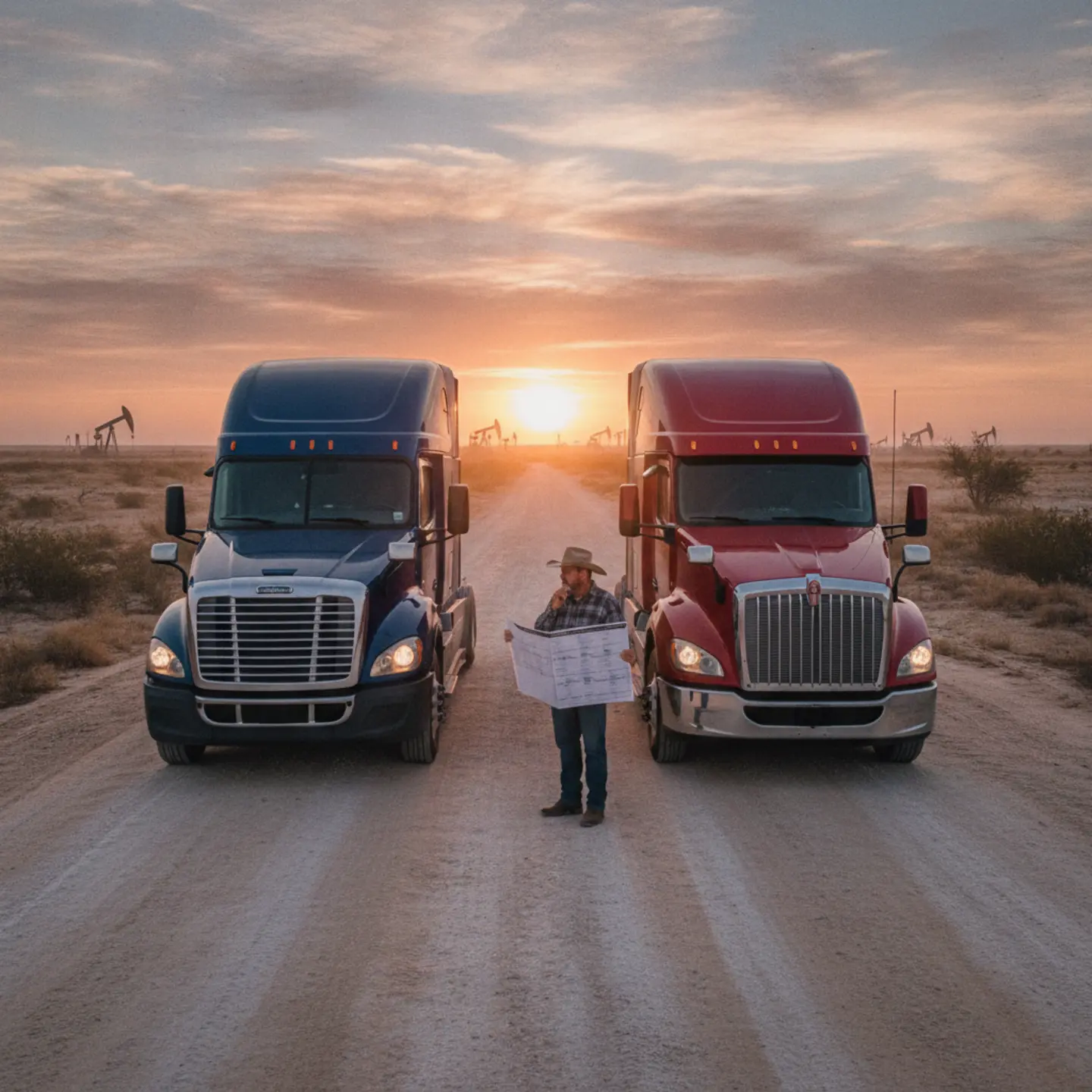
Renting a frac sand trailer from a carrier like Sisu Energy typically delivers better net take-home pay and far lower financial risk than buying or financing one. While ownership offers tax advantages and long-term equity potential, the hidden costs of maintenance, depreciation, downtime, and financing often outweigh those benefits — especially in a volatile market where a single equipment failure or market slowdown can wipe out months of savings. For most owner-operators, the math strongly favors renting.
Here’s what the real numbers show, and why the decision matters more now than ever.
Sisu Energy
100% Owner-Operator — You Never Compete With Company Trucks
Core Service Programs:
- Pneumatic Frac Sand Hauling for owner-operators running STX and PA/OH oilfield lanes
- Hopper Bottom Frac Sand Hauling for owner-operators across the Permian, West Texas, and South Texas
- Cement Hauling for owner-operators running Monday–Friday daytime lanes in North Texas and Houston
Why Choose Sisu Energy:
- ✓ 100% Owner-Operator fleet — you never compete with company trucks for loads
- ✓ 24/7 live human dispatch with a fair rotary load distribution system
- ✓ No escrow, no fuel card fees, and minimal deductions
- ✓ Weekly direct deposit, paid every Friday
- ✓ Fuel program with a 10–12% discount off market rate
- ✓ Fast, streamlined onboarding — no orientation required
The Weekly Cost Breakdown: Owning vs. Renting
The buy-vs-rent debate for frac sand trailers almost always comes down to one question: what does it actually cost you per week? Most owner-operators focus on the trailer payment and stop there. That’s where the math goes wrong.
Purchase Prices and Financing Reality
In the 2026 Texas market, new hopper bottom trailers run $65,000–$85,000; new pneumatic tankers push $90,000–$120,000+. Used equipment (1–3 years old) brings some relief — hopper bottoms at $50,000–$65,000, pneumatics at $75,000–$95,000 — but the financing terms often erase that advantage. Lenders typically require a 10–20% down payment, meaning you’re writing a check for $9,000–$24,000 before you turn a single wheel. Interest rates for owner-operators range from 9% to 20%+ depending on credit history and business tenure — and lenders view frac sand hauling as a high-risk, cyclical industry, so qualifying isn’t guaranteed.
Run a $72,000 loan at 12% over 60 months and your monthly payment lands at roughly $1,590 — or about $370/week. That’s your floor. Everything else is on top of it. For a deeper look at how truck financing compares, the finance vs. lease breakdown for oilfield semi trucks walks through the same logic on the cab side.
Full Ownership Cost per Week
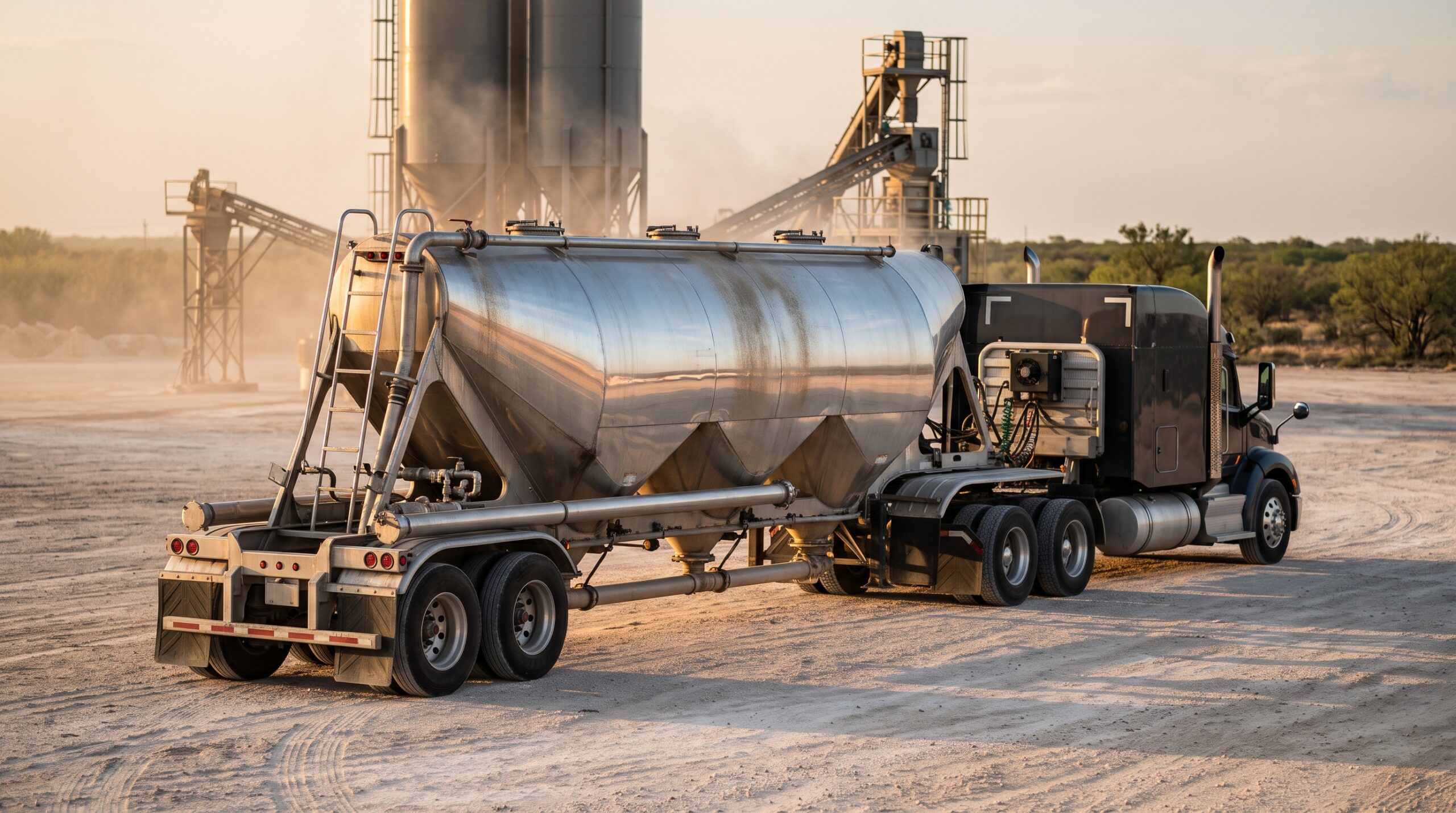
Stack the real costs of owning a financed pneumatic tanker and the weekly number gets uncomfortable fast. The trailer payment alone is around $370. Add physical damage insurance (~$50/week), a maintenance reserve for blowers, hoses, and vibrators (~$150/week), and a tires-and-brakes budget (~$75/week), and you’re at roughly $645/week before a single major repair hits. Hopper bottoms are simpler and cheaper to maintain, but the loan payment and insurance costs are nearly identical.
Rental Cost Comparison
Sisu Energy’s hopper bottom trailer rental in the WTX division runs $350/week — maintenance included, replacement trailer provided if yours goes down. That’s a $295/week difference versus owning, or roughly $15,340 per year — and that’s before accounting for any major repair events. The break-even on ownership requires near-100% utilization with zero catastrophic failures. In the real world, that never happens.
| Cost Item | Owned (Financed) | Rented (Sisu WTX) |
|---|---|---|
| Trailer Payment / Rental Fee | ~$370/week | $350/week |
| Physical Damage Insurance | ~$50/week | Carrier’s responsibility |
| Maintenance Reserve (Pneumatic) | ~$150/week | Included |
| Tires & Brakes | ~$75/week | Included |
| Total Weekly Cost | ~$645 (before major repairs) | $350 (all-in) |
| Annual Cost Difference | $15,340/year more to own — before any blower failure or major repair | |
The Hidden Risks of Equipment Ownership
The weekly cost comparison is just the starting point. The real danger of trailer ownership in frac sand hauling isn’t the predictable expenses — it’s the unpredictable ones that can end your business.
⚠ The Downtime Trap: One Week of Repairs Can Erase Months of SavingsA single major repair — blower failure, transmission issue — on an owned trailer can cost $10,000–$15,000 and sideline the equipment for weeks. In a market where you’re grossing $8,000–$11,000 per week, that’s two weeks of lost revenue plus the repair bill — wiping out months of “savings” from ownership.
Depreciation and Resale Volatility
Frac sand trailers are specialized assets — their value tracks oil prices almost directly. Equipment auction data from Ritchie Bros. shows value swings of 40%+ within a 12-month window during market downturns. When drilling activity slows, used trailers flood the secondary market and prices collapse. An owner-operator who financed a $90,000 pneumatic tanker at the top of the market can find themselves owing $65,000 on an asset worth $45,000 — negative equity with no exit. Renting eliminates this asset risk entirely.
Maintenance and Repair Catastrophes
Pneumatic tankers are the most demanding equipment in the frac sand fleet. The PTO-driven blower system is a high-wear, high-cost component — replacement runs $10,000–$15,000. Beyond the blower, hoses, valves, and vibrators need constant attention, adding hundreds of dollars per month in routine costs. Hopper bottoms are simpler, but suspension, gate, and brake work is still a recurring expense. A single catastrophic repair can wipe out two to three months of net income. That’s not a risk — it’s a near-certainty over a multi-year ownership period.
The Cost of Downtime
In a strong Permian Basin market, owner-operators can gross $8,000–$11,000 per week. One week of trailer downtime means $8,000–$11,000 in lost revenue — plus your fixed costs keep running. Trailer-related mechanical downtime conservatively accounts for two to four weeks per year on owned equipment. When you rent from Sisu, a replacement trailer is provided to keep you earning. That’s not a minor benefit — it’s the difference between a profitable year and a catastrophic one. For a full picture of what owner-operator frac sand hauling really nets out to, the numbers tell the story clearly.
Market Conditions and Utilization Reality in the Permian Basin
The 2026 Permian Basin market is genuinely strong. With WTI crude holding around $106/barrel — up approximately 72% year-over-year — E&P companies have maintained healthy completion budgets. The active frac spread count sits at approximately 106 crews as of early 2026, up both week-over-week and year-over-year. The Permian rig count is running 185–195 active rigs in Q2 2026. Global frac sand demand is projected to grow from $6.5B in 2026 to $9.5B by 2033 at a 5.7% CAGR. The market is real, and the opportunity is real.
But strong markets don’t stay strong forever — and the utilization assumptions baked into trailer ownership math are almost always too optimistic.
You’re Not Alone: Most New Owner-Operators Choose RentingSince the 2023–2025 downturn, an estimated 60–70% of new owner-operators entering the frac sand market now opt to rent rather than buy. This shift reflects hard-won lessons from operators who financed trailers only to face zero revenue when drilling activity slowed. Renting gives you the flexibility to scale up or exit the market without being trapped by equipment debt.
The Shift to In-Basin Sand and Short Hauls
In-basin sand mining in West Texas has dramatically shortened haul lengths. More turns per day means revenue depends more on efficiency and quick turnarounds than on mileage. This favors operators with well-maintained, reliable equipment — whether owned or rented. But it also means that any downtime hits harder, because you’re not making up lost time on a long haul. You’re simply missing loads. Understanding how the Permian Basin frac sand market works for owner-operators in 2026 is essential before committing to any equipment decision.
Lessons from the 2023–2025 Cycle
The 2023–2025 downturn was a masterclass in equipment risk. When oil prices dropped, drilling and completions halted almost overnight. Owner-operators with financed trailers faced $600+/week in payments with zero revenue to cover them. Many were forced to sell at steep losses or default entirely. Operators who rented walked away with minimal financial liability. That asymmetry — unlimited downside for owners, limited downside for renters — is the most important number in this entire comparison.
Regulatory, Compliance, and Liability Considerations
The financial risks of ownership get most of the attention, but the regulatory and legal burden is equally significant — and often underestimated by first-time buyers.
DOT and FMCSA Responsibility
When you own the trailer, you own the compliance obligation. Every federal and state inspection standard applies to your equipment, and a failed Level I inspection due to a trailer defect hits your record — not just your wallet. Downtime and costly repairs follow. When you rent from a carrier, DOT compliance for the fleet is the carrier’s responsibility. That’s a meaningful shift in both administrative burden and liability exposure. Sisu’s DOT compliance guide for frac sand owner-operators covers what this means in practice.
Permits, Taxes, and Insurance
Texas blanket overweight permits for county roads cost several hundred dollars per year — and as the trailer owner, that’s your bill. Physical damage insurance for an owned trailer runs approximately $50/week on top of your liability coverage. Note that for Sisu’s WTX and STX Hopper Bottom divisions, physical damage insurance is not required on customer-supplied trailers — but if you’re financing a trailer you own, your lender will require it regardless. When you rent, the carrier covers permits and insurance as part of the rental fee.
Accident Liability and Equipment Defects
This is the risk most owner-operators don’t think about until it’s too late. If your owned trailer’s defect — failed brakes, worn tires — contributes to an accident, the legal and financial liability lands squarely on you. That exposure can exceed your insurance coverage and reach your personal assets. When you rent, the carrier’s primary liability policy and insurance infrastructure cover equipment-related incidents. That’s not a small distinction — it’s the difference between a recoverable situation and a financially catastrophic one.
Trailer Rental, Leasing, and Ownership Options in the Texas Market
Not every arrangement is created equal. Understanding the full spectrum of options — and their trade-offs — is what separates operators who make sound decisions from those who learn the hard way.
Ask These Questions Before Renting or BuyingBefore committing to any trailer arrangement, ask: (1) Who covers routine maintenance like tires and brakes? (2) How quickly can I get a replacement if my trailer breaks down? (3) Is the weekly fee deducted even if the trailer is in the shop? (4) Are there hidden fees or charges? With Sisu, the answers are clear: Sisu covers maintenance, replacement trailers are provided, no deductions during downtime, and there are no hidden fees.
Carrier Rental Programs
Carrier rental programs — like Sisu’s $350/week WTX hopper bottom rental — are the lowest-risk entry point into frac sand hauling. The weekly flat rate is simple and predictable. Maintenance, tires, brakes, and repairs are the carrier’s responsibility. A replacement trailer is provided if yours goes down. For operators who want flexibility and want to minimize financial exposure, this is the cleanest structure available.
Third-Party Leasing Companies
Companies like XTRA Lease and local Texas lessors offer trailers, but they’re not integrated with your freight source. Maintenance responsibility varies by agreement — and you’re responsible for finding your own loads. Terms tend to be less flexible than carrier rentals, and the added complexity of managing a separate equipment relationship alongside your carrier relationship adds administrative overhead that most owner-operators don’t need.
Lease-to-Own and Financing Pitfalls
Lease-to-own agreements are among the most dangerous arrangements in trucking — and the oilfield version is no exception. These deals are typically structured to favor the lessor: high weekly payments, large balloon payments at the end, and full maintenance responsibility on the driver. Effective interest rates can exceed 15% when all costs are factored in, and walking away mid-agreement is often contractually difficult or financially punishing. Sisu does not offer lease-to-purchase. That’s a deliberate choice — straightforward weekly rental is a safer, more transparent option for owner-operators at every stage of their career. For context on how frac sand hauling rates and pay structures work across Texas, the numbers help frame what any equipment cost is actually eating into.
Why Sisu Energy is the Right Choice for Owner-Operators Weighing Trailer Ownership
Every risk outlined in this post — depreciation, downtime, catastrophic repairs, regulatory liability, market volatility — is a risk that Sisu’s rental structure eliminates or dramatically reduces. That’s not a coincidence. Sisu is built 100% Owner-Operator first, which means the business model only works if you’re profitable. There are zero company trucks at Sisu — no internal competition for loads, no carrier prioritizing its own equipment over yours.
Six hauling divisions across Texas and Pennsylvania/Ohio — STX Pneumatics, STX Hopper Bottom, WTX Bottom Drop, NTX Pneumatics, Houston Pneumatics, and PA/OH Pneumatics — let you pick the hauling type, region, and schedule that fits your life without leaving the company if your needs change. Trailer rental programs run $350/week, with maintenance, replacement equipment, and no hidden fees included. No escrow, weekly Friday direct deposit, and minimal deductions mean you keep what you earn. 24/7 live human dispatch with rotary load distribution means consistent, loaded miles — not an app-based lottery where the loudest driver wins.
The math in this post points in one direction. The market history from 2023–2025 points in the same direction. And Sisu’s structure is designed specifically to protect the operator who makes the financially sound call. Your success is our success — that’s not a slogan, it’s the operating model.
Join Our Pack and start earning with Sisu — take control of your future without the burden of equipment ownership.
Frequently Asked Questions
If I rent a trailer from the carrier, who is legally responsible for it if it’s damaged?
Typically, the rental agreement and the carrier’s insurance policies cover the trailer — and your weekly insurance deductions contribute to that coverage. You are responsible for reporting damage immediately and operating the equipment safely. However, negligent damage may still be charged back to the owner-operator depending on the specific agreement terms, so it’s worth reading the rental contract carefully before signing.
Can I make more money if I bring my own trailer to a carrier like Sisu?
Some carriers may offer a slightly higher revenue split if you bring your own trailer, but it rarely offsets the full cost and risk of ownership. When you factor in trailer payments (~$370/week), maintenance, insurance, and downtime risk, the net take-home is often lower and far less predictable than renting from the carrier. The $295/week apparent savings from ownership disappears quickly once a single major repair hits.
What happens if the carrier I’m renting from loses their contract or runs out of work?
This is one of the most significant advantages of renting. If you’re renting from a carrier and work slows down, you can terminate your agreement and walk away with no further financial obligation for the trailer. If you owned the trailer, you’d be stuck with a $370+/week payment on a parked, non-revenue-generating asset — exactly the situation that forced many operators into default during the 2023–2025 downturn. Renting gives you an exit; ownership doesn’t.
How does owning a trailer affect my taxes compared to renting?
When you own, you can deduct interest payments and depreciate the trailer’s value over several years — significant tax advantages on paper. When you rent, the weekly rental fee is a straightforward business expense deduction with no depreciation schedules to manage. Consult a tax professional for your specific situation, but many owner-operators find the simplicity and predictability of a rental deduction preferable to navigating multi-year depreciation schedules. For a broader look at taxes and deductions for frac sand owner-operators, the IFTA and quarterly filing guide covers the key considerations.
Why should I choose Sisu Energy over buying my own trailer or renting from a third-party lessor?
Sisu is built 100% Owner-Operator first — your success is our success, and that’s not marketing language, it’s the operating model. Unlike third-party lessors, Sisu integrates your trailer rental with consistent, loaded freight, 24/7 live human dispatch, and zero escrow. You get financial predictability ($350/week with maintenance included) without the ownership risks of depreciation, catastrophic repairs, or downtime liability. Six divisions across Texas and PA/OH mean you can switch hauling types or regions without leaving the company. Apply Today with Sisu Energy and eliminate the trailer ownership risk from your business equation.
Ready to Haul Frac Sand Without the Trailer Ownership Risk?
The math is clear — renting a trailer from Sisu puts more money in your pocket every week and keeps you protected when the market shifts. No $600/week payments on a parked trailer, no $15,000 blower bills, no depreciation trap. Just loaded miles, weekly direct deposit, and a Pack that’s built around your success.
*Sisu Energy LLC contracts exclusively with independent Owner-Operators. Earnings vary by division, miles, fuel costs, and individual business factors, and no specific income is guaranteed. Programs, lease rates, and requirements are subject to change. Please contact Sisu Energy directly for current opportunities and division details.