Owner-Operator Frac Sand Hauling in Texas 2026: Rates, Costs & Real Take-Home Pay
Gross revenue of $8,000–$11,000 per week hauling frac sand in the Permian Basin. That number is real — and it’s what gets Owner-Operators interested. Here’s the number that doesn’t make the recruiting ads: after fuel, truck payments, insurance, maintenance reserves, permits, and carrier deductions, the actual take-home for an experienced Owner-Operator lands closer to $2,900–$5,900 per week.
Most Owner-Operators don’t know where their money actually goes — and that costs them thousands annually. This guide strips away the mystery. Real rates, real costs, real take-home. No hype, no vague promises. If you’re evaluating frac sand hauling as a business — or you’re already hauling and wondering why the math doesn’t add up — this is the breakdown you need.
Key Takeaways
- Owner-Operators in the Permian can gross $8,000–$11,000/week — but net take-home after all expenses typically lands at $2,900–$5,900/week
- Fixed weekly costs (truck payment, insurance, permits, carrier deductions, maintenance reserve) total approximately $1,879/week before fuel
- Fuel discount programs can save $130–$478/week — that’s up to $24,856 annually in additional net income
- Uncompensated detention is the #1 hidden income leak — drivers lose $5,000–$15,000+ annually from unpaid wait time
- The Permian Basin has ~335 active rigs and 35–40 active frac spreads consuming 100,000–130,000 tons of sand weekly (May 2026)
- Carrier selection is one of the most consequential decisions you’ll make — transparent pay structures, clear detention policies, and fuel programs directly determine your bottom line
What Owner-Operators Actually Earn Hauling Frac Sand in Texas (Real Numbers)
The gross revenue potential in frac sand hauling is real. What separates informed Owner-Operators from the ones who burn out after six months is understanding the full picture — not just the top line. Let’s start with current market rates, then walk through every dollar that comes out before you see your take-home.
Bottom Drop tanker rates in Q2 2026 (per DAT Freight & Analytics) break down by haul distance:
- Short haul (<50 miles): $300–$450/load
- Mid haul (50–150 miles): $450–$650/load
- Long haul (>150 miles): $750–$1,000+/load
A moderate week — 15 loads at mid-haul rates averaging $550/load — generates roughly $8,250 gross. A strong week with 20 loads pushes toward $11,000 gross. Those are real numbers. The question is what’s left after costs.
Sisu’s Owner-Operator-first model is built around maximizing the gap between gross revenue and deductions — because the only number that matters to your business is what hits your bank account on Friday. That starts with knowing exactly what you’re paying and why.
Gross Revenue Potential: Pneumatic vs. Hopper Bottom
Hopper bottom rates run $50–$125/load lower than pneumatic for the same haul distance. That premium isn’t arbitrary — pneumatic tankers require specialized blower equipment, precise loading and unloading procedures, and meticulous cleaning protocols to prevent contamination. The higher rates reflect real operational complexity and skill demand.
Hopper bottom offers a lower barrier to entry — simpler operation, lower upfront equipment costs, and less stringent cleaning requirements. For drivers new to oilfield hauling or those prioritizing operational simplicity, hopper bottom is a legitimate path. For experienced drivers chasing maximum earnings, pneumatic is the play. We’ll break down this decision in detail later in this guide.
You’re Right to Question the Numbers
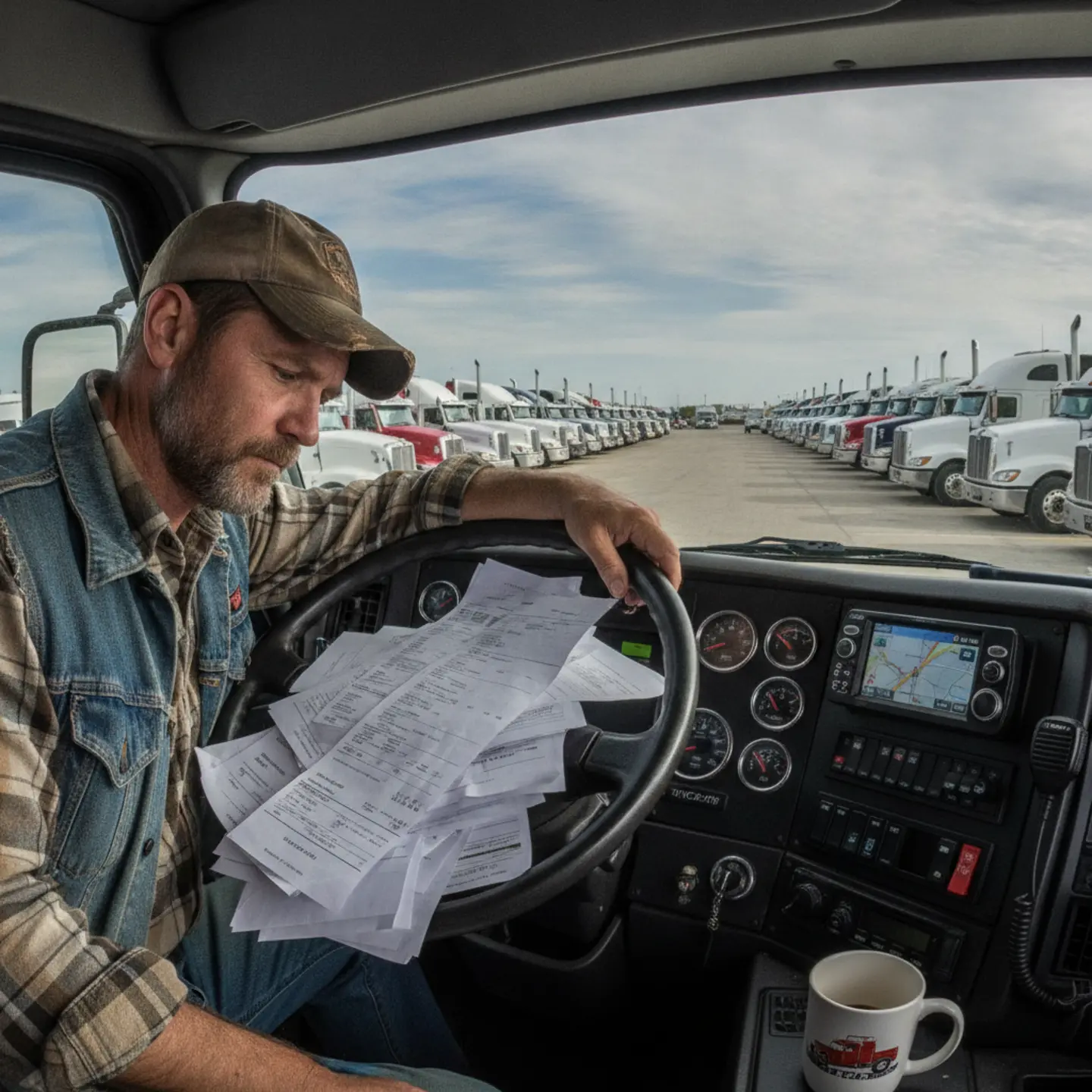
Most Owner-Operators don’t get a clear breakdown of their actual take-home pay — carriers often hide deductions or make detention pay hard to track. This post exists because you deserve transparency. Your business depends on knowing exactly where your money goes.
The Real Weekly Cost Breakdown (Financed O-O, Pneumatic, West Texas)
Here’s what a financed Owner-Operator running a pneumatic tanker in West Texas actually pays each week before fuel:
| Cost Category | Weekly Cost |
|---|---|
| Truck payment (financed) | $600 |
| Trailer rental (standard) | $350 |
| Insurance (full coverage) | $150 |
| Maintenance reserve | $250 |
| Permits (prorated annual) | $50 |
| PPE / miscellaneous | $150 |
| Carrier deductions (liability, accidental, dispatch, cargo, Motive app) | $379 |
| Total fixed weekly costs (excluding fuel) | ~$1,879 |
Add fuel on top of that — which we’ll cover in the next section — and you can see why the gap between gross and net is so significant. Knowing these numbers cold is what separates Owner-Operators who build wealth from those who just stay busy.
Fuel Costs & the Diesel Price Reality for Frac Sand Haulers
Fuel is your largest variable cost — and in West Texas, it’s the number that can make or break a week. As of May 2026, retail diesel in the Texas/Gulf Coast region sits at approximately $5.50/gallon, up roughly 2% over the prior 30 days (U.S. Energy Information Administration, May 2026). That number matters more to your bottom line than almost anything else.
At 6.5 MPG over a typical 2,500-mile week, you’re burning through roughly 385 gallons. At retail, that’s $2,118 in fuel costs before any discounts. Over a heavier week with more miles, that number climbs toward $3,000+. Fuel isn’t a line item you can ignore — it’s the variable that determines whether a decent week becomes a good one.
WTI crude oil is trading around $78/barrel as of May 7th, 2026 (EIA). That’s a stable price point that supports current diesel pricing. Significant drops below $70/barrel would ease fuel pressure; spikes above $85 would tighten margins further. For now, the market is predictable enough to plan around — but you need a fuel strategy, not just a fuel budget. Understanding retail-minus vs. cost-plus fuel pricing structures is essential for evaluating any carrier’s fuel program.
How Fuel Discounts Impact Your Bottom Line
A 10–12% discount on $5.50/gallon diesel saves $0.55–$0.66 per gallon, bringing your effective price to approximately $4.84–$4.95/gallon. That might not sound like much per gallon — but over a week, it’s a different story.
At 2,500 miles and 6.5 MPG, a fuel discount program saves you $130–$478 per week compared to paying retail. Annualized, that’s $6,760–$24,856 in additional net income — money that stays in your pocket instead of going to the fuel pump. That’s not a rounding error. That’s a material difference in your annual take-home.
Sisu’s fuel card program delivers a 10–12% average discount on diesel, applied via fuel card with no hidden fees. When you’re evaluating carriers, ask specifically how their fuel discount is calculated, where it applies, and whether there are any conditions that reduce the effective discount. Vague answers on fuel programs are a red flag.
Detention Pay: The Hidden Income Leak Most Drivers Don’t Track
If fuel is your largest variable cost, uncompensated detention is your largest hidden income leak. The math is brutal: a driver running 5 loads per week with 4 hours of unpaid detention per load — 20 hours total — loses $1,500–$2,000 in potential gross revenue every single week. That’s $78,000–$104,000 annually in earnings that should be yours but never show up in your paycheck.
Industry norms say 1–2 hours of free time at a wellsite is reasonable. Four or more hours indicates operational problems — and you shouldn’t be absorbing that cost. Average wait times at frac wellsites run 3–6 hours per load, with some exceeding 8–10 hours during peak completion activity. According to driver surveys and FreightWaves investigative reporting (May 2026), an estimated 40–50% of drivers are not paid for all or a significant portion of their detention time.
Fair detention pay is $75–$100/hour after the free time window. The annual income loss from uncompensated detention runs $5,000–$15,000+ per Owner-Operator — money that disappears not because the work wasn’t done, but because drivers don’t track it and carriers don’t enforce it. Working with carriers with transparent detention policies who actually bill and collect that time is one of the highest-leverage decisions you can make for your business.
Pro Tip: Track Detention Like Your Paycheck Depends On It
Uncompensated detention is the #1 income leak for frac sand haulers. Log every minute of wait time — arrival time, start of loading, end of loading, departure time — and demand payment. A single week of unpaid detention can cost you $1,500–$2,000 in lost earnings. That’s real money that belongs to you.
If you’re tired of losing money to uncompensated detention and hidden deductions, that’s exactly what Sisu’s transparent pay structure is designed to address. Drivers who lease with Sisu know exactly what they’re earning and what they’re paying — no surprises.
Permian Basin & Eagle Ford Market Conditions (Q2 2026)
Before you commit to frac sand hauling, you need to understand the market you’re entering. The fundamentals in Q2 2026 are solid — here’s what the data actually shows.
Permian Basin: Approximately 335 active rigs as of May 2026 (Baker Hughes), up slightly from May 2025. The Midland sub-basin accounts for roughly 200 rigs; the Delaware sub-basin holds around 135. With 35–40 active frac spreads, the Permian is consuming an estimated 100,000–130,000 tons of sand weekly. That’s a massive, consistent demand base for carriers and Owner-Operators operating in the basin.
Eagle Ford Shale: Approximately 85 active rigs as of May 2026, stable year-over-year. With 10–15 active frac spreads, the Eagle Ford consumes 20,000–30,000 tons of sand weekly. High-demand corridors include the Laredo area and San Antonio access routes into the basin. Sisu’s service areas across STX, WTX, and NTX are specifically aligned with these high-activity zones, giving drivers in each division consistent load flow.
Texas accounts for over 60% of total U.S. frac sand consumption (Rystad Energy, S&P Global Commodity Insights, May 2026 projections), with the Permian alone projected to consume 25–30 million tons annually in 2025–2026. In-basin sand development near Kermit/Winkler County has reduced long-haul demand from outside Texas, but it’s created consistent regional hauling lanes that are well-suited to Owner-Operators running shorter, higher-turn routes.
Why Stable Crude Prices Matter to Your Load Availability
WTI crude at $78/barrel (May 2026) keeps operator capital expenditure budgets stable. Major E&P companies — ExxonMobil (via Pioneer), Chevron, Diamondback Energy — are maintaining steady investment in development drilling and completions. The chain is direct: stable crude = stable completion schedules = consistent frac sand demand = reliable load flow for Owner-Operators.
Significant drops below $70/barrel would trigger spending cuts and tighten load availability. That’s not the current situation — and industry analysts aren’t projecting it for the remainder of 2026. The carrier market for specialized pneumatic equipment is currently balanced to slightly capacity-constrained, particularly during peak completion periods. That’s good news for Owner-Operators with the right equipment and certifications. For a deeper look at whether the current market makes frac sand hauling a sound business decision, see our analysis on whether frac sand hauling is worth it in 2026.
Pneumatic vs. Hopper Bottom: Which Hauling Type Fits Your Business?
Equipment choice is a business decision, not just a preference. It determines your earning potential, your operating costs, your skill requirements, and your daily workload. Here’s the honest comparison.
Why Pneumatic Tankers Cost More (And Earn More)
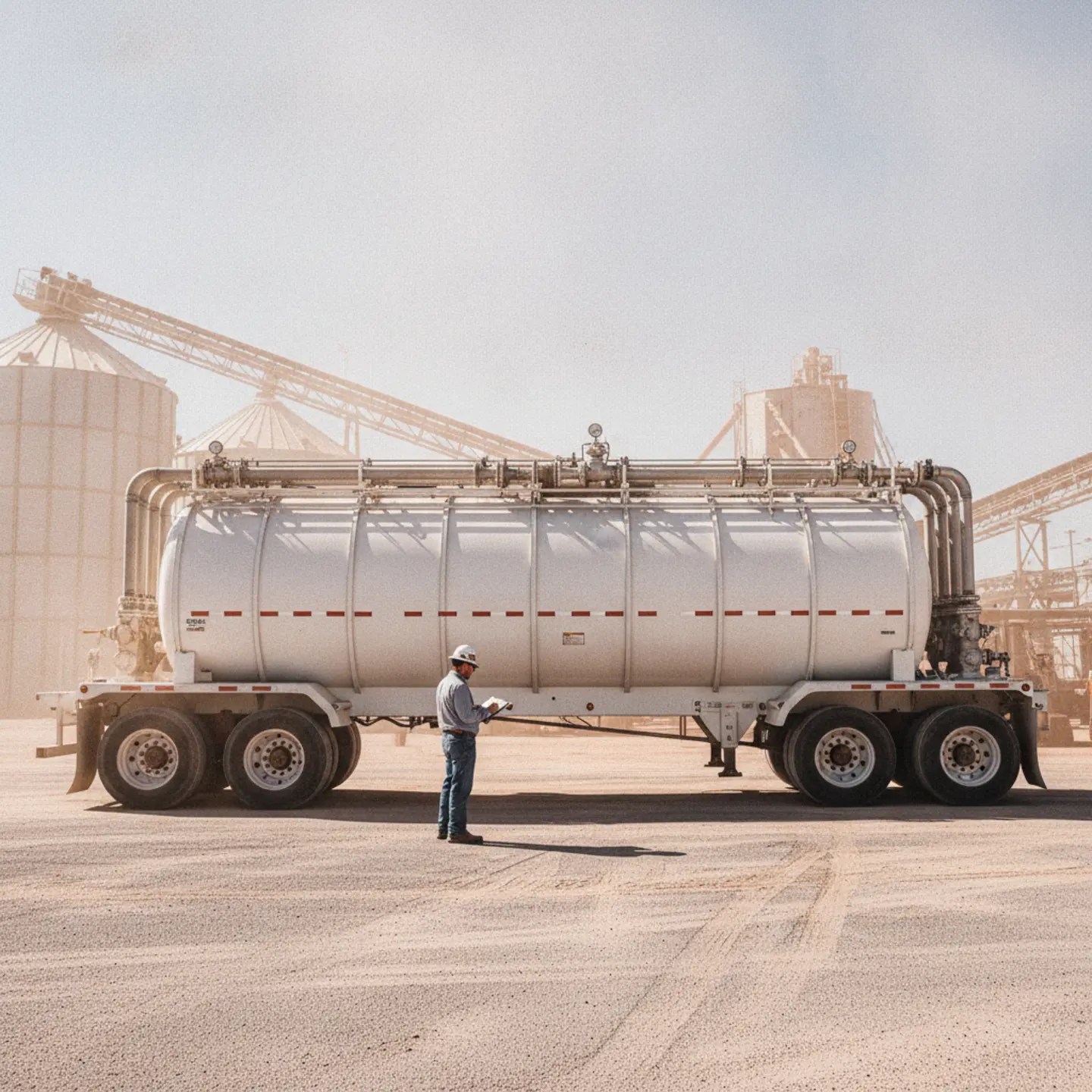
Pneumatic tankers command $50–$125/load premiums because they require specialized blower equipment, precise loading and unloading operation, and meticulous cleaning protocols to prevent sand contamination. The higher rates reflect real complexity — but they also mean higher earning potential for skilled, disciplined drivers.
Sisu’s STX Pneumatics and STX Hopper Bottom divisions give drivers the ability to choose the hauling type that matches their skills and goals — without having to leave the carrier when their needs change. That flexibility matters more than most drivers realize when they’re first starting out. For a detailed side-by-side comparison, our guide on bottom drop vs. pneumatic frac sand hauling covers the full trade-off analysis.
Pneumatic Tanker: Higher Earning Potential, Higher Complexity
Pneumatic tankers earn 15–25% more per load than hopper bottom peers — and that premium compounds across a week. On a 15-load week, the difference between pneumatic and hopper bottom rates can mean $750–$1,875 in additional gross revenue. Over a year, that’s a significant income difference.
The trade-offs are real, though. Blower operation requires hands-on training and skill — you can’t fake it at a wellsite. Cleaning protocols are strict: contamination fines can exceed $500 per incident, and E&P operators enforce them without mercy. Rough lease roads accelerate wear on pneumatic equipment more aggressively than on hopper bottom trailers. Maintenance costs are higher, and a major blower failure can cost $2,000–$5,000 and sideline you for days.
For experienced drivers who can manage the operational demands, the earning potential justifies the complexity. For drivers new to oilfield hauling, the learning curve is real — and the cost of mistakes is steep.
Hopper Bottom: Simplicity and Accessibility
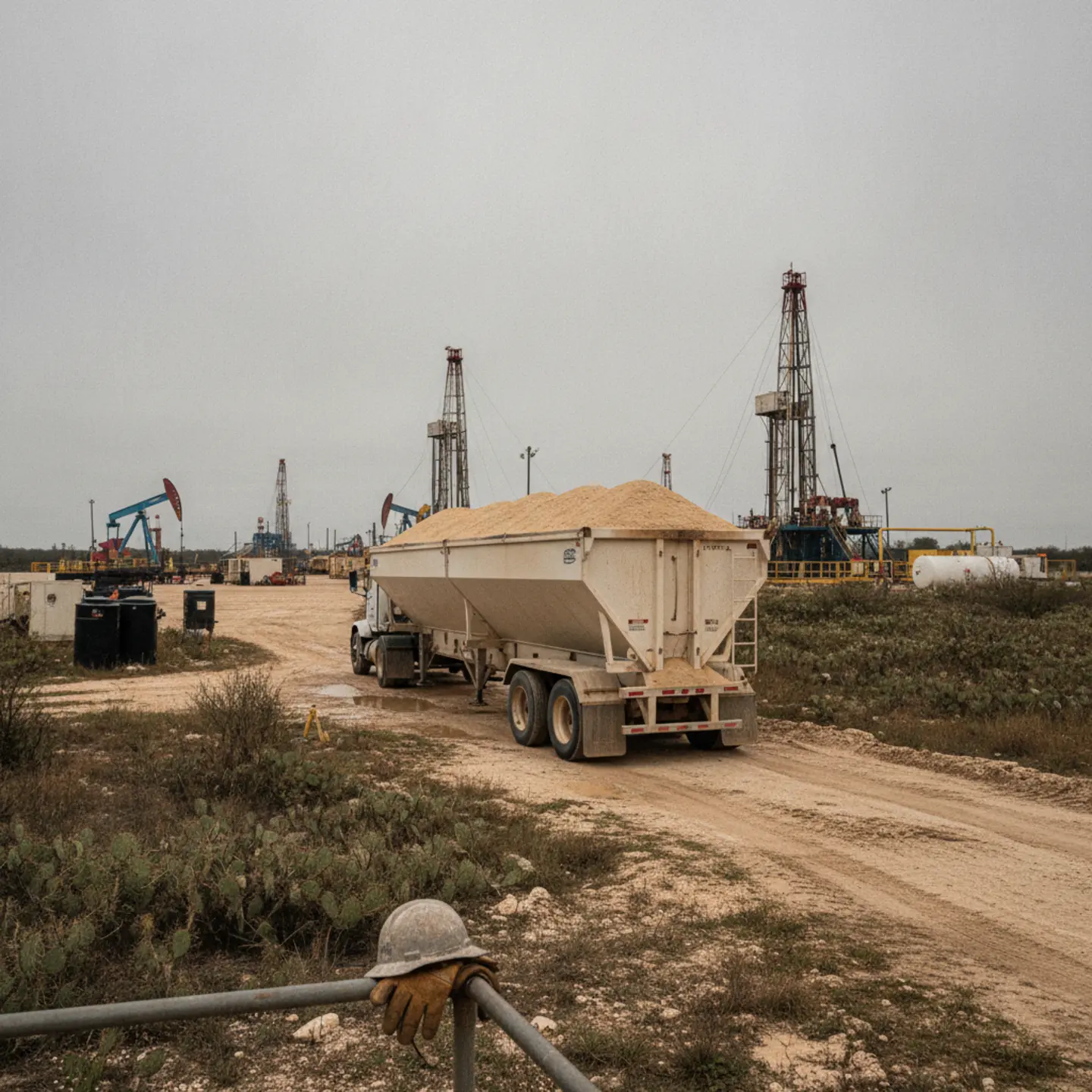
Hopper bottom hauling uses gravity-fed loading and unloading — straightforward, predictable, and far less technically demanding than pneumatic. Loading and unloading is faster, cleaning requirements are less stringent, and the maintenance profile is simpler. For drivers who are new to oilfield hauling or who want to reduce operational complexity, hopper bottom is a legitimate and profitable path.
The lower rates are a real trade-off — pneumatic Owner-Operators can net $200–$400/week more than hopper bottom peers, all else equal. But simpler operations can reduce downtime, lower frustration, and make the job more sustainable over the long haul. For drivers entering the oilfield hauling market, hopper bottom is often the right starting point — with a clear path to pneumatic once you have the experience and equipment to justify the jump.
Certifications, Licenses & Regulatory Requirements You Can’t Skip
The regulatory and certification landscape for frac sand hauling in Texas is non-negotiable. E&P operators and service companies enforce these requirements at the gate — no certification, no access, no load. Here’s exactly what you need before you can turn a wheel on an oilfield job site.
- CDL (Class A) with air brake endorsement: Mandatory for all commercial hauling. Non-negotiable.
- PEC/Safeland certification: Required for oilfield site access in the Permian and Eagle Ford. Approximately $200, one-time cost. Without this, you cannot haul frac sand — period.
- H2S Awareness: Required annually. Approximately $20/year.
- Respiratory Fit Test: Required annually. Approximately $30–$50/year.
- FMCSA USDOT number and Operating Authority (MC number): Required for independent Owner-Operators. Lease O-Os operate under the carrier’s authority.
- ELD (Electronic Logging Device): Required for most operations. Exemption available for 1999-or-older trucks or qualifying 150 air-mile short-haul operations.
- Texas oversize/overweight permits: Required for operations above 80,000 lbs GVW on certain county roads and oilfield service roads. Permian Basin counties — Midland, Ector, Reeves, Ward, Loving — often have specific requirements.
- Drug screen, MVR, PSP, Clearinghouse query: Standard pre-employment screening. Approximately $150–$200 total.
Total initial certification outlay: approximately $575–$625 (excluding truck and trailer purchase). That’s a manageable investment — but you need to budget for it before your first load, not after.
Oilfield-Specific Certifications: PEC, H2S, and Fit Testing
PEC/Safeland is the gateway to oilfield site access. Without it, you will be turned away at the gate — no exceptions. The certification covers oilfield safety fundamentals and is recognized across the Permian Basin and Eagle Ford. Budget approximately $200 for the initial course.
H2S Awareness and Respiratory Fit Test are annual renewals — budget $50–$70/year for both. These are not optional. E&P operators and service companies check these certifications at every site visit, and expired certs mean you’re not getting on location. Build the renewal dates into your business calendar.
FMCSA Compliance: Authority, ELDs, and Safety Ratings
Lease Owner-Operators operate under the carrier’s USDOT/MC authority — which means the carrier’s safety rating and CSA scores directly affect your ability to work. Before signing a lease, verify the carrier’s status at safer.fmcsa.dot.gov. Look for a “Satisfactory” safety rating and low BASIC scores across the seven compliance categories. High CSA scores in Unsafe Driving or HOS Compliance are red flags that indicate operational problems.
The ELD mandate applies to most frac sand hauling operations. Verify your exemption eligibility with your carrier before assuming you qualify for the short-haul or older-truck exemptions. Sisu’s streamlined onboarding process handles ELD integration through Motive, compliance support, and safety documentation — so drivers can start hauling within days rather than weeks.
The regulatory landscape can feel overwhelming, but carriers like Sisu handle the compliance heavy lifting — ELD integration, safety support, and streamlined onboarding — so you can focus on running your business.
How to Find and Evaluate Frac Sand Carriers: Red Flags & Green Lights
Your carrier partner is one of the most consequential decisions you’ll make as an Owner-Operator. The wrong carrier costs you thousands per month in hidden fees, missed detention pay, and inconsistent loads. The right carrier amplifies your earnings and treats you like a business partner, not a number. Here’s how to tell the difference.
Start with reputation research. Reddit’s r/Truckers and r/oilfield communities are the most honest sources of carrier feedback you’ll find — drivers don’t pull punches when they’re posting anonymously. TheTruckersReport.com forums are another strong source. Ask other drivers in the area who they’re running with and why. Referral networks are the most trusted signal in this industry.
Verify FMCSA credentials. Every carrier you evaluate should have an active USDOT/MC number with a “Satisfactory” safety rating. Check it at safer.fmcsa.dot.gov — takes 60 seconds and tells you a lot. Request Certificates of Insurance showing $1M+ primary liability, cargo coverage, and non-trucking liability. A carrier that hesitates to provide these documents is a carrier you should walk away from.
Sisu’s transparent pay structure and 24/7 live dispatch represent what the Owner-Operator-first model actually looks like in practice — clear splits, itemized deductions, enforceable detention policies, and a human being on the phone when you need help at 2 AM on a West Texas lease road.
Predatory Practices to Avoid
Red Flag: Carriers That Won’t Discuss Detention Pay
If a carrier dodges your questions about detention policy or says “it depends,” walk away. Responsible carriers have clear detention policies with specific hourly rates and billing processes — and they enforce them consistently. Vague answers on detention mean you’ll likely lose thousands in unpaid wait time.
The predatory practices that cost Owner-Operators the most money are often the hardest to spot before you sign:
- Hidden deductions: Charges for services not rendered, or legitimate services billed at inflated rates. Ask for a complete, itemized deduction list before signing anything.
- Escrow abuse: Large escrow requirements that are difficult to reclaim upon termination. Legitimate carriers don’t need to hold your money hostage.
- Load stacking: Assigning the same load to multiple drivers, creating confusion and wasted time. Ask specifically how loads are assigned and whether there are any duplicate assignment issues.
- Misleading fuel programs: Advertising large discounts that are rarely achieved in practice, or applying discounts only at specific locations that are inconvenient for your routes.
- Poor detention enforcement: Failing to bill or collect detention pay, effectively making you absorb all wait time costs. This is the most common and costly predatory practice in frac sand hauling.
Questions to Ask Before Signing a Lease
These are the specific questions that separate good carriers from bad ones. Any carrier worth working with will answer all of them directly and without hesitation:
- “What is your exact percentage split for pneumatic/hopper bottom hauling in the Permian/Eagle Ford?”
- “What are your specific detention pay policies — free time window, hourly rate, and billing process?”
- “Can you provide a complete, itemized list of all weekly, one-time, and annual deductions?”
- “What is the average weekly mileage and number of loads for drivers in this division?”
- “How does your fuel program work? What’s the average discount and how is it applied?”
- “How are loads assigned — seniority-based, first-come-first-served, or dispatcher discretion?”
- “What are the terms for ending the lease agreement?”
Ready to find a carrier that respects your business and pays fairly? Sisu’s Owner-Operator-first model, transparent splits, and 24/7 live dispatch are built on the principles outlined in this guide.
Explore what it means to join a carrier that puts your success first.
Top Frac Sand Hauling Carriers in the Permian Basin & Eagle Ford: Compared and Reviewed
The Permian Basin and Eagle Ford carrier landscape ranges from large national logistics providers to regional specialists to Owner-Operator-focused fleets. Each model has real trade-offs. Here’s an honest look at what’s available and how the major carrier types compare on the factors that actually matter to your business. For additional context on how the broader market shakes out, our guide to the best frac sand carriers in Texas covers the full competitive landscape.
Sisu Energy LLC — All-Pneumatic, Owner-Operator-First
Address: 2400 Handley Ederville Rd Ste 200, Fort Worth, TX 76118
Business model: 100% Owner-Operator fleet — no company trucks, no internal competition for loads. Every load goes to an Owner-Operator.
Service areas: STX (South Texas), WTX (West Texas/Permian), NTX (North Texas), SETX (Southeast Texas), PA/OH
Divisions: Sisu’s four specialized divisions — STX Pneumatics (oilfield experience required, blower required), STX Hopper Bottom (no oilfield experience needed, $210/wk trailer lease), WTX Hopper Bottom (Permian to NM border, wet/dry sand, $350/wk lease), NTX Pneumatic (Mon–Fri daytime, weekends off, ~$5K/wk average take-home)
Pay structure: 80/20–90/10 splits depending on division and tenure. Transparent, itemized deduction list. No escrow. Weekly direct deposit.
Fuel program: 10–12% discount on diesel, applied via fuel card with no hidden fees.
Dispatch: 24/7 live human dispatch — not app-based. Motive ELD integration for compliance. Real people, real answers, real support.
Onboarding: Streamlined email-based process. Decals overnighted upon clearance. Field inspection and road test near staging area. Drivers can start within days.
Driver feedback: Strong reputation on Reddit (r/Truckers, r/oilfield) for fair treatment, consistent loads, and transparent operations. Positive driver testimonials on pay transparency and dispatch responsiveness. Described as the fastest-growing all-pneumatic frac sand hauling company in the country.
Regional Competitor — Established Presence, Mixed Model
Business model: Mix of company drivers and Owner-Operators. Internal competition for loads — company trucks get priority on the best runs in some divisions.
Service areas: Primarily Permian Basin and Eagle Ford. Established regional presence with multiple staging locations.
Pay structure: 75/25–80/20 splits. Deductions vary by division and are not always clearly communicated upfront. Escrow requirements reported by some drivers.
Fuel program: Fuel discount available, but terms are less transparent than Sisu. Effective discount varies significantly by location.
Dispatch: Dispatch team available during business hours. Some drivers report load delays and difficulty reaching dispatch after hours.
Onboarding: Standard process, typically 1–2 weeks to start hauling.
Driver feedback: Mixed reviews. Some drivers praise consistency and regional expertise. Others cite hidden fees, inconsistent deduction explanations, and slow dispatch response as ongoing frustrations.
National Logistics Provider — Large Fleet, Standardized Operations
Business model: Large national fleet, primarily company drivers with some Owner-Operator leases. Multi-basin coverage provides flexibility but less regional specialization.
Service areas: Multi-basin (Permian, Eagle Ford, Bakken, DJ Basin). Useful for drivers willing to relocate or run multiple basins.
Pay structure: Standardized splits (70/30–75/25). Centralized deduction processing. Escrow is standard. Less flexibility for negotiation.
Fuel program: Corporate fuel discount applied at major chains. Less personalized than carrier-specific programs.
Dispatch: Centralized, app-based load assignment. Less personal interaction. Some drivers report feeling disconnected from dispatch.
Onboarding: Formal process, typically 2–3 weeks.
Driver feedback: Generally positive for stability and multi-basin flexibility. Common complaint: drivers feel like a number, not a business partner. Detention pay enforcement is inconsistent across divisions.
Maximizing Your Take-Home: Cost Management & Efficiency Strategies
Knowing the numbers is step one. Acting on them is what separates Owner-Operators who build sustainable businesses from those who grind hard and still wonder where the money went. Here are the highest-leverage strategies for maximizing your net take-home in frac sand hauling.
Preventive Maintenance: The Best Investment You Can Make
A single blower failure can cost $2,000–$5,000 and sideline you for days — losing you $4,500–$5,500 in gross revenue per week of downtime (based on industry benchmarks, May 2026). Regular preventive maintenance — oil changes, tire rotations, blower servicing, brake inspections — costs $500–$1,000 per year but prevents catastrophic failures that cost multiples of that.
Rough lease roads in the Permian are particularly hard on suspension components and tires. Budget extra for these wear items in oilfield operations — they’ll cost you more than they would on highway freight. Sisu’s maintenance support and equipment standards are designed to help Owner-Operators stay on the road and out of the shop.
Detention Tracking: Document Everything
Keep a log of every load: arrival time, start of loading, end of loading, departure time. Calculate your unpaid detention hours weekly and follow up with dispatch. Don’t let it accumulate — address it load by load, week by week. If your carrier refuses to enforce detention billing or tells you it’s “just part of the job,” that’s a red flag worth acting on.
Demand fair detention pay — $75–$100/hour after the free time window. If a carrier won’t back you up on detention, they’re effectively capping your earnings. For a deeper look at how load rates and turns affect your overall income, our analysis on load rates vs. turns in frac sand hauling breaks down the math in detail.
Additional efficiency strategies that move the needle:
- Fuel efficiency: Monitor your MPG, avoid excessive idling, maintain proper tire pressure, and leverage every available fuel discount. Small improvements compound significantly over a year.
- Load selection: Prioritize loads with fair detention policies and predictable haul distances. Avoid low-rate loads that don’t justify fuel and wear costs.
- Route optimization: Understand basin geography, minimize deadhead miles, and plan loads to reduce empty returns. Even a 5% improvement in deadhead can add $500+ to your weekly net.
- Escrow management: Avoid carriers requiring large escrows. Prioritize carriers with weekly direct deposit and minimal deductions — your cash flow depends on it.
The Owner-Operator Mindset: Building Your Frac Sand Hauling Business for Long-Term Success
The biggest shift you can make — and the one that separates drivers who thrive from those who just survive — is treating your operation as a business, not a job. You own a capital asset. You have operating costs, revenue streams, and profit margins. Every decision you make is a business decision.
Know your unit economics cold: gross revenue per load, fuel cost per mile, fixed costs per week, net take-home per load. When you know these numbers, you can evaluate every carrier offer, every load, and every route from a position of informed strength — not guesswork. Real Owner-Operator frac sand hauling numbers are the foundation of every smart business decision you’ll make in this industry.
Build Your Business Like a Business Owner
Set aside 25–30% of your net income for taxes, maintain a 3–6 month maintenance reserve, and keep an emergency fund covering 2–3 weeks of operating costs. Treat your truck as a capital asset, not a paycheck. This mindset is the difference between surviving a bad week and being sidelined by it.
Build financial reserves with discipline:
- Maintenance fund: 3–6 months of expected repair costs. A major breakdown without reserves means debt or downtime — both of which hurt your business.
- Emergency fund: 2–3 weeks of operating costs. Markets slow down. Trucks break. Weather happens. Reserves are what keep you running when things go sideways.
- Tax reserve: 25–30% of net income. Owner-Operators pay self-employment tax plus income tax. Quarterly estimated payments are not optional — the IRS doesn’t negotiate.
Negotiate from a position of strength. You know your market rates. You understand your costs. You’ve done the research. Don’t accept unfair terms because you need to start quickly — a bad carrier relationship costs you more in the first month than taking an extra week to find the right one.
Build your reputation. Safety, reliability, and professionalism are your competitive advantages in this market. They lead to better loads, higher rates, and the kind of dispatch relationships that get you the first call when a premium run opens up. Sisu’s “Your success is our success” philosophy is built on exactly this alignment — when drivers succeed, the carrier succeeds. No internal competition, transparent operations, and driver-first decisions aren’t just marketing language. They’re the operating model.
The median annual net income for Owner-Operators in oilfield specialty hauling (Permian pneumatic) runs $80,000–$110,000 after all expenses and taxes, with top-quartile earners exceeding $130,000+ (OOIDA Owner-Operator Income Study, FreightWaves O-O benchmarks, May 2026). That’s a real business income — not a wage. Build it like one.
Frequently Asked Questions: Frac Sand Hauling for Owner-Operators
How much does an Owner-Operator hauling frac sand in the Permian actually take home each week?
After covering all operating expenses — fuel, maintenance, insurance, permits, and carrier fees — experienced pneumatic tanker Owner-Operators in the Permian can typically net $1,800–$2,500 per week. This figure varies significantly based on load volume, haul distance, efficiency, and how well detention pay is tracked and collected. Consistent performance and diligent cost management are the two variables most within your control — and they’re the ones that determine whether you’re at the bottom or top of that range.
What’s the real difference between hauling frac sand with a pneumatic tanker versus a hopper bottom trailer for an Owner-Operator?
Pneumatic tankers generally offer $50–$125 more per load due to specialized equipment requirements and the skill needed to operate blowers and maintain contamination-free cleaning protocols. Hopper bottoms are simpler to operate, have lower maintenance demands, and offer a more accessible entry point for drivers new to oilfield hauling. The choice comes down to your comfort with complex equipment, your appetite for higher earnings, and your upfront investment capacity — there’s no universally right answer, but there is a right answer for your specific situation.
Is hauling frac sand worth the high costs and hard work compared to regular trucking?
Frac sand hauling offers higher gross revenue potential than most OTR segments — but operating costs are significantly higher, the work is physically demanding, and oilfield site conditions add complexity that highway freight doesn’t. It’s “worth it” for Owner-Operators who can achieve high load efficiency, manage costs with discipline, secure consistent loads with fair detention pay, and tolerate the oilfield lifestyle. Median annual net income of $80,000–$110,000 for experienced Permian pneumatic operators (OOIDA, May 2026) is a real business income — but it requires running your operation like a business, not just a truck.
How do I find a good carrier like Sisu to haul frac sand for in West Texas if I’m an Owner-Operator?
Start with reputation research — Reddit’s r/Truckers and r/oilfield communities, TheTruckersReport.com, and direct conversations with other drivers in the area are the most honest sources you’ll find. Verify any carrier’s FMCSA safety ratings and insurance credentials before you go further. Then contact recruiting directly to ask the specific questions outlined in this guide — pay structure, detention policy, deduction list, fuel program details, and load assignment process. A carrier that answers all of these questions clearly and without hesitation is a carrier worth taking seriously.
What are the biggest risks hauling frac sand, especially with a pneumatic tanker in the oilfield?
The major risks are costly mechanical breakdowns (blower failures can run $2,000–$5,000), significant equipment wear from rough lease roads, extended detention times that erode earning potential, contamination fines exceeding $500 per incident if cleaning protocols aren’t followed, and the ongoing compliance demands of oilfield site access certifications. Managing these risks requires a disciplined maintenance schedule, meticulous operational habits, strict adherence to safety protocols, and a carrier partner who actively supports your compliance and equipment needs — not one who leaves you to figure it out alone.
Are those oilfield safety certifications (PEC, H2S, Fit Test) really mandatory for hauling frac sand in Texas?
Yes — for virtually all oilfield work in the Permian Basin and Eagle Ford, PEC/Safeland, H2S Awareness, and a Respiratory Fit Test are mandatory for site access. E&P operators and service companies enforce these requirements at the gate without exception. Without them, you will be turned away from job sites, severely limiting your load opportunities and earning potential. Budget approximately $200 for PEC/Safeland (one-time) and $50–$70 annually for H2S and Fit Test renewals — these are non-negotiable costs of doing business in oilfield hauling.
Your Business. Your Pack. Your Future.
Frac sand hauling can be a profitable business — when you have the right numbers, the right certifications, and the right carrier partner in your corner. You’ve done the research. You know what fair looks like.
If you’re ready to take control of your earnings and join a Pack that respects Owner-Operators, Sisu is built for exactly that — 100% Owner-Operator fleet, transparent splits, 24/7 live human dispatch, and a fuel program that actually delivers.