Freightliner Cascadia vs. Kenworth T680 for Oilfield Hauling: Which Truck Maximizes Your Take-Home Pay?
- The Freightliner Cascadia wins on total cost of ownership — lower purchase price, a 0.2–0.3 MPG fuel economy edge over the T680, and more affordable, widely available parts that reduce downtime risk in the Permian Basin.
- The Kenworth T680 wins on driver comfort and resale value — its cab is widely regarded as the best in class, and used T680s command a 10–15% price premium at auction over comparably spec’d Cascadias.
- Regulatory requirements — CDL Class A with Tanker endorsement, DOT medical card, and well-site certifications like PEC/Safeland — apply equally to both trucks; neither platform has a compliance advantage.
- In the sand patch, the most profitable truck is the one not sitting in the shop — both the Cascadia and T680 have strong dealer networks in Midland and Odessa, but Cascadia’s parts availability is a meaningful edge for roadside repairs.
- Trust Sisu Energy for 100% Owner-Operator dispatch, zero company trucks competing for your loads, and weekly Friday direct deposit — apply today and put your truck choice to work.
Freightliner Cascadia vs. Kenworth T680: Which Truck Is Better for Oilfield Hauling?
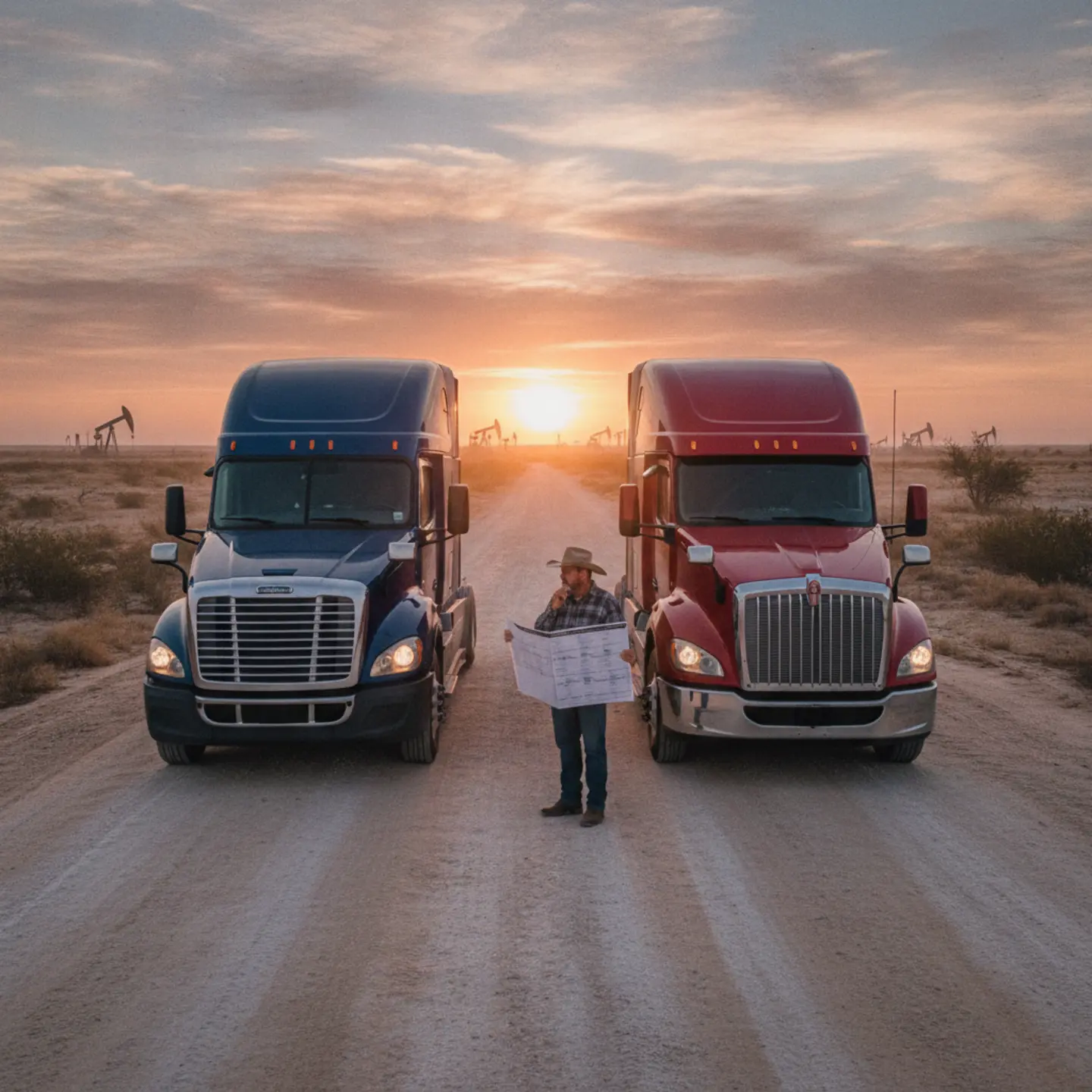
The Cascadia wins on total cost of ownership and fuel economy; the T680 wins on driver comfort and resale value. For owner-operators in the Permian Basin and Eagle Ford, the choice comes down to whether you prioritize lower day-to-day running costs and a faster payback (Cascadia) or superior cab comfort, brand prestige, and recouping more of your investment at resale (T680). Both trucks are durable, well-supported by West Texas dealers, and capable of handling the rigors of frac sand hauling — the decision is about your business model and what matters most to your bottom line.
To help you make the right choice for your operation, we’ve compiled a head-to-head comparison covering total cost of ownership, regulatory compliance, powertrain performance, and real owner-operator feedback from the field.
Sisu Energy
100% Owner-Operator — You Never Compete With Company Trucks
Core Service Programs:
- Pneumatic Frac Sand Hauling for owner-operators running STX and PA/OH oilfield lanes
- Hopper Bottom Frac Sand Hauling for owner-operators across the Permian, West Texas, and South Texas
- Cement Hauling for owner-operators running Monday–Friday daytime lanes in North Texas and Houston
Why Choose Sisu Energy:
- ✓ 100% Owner-Operator fleet — you never compete with company trucks for loads
- ✓ 24/7 live human dispatch with a fair rotary load distribution system
- ✓ No escrow, no fuel card fees, and minimal deductions
- ✓ Weekly direct deposit, paid every Friday
- ✓ Fuel program with a 10–12% discount off market rate
- ✓ Fast, streamlined onboarding — no orientation required
Local Market Context: Oilfield Trucking Demand in West Texas & the Permian Basin
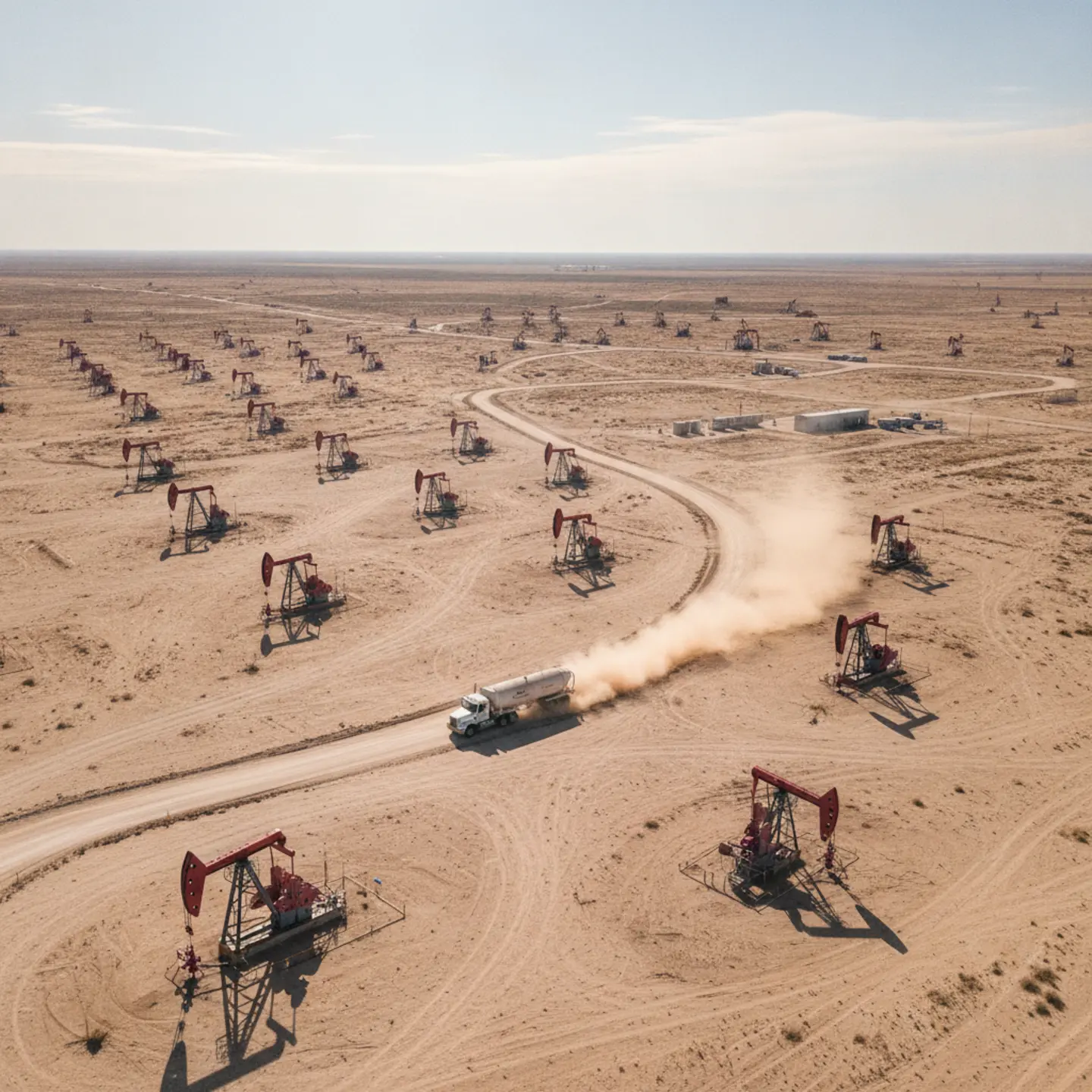
As of November 2026, the Permian Basin is running 273 active drilling rigs (Baker Hughes), with the Eagle Ford adding roughly 55 more in South Texas. Rig counts aren’t the whole story — modern wells are longer, more sand-intensive, and require more truckloads per completion than ever before. A single Permian well now demands 5,000–10,000+ tons of frac sand, which translates to hundreds of individual loads per job.
The shift to in-basin sand has fundamentally changed the logistics equation. Over 95% of sand used in the Permian is now sourced from local West Texas mines — meaning most frac sand routes run under 50 miles, with drivers turning 3–5 loads per day between mine and well site. That short-haul, high-frequency model rewards uptime, efficiency, and reliability above everything else.
Owner-operators running these lanes can gross $5,000–$11,000+ per week, with short-haul rates running $18–$23/ton (~$414–$575 per load). Pneumatic tanker loads run $27–$40/ton versus $18–$23/ton for hopper bottom — a meaningful per-ton difference that varies by lane and customer. If you want to understand the full income picture before choosing your equipment, the real numbers on owner-operator frac sand hauling break it down in detail.
In this environment, your truck choice isn’t just a preference — it’s a business decision. One week of downtime costs you $5,000–$9,000+ in lost gross revenue. The platform you choose, and how well it’s supported in West Texas, directly determines how much money you take home.
Total Cost of Ownership: Cascadia vs. T680 Over 3–5 Years
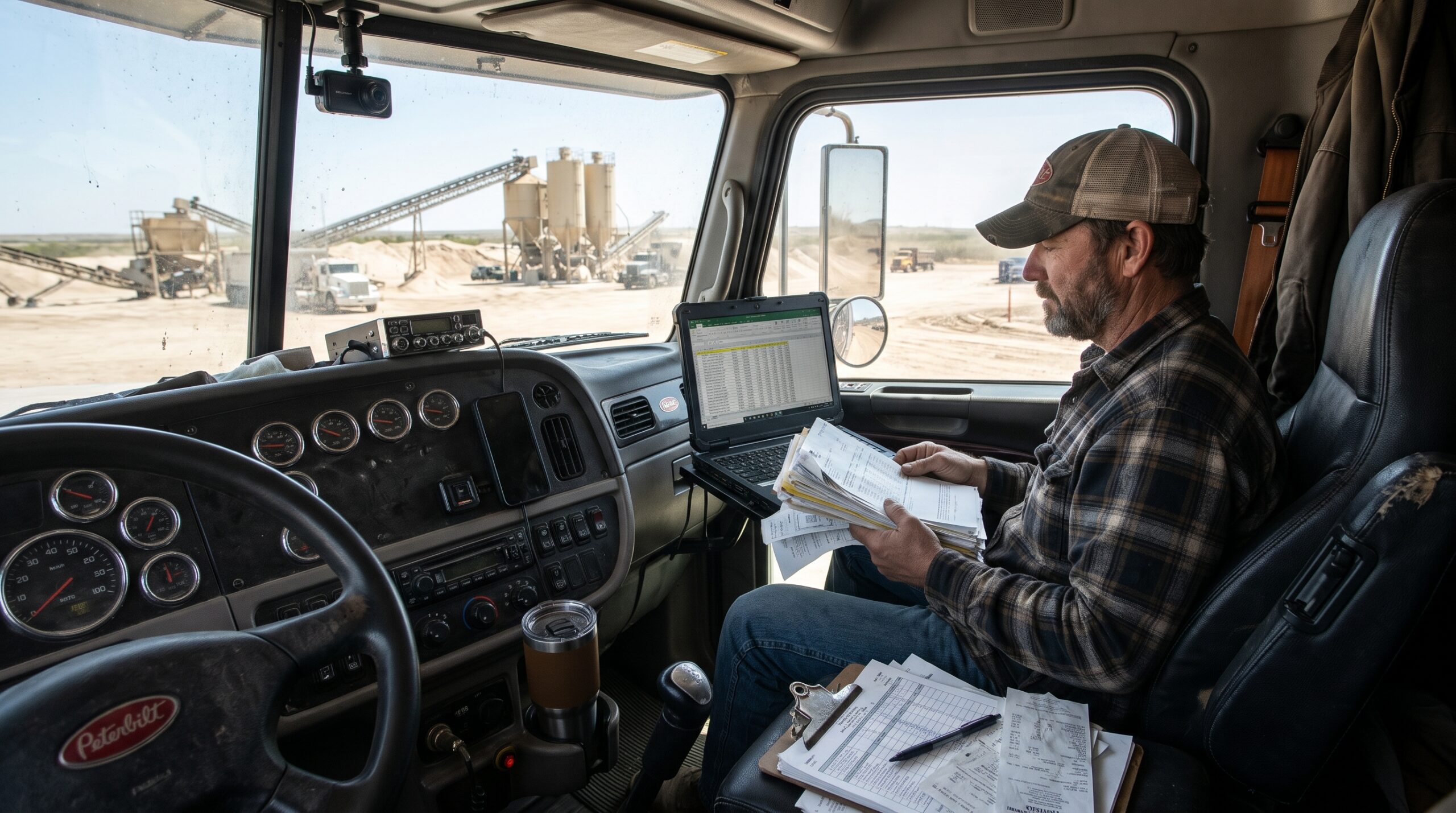
A single week in the shop costs $5,000–$9,000+ in lost gross revenue. When comparing Cascadia vs. T680, factor in parts availability and dealer response time — the truck that spends less time broken down is the one that makes you money.
| Cost Factor | Freightliner Cascadia | Kenworth T680 | Edge |
|---|---|---|---|
| New Purchase Price | $160,000–$185,000 | $170,000–$200,000 | Cascadia |
| Used Price (3–4 yrs) | $70,000–$100,000 | $85,000–$115,000 | T680 (resale) |
| Fuel Economy | 6.0–7.0 MPG (DD15) | 5.8–6.8 MPG (MX-13) | Cascadia (~$2,500/yr) |
| Maintenance & Parts | High availability; 15–25% lower repair cost | PACCAR-specific; higher parts cost | Cascadia |
| Resale Value (3–5 yrs) | Good; depreciates faster | 10–15% premium at auction | T680 |
| 3-Year TCO Verdict | Lower entry + lower running costs | Higher upfront; stronger resale payback | Depends on cash flow |
At 100,000 miles per year and $5.50/gallon diesel, the Cascadia’s 0.2–0.3 MPG fuel economy edge saves roughly $2,500 annually over the T680. Over three years, that’s $7,500 back in your pocket — nearly enough to offset the T680’s resale premium. The two platforms are closer in true TCO than their sticker prices suggest, which is exactly why this decision comes down to your cash flow situation and how long you plan to hold the truck.
Regulatory & Compliance Requirements for Texas Oilfield Trucking
Neither truck gives you a regulatory edge — compliance requirements apply equally to both platforms. Here’s what you need to operate legally in Texas oilfield hauling:
- CDL Class A with Tanker (N) Endorsement — required for bulk pneumatic and liquid tanker operations; many carriers require it even for dry bulk as company policy
- DOT Medical Certificate — current and valid; no exceptions
- FMCSA Hours of Service — 11-hour driving limit, 14-hour on-duty window; ELD required for non-exempt routes
- Texas Overweight Permits — standard GVW is 80,000 lbs; annual permits allow up to 84,000 lbs on state-maintained roads with route and county restrictions
- Well Site Certifications — PEC/Safeland (~$200, one-time / no expiry), H2S Awareness (~$20, annual), Respiratory Fit Test (~$30–$50, annual)
Many frac sand routes in the Permian qualify for the 150-air-mile short-haul exemption, allowing you to use a timecard instead of an ELD and work up to 16 hours on-duty. This flexibility can mean more loads per day and better income — regardless of which truck you choose.
No major federal or Texas regulatory changes targeting oilfield bulk hauling were implemented in 2025–2026. One minor operational note: newer Cascadia models with full LED lighting packages tend to generate fewer CSA lighting violations at roadside inspections — a small but real advantage for keeping your safety score clean. For a deeper look at how pneumatic vs. bottom drop equipment choices affect compliance and operations, that’s worth reviewing before you spec your trailer setup.
Head-to-Head: Freightliner Cascadia Specifications & Performance
The Cascadia 126 is the workhorse of the American trucking industry — and for good reason. The Detroit DD15 (455–505 HP, 1,550–1,750 lb-ft torque) paired with the DT12 automated manual transmission is the dominant powertrain combination, and its integration is genuinely impressive. The DT12 handles the constant low-speed maneuvering on lease roads without beating up the driver — a real advantage when you’re making five turns a day between a sand mine and a well site.
Freightliner offers vocational frame rail options with higher RBM (Resisting Bending Moment) for durability, plus taper-leaf or AirLiner rear suspensions. For rough oilfield roads, taper-leaf is often the preferred spec for its simplicity and durability. The cab is modern, quiet, and ergonomic — visibility is excellent, the HVAC handles Texas heat well, and the dash layout is intuitive.
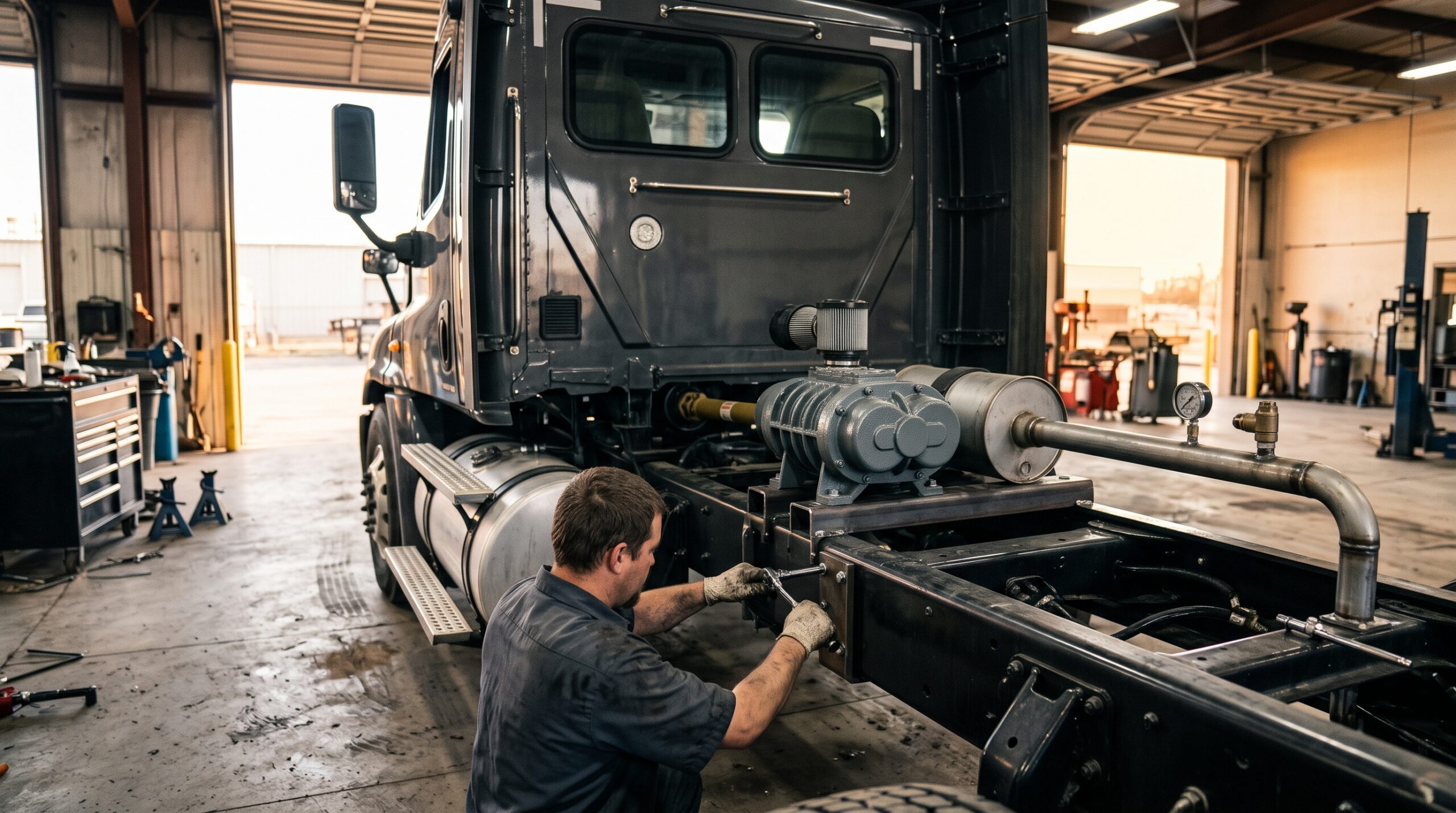
West Texas dealer support is excellent. Premier Truck Group has major facilities in Midland and Odessa with large parts inventory and certified technicians. Freightliner’s 37–40% U.S. market share (per 2025 Wards Intelligence data) means parts for the DD15 are stocked everywhere — that’s the single biggest practical advantage in a remote oilfield environment.
Known oilfield-specific issues: the Cascadia’s complex sensor systems can cause frustrating downtime from false fault codes, and its plastic body panels — while aerodynamically efficient — are more susceptible to damage on rough lease roads than steel alternatives. Many oilfield veterans also prefer to disable or omit the Detroit Assurance collision mitigation suite, which can trigger false warnings in dusty, low-speed conditions.
Head-to-Head: Kenworth T680 Specifications & Performance
The T680 Next Gen is Kenworth’s flagship, and it earns its premium. The standard PACCAR MX-13 (405–510 HP, 1,450–1,850 lb-ft torque) is capable and efficient, but the real crowd favorite in the oilfield is the Cummins X15 (400–605 HP, 1,450–2,050 lb-ft torque) — a powertrain with decades of heavy-haul credibility behind it. The T680 also remains one of the few trucks where you can still order a classic Eaton Fuller 18-speed manual, which is a significant differentiator for drivers who don’t trust automatics on lease roads.
Kenworth’s vocational chassis reputation is rock-solid. The AG400L and AG130 suspension systems are built for high-stress, unpaved road conditions, and the T680 Next Gen’s improved aerodynamics deliver competitive fuel economy when paired with the integrated PACCAR powertrain — though like the Cascadia, those aero benefits diminish in low-speed oilfield work.
The cab is where the T680 separates itself. High-quality materials, superior HVAC, excellent storage, and the “Driver’s Studio” sleeper options set the industry benchmark for comfort. For drivers spending three weeks at a time in their truck, this isn’t a luxury — it’s a fatigue management tool. Rush Truck Centers handles Kenworth dealer support in the Permian Basin, with well-equipped facilities in Midland and Odessa.
Known issues: PACCAR MX-13 repairs run 15–25% more expensive than comparable Detroit or Cummins work, and some independent shops in remote areas are less familiar with PACCAR-specific diagnostics. Early-generation T680 electrical gremlins have been largely resolved in the Next Gen platform, but it’s worth verifying on any used unit you’re considering.
Cascadia vs. T680: Where Each Truck Wins & Owner-Operator Consensus
Pull up any owner-operator forum — The Trucker’s Report, r/Truckers, the Facebook groups — and this debate follows a consistent pattern. Drivers who’ve run both trucks describe the choice the same way every time: the Cascadia is the head decision, the T680 is the heart decision.
Owner-operators consistently describe this choice as a trade-off between business logic (Cascadia’s lower TCO and fuel economy) and quality of life (T680’s comfort and resale value). Both are valid — the right choice depends on your priorities and cash flow situation.
Where the Cascadia wins: Lower purchase price, more affordable maintenance, a slight MPG advantage that compounds over time, and parts availability that can genuinely reduce downtime in a pinch. If you’re cash-flow-conscious, trying to minimize your monthly nut, or buying used, the Cascadia is the pragmatic choice.
Where the T680 wins: Cab comfort, build quality, powertrain flexibility (Cummins X15 + manual option), and resale value that protects your investment. Ritchie Bros. and Taylor & Martin auction data consistently shows T680s commanding a 10–15% premium over comparably spec’d Cascadias at the 3–5 year mark. If you’re living in your truck and plan to sell it in three years, that premium matters.
Where they’re equivalent: Dealer support in the Permian, fundamental durability when properly spec’d, and ability to handle the physical demands of frac sand hauling. The oilfield consensus is blunt: “The best truck is the one that’s not sitting in the shop while a frac crew is waiting on you.” Both platforms can deliver that — the difference is in the details of your spec and how well you maintain it.
Powertrain loyalty drives a lot of these decisions. Detroit loyalists land on the Cascadia. Cummins fans and anyone who wants a manual transmission lean T680. Understanding how load rates and daily turns affect your income matters more than the badge on your hood — but the right truck makes hitting those turns consistently a lot easier.
Why Sisu Energy Is the Right Choice for Owner-Operators Choosing Their Next Truck
Once you’ve settled on your truck, the next decision is just as important: who you run with. Sisu Energy is a 100% Owner-Operator carrier with zero company trucks — which means you never compete with in-house equipment for loads. Whether you’re running a Cascadia or a T680, your truck choice directly determines your profitability, and Sisu’s dispatch model is built to support it.
Our 24/7 live human dispatch with rotary load distribution ensures consistent, loaded miles regardless of your platform. You’re not fighting an algorithm or getting pushed to the back of the line — every driver in the Pack gets a fair shot at loads. That consistency is what makes the TCO math on your truck purchase actually work out.
No escrow. Weekly Friday direct deposit. Minimal deductions. A fuel program with a 10–12% discount off market rate. Six hauling divisions across Texas and PA/OH mean that if your equipment needs change — or your situation does — you can switch lanes without switching carriers. Sisu’s structure is designed to keep more of what you earn in your pocket, which is the only number that matters when you’re calculating whether that Cascadia or T680 payment makes sense.
Join Our Pack today and put your truck choice to work with loads that maximize your income potential.
Frequently Asked Questions
Which Truck Will Make Me More Money in the Sand Patch?
Neither truck will inherently “make more money” on its own — profit is tied to uptime, fuel efficiency, and cost control. The Cascadia may have a slight edge on weekly profitability due to its lower initial cost and better fuel economy. However, the T680’s superior resale value means you recover more of your investment when you sell, which can equalize the long-term financial picture. The most profitable truck is the one that stays out of the shop and on the road — full stop.
Can I Still Get a Manual Transmission? I Don’t Trust Automatics in the Oilfield.
Yes, but your options are significantly better with Kenworth. The T680 is widely available with a classic Eaton Fuller 18-speed manual, most commonly paired with the Cummins X15 engine — a combination that’s proven itself in heavy-haul applications for decades. While you can technically order a Cascadia with a manual, the vast majority roll off the line with the DT12 automated manual, and finding a stick-shift Cascadia on a dealer lot is rare. If manual transmission is non-negotiable for your operation, the T680 is the clear choice.
Which Truck Is Easier and Cheaper to Fix in the Middle of Nowhere in West Texas?
The Freightliner Cascadia generally wins this one, and it’s not particularly close. Freightliner’s 37–40% U.S. market share means DD15 parts are stocked in volume everywhere — including independent shops and parts houses scattered across the Permian. That translates to faster repairs and lower parts costs for common failures. Both platforms have strong dealer networks in Midland and Odessa, but when you’re broken down on a lease road at 2 a.m., Cascadia’s parts availability is a meaningful real-world advantage.
I Live in My Truck for 3 Weeks at a Time. Is the Kenworth’s Cab Really Worth the Extra Money?
This is a personal call, but the overwhelming consensus from drivers who’ve run both is yes. The T680’s cab is quieter, finished with higher-quality materials, and ergonomically superior to the Cascadia — particularly in the sleeper configurations. For drivers spending weeks on end in the truck, better sleep quality, more storage, and reduced vibration fatigue aren’t luxury items; they’re operational necessities. Many owner-operators say the comfort pays for itself in reduced wear on the driver, which directly affects how many productive turns you can make per day.
What Makes Sisu Energy Different From Other Carriers When It Comes to Supporting My Truck Choice?
Sisu is built 100% Owner-Operator first — we have zero company trucks competing for loads, which means your truck choice directly impacts your profitability and we support it. Our 24/7 live human dispatch with rotary load distribution ensures consistent, loaded miles whether you’re running a Cascadia, T680, or any other platform. We don’t nickel-and-dime you with escrow holds or hidden deductions; you get weekly Friday direct deposit with minimal deductions, so you keep more of what you earn to invest in the right equipment for your business. Apply today and join a carrier that puts your success first.
Ready to Put Your Truck to Work in the Permian Basin?
You’ve done the research on Cascadia vs. T680 — now pair that truck with a carrier that’s built around your success. Sisu Energy runs 100% Owner-Operator, dispatches 24/7 with live humans, and pays every Friday with no escrow and minimal deductions. Your business deserves a partner who’s as serious about your bottom line as you are.
*Sisu Energy LLC contracts exclusively with independent Owner-Operators. Earnings vary by division, miles, fuel costs, and individual business factors, and no specific income is guaranteed. Programs, lease rates, and requirements are subject to change. Please contact Sisu Energy directly for current opportunities and division details.