What Kind of Shifts Should I Expect Hauling Frac Sand In West Texas?
- Frac sand hauling shifts in West Texas typically run 2–3 weeks on-site followed by 1 week off, with short-haul hopper bottom drivers completing 4–5 loads per day on routes under 50 miles round trip.
- The Permian Basin has 241 active rigs and 129 frac spreads as of 2026, creating consistent—though not surging—demand for reliable Owner-Operators in a balanced-to-undersupplied market.
- An experienced hopper bottom Owner-Operator running 24 loads per week at a $375 average can net approximately $4,486 weekly after fuel, deductions, and fixed costs—with pneumatic operators earning significantly more per load.
- Detention time at Permian wellsites regularly runs 2–5+ hours per load; uncompensated detention can cost a driver $750–$1,000+ per week in lost income—making carrier detention policy one of the most important factors when choosing who to lease with.
- Trust Sisu Energy for 100% Owner-Operator hauling, fair rotary dispatch, no escrow, and transparent pay built around your success—apply today and join the Pack.
What Kind of Shifts Should I Expect Hauling Frac Sand In West Texas?
Frac sand hauling shifts in West Texas typically run 2–3 weeks on-site followed by 1 week off, with drivers completing 4–5 loads per day on short-haul routes or 1–3 loads on longer hauls. The Permian Basin offers high earning potential—experienced hopper bottom drivers can net $4,500+ weekly, while pneumatic operators earn significantly more—but the work demands grit, regulatory compliance, and a carrier that prioritizes fair pay and consistent loads. Understanding the real market conditions, costs, and shift structures is essential before committing to this demanding yet rewarding work.
This guide walks you through the current market landscape, realistic earnings, regulatory requirements, and what to expect from shift structures so you can make an informed decision about frac sand hauling in West Texas.
Sisu Energy
100% Owner-Operator — You Never Compete With Company Trucks
Core Service Programs:
- Pneumatic Frac Sand Hauling for owner-operators running STX and PA/OH oilfield lanes
- Hopper Bottom Frac Sand Hauling for owner-operators across the Permian, West Texas, and South Texas
- Cement Hauling for owner-operators running Monday–Friday daytime lanes in North Texas and Houston
Why Choose Sisu Energy:
- ✓ 100% Owner-Operator fleet — you never compete with company trucks for loads
- ✓ 24/7 live human dispatch with a fair rotary load distribution system
- ✓ No escrow, no fuel card fees, and minimal deductions
- ✓ Weekly direct deposit, paid every Friday
- ✓ Fuel program with a 10–12% discount off market rate
- ✓ Fast, streamlined onboarding — no orientation required
Local Market Context: West Texas Frac Sand Hauling Today
The Permian Basin remains the epicenter of U.S. fracking activity—and that means sustained, consistent work for frac sand haulers who know what they’re doing. As of May 2026, the basin is running 241 active rigs, down from 293 in mid-2025 but still representing enormous completion activity. That modest contraction isn’t a red flag—it reflects operator efficiency, not abandonment. Longer laterals and multi-stage completions mean each well consumes more sand than ever, so fewer rigs doesn’t mean fewer loads.
Drilling Activity and Frac Spread Trends
With 129 active frac spreads in the basin, well completion work is ongoing and direct demand for frac sand haulers remains real. The Midland/Odessa corridor and the Delaware Basin sub-region are the primary hubs of activity, with well pads dispersed across the vast Permian landscape. For Owner-Operators, this geographic spread means route variety—and the need for a carrier with experienced dispatch who knows these roads.
What’s Driving Frac Sand Demand Right Now
Operator capex budgets for 2025–2026 are focused on efficiency and asset optimization—infill drilling, longer laterals, more sand per stage. That strategy directly increases sand consumption per well even when new well starts slow. Global oil consumption is projected at 104.1 million barrels per day by 2026, and the Permian is carrying a significant share of that production. The market for reliable haulers is balanced to slightly undersupplied—meaning consistent load availability for quality Owner-Operators who show up and perform.
Geographic Realities and Haul Corridors
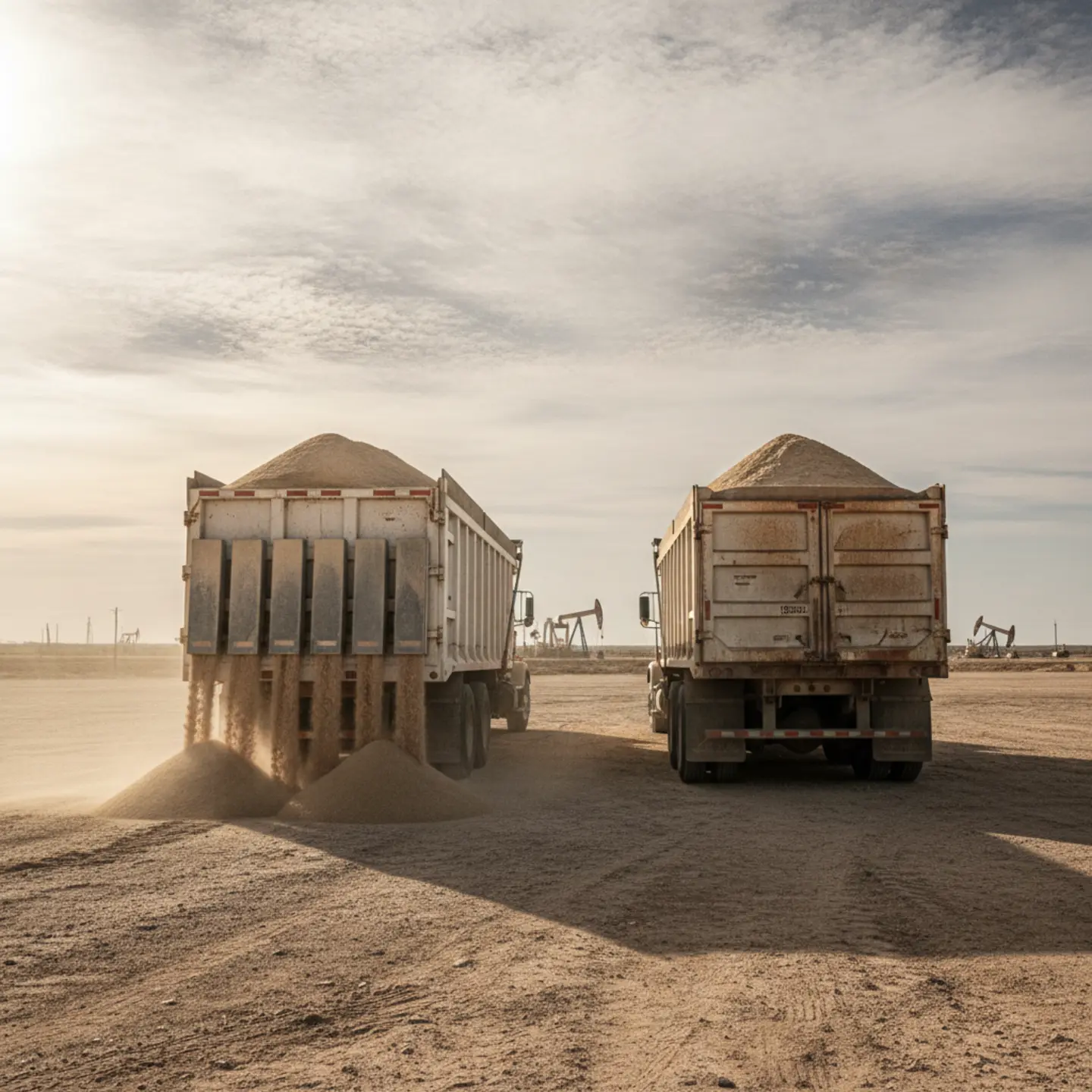
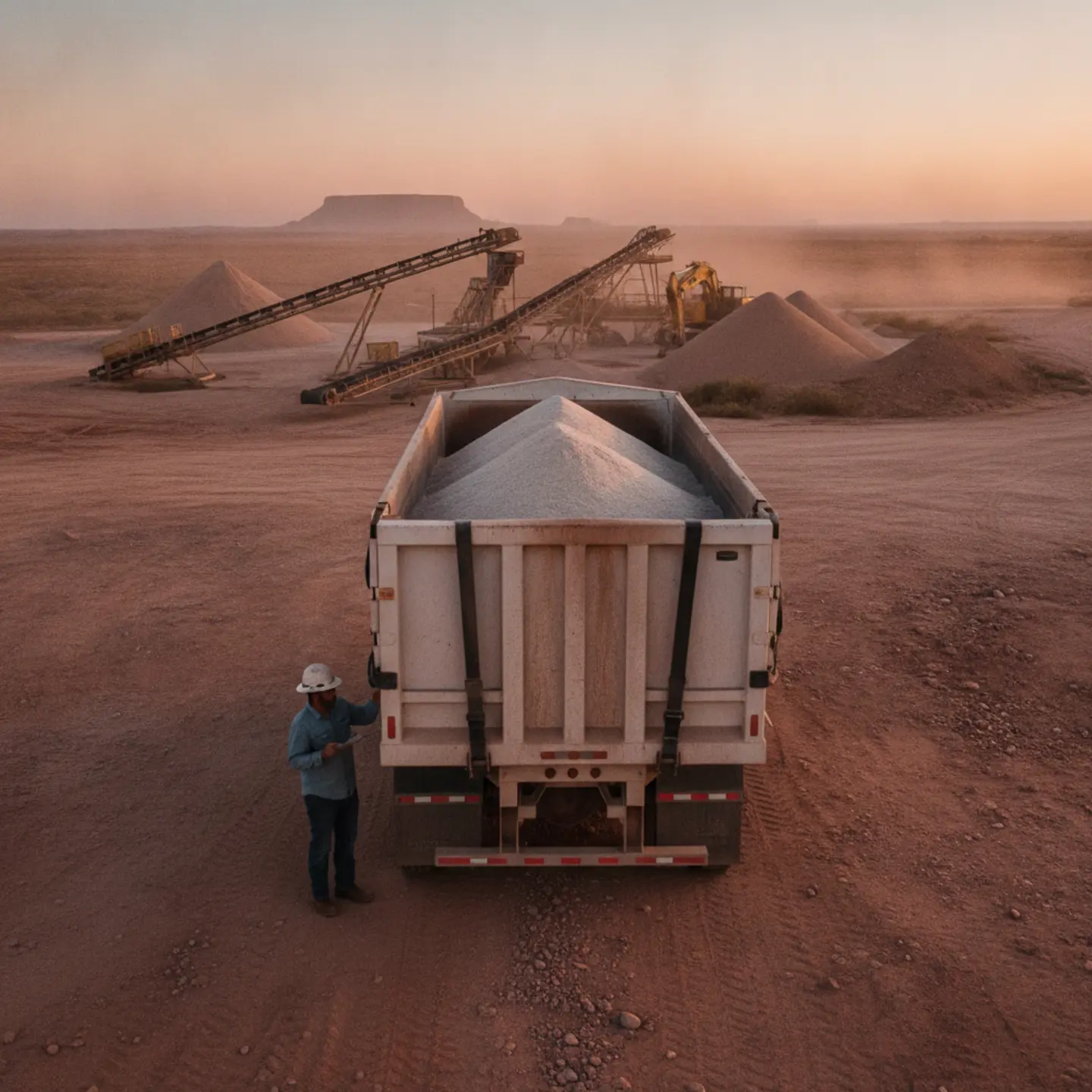
In-basin Permian sand dominates the market—mines concentrated in Winkler, Ward, and Crane counties feed staging areas around Midland and Odessa, with haul corridors running west toward the New Mexico border. Shorter haul distances mean more turns per day, which is the engine of hopper bottom profitability. The terrain is flat but don’t let that fool you—unpaved oilfield county roads are rough, dusty in dry weather, and muddy after rain. Tire wear and suspension maintenance are real operating costs out here, not afterthoughts. If you want to understand the full picture of whether frac sand hauling is worth it in 2026, the geographic realities of the Permian are part of that calculation.
Shift Structures and Scheduling Expectations
The standard rotation for Permian frac sand haulers is 2–3 weeks on-site followed by 1 week off. That’s the reality of working a basin this remote—you’re not commuting home every night. The upside is that your productive weeks are genuinely productive, and your off-week is yours. Some carriers lock you into a fixed rotation. Others, like Sisu Energy, let Owner-Operators choose the rotation that fits their life.
Daily Load Counts and Turn Potential
Turn count is where the money is made or lost in hopper bottom work. Here’s what’s realistic by haul distance:
- Short haul (under 50 miles round trip): 4–5 turns per day — the sweet spot for maximizing daily revenue
- Mid haul (50–150 miles): 2–3 loads per day due to extended transit time
- Long haul (over 150 miles): 1–2 loads per day, often at premium per-load rates
What limits your turns? Hours of Service regulations, detention at mines or wellsites, weather, and truck maintenance. All of these are real—and all of them are manageable with the right carrier and dispatch model behind you. For a deeper look at how load rates and turns interact, this breakdown of load rates vs. turns in frac sand hauling lays out the math.
Home Time and Rotation Options
Peak activity in Q2 and Q3 means more consistent work and potentially tighter schedules during those months. Winter months—Q4 and Q1—often see slowdowns from freezing temperatures, muddy roads, and reduced completion activity around the holidays. Plan for that seasonality. It’s predictable, and smart Owner-Operators use their off-weeks and slower periods to handle maintenance, banking, and business planning rather than burning out chasing every possible load.
Pricing, Rates, and Real Earnings Potential
Let’s talk real numbers. Oilfield driving in West Texas is consistently the highest-paying trucking work in Texas—experienced operators can gross $100,000–$180,000 annually. But gross revenue is only part of the story. What you net after fuel, deductions, and fixed costs is what actually builds your business.
Per-Load Rate Breakdown by Haul Distance
| Haul Type | Distance | Hopper Bottom Rate | Turns/Day |
|---|---|---|---|
| Short Haul | Under 50 mi | $300–$450 | 4–5 |
| Mid Haul | 50–150 mi | $450–$700 | 2–3 |
| Long Haul | Over 150 mi | $600–$1,000+ | 1–2 |
| Pneumatic Premium | Any distance | +$500–$625/load over hopper | Varies |
Weekly Cost Structure and Deductions
Here’s a realistic weekly take-home model for an experienced WTX hopper bottom Owner-Operator running a full schedule—24 loads per week at a $375 average:
- Gross revenue: $9,000 (24 loads × $375)
- Carrier share (15%): −$1,350
- Owner-Operator gross pay (85%): $7,650
- Weekly deductions (trailer rental, insurance, cargo): −$629
- Fuel (~349 gallons at net discounted price): −$1,410
- Remaining fixed costs (truck payment, maintenance, misc): −$1,125
- True weekly take-home: ~$4,486
That’s real money for a full-schedule hopper bottom operator. Pneumatic operators running the same basin earn significantly more per load—the $500–$625 per-load premium reflects specialized equipment, training, and operational complexity. For a full breakdown of how Owner-Operator frac sand hauling real numbers stack up across divisions, the math is worth studying before you commit.
If you’ve heard stories about sitting for hours at wellsites, they’re true. Permian Basin detention is a known operational challenge that directly eats into your earning potential. The difference between a carrier with fair detention pay and one without can be $750–$1,000+ per week.
Detention Time Economics
Average detention at Permian wellsites and transload facilities runs 2–5+ hours per load. That’s not an edge case—it’s the norm. Fair detention pay starts after 1–2 hours of free time at $75–$100+ per hour. If your carrier doesn’t have a clear, published detention policy, you’re absorbing that cost yourself. Ten hours of uncompensated detention per week at $80/hour is $800 you’ll never see—on top of the loads you couldn’t run while you were sitting.
A 10–12% fuel discount might sound small, but at current Texas diesel prices (~$4.57/gallon as of June 2026) and realistic weekly fuel burn for a high-turn driver (~349 gallons/week), that discount saves nearly $10,000 annually. That’s real money that goes straight to your bottom line.
Regulatory Requirements and Compliance
Before you turn a wheel in the Permian Basin, you need the right credentials. This isn’t paperwork for the sake of it—these requirements exist because active frac wellsites are genuinely hazardous environments. Know what you need before you show up.
CDL, Endorsements, and Certifications
- Class A CDL — baseline requirement for all frac sand hauling
- Tanker (N) endorsement — required for pneumatic tanker operations
- PEC/Safeland certification — one-time, no expiry; universal oilfield safety orientation
- H2S training — annual renewal; mandatory in areas where hydrogen sulfide may be present
- Respiratory Fit Test (RFT) — annual; ensures proper respirator fit for emergency situations
- DOT Medical Card — must be current and valid to maintain CDL eligibility
For a complete walkthrough of every credential you need before hauling, the CDL requirements and training guide for frac sand hauling covers each certification in detail.
Hours of Service and the Short-Haul Exemption
Standard FMCSA HOS rules apply to most frac sand haulers—11-hour driving limit, 14-hour on-duty window, 60/70-hour limits over 7/8-day cycles. But here’s where WTX short-haul work gets interesting: the FMCSA short-haul exemption (49 CFR 395.1(e)) exempts qualifying drivers from the ELD mandate and the 30-minute break requirement.
To qualify, you must operate within a 150 air-mile radius of your normal work reporting location and return within 14 hours. Sisu’s WTX Bottom Drop division is structured specifically to qualify for this exemption. You still track your hours—paper logs, not an ELD—and the 14-hour and 60/70-hour limits still apply. But the ability to run without an ELD and skip the mandatory 30-minute break can meaningfully increase your turns per day on short-haul routes.
Texas Oilfield Road Permits and Weight Restrictions
Many Permian Basin counties impose weight limits on county roads that are lower than state highway limits. Fully loaded frac sand trucks frequently approach or exceed 80,000 lbs GVW, which can trigger Texas DOT overweight permit requirements. Seasonal restrictions during heavy rain periods add another layer of complexity. Carriers with experienced dispatch navigate this via route planning and permit acquisition—which is exactly why 24/7 live human dispatch isn’t a nice-to-have out here. It’s operational infrastructure.
Choosing the Right Carrier: What to Evaluate
Your carrier choice is one of the most consequential business decisions you’ll make as an Owner-Operator. The wrong carrier costs you thousands per month in hidden fees, idle time, and uncompensated detention. The right carrier amplifies everything you earn. Here’s what to evaluate before you sign anything.
FMCSA Authority and Safety Verification
Start with the FMCSA SAFER database (safer.fmcsa.dot.gov). Verify the carrier’s operating authority is “Active” and review their SMS scores across key BASICs—HOS Compliance, Vehicle Maintenance, Unsafe Driving. An “unsatisfactory” safety rating or revoked authority is a hard stop. High SMS scores in critical categories signal a carrier that may not prioritize compliance, which puts your CDL at risk, not just your paycheck. For a broader comparison of what to look for when evaluating your options, the Owner-Operator vs. company driver breakdown for frac sand hauling is worth reading before you commit.
Detention Pay, Deductions, and Fuel Programs
Demand a detailed, itemized list of every weekly deduction before you sign. Trailer rental, insurance riders, dispatch fees, app fees—every line item should be transparent and explained. Avoid carriers with escrow requirements; they tie up your capital and are a red flag for financial mismanagement. On fuel: a 10–12% discount off market rate is competitive and translates to nearly $10,000 in annual savings at current Texas diesel prices. That’s not a rounding error—it’s a meaningful boost to your bottom line.
Dispatch Model and Load Consistency
A rotary dispatch system ensures fair load distribution—no favorites, no politics, just your turn in the queue. 24/7 live human dispatch means when you’re sitting at a wellsite at 11 PM with a detention issue, you’re talking to a real person who can help—not leaving a voicemail or navigating an app. One lost day of hauling for a hopper bottom operator costs roughly $1,500 in gross revenue. For a pneumatic operator, that number is closer to $3,600. The value of consistent load availability is not abstract. To understand why dispatch quality matters this much, this breakdown of why 24/7 dispatch matters in frac sand hauling makes the case with real numbers.
Avoid carriers that require escrow, offer vague detention policies, lack live dispatch, or refuse to provide itemized deductions. These are warning signs of carriers that prioritize their margins over your earnings. Always verify FMCSA authority and speak to current Owner-Operators before signing.
Seasonal Patterns, Market Trends, and Outlook
Frac sand demand in the Permian follows predictable seasonal patterns. Q2 and Q3 are peak seasons—favorable weather, active completion schedules, and operator capex deployment all align. Q4 and Q1 slow down: freezing temperatures affect equipment, muddy roads limit access, and holiday periods reduce completion activity. Smart Owner-Operators plan for this cycle rather than being caught off guard by it.
Long-Term Market Outlook
The long-term picture for frac sand hauling is strong. Demand is projected to grow at a CAGR of 6.82–7.50% through 2035, driven by longer laterals, multi-stage completions, and rising global energy demand. The Permian Basin is expected to remain the dominant U.S. fracking hub—which means sustained, long-term demand for West Texas frac sand haulers who build their business right. WTI crude oil prices hovering around $73–$74 per barrel as of June 2026 keep operator budgets active without triggering the kind of price-shock slowdowns that rattle the market. This is a durable market for durable Owner-Operators.
Why Sisu Energy is the Right Choice for West Texas Frac Sand Haulers
Everything covered in this guide—shift structures, earnings models, detention economics, carrier evaluation criteria—points to one conclusion: the carrier you choose determines how much of the Permian Basin’s opportunity you actually capture. Sisu Energy is built from the ground up around that reality.
Sisu runs a 100% Owner-Operator fleet—zero company trucks means zero internal competition for your loads. Every load in the rotary dispatch queue goes to an Owner-Operator. That’s not a marketing claim; it’s the business model. Six hauling divisions across Texas and Pennsylvania/Ohio mean you can choose the hauling type, region, and schedule that fits your life—and change it without changing carriers.
The financial structure is built for transparency: no escrow, itemized weekly deductions, and Friday direct deposit—every week, without exception. The 10–12% fuel discount saves nearly $10,000 annually at current diesel prices. The WTX Hopper Bottom division is specifically designed for Permian Basin short-haul work, with flexible trailer rental options ($350/week or daily rentals available) and no oilfield experience required to start.
24/7 live human dispatch isn’t a tagline at Sisu—it’s operational infrastructure. When detention drags at a wellsite or a county road is restricted after rain, you need a real person with real knowledge of these lanes, not an automated system. Sisu’s dispatch team is that resource.
Ready to take control of your future and join a carrier that puts Owner-Operators first? Apply Today and join the Pack.
Frequently Asked Questions: Frac Sand Hauling Shifts in West Texas
What are the typical shifts like for hauling frac sand in West Texas, and how much home time can I actually expect?
Typical shifts for frac sand hauling in West Texas run 2–3 weeks on-site followed by 1 week off, maximizing productive time in the basin while preserving a predictable off-week for family and personal commitments. The key is consistent communication with dispatch to plan your rotation effectively. Some carriers lock you into a fixed schedule; Sisu Energy allows Owner-Operators to choose the rotation that works best for their life, which makes a real difference when you’re managing a business and a family from the road.
I’m worried about sitting at wellsites for hours. How bad is detention time in the Permian, and do carriers actually pay for it?
Detention time at Permian Basin wellsites and transload facilities is a known operational reality—it frequently runs 2–5+ hours per load, and it directly eats into your earning potential. Fair detention pay starts after 1–2 hours of free time at $75–$100+ per hour; anything less than that and you’re subsidizing the operator’s scheduling problems out of your own pocket. Sisu Energy’s 24/7 live human dispatch and rotary system actively work to minimize wait times and ensure fair compensation for any detention that does occur, protecting your weekly take-home.
Is it really true that hopper bottom drivers don’t need an ELD in West Texas? How does that work legally?
Yes—for qualifying operations, it’s true. The FMCSA short-haul exemption (49 CFR 395.1(e)) exempts drivers from the ELD mandate and the 30-minute mandatory break rule if they operate within a 150 air-mile radius of their normal work reporting location and return within 14 hours. Sisu’s WTX Bottom Drop division is structured specifically to qualify for this exemption. You still track your hours accurately—paper logs, not an ELD—and the 14-hour and 60/70-hour limits still apply. But eliminating the ELD requirement and the mandatory break can meaningfully increase your turns per day on short-haul routes.
What’s the real difference in money between hauling frac sand in a hopper bottom versus a pneumatic tanker in the Permian?
The financial difference is substantial. Pneumatic tankers command a premium of $500–$625 more per load compared to hopper bottoms—a difference that reflects specialized equipment, training, and operational complexity. While hopper bottoms offer strong turn potential (4–5 loads per day on short hauls), pneumatic operations generate significantly higher gross revenue per load. For experienced pneumatic operators, annual net take-home can reach $80,000–$110,000 or more, well above what a hopper bottom operator nets running the same number of days. The hopper bottom is the right starting point for drivers new to the oilfield; the pneumatic is where earning potential scales significantly.
What makes Sisu Energy different from other frac sand carriers in West Texas?
Sisu Energy is built 100% Owner-Operator first—zero company trucks means zero internal competition for your loads. The rotary dispatch system and 24/7 live human dispatch ensure fair load distribution and real-time support in the field, not automated systems and voicemails. No escrow, transparent itemized deductions, a competitive 10–12% fuel discount, and Friday direct deposit mean you keep more of what you earn and always know where your money went. The WTX Hopper Bottom division is specifically designed for Permian Basin short-haul work, with flexible trailer rental options and no oilfield experience required to start. Most importantly, Sisu treats Owner-Operators as partners in their own business—not as numbers on a load board. Ready to join a carrier that genuinely prioritizes your success? Apply Today and take control of your future.
Ready to Haul Frac Sand in West Texas?
You now know the shifts, the rates, the regulations, and what separates a carrier that works for you from one that works against you. The Permian Basin rewards Owner-Operators who show up prepared and partner with a carrier built around their success. Sisu Energy is that carrier—100% Owner-Operator, no escrow, fair rotary dispatch, and 24/7 live human support in the field.
*Sisu Energy LLC contracts exclusively with independent Owner-Operators. Earnings vary by division, miles, fuel costs, and individual business factors, and no specific income is guaranteed. Programs, lease rates, and requirements are subject to change. Please contact Sisu Energy directly for current opportunities and division details.