CDL Requirements for Frac Sand Hauling: Complete License and Training Guide
Key Takeaways
- Frac sand hauling requires a Class A CDL for all rigs — Class B or C licenses are insufficient and will result in citations and fines.
- Pneumatic haulers need a Tanker (T) endorsement in addition to their Class A CDL; hopper bottom haulers typically do not — making hopper bottom the faster, lower-cost path to certification.
- The Air Brake endorsement is mandatory if your trailer has air brakes — which nearly all modern frac sand rigs do — and the written test is more demanding than most new applicants expect.
- Total CDL timeline runs 6–12 weeks for a Class A alone; add 2–4 weeks for Tanker endorsement and 4–8 weeks for HAZMAT TSA clearance if required by your carrier or shipper.
- Trust Sisu Energy for Owner-Operator-first frac sand hauling across Texas and Pennsylvania/Ohio — visit Sisu Energy to explore divisions and take control of your future.
What CDL Requirements Do You Need for Frac Sand Hauling?
To haul frac sand legally, you need a Class A CDL with a Tanker (T) endorsement for pneumatic hauling, or a Class A CDL with no additional endorsement for hopper bottom hauling — though many operators require additional certifications like HAZMAT or air brake endorsements depending on the load and region. The specific requirements vary by state, hauling method, and whether you’re carrying hazardous materials, but all frac sand haulers must pass a medical exam, written tests, and a practical driving test.
Understanding these requirements upfront — and knowing what separates pneumatic from hopper bottom licensing — helps you plan your training timeline and avoid costly mistakes.
Sisu Energy
100% Owner-Operator — You Never Compete With Company Trucks
Core Service Programs:
- Pneumatic Frac Sand Hauling for owner-operators running STX and PA/OH oilfield lanes
- Hopper Bottom Frac Sand Hauling for owner-operators across the Permian, West Texas, and South Texas
- Cement Hauling for owner-operators running Monday–Friday daytime lanes in North Texas and Houston
Why Choose Sisu Energy:
- ✓ 100% Owner-Operator fleet — you never compete with company trucks for loads
- ✓ 24/7 live human dispatch with a fair rotary load distribution system
- ✓ No escrow, no fuel card fees, and minimal deductions
- ✓ Weekly direct deposit, paid every Friday
- ✓ Fuel program with a 10–12% discount off market rate
- ✓ Fast, streamlined onboarding — no orientation required
Class A CDL: The Foundation for Frac Sand Hauling
Every frac sand rig — whether you’re running a pneumatic tanker in South Texas or a hopper bottom through the Permian Basin — falls under the federal threshold that requires a Class A CDL. Any combination vehicle with a gross vehicle weight rating (GVWR) over 26,001 lbs and a trailer exceeding 10,000 lbs GVWR requires a Class A. Frac sand rigs clear that threshold with room to spare.
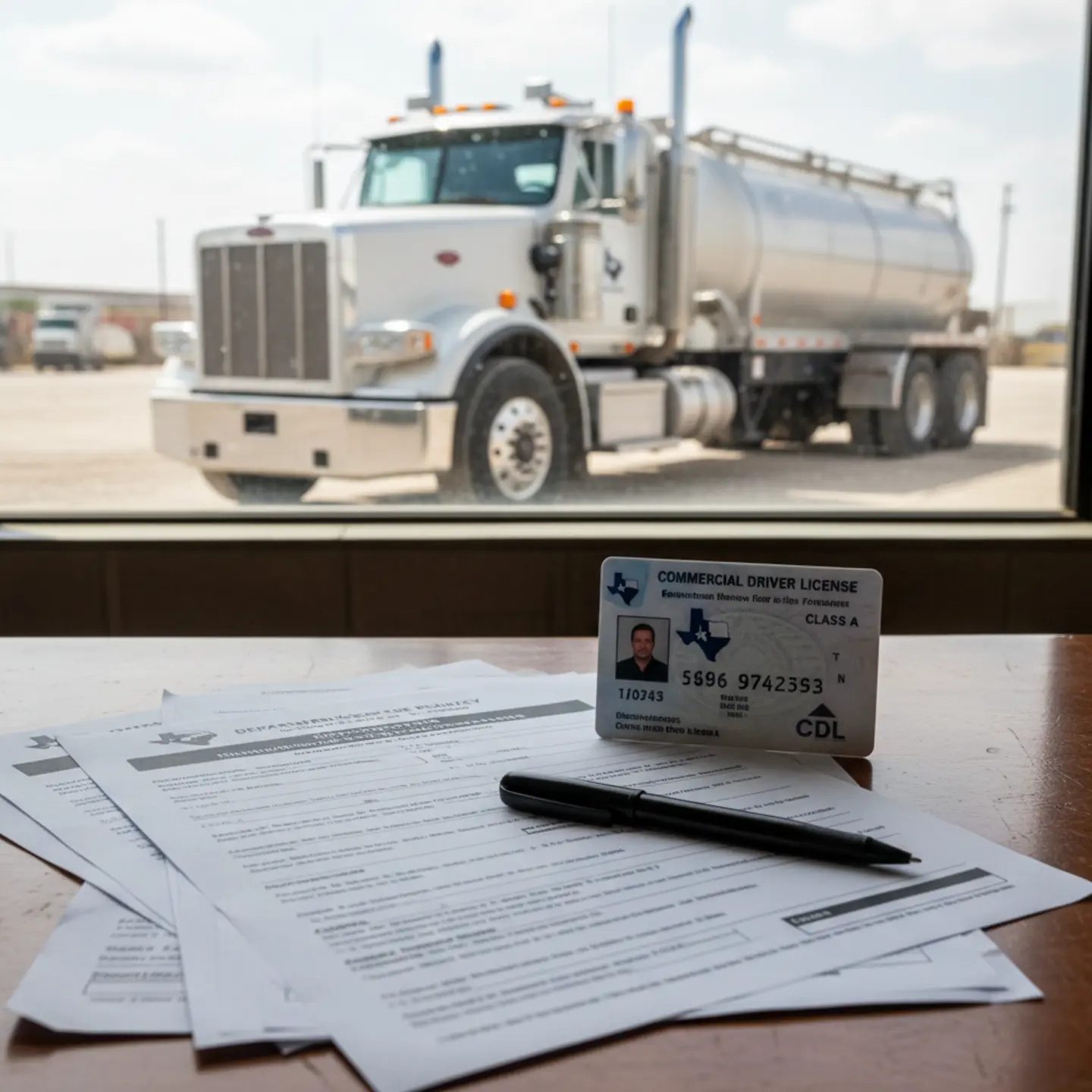
Class A is the broadest commercial license available — it lets you operate the widest range of vehicles, which matters when you’re building a long-term Owner-Operator business and want flexibility across divisions and regions. Class B and Class C licenses are not substitutes. Attempting to operate a frac sand rig on a Class B will result in citations, fines, and potential loss of operating authority. There’s no gray area here.
Before you can test for your Class A, you must pass a DOT physical examination (DOT Form 649). This covers vision, hearing, blood pressure, and general health standards set by the Federal Motor Carrier Safety Administration (FMCSA). The medical certificate is valid for up to 24 months — keep it current, because an expired medical card can pull you off the road just as fast as a suspended license. If you’re serious about whether frac sand hauling is worth it in 2026, the CDL is the non-negotiable starting point.
Tanker (T) Endorsement: Required for Pneumatic Frac Sand Hauling
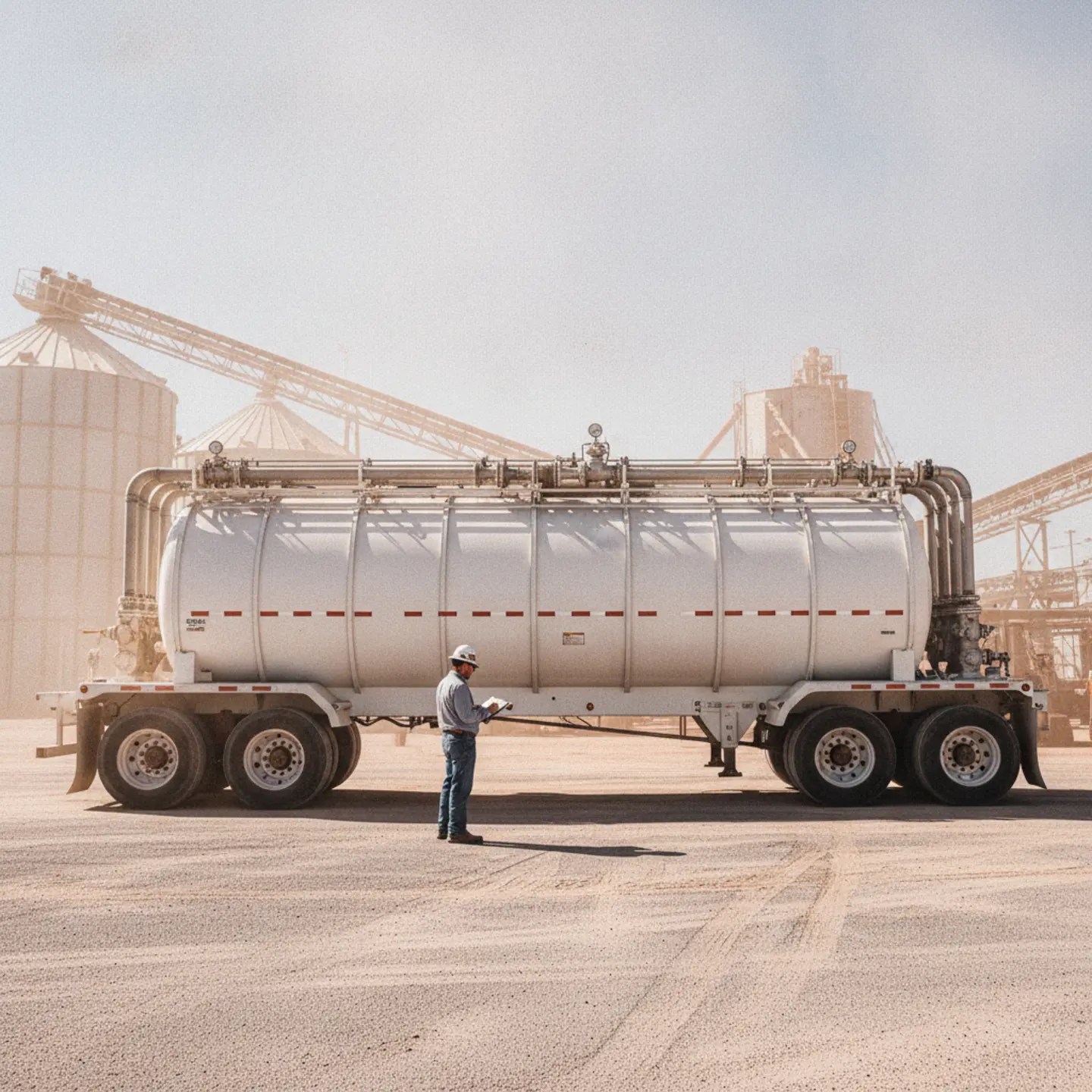
If you’re planning to run a pneumatic tanker — the pressurized bulk trailer used to blow frac sand directly into wellsite storage — you need a Tanker endorsement on your Class A CDL. This requirement applies regardless of whether the cargo is classified as hazardous. The FMCSA defines a tank vehicle as any commercial motor vehicle designed to transport liquid or gaseous materials in a tank with a capacity of 119 gallons or more. Pneumatic trailers used in frac sand hauling meet that definition.
The Tanker endorsement written test covers tank-specific safety topics: weight distribution, surge dynamics, emergency procedures, and the unique handling characteristics of pressurized bulk transport. The test typically includes 20 questions, and you must score at least 80% to pass. It’s not a throwaway exam — surge dynamics alone can catch drivers off guard if they haven’t studied how load shift behaves differently in a pressurized tank versus a flatbed or dry van.
One detail that trips up drivers who relocate: the Tanker endorsement is state-specific. Your Class A CDL transfers between states under reciprocity rules, but endorsements may not follow automatically. If you move from Texas to Pennsylvania to run the PA/OH oilfield lanes, verify with your new state’s DMV that your Tanker endorsement is recognized before you pull a load. Understanding the differences between pneumatic and bottom-drop hauling will help you choose the right CDL path from the start.
Hopper Bottom Hauling: CDL Requirements Without Tanker Endorsement
Hopper bottom frac sand hauling offers a faster, less expensive path to your CDL — and it’s a legitimate, high-demand lane across the Permian Basin, West Texas, and South Texas. Because hopper bottom trailers are classified as dry bulk cargo containers rather than pressurized tanks, they do not require a Tanker endorsement in most states. A Class A CDL alone is sufficient to get you hauling.
That distinction matters when you’re weighing your options. Skipping the Tanker endorsement saves you study time, testing fees, and several weeks off your timeline. For drivers who want to get into the oilfield quickly — particularly those coming from flatbed, van, or general freight backgrounds — hopper bottom is often the most direct route. You still need to pass the Class A written tests (General Knowledge is mandatory) and the practical driving exam, but you’re not adding an extra endorsement layer on top.
A few caveats: some states or specific shippers may require additional endorsements depending on load composition or destination. And if your hopper bottom trailer is equipped with air brakes — which most modern trailers are — you’ll need an Air Brake endorsement regardless of the trailer type. That requirement applies across the board, not just to pneumatic haulers.
HAZMAT Endorsement: When It’s Required and When It’s Optional
Pure frac sand is not classified as a hazardous material by the DOT — so the majority of frac sand haulers operate without a HAZMAT endorsement and do so legally. The endorsement becomes required only when you’re transporting materials that carry a hazmat classification: certain chemical additives, cement blends with reactive components, or other oilfield materials that meet DOT hazmat thresholds.
Tip: Confirm HAZMAT Requirements Before You Invest
HAZMAT endorsement is expensive and time-consuming — the TSA background clearance alone takes 4–8 weeks. Before pursuing it, ask your potential shipper or carrier whether it’s truly required for the loads you’ll haul. Many frac sand haulers operate profitably without it by sticking to non-hazardous cargo.
If your carrier or shipper does require HAZMAT certification, the process involves three components beyond your Class A CDL: a written knowledge test covering hazardous materials regulations, a TSA security threat assessment (background check), and fingerprinting. The TSA clearance is the long pole in the tent — plan for 4–8 weeks of processing time, and that clock doesn’t start until your application is complete and submitted.
Many experienced frac sand Owner-Operators pursue HAZMAT eventually to maximize their load flexibility and earning potential across multiple commodities. But if you’re trying to get on the road quickly, confirm with your target carrier whether it’s truly required before investing the time and money.
Air Brake Endorsement: Mandatory if Your Trailer Has Air Brakes
Don’t Overlook the Air Brake Test
Many new CDL applicants fail the Air Brake test because they underestimate its importance. Since nearly all modern frac sand rigs have air brakes, this endorsement is non-negotiable — study the brake system components, inspection procedures, and emergency protocols thoroughly.
The Air Brake endorsement is one of the most commonly overlooked requirements among drivers new to commercial hauling. If your pneumatic or hopper bottom trailer is equipped with air brakes — and virtually every modern frac sand rig is — you must have this endorsement on your CDL. Operating without it when required is a federal violation that can result in fines and disqualification from operating that equipment.
The Air Brake written test covers brake system components, operation principles, pre-trip inspection procedures, and emergency braking protocols. This isn’t theoretical knowledge — understanding air brake behavior is directly tied to safe operation of heavy bulk rigs, especially when you’re loaded with 40,000+ lbs of frac sand and navigating oilfield lease roads. The good news: many states allow you to take the Air Brake test on the same day as your Class A CDL knowledge tests, which streamlines the process considerably.
If you’re evaluating carriers and their equipment options, understanding the real numbers behind Owner-Operator frac sand hauling will help you see how your CDL investment translates directly to take-home pay.
Training and Testing Timeline: From Application to CDL
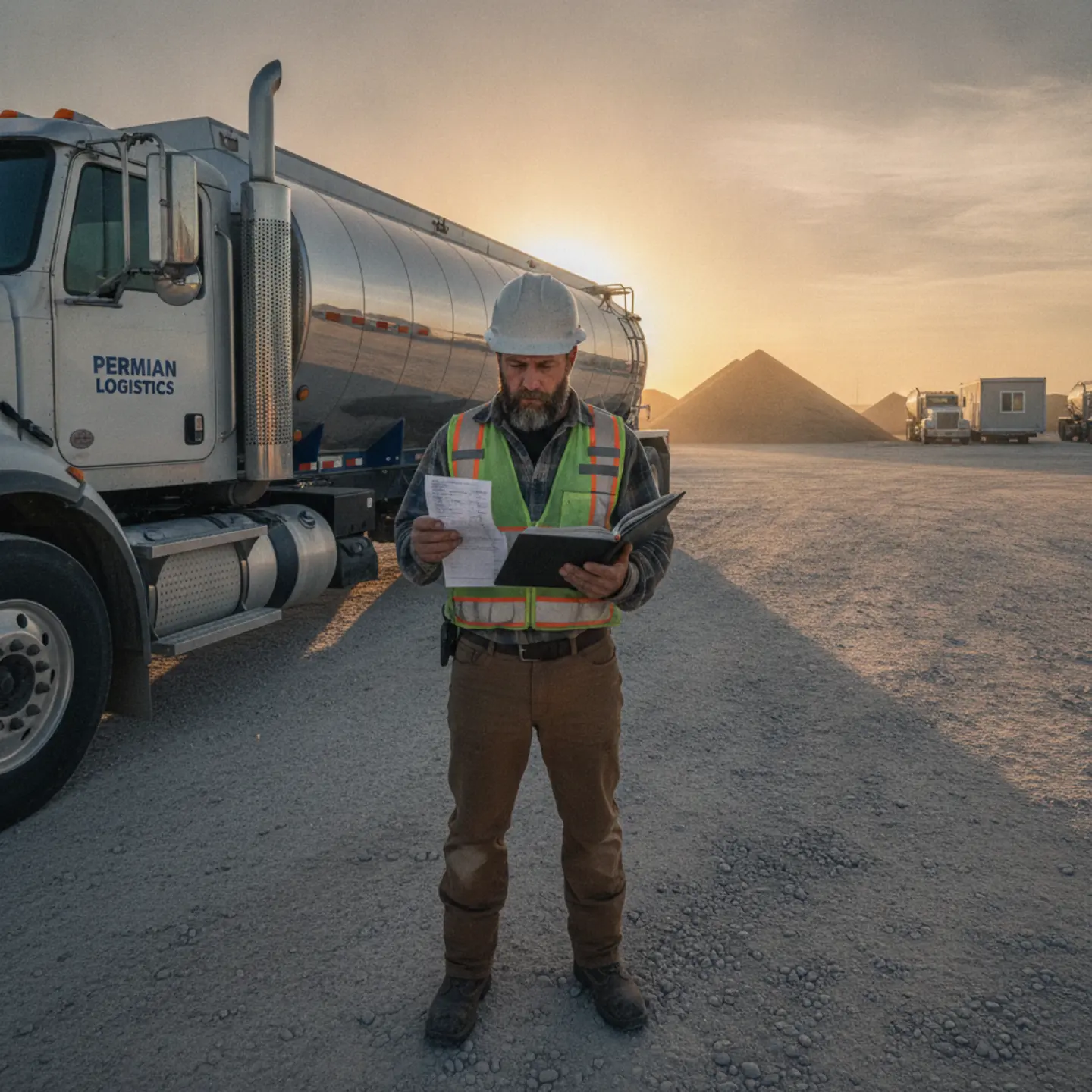
One of the most common questions from drivers considering the switch to frac sand hauling is how long the CDL process actually takes. The honest answer: it depends on your state’s testing schedule, your study pace, and which endorsements you’re pursuing. Here’s a realistic breakdown:
Your CDL Investment Is Worth It
Getting your CDL takes time and effort, but it’s the gateway to consistent, well-paying work in frac sand hauling. Owner-Operators with a Class A CDL and the right endorsements command premium rates and have access to steady loads across multiple basins.
| Step | Timeline | Notes |
|---|---|---|
| DOT Medical Exam | 1–2 weeks | Must be completed before testing; valid up to 24 months |
| CDL Study / Classroom | 2–4 weeks | Self-study or formal CDL school; covers General Knowledge, Air Brakes, Tanker if applicable |
| Written Knowledge Tests | 1 day – 1 week | Scheduling varies by state DMV; Air Brake and Tanker can often be taken same day |
| Practical Driving Test | 1–2 weeks after written | Pre-trip inspection, basic vehicle controls, road test |
| Tanker Endorsement (if pursuing pneumatic) | Add 2–4 weeks | Additional written test; 20 questions, 80% passing score |
| HAZMAT TSA Clearance (if required) | 4–8 weeks (parallel) | Background check + fingerprinting; can run concurrently with other steps |
Total realistic timeline: 6–12 weeks for a Class A CDL alone. Add endorsements and you’re looking at 8–20 weeks depending on your path and whether HAZMAT is in the picture. Plan accordingly — and if you’re targeting a specific start date with a carrier, work backward from that date to set your study schedule.
State-Specific Variations and CDL Reciprocity
CDL requirements are federally standardized at the base level, but states retain the ability to layer on additional requirements or stricter medical standards. The core Class A CDL structure is consistent nationwide — but the devil is in the details when it comes to endorsements and testing schedules.
Most states honor CDL licenses issued by other states — this is called reciprocity. Your Class A CDL earned in Texas is valid in Pennsylvania. But endorsements don’t always follow automatically. If you relocate from Texas to run the PA/OH oilfield lanes and your Tanker endorsement was issued in Texas, verify with the Pennsylvania DMV that it transfers before you assume you’re clear to operate. Some states require you to retest for specific endorsements when you convert your out-of-state license.
The safest move: contact the DMV in your destination state before you relocate, confirm exactly which endorsements transfer and which require retesting, and get that information in writing. Don’t assume — a gap in endorsement coverage discovered at a weigh station is an expensive lesson. If you’re researching carrier options across different regions, reviewing the top frac sand carriers in Texas can help you match your CDL path to the right hauling lanes.
Why Sisu Energy Is the Right Choice for Owner-Operators in Frac Sand Hauling
Your CDL is an investment — in your time, your money, and your future. Where you take that investment matters as much as the license itself. Sisu Energy is a 100% Owner-Operator carrier with zero company trucks, which means you never compete with in-house equipment for the best loads. Every load in the rotary distribution system goes to an Owner-Operator. That’s the model — no exceptions.
With six hauling divisions across Texas and Pennsylvania/Ohio, Sisu gives you the flexibility to choose the CDL path that fits your timeline and goals. If you’re pursuing a Class A with Tanker endorsement for pneumatic hauling, the STX Pneumatics and NTX Pneumatic divisions are built for you. If you’re taking the faster hopper bottom route, STX Hopper Bottom and WTX Hopper Bottom are ready — no oilfield experience required for either. You pick the lane that matches your license, your schedule, and your life.
24/7 live human dispatch with rotary load distribution means your CDL investment translates to consistent, loaded miles — not idle time waiting on freight. No escrow holds and weekly Friday direct deposit mean you keep more of what you earn, faster. The NTX Pneumatic division averages $5,000/week take-home for drivers running Monday–Friday daytime lanes with weekends off. That’s what a well-matched CDL path looks like when the carrier is built around your success.
Apply Today and take control of your future in frac sand hauling — join a carrier that puts Owner-Operators first.
Frequently Asked Questions: CDL Requirements for Frac Sand Hauling
Can I haul frac sand with just a regular Class B CDL?
No — and this is a hard line with real consequences. Frac sand rigs exceed 26,001 lbs GVWR with trailers over 10,000 lbs GVWR, which places them squarely in Class A territory. Operating one of these combinations on a Class B license is a federal violation that will result in citations, fines, and potential disqualification from operating that equipment. If you’re serious about frac sand hauling, the Class A CDL is the only valid starting point — there’s no workaround.
Do I need a Tanker endorsement for hopper bottom frac sand hauling?
No, not in most states. Hopper bottom trailers are classified as dry bulk cargo containers — not pressurized or liquid tanks — so they fall outside the Tanker endorsement requirement. A Class A CDL alone is sufficient to legally haul frac sand in a hopper bottom. That said, if your hopper bottom trailer has air brakes (which nearly all modern trailers do), you must have an Air Brake endorsement on your CDL. That requirement applies regardless of trailer type.
How long does it take to get a CDL for frac sand hauling?
Plan for 6–12 weeks to obtain a Class A CDL alone, depending on your state’s testing schedule and how quickly you study. If you’re pursuing a Tanker endorsement for pneumatic hauling, add 2–4 weeks on top of that. HAZMAT endorsement — if required by your carrier or shipper — adds another 4–8 weeks for the TSA background clearance, though that process can run parallel to your other testing. The HAZMAT clock starts when you submit your application, so initiate it early if you know you’ll need it.
What happens if I move to a different state — will my CDL still be valid?
Your Class A CDL is generally recognized in all states under reciprocity rules — the base license travels with you. Endorsements are a different story. Tanker, HAZMAT, and other endorsements may not transfer automatically when you convert your license to a new state. Before you relocate, contact the DMV in your destination state and confirm exactly which endorsements carry over and which require retesting. Don’t assume reciprocity covers everything — verify it directly and get the answer in writing before your move.
Why should I choose Sisu Energy to start my frac sand hauling career?
Sisu Energy is a 100% Owner-Operator carrier with six divisions across Texas and Pennsylvania/Ohio, so you can choose the hauling type and CDL path that fits your timeline and goals — pneumatic with Tanker endorsement, or hopper bottom without. With 24/7 live human dispatch, rotary load distribution, no escrow, and weekly Friday direct deposit, your CDL investment translates directly to consistent, loaded miles and maximized take-home pay. Apply Today and take control of your future in frac sand hauling.
Ready to Put Your CDL to Work in Frac Sand Hauling?
You’ve done the work to understand the licensing path — now find a carrier built to make that investment pay off. Sisu Energy’s 100% Owner-Operator model, live human dispatch, and six divisions across Texas and PA/OH mean consistent loaded miles and real take-home pay from day one.
*Sisu Energy LLC contracts exclusively with independent Owner-Operators. Earnings vary by division, miles, fuel costs, and individual business factors, and no specific income is guaranteed. Programs, lease rates, and requirements are subject to change. Please contact Sisu Energy directly for current opportunities and division details.