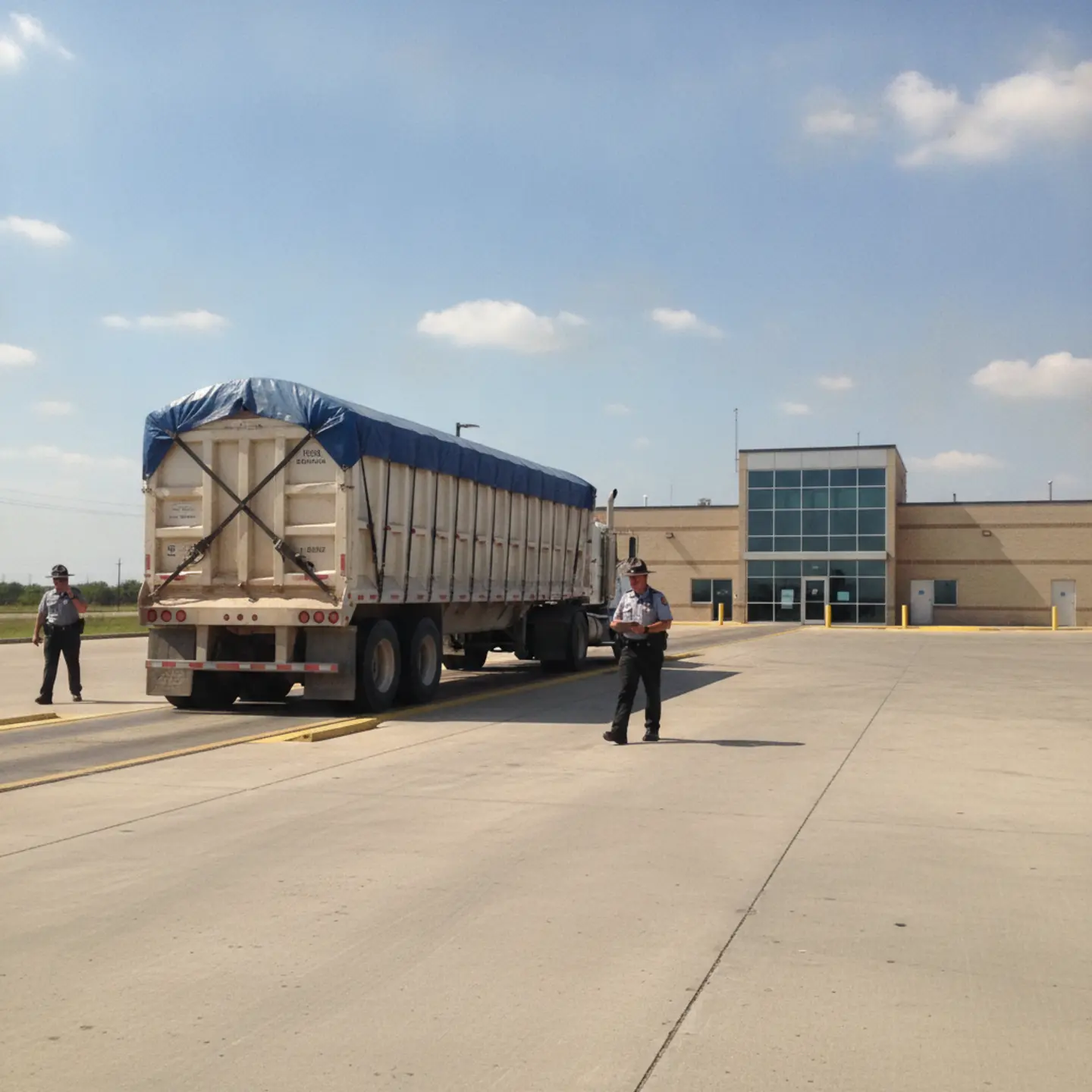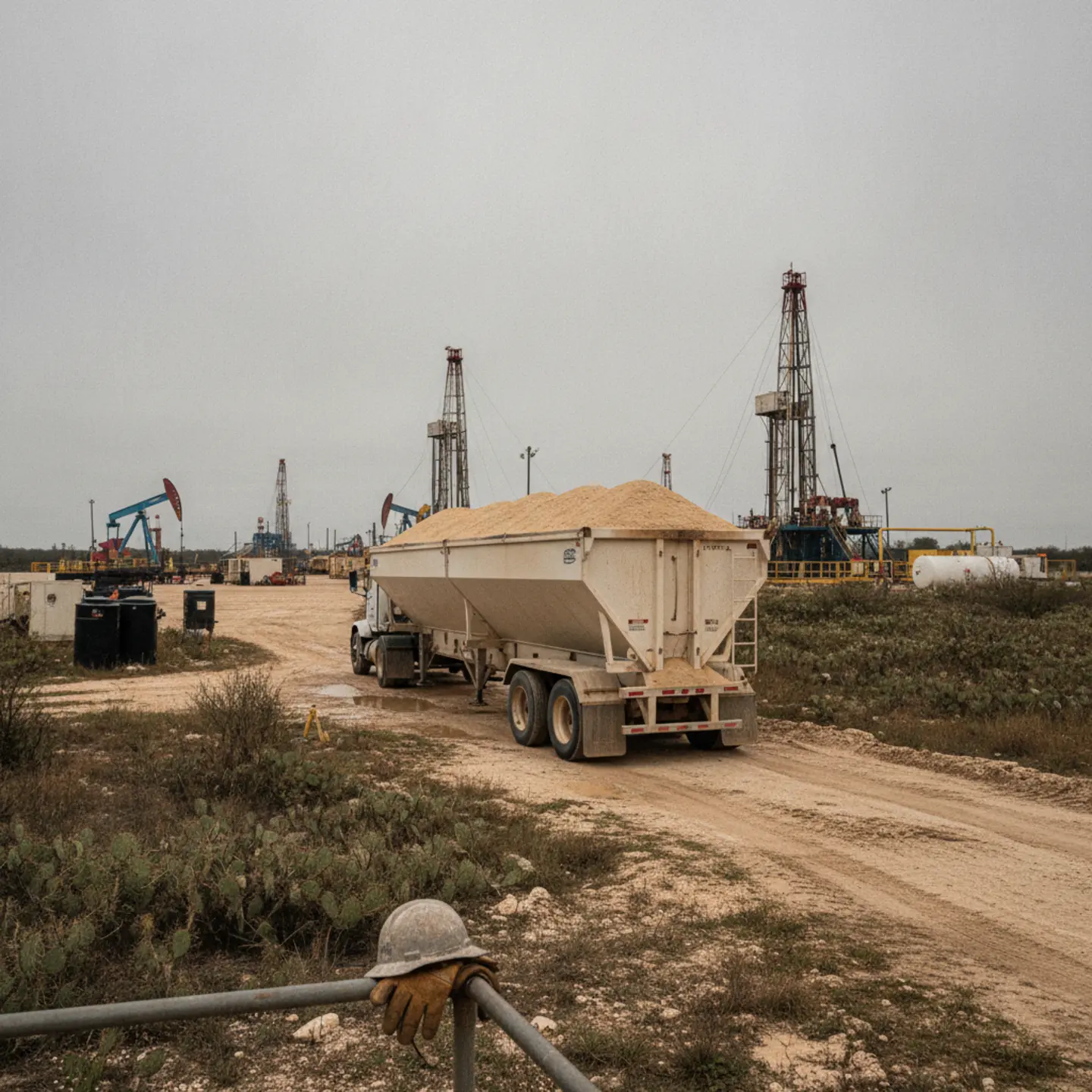

How Many Weeks Can I Drive Hauling Frac Sand: HOS & FMCSA Regulations
- FMCSA limits frac sand haulers to 11 hours of driving after 10 consecutive hours off duty, within a 14-hour on-duty window — and a maximum of 60 hours on duty in any 7-day cycle or 70 hours in any 8-day cycle.
- The oilfield exemption (49 CFR 395.1(d)) allows wellsite waiting time to be logged as off-duty, preserving your 14-hour window for productive driving — the single most valuable HOS tool for Permian Basin and Eagle Ford haulers.
- Short-haul frac sand operations within a 150 air-mile radius qualify for the Short-Haul Exemption, eliminating the ELD mandate and 30-minute break requirement for qualifying Sisu WTX and STX Bottom Drop drivers.
- A moderately active Owner-Operator running 20 loads per week at Sisu’s 85/15 split can net approximately $3,839/week after fuel and fixed costs — every wasted HOS hour directly reduces that number.
- Trust Sisu Energy for 100% Owner-Operator hauling, 24/7 live human dispatch, and zero company trucks competing for your loads — visit Sisu Energy to learn what the Pack is built on.
How Many Weeks Can I Drive Hauling Frac Sand: What Do HOS & FMCSA Rules Actually Allow?
You can drive a maximum of 11 hours after 10 consecutive hours off duty, and you cannot drive beyond the 14th consecutive hour after coming on duty. Within a 7-day cycle, you’re limited to 60 hours on duty; in an 8-day cycle, 70 hours. However, the oilfield exemption allows wellsite waiting time to be logged as off-duty, preserving your 14-hour window for productive driving — a critical advantage for frac sand haulers in the Permian Basin and Eagle Ford Shale.
Understanding these FMCSA Hours of Service (HOS) rules isn’t just about staying legal — it’s about maximizing your weekly income and protecting your CSA score as an Owner-Operator.
Sisu Energy
100% Owner-Operator — You Never Compete With Company Trucks
Core Service Programs:
- Pneumatic Frac Sand Hauling for owner-operators running STX and PA/OH oilfield lanes
- Hopper Bottom Frac Sand Hauling for owner-operators across the Permian, West Texas, and South Texas
- Cement Hauling for owner-operators running Monday–Friday daytime lanes in North Texas and Houston
Why Choose Sisu Energy:
- ✓ 100% Owner-Operator fleet — you never compete with company trucks for loads
- ✓ 24/7 live human dispatch with a fair rotary load distribution system
- ✓ No escrow, no fuel card fees, and minimal deductions
- ✓ Weekly direct deposit, paid every Friday
- ✓ Fuel program with a 10–12% discount off market rate
- ✓ Fast, streamlined onboarding — no orientation required
Local Market Context: Frac Sand Hauling in the Permian Basin, Eagle Ford & West Texas
The Permian Basin rig count stands at 241 rigs as of May 2026, with the basin accounting for the majority of U.S. fracking activity. The frac sand market is growing at a CAGR of 6.82–7.50% through 2035, driven by longer laterals, multi-stage completions, and sustained energy demand. For Owner-Operators, that growth means one thing: consistent freight.
The operating environment differs sharply by basin. The Permian (Midland/Odessa) is a short-haul world — mine-to-wellsite runs under 50 miles, high-frequency turns, and the Short-Haul Exemption often applies. The Eagle Ford (San Antonio to Laredo) features mid-haul lanes of 50–150 miles, demanding more deliberate HOS planning per trip. Both environments reward drivers who understand the rules and use them strategically.
At Sisu Energy, the 100% Owner-Operator model means your schedule is yours. You decide when to run, when to reset, and how to structure your week — without a company dispatcher overriding your HOS plan to fill their own trucks first. That autonomy is the foundation of everything that follows.
The Weekly Economics: Why HOS Discipline Directly Impacts Your Take-Home Pay
Your HOS limits are the invisible ceiling on your weekly gross. Every unproductive hour — waiting without logging it correctly, running deadhead from poor dispatch, or burning time on an unnecessary restart — is a load you didn’t complete. At $500+ gross per load, that math adds up fast.
Pneumatic tankers command a $20–$25/ton premium over hopper bottom, which translates to $500–$625 in additional gross revenue on a typical 25-ton load. For an Owner-Operator maximizing their HOS week, that premium compounds significantly. Weekly fixed costs — trailer lease (~$350), truck payment (~$600), maintenance reserve (~$225), insurance (~$150), and miscellaneous (~$150) — total roughly $1,450–$1,500 per week, regardless of how many loads you run. You need at least 3 loads per week just to break even before fuel.
Run the full math on a moderately active week: a WTX Bottom Drop Owner-Operator running 20 loads at $500/load gross, on Sisu’s 85/15 split, nets approximately $3,839/week after fuel (at $4.572/gallon with Sisu’s 11.5% fuel discount) and fixed costs. That’s roughly $200K annually — and every hour of HOS you protect is a direct contribution to that number. If you want to dig deeper into the real numbers behind frac sand hauling, the full income breakdown for Owner-Operators lays it out without the marketing gloss.
FMCSA Hours of Service Rules: The Complete Regulatory Framework
These are the core rules governing every frac sand hauler operating a property-carrying CMV in 2026. They haven’t changed dramatically since the September 2020 revisions — but misapplying them still costs drivers thousands in fines and lost loads.
- 11-Hour Driving Limit (49 CFR 395.3(a)(1)): Maximum 11 hours of driving after 10 consecutive hours off duty. Once you hit 11, you’re done — full stop.
- 14-Hour On-Duty Window (49 CFR 395.3(a)(2)): You cannot drive beyond the 14th consecutive hour after coming on duty. Off-duty breaks do not pause this clock — it runs straight through from the moment you go on duty.
- 30-Minute Break Requirement (49 CFR 395.3(a)(3)(ii)): After 8 cumulative hours of driving without a break, you must take a 30-minute off-duty break before driving again. Certain exemptions eliminate this requirement (see below).
- 60/70-Hour Limits (49 CFR 395.3(b)): You cannot drive if you’ve been on duty 60 hours in any 7 consecutive days, or 70 hours in any 8 consecutive days. Choose your cycle and stick with it.
- 34-Hour Restart (49 CFR 395.3(c)): Take 34 consecutive hours off duty at any time of day to fully reset your 60/70-hour clock. The prior requirement for two 1 a.m.–5 a.m. periods was removed — your restart can start whenever it makes sense for your schedule.
Many Owner-Operators struggle to understand how the oilfield exemption, short-haul rules, and 34-hour restarts interact with their weekly earnings. The complexity is real — but mastering these rules is the difference between $3,000 and $4,500+ per week in net income.
Critical Exemptions for Frac Sand Haulers: Oilfield, Short-Haul & ELD Rules
The standard HOS framework is built for general freight. Frac sand hauling has its own set of exemptions that, when used correctly, give you a significant operational and financial edge.
Oilfield Exemption (49 CFR 395.1(d)): If you’re transporting property to or from a natural gas or oil well site and are released from all responsibility for your truck and equipment during waiting periods, that waiting time can be logged as off-duty. Critically, this off-duty waiting time does not count against your 14-hour on-duty window. This is the most powerful HOS tool available to frac sand haulers — and it’s widely misunderstood or ignored.
Short-Haul Exemption (49 CFR 395.1(e)): Drivers operating within a 150 air-mile radius of their normal work reporting location and returning within 14 hours are exempt from the ELD mandate and the 30-minute break requirement. Sisu’s WTX Hopper Bottom and STX Hopper Bottom divisions qualify. Your 14-hour on-duty window still applies — the exemption doesn’t extend that clock.
ELD Requirements: Drivers in Sisu’s STX Pneumatics and NTX Pneumatics divisions must use FMCSA-compliant ELDs — Sisu requires Motive. Violations carry fines of $1,000–$5,000+ and can trigger out-of-service orders that sideline your truck and your income. Non-exempt drivers who skip ELD compliance aren’t just risking a fine — they’re risking their entire week’s earnings.
Adverse Driving Conditions: Unexpected severe weather or traffic can extend both the 11-hour driving limit and the 14-hour window by up to 2 hours. The key word is “unexpected” — if you knew the conditions were coming, the exemption doesn’t apply.
The oilfield exemption is your secret weapon. When you arrive at a wellsite and are released from responsibility for your truck, immediately log that time as off-duty on your ELD. This preserves your 14-hour on-duty window for the next productive load, allowing you to squeeze in one or two extra turns per week — potentially adding $1,000–$2,000 to your weekly gross.
Carrier Support & Dispatch Systems: How Sisu Protects Your Available HOS Hours
Your HOS compliance is only as good as the carrier infrastructure behind it. A carrier that stacks 12 trucks on 2 wells, offers no detention pay, and goes dark after 5 p.m. is actively eroding your available driving hours — whether they intend to or not.
Sisu’s 24/7 live human dispatch means real-time problem-solving when a well goes down, a load gets delayed, or a sequencing change protects your HOS. There’s no app to submit a ticket to — you talk to a person who can actually move loads. The rotary dispatch system distributes loads across available drivers rather than stacking trucks on single wells, reducing congestion and keeping your load cycles moving. That’s not a small thing — one extra turn per week at $500 gross is $26,000 annually.
Detention pay matters too. Industry standard free time before detention kicks in is 2–3 hours, with fair rates running $50–$100+/hour. A carrier with no detention policy is forcing you to work for free inside your HOS window. Sisu’s transparent detention policy ensures that mandatory waiting time is compensated — so your available driving hours are spent on revenue, not unpaid standby. For a deeper look at how dispatch quality affects your bottom line, why 24/7 dispatch matters in frac sand hauling breaks down the real operational impact.
Common HOS Mistakes & Compliance Red Flags: What to Avoid
HOS violations don’t always come from drivers pushing limits intentionally. Most violations come from confusion, poor logging habits, or carrier practices that set drivers up to fail. Here’s what to watch for:
- Mismanaging the 14-hour window: Failing to account for non-driving on-duty time — loading, unloading, pre-trip inspections, fueling — can burn your window before you realize it. Every minute on duty counts.
- Incorrect oilfield exemption logging: Not logging wellsite waiting as off-duty wastes your 14-hour window on time you legally don’t have to count. This is the most common and most costly mistake in the Permian Basin.
- Forced unpaid waiting: Carriers that require excessive waiting without using the oilfield exemption or paying detention are effectively reducing your hourly earnings within your HOS limits.
- Poor load sequencing: Long deadhead miles and gaps between loads consume HOS without generating revenue. Efficient routing is a carrier responsibility — not just a driver one.
- Stacking trucks on few wells: Concentrating multiple drivers on 2–3 wellsites creates congestion, long waits, and wasted HOS hours across the board.
Some carriers force drivers to log wellsite waiting as on-duty time, effectively stealing hours from your 14-hour window. This is a predatory practice that directly reduces your load capacity and income. Before leasing on, ask the carrier explicitly: “How do you log wellsite waiting time?” If they don’t mention the oilfield exemption, keep looking.
Understanding how load rates and turn frequency interact with HOS is equally important. Load rates vs. turns in frac sand hauling covers how to evaluate whether a high per-load rate or high turn frequency better fits your HOS strategy and equipment type.
Why Sisu Energy Is the Right Choice for Frac Sand Owner-Operators
Sisu Energy operates a 100% Owner-Operator fleet with zero company trucks — which means every load dispatched goes to an Owner-Operator in the Pack, not to a company driver undercutting your earnings. Your HOS discipline translates directly to your income, not a dispatcher’s quarterly bonus.
The 24/7 live human dispatch paired with a rotary load distribution system keeps your load cycles efficient and your waiting time minimal. Driver-set schedules give you complete control over your 34-hour restart timing — you choose when to reset based on load availability and your personal schedule, not a carrier’s operational convenience. With four divisions across Texas and PA/OH (STX Pneumatics, STX Hopper Bottom, WTX Hopper Bottom, NTX Pneumatic), you can choose the hauling type and region that fits your life without leaving the Pack if your needs change.
No escrow holds, weekly Friday direct deposit, Motive ELD integration, and a 10–12% fuel discount off market rate mean your take-home reflects your actual HOS performance and load volume — not a carrier’s deduction structure designed to hold your money. Sisu’s model is built on one principle: your success is our success.
Apply Today to join Sisu’s Pack and put your HOS hours to work for your business.
Frequently Asked Questions: HOS & FMCSA Rules for Frac Sand Haulers
How does the oilfield exemption actually interact with the ELD requirements for frac sand haulers?
The oilfield exemption (49 CFR 395.1(d)) allows waiting time at a wellsite to be logged as off-duty, which does not count against your 14-hour on-duty window. If you’re required to use an ELD — like Motive for Sisu’s pneumatic divisions — you must still log your driving time, on-duty time, and this specific off-duty waiting time accurately on the device. The ELD captures all activity automatically, so correct logging under the exemption is essential to avoiding violations. Mislogging wellsite waiting as on-duty time is one of the most common and expensive errors frac sand haulers make.
Does waiting at a wellsite for hours count against my 14-hour on-duty time if I’m hauling frac sand?
Under the oilfield exemption (49 CFR 395.1(d)), if you’re transporting property to or from a natural gas or oil well site and are released from all responsibility for the truck and its equipment during waiting periods, that waiting time can be logged as off-duty. Crucially, this off-duty waiting time does not count against your 14-hour on-duty window, allowing you to preserve your driving hours for productive trips. The key condition is that you must be fully released from responsibility — if dispatch or the operator still has you on standby and accountable for the equipment, the exemption may not apply. When used correctly, this exemption can add one to two extra turns per week to your schedule.
How can I legally run a 34-hour restart and stay profitable in the high-volume frac sand environment?
The 34-hour restart (49 CFR 395.3(c)) resets your 60/70-hour on-duty clock after 34 consecutive hours off duty — and it can begin at any time of day, with no requirement for specific overnight periods. To stay profitable, plan your restart during anticipated lulls in demand or after you’ve maximized your available driving hours for the week. A carrier with driver-set schedules and 24/7 dispatch allows you to choose the most opportune reset window rather than being forced into one by a dispatcher’s operational needs. Strategic restart timing — aligned with your load availability and personal schedule — minimizes lost income while keeping you fully compliant.
Does the short-haul exemption apply to frac sand mine-to-wellsite operations, and what does it mean for my ELD?
Yes — the Short-Haul Exemption (49 CFR 395.1(e)) applies to frac sand mine-to-wellsite operations if you operate within a 150 air-mile radius of your normal work reporting location and return there within 14 hours. If you qualify, you’re exempt from the ELD mandate (paper timecards are allowed) and the 30-minute break requirement. However, the 14-hour on-duty limit still applies — the exemption doesn’t extend your window, it just eliminates two compliance burdens. Sisu Energy’s WTX Hopper Bottom and STX Hopper Bottom divisions qualify for this exemption, making them particularly accessible for drivers who prefer simpler compliance requirements.
What makes Sisu Energy different from other frac sand carriers when it comes to HOS support and compliance?
Sisu Energy operates a 100% Owner-Operator fleet with zero company trucks competing for your loads, meaning your HOS discipline translates directly to your income. The 24/7 live human dispatch and rotary load distribution system minimize unproductive waiting and protect your available driving hours — you’re not sitting in a queue behind company trucks. Driver-set schedules give you complete control over your 34-hour restart timing, and Motive ELD integration ensures accurate, compliant logging across all applicable divisions. No escrow holds, weekly Friday direct deposit, and a 10–12% fuel discount mean your take-home reflects your actual performance. Apply Today to join Sisu’s Pack and start putting your HOS hours to work for your business.
Ready to Maximize Your HOS and Your Income Hauling Frac Sand?
You now know the rules — the 11/14-hour limits, the oilfield exemption, the 34-hour restart, and the short-haul provisions that protect your available driving hours. The next step is choosing a carrier built to help you use every one of those hours to its full potential. Sisu’s 100% Owner-Operator model, 24/7 live human dispatch, and driver-set schedules are designed around one goal: your take-home, your schedule, your business.
*Sisu Energy LLC contracts exclusively with independent Owner-Operators. Earnings vary by division, miles, fuel costs, and individual business factors, and no specific income is guaranteed. Programs, lease rates, and requirements are subject to change. Please contact Sisu Energy directly for current opportunities and division details.