Bottom Drop vs. End Dump Trailers for West Texas Sand Operations
Key Takeaways
- Bottom drop (hopper bottom) trailers are purpose-built for dry frac sand delivery in the Permian Basin — gravity-fed unloading enables 4–5 turns per day on short-haul routes (20–80 miles), generating $8,000–$11,000 gross weekly revenue for qualified Owner-Operators.
- End dump trailers serve a fundamentally different market — wet sand, aggregates, and construction materials — with slower hydraulic unloading, fewer daily turns, and generally lower per-ton rates than specialized frac sand hauling.
- The Permian Basin’s shift to in-basin West Texas white sand (now 50–70% of demand) has concentrated activity into last-mile logistics, where bottom drops and their rapid gravity discharge are the preferred — and often required — trailer type at modern wellsites using frac sand box systems.
- Many WTX bottom drop operations qualify for the FMCSA Short-Haul Exemption (150 air-mile radius, 14-hour return), eliminating the ELD requirement and reducing administrative burden — a meaningful operational advantage over longer-haul end dump work.
- Trust Sisu Energy for 100% Owner-Operator frac sand hauling, no escrow, 24/7 live human dispatch, and consistent Permian Basin lanes — join the Pack and take control of your hauling business.
Bottom Drop vs. End Dump Trailers: Which Is Better for West Texas Frac Sand Hauling?
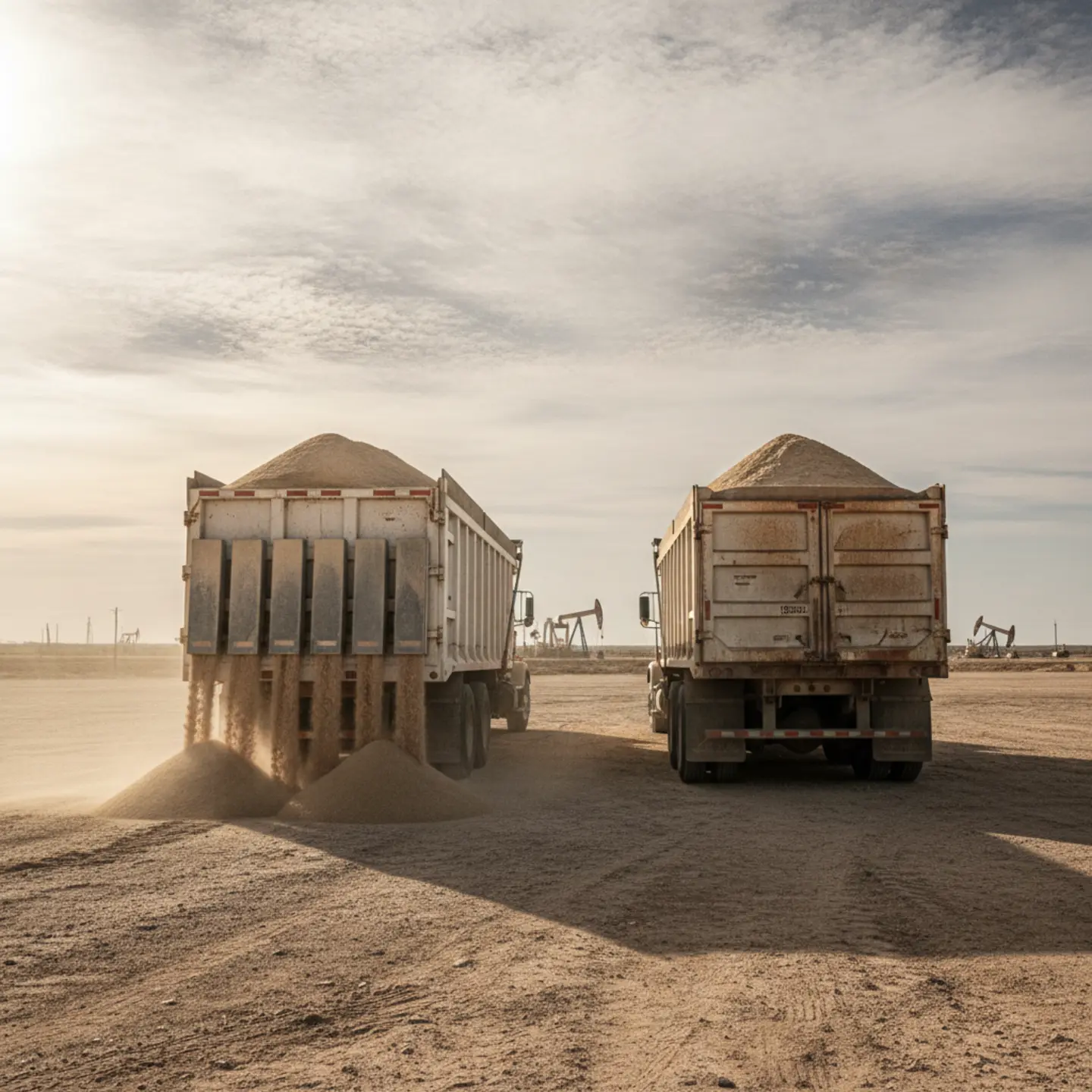
For frac sand hauling in the Permian Basin, a bottom drop (hopper bottom) trailer typically delivers higher earnings potential, faster daily turns, and better alignment with modern wellsite logistics than an end dump. Bottom drops are engineered for rapid gravity-fed unloading of dry proppant into specialized on-site storage systems, enabling 4–5 turns per day on short-haul routes and consistent detention pay enforcement. End dumps, by contrast, are designed for wet sand, aggregates, or construction materials — slower hydraulic unloading, fewer daily turns, and generally lower per-ton rates — making them a different market segment entirely.
Understanding the operational, financial, and regulatory differences between these two trailer types is critical for Owner-Operators choosing their next hauling division in West Texas.
Sisu Energy
100% Owner-Operator — You Never Compete With Company Trucks
Core Service Programs:
- Pneumatic Frac Sand Hauling for owner-operators running STX and PA/OH oilfield lanes
- Hopper Bottom Frac Sand Hauling for owner-operators across the Permian, West Texas, and South Texas
- Cement Hauling for owner-operators running Monday–Friday daytime lanes in North Texas and Houston
Why Choose Sisu Energy:
- ✓ 100% Owner-Operator fleet — you never compete with company trucks for loads
- ✓ 24/7 live human dispatch with a fair rotary load distribution system
- ✓ No escrow, no fuel card fees, and minimal deductions
- ✓ Weekly direct deposit, paid every Friday
- ✓ Fuel program with a 10–12% discount off market rate
- ✓ Fast, streamlined onboarding — no orientation required
Local Market Context: West Texas Frac Sand Demand in 2026
The Permian Basin remains the undisputed center of U.S. drilling activity. As of May 2026, the basin runs 241 active rigs — down from 287 a year prior, but still accounting for 40–50% of all U.S. drilling. More telling for frac sand haulers: the Permian carries 35–40 active frac spreads, consuming 100,000–130,000 tons of sand every week. Annual Permian frac sand consumption runs between 25–35 million tons. That volume doesn’t move itself.
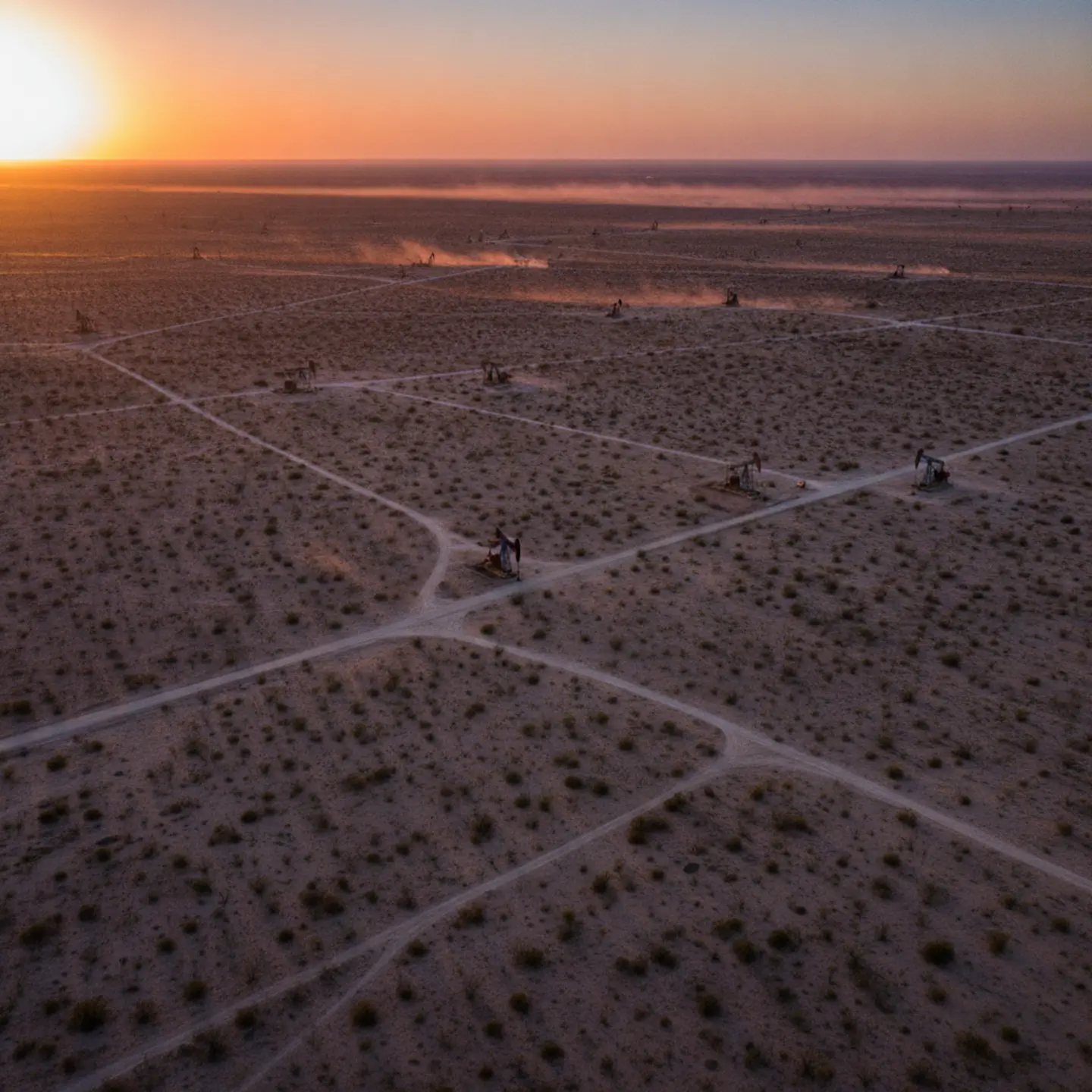
The structural shift that matters most for trailer selection is the rise of in-basin sand. West Texas white sand now fulfills 50–70% of Permian demand — up from near-zero a decade ago. New mine operations near Kermit and Winkler County, including Wallstreet Sand Co.’s dry frac sand facility launched in January 2026, have compressed long-haul transport and concentrated the real action into last-mile logistics: 20–100 mile runs from transload or mine to wellsite. That’s bottom drop territory.
E&P operators have also accelerated their adoption of on-site sand storage systems — frac sand boxes and mobile silos from providers like Solaris, PropX, and Arrows Up. These systems require rapid gravity-fed discharge directly from the trailer. A bottom drop delivers that. An end dump cannot interface with these systems for dry proppant. When a wellsite supervisor specifies trailer type, it’s not a preference — it’s a logistics requirement driven by the equipment on location.
West Texas oilfield roads add another layer. Caliche lease roads and unpaved pad access routes accelerate wear on every piece of equipment. A bottom drop’s lower center of gravity when loaded offers stability advantages on uneven terrain. End dumps require a level, stable surface to safely raise the hydraulic bed — a condition that’s rarely guaranteed on a remote Permian pad. For Owner-Operators evaluating how frac sand hauling has shifted in West Texas, the equipment alignment with wellsite infrastructure is no longer optional.
Pricing, Rates, and Daily Earnings: Bottom Drop vs. End Dump
WTX bottom drop frac sand rates run $15–$20/ton, averaging approximately $420/load across typical 20–80 mile lanes with 23–25 tons per haul. End dump hauling for wet sand, aggregates, or construction fill generally commands lower per-ton rates with less predictable load availability — and the rate gap widens when you factor in daily turns.
Why Frac Sand Rates Are Higher Than General Aggregate
Frac sand is a specialized, high-value proppant with strict cleanliness and purity standards, time-sensitive delivery requirements tied to active frac spreads, and consistent demand in the Permian Basin. This drives higher per-ton rates and more predictable load availability compared to general aggregate hauling.
Daily Turns and Revenue Comparison
The turn-rate differential is where bottom drop frac sand hauling separates itself. On short-haul routes under 50 miles, a bottom drop operator can realistically run 4–5 turns per day — gravity discharge is fast, wellsite turnaround is tight, and the lanes are consistent. At $300–$450 per load, that’s $1,200–$2,250 gross daily revenue. Mid-haul (50–150 miles) drops to 2–3 turns/day but still generates strong weekly numbers.
End dump operations — hauling wet sand, dirt, or aggregate to construction sites or pits — typically run fewer turns per day. Hydraulic unloading is slower than gravity discharge, job site conditions are more variable, and load availability is less predictable than a contracted frac sand lane. The effective hourly earnings comparison consistently favors the bottom drop when volume is consistent.
| Factor | Bottom Drop (Frac Sand) | End Dump (Aggregate) |
|---|---|---|
| Rate (per ton) | $15–$20/ton | Lower; varies by market |
| Avg. Load (short-haul) | ~$420/load (23–25 tons) | Variable; typically lower |
| Daily Turns (short-haul) | 4–5 turns/day | 2–3 turns/day (typical) |
| Gross Daily Revenue | $1,200–$2,250 | Lower; less predictable |
| Gross Weekly Revenue | $8,000–$11,000 | Typically lower |
| Weekly Operating Costs (ex-fuel) | ~$1,450–$1,500/wk | ~$1,450–$1,500/wk |
| Detention Pay | $75–$100/hr; consistently enforced | Less standardized |
| Trailer Lease (Sisu WTX) | $350/week; customer-supplied phys. damage ins. | Varies; driver may carry phys. damage |
| Unload Mechanism | Gravity-fed; fast, low maintenance | Hydraulic lift; slower, higher upkeep |
Hidden Cost Differentials
Weekly operating costs for both trailer types land in a similar range — approximately $1,450–$1,500/week excluding fuel — when you stack truck payment ($600/wk), maintenance reserves ($200–$250/wk), insurance ($150/wk), miscellaneous ($150/wk), and trailer lease ($350/wk). The difference shows up in where the maintenance dollars go.
Bottom drops have fewer complex moving parts in the unload system — gravity does the work. Your maintenance budget on a hopper bottom goes toward tires, brakes, and suspension, all of which take a beating from abrasive frac sand and rough caliche roads. End dumps carry an additional maintenance category: the hydraulic system. Pumps, cylinders, and hoses require regular inspection, and a hydraulic failure can mean costly downtime and specialized repairs. For Owner-Operators evaluating the relationship between load rates and daily turns, the maintenance cost structure matters as much as the gross rate.
Both trailer types require tarping — frac sand for dust control and product integrity, end dump loads almost universally by law to prevent spillage. Overweight permitting applies to both when loads exceed 80,000 lbs. County-specific restrictions in Midland, Ector, Andrews, Ward, Winkler, Loving, and Reeves counties can add route complexity and cost — factor this into your planning regardless of trailer type.
Detention Pay Is a Hidden Revenue Stream in Frac Sand Hauling
For frac sand operations, detention pay (typically $75–$100/hour after 1–2 hours free time) can represent 10–20% of your gross weekly earnings. Ensure your carrier enforces detention policies consistently and pays promptly; this is a significant income lever that separates profitable operations from marginal ones.
Regulatory and Licensing: CDL, Permits, and Compliance
Both trailer types require a Class A CDL — no additional endorsements are required for dry bulk frac sand in a hopper bottom or wet aggregates in an end dump. A Tanker endorsement (N) is not required for either, as these are open or gravity-discharge trailers, not sealed pressurized tanks. Texas DPS structures CDL classes around GCWR and towed unit weight, not trailer configuration.
Standard gross vehicle weight in Texas is 80,000 lbs without special permits. Both trailer types are engineered to approach that limit when fully loaded. Overweight permits from TxDOT are required above that threshold and specify approved routes. County roads in the Permian Basin add another layer — seasonal weight limits on caliche roads during wet conditions can restrict access regardless of state permits. Midland, Ector, Andrews, Ward, Winkler, Loving, and Reeves counties each have their own road use policies for heavy haul on lease roads.
The most operationally significant regulatory advantage for WTX bottom drop operators is the FMCSA Short-Haul Exemption (395.1(e)(1)). Many Permian Basin frac sand runs — 20–80 miles from transload to wellsite and back — fall within the 150 air-mile radius and 14-hour return window. When you qualify, you’re not required to use an ELD for Hours of Service recording. Time card records replace electronic logs, reducing administrative burden and giving you operational flexibility. This exemption applies to the driver’s operation, not the trailer type — but in practice, the short-haul lane structure of bottom drop frac sand work makes qualification far more consistent than longer-haul end dump routes.
Frac sand hauling in the oilfield also requires specific safety certifications beyond the CDL: PEC (Safeland) Basic Orientation, H2S Clear certification, and a Respiratory Fit Test (3M Half Mask) for silica dust exposure. A valid DOT Medical Card, clean MVR, and no FMCSA Clearinghouse violations are baseline requirements. Major E&P operators vet contractors through ISNetworld, Avetta, and Veriforce — your carrier must maintain good standing on these platforms, and your personal record directly affects your load access. For a deeper look at whether frac sand hauling is worth it in 2026, compliance costs and certification requirements are part of the real numbers calculation.
Top Frac Sand Hauling Carriers in West Texas: Compared and Reviewed
West Texas frac sand logistics is served by several distinct carrier models — each with different equipment, pay structures, and load consistency. Understanding where each fits helps Owner-Operators choose the right partner, not just the right trailer.
Avoid These Common Carrier Traps When Choosing a Frac Sand Hauler
Watch out for carriers with escrow holds, fuel surcharge manipulation, forced dispatch provisions, unclear pay splits, and delayed payments. Transparent weekly direct deposit, no escrow, and clear deduction policies are non-negotiable for protecting your take-home pay as an Owner-Operator.
Sisu Energy LLC: 100% Owner-Operator Frac Sand Hauling
Sisu Energy operates four divisions across Texas and PA/OH, including the WTX Hopper Bottom division specializing in Permian Basin frac sand. The model is 100% Owner-Operator — zero company trucks, which means no internal competition for loads. The WTX division runs consistent short-haul lanes (20–80 miles), $350/week trailer lease with customer-supplied physical damage insurance, 4–5 turns/day potential, and weekly Friday direct deposit with no escrow. Dispatch is 24/7 live human with rotary load distribution — no algorithm deciding who gets the next run.
Large Fleet Carriers
Large fleet carriers operate mixed fleets — hopper bottoms, pneumatics, and specialized equipment — under long-term contracts with major E&P operators and pressure pumpers. They offer integrated logistics solutions but often have internal competition for loads and more complex pay structures. Pneumatic tankers in these fleets command a $20–$25/ton premium over hopper bottom rates, reflecting specialized equipment and silo delivery capabilities.
Direct E&P-Contracted Haulers
Individual Owner-Operators or small fleets securing direct contracts with E&P companies operate with less load diversity but potentially more stable, long-term arrangements. Trailer type is explicitly specified by contract — if the wellsite runs frac sand boxes, they’re calling for a bottom drop. Full compliance with operator-specific safety and logistics requirements is non-negotiable.
Spot Market Independents
Spot market operators source loads via load boards — maximum flexibility, minimum predictability. Rates are generally lower and deadhead risk is higher compared to contracted or aggregator-based operations. For Owner-Operators who want consistent frac sand volume in the Permian, spot market hauling is rarely the most profitable path.
| Carrier Type | Trailer Focus | Load Consistency | O-O Competition for Loads |
|---|---|---|---|
| Sisu Energy (O-O Aggregator) | Hopper Bottom, Pneumatic | High — contracted lanes | None — 100% O-O fleet |
| Large Fleet Carrier | Mixed fleet | High — long-term contracts | Yes — company trucks compete |
| Direct E&P Contract | Contract-specified | Stable but narrow | Minimal |
| Spot Market Independent | Variable | Low — load board dependent | N/A — self-sourced |
Safety Certifications and Oilfield Compliance Requirements
Getting your CDL is the starting line, not the finish. To run frac sand in the Permian, you need a full compliance stack. These aren’t suggestions — they’re the requirements E&P operators and transloaders enforce before a truck goes on location. Missing one certification means no loads.
- PEC (Safeland) Basic Orientation — mandatory for all oilfield site personnel
- H2S Clear Certification — required for any area where hydrogen sulfide may be present
- Respiratory Fit Test (3M Half Mask) — specifically mandated for frac sand hauling due to silica dust exposure
- Valid DOT Medical Card — federal requirement
- Clean MVR — no major violations, no DUI/DWI; PSP score of 50% or lower typically required
- FMCSA Clearinghouse — no drug or alcohol violations
- Contractor Pre-Qualification Platforms — ISNetworld, Avetta, Veriforce; your carrier must maintain good standing
These requirements apply to frac sand hauling specifically — general aggregate or construction end dump work typically does not carry the same oilfield certification burden. That’s part of why frac sand rates are higher: the compliance bar is real. For Owner-Operators who want to understand the real numbers behind Owner-Operator frac sand hauling, certification costs and timeline are part of the upfront investment calculation.
Why Sisu Energy Is the Right Choice for West Texas Owner-Operators
Sisu Energy operates a 100% Owner-Operator fleet with zero company trucks across six hauling divisions in Texas and Pennsylvania/Ohio. In the WTX Hopper Bottom division, that structure translates directly to your bottom line: no internal competition for loads means every run dispatched goes to an Owner-Operator in the Pack — not a company driver undercutting your lane.
The dispatch model matters as much as the fleet model. Sisu runs 24/7 live human dispatch with a rotary load distribution system — fair allocation, not algorithmic favoritism. Drivers who’ve worked with app-based or automated dispatch know the difference when a load goes sideways at 2 a.m. and there’s no one to call. At Sisu, there’s always someone on the other end.
The WTX Hopper Bottom division’s financial structure is built for Owner-Operator success. $350/week trailer lease with customer-supplied physical damage insurance keeps upfront capital requirements low. No escrow. Weekly Friday direct deposit. No fuel surcharge manipulation — the fuel program runs at a 10–12% discount off market rate. Consistent short-haul lanes (20–80 miles) in the Permian Basin enable 4–5 turns per day, with gross weekly revenue of $8,000–$11,000 and realistic net take-home of $2,900–$5,900/week after all operating costs.
Sisu also supports Owner-Operators through the compliance stack — PEC, H2S, and Respiratory Fit certifications — so you meet every E&P operator requirement and maintain consistent access to loads. Your success is our success isn’t a tagline. It’s the business model.
Frequently Asked Questions
What’s the main difference in work for an Owner-Operator choosing a bottom drop versus an end dump in West Texas?
For frac sand in West Texas, a bottom drop (hopper bottom) trailer means hauling dry proppant on consistent, often shorter, high-turn routes from transloads or in-basin mines to wellsites — with rapid gravity-fed unloading directly into frac sand box systems or mobile silos. An end dump is typically for wet sand, aggregates, or dirt for construction, involving slower hydraulic unloading at pits, quarries, or job sites. These are fundamentally different market segments: bottom drop frac sand sits inside the core last-mile oilfield supply chain, while end dump aggregate work generally does not interface with active frac spread logistics.
Will I make more money hauling frac sand with a bottom drop or general aggregates with an end dump in the Permian?
For qualified Owner-Operators, bottom drop frac sand hauling in the Permian Basin consistently outperforms general aggregate work on gross weekly earnings. Frac sand operations can generate $8,000–$11,000 gross weekly due to consistent demand, contracted lanes, and 4–5 daily turns on short-haul routes. General aggregate hauling typically offers lower per-ton rates and fewer daily turns due to slower hydraulic unloading and more variable job site conditions. The combination of higher rates, higher turn frequency, and enforced detention pay makes bottom drop frac sand the stronger earnings opportunity for drivers who meet the compliance requirements.
Can I use the Short-Haul Exemption with a bottom drop trailer in West Texas, and what does that mean for my ELD?
Yes — many Owner-Operator bottom drop operations in the West Texas Permian Basin qualify for the FMCSA Short-Haul Exemption (395.1(e)(1)) because the prevalent 20–80 mile lanes fall within the 150 air-mile radius, and drivers return to their work reporting location within 14 hours. The primary operational benefit is that you are not required to use an ELD for Hours of Service recording — time card records replace electronic logs, reducing administrative burden and giving you more operational flexibility. The exemption applies to the driver’s operation regardless of trailer type, but the short-haul lane structure of bottom drop frac sand work makes consistent qualification far more achievable than longer-haul end dump routes.
What are the biggest operational challenges I’ll face with a bottom drop trailer on West Texas oilfield roads?
The primary challenge for any equipment in the Permian is the harshness of caliche lease roads and unpaved pad access routes — they accelerate wear on tires, brakes, and suspension components significantly. Abrasive frac sand compounds the tire and brake wear beyond what you’d see in general hauling. Budget your maintenance reserves accordingly. The gravity-fed unload mechanism itself has fewer complex parts than a hydraulic system, so that’s a maintenance advantage — but the roads will test everything else on your truck and trailer. A bottom drop’s lower loaded center of gravity does offer better stability on uneven terrain than an end dump raised for discharge.
What makes Sisu Energy different from other frac sand hauling carriers in West Texas?
Sisu Energy operates a 100% Owner-Operator fleet with zero company trucks — meaning no internal competition for loads and no escrow holds on your earnings. The WTX Hopper Bottom division offers consistent short-haul lanes (20–80 miles) with 4–5 turns/day potential, 24/7 live human dispatch with rotary load distribution, weekly Friday direct deposit, transparent pay with no hidden deductions, and a $350/week trailer lease with customer-supplied physical damage insurance. Safety and compliance support — including assistance with PEC, H2S, and Respiratory Fit certifications — ensures you meet all E&P operator requirements and maintain consistent access to high-paying frac sand loads. Apply Today to join the Pack and take control of your frac sand hauling business.
Ready to Run Frac Sand in the Permian Basin?
You’ve done the comparison — now put the right trailer and the right carrier to work for you. Sisu Energy’s WTX Hopper Bottom division is built for Owner-Operators who want consistent Permian Basin lanes, transparent pay, and a Pack that has your back. No escrow. No company trucks competing for your loads. Weekly Friday direct deposit, every time.
*Sisu Energy LLC contracts exclusively with independent Owner-Operators. Earnings vary by division, miles, fuel costs, and individual business factors, and no specific income is guaranteed. Programs, lease rates, and requirements are subject to change. Please contact Sisu Energy directly for current opportunities and division details.