Why Is 24/7 Dispatch Important For Frac Sand Hauling?
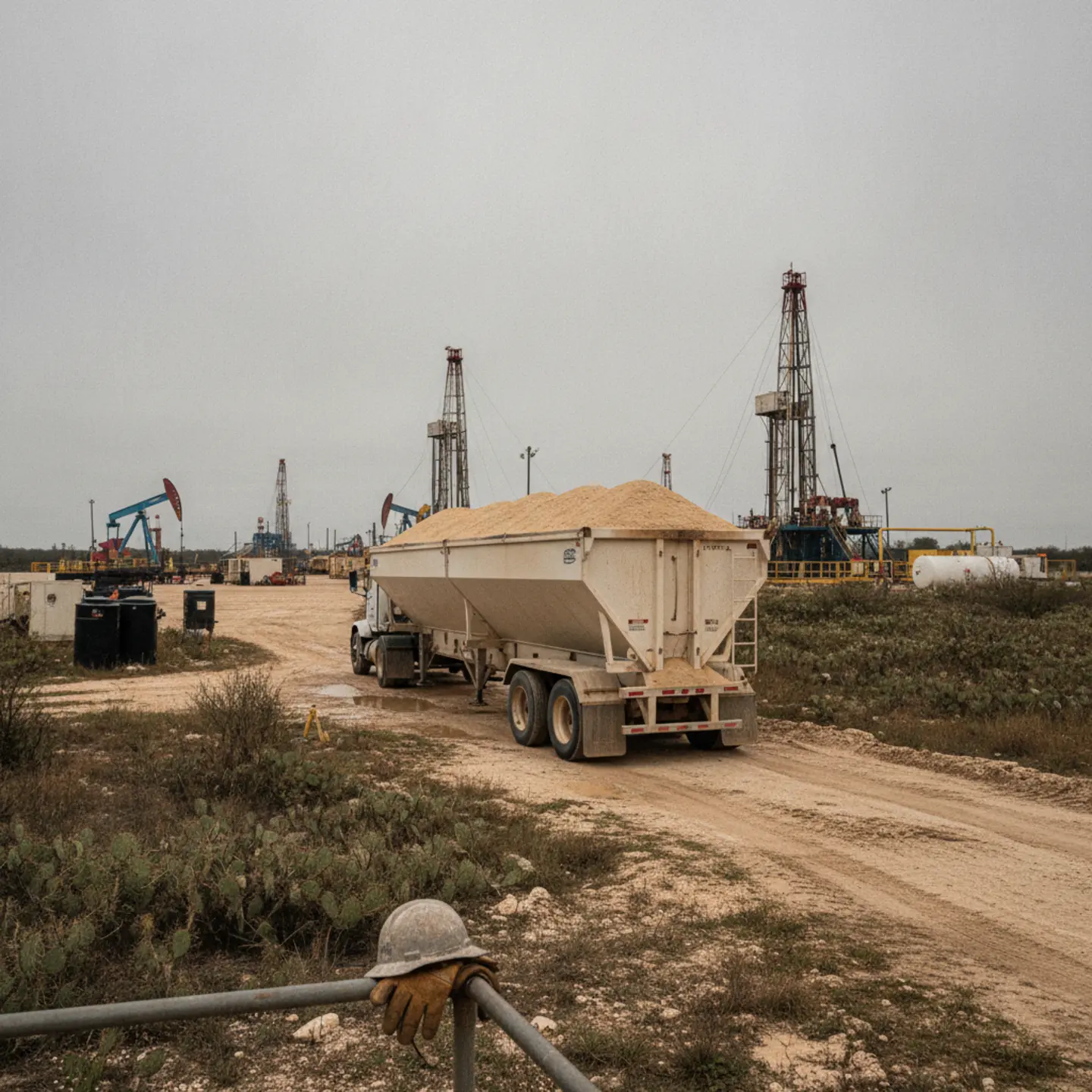
It’s 2 AM in the Permian Basin. Your pneumatic tanker is staged at the wellsite, the frac crew is running hot, and the completion supervisor just told you the load specs changed — different sand grade, different delivery sequence. You need answers right now. Not in six hours when an office opens. Not from a push notification that says “contact support via app.” Right now.
With an app-only dispatch system, you’re on your own. You fire off a message into the void, wait for a response that may not come until morning, and either make a judgment call that could cost you the load — or sit idle while the clock runs and the frac crew burns operator money at $20,000–$50,000+ per day.
With a live dispatcher who picks up the phone, the situation resolves in minutes. You get clear instructions, a re-sequenced load plan, and you’re rolling again. That’s the difference between 24/7 live human dispatch and everything else — and in frac sand hauling, that difference shows up directly in your take-home pay, your stress level, and your ability to control your own business.
Key Takeaways
- ✓ Frac sand hauling operates 24/7 — completion crews never stop, and sand delivery can’t either
- ✓ App-only dispatch shifts the problem-solving burden entirely onto the driver — at 2 AM, that’s a serious risk
- ✓ Poor dispatch costs Owner-Operators $500–$1,200+ per day in lost revenue through detention, deadhead, and missed loads
- ✓ The oilfield HOS exemption (49 CFR § 395.1(d)) is complex — knowledgeable dispatchers help you maximize legal drive time
- ✓ Transparent load assignment and enforced detention pay policies are non-negotiable — ask carriers directly before signing on
- ✓ Technology (ELDs, TMS, GPS telematics) amplifies good dispatch — it doesn’t replace it
The 24/7 Reality of Frac Sand Hauling Operations
Frac sand hauling isn’t standard freight. It doesn’t run on business hours, it doesn’t wait for Monday morning, and it has zero tolerance for communication gaps. As an all-pneumatic frac sand hauling company, Sisu Energy operates in the same world you do — where the pace is set by completion crews, not office schedules. Understanding that reality is the foundation for understanding why 24/7 dispatch isn’t a premium feature. It’s a baseline requirement.
The Permian Basin alone runs between 350 and 450 active rigs at any given time, according to Baker Hughes rig count data. The Eagle Ford Shale maintains 60–90 active rigs. Each of those rigs represents a completion crew that operates around the clock, consuming sand at a rate that can reach 5 to 15+ million pounds per well — that’s 2,500 to 7,500+ tons per completion. Multiple hauls. Multiple trucks. Multiple touchpoints where dispatch coordination can either maximize your day or destroy it.
Rail moves frac sand from mines to regional distribution hubs. But that final mile — from the hub to the wellsite — is 100% truck-dependent. There’s no substitute. When a completion crew runs out of sand, the entire operation halts. That idle time costs operators anywhere from $25,000 to $70,000+ per day in equipment and crew costs. That financial pressure flows directly downstream to carriers and drivers — which is exactly why dispatch quality matters so much.
Why Completion Schedules Never Stop
Frac crews work in continuous shifts because well productivity and operator economics demand it. Stopping a frac job mid-completion isn’t just inconvenient — it can compromise the well’s integrity and cost the operator millions. Sand delivery is synchronized to crew pace. Running out of sand doesn’t pause the job; it halts it entirely, with every piece of specialized equipment sitting idle at full daily cost.
Unlike standard dry bulk freight — where a load can be deferred until the next business day without major consequence — oilfield logistics operate on a zero-tolerance timeline. A dispatcher who goes offline at 5 PM is a dispatcher who can’t support you at 11 PM when the wellsite coordinator changes the delivery sequence. That gap isn’t a minor inconvenience. It’s a direct hit to your income.
The Permian Basin and Eagle Ford Demand Landscape
The Permian Basin consistently represents 40–50% of total U.S. frac sand consumption. When WTI crude prices sit above the $65–75/bbl breakeven threshold for most operators, drilling and completion activity ramps up within 1–3 months — driving sand demand higher. That correlation means the Permian and Eagle Ford can go from steady to surge-mode quickly, and carriers without 24/7 dispatch infrastructure simply can’t keep up.
The growth of in-basin sand mines in West Texas has shortened average haul distances — but it’s actually increased dispatch complexity. More localized sourcing points mean tighter delivery windows, more coordination between mines and wellsites, and more real-time adjustments needed throughout the day. That’s not a problem an app notification can solve. That’s a problem a live human dispatcher solves by picking up the phone.
What 24/7 Live Dispatch Actually Means in Practice
The phrase “24/7 dispatch” gets thrown around a lot. Some carriers use it to mean an answering service that takes messages. Others use it to mean a driver app that sends automated notifications. Neither of those is 24/7 live human dispatch. Understanding the difference isn’t just semantics — it’s the difference between having real support when things go sideways and being completely on your own.
True 24/7 live dispatch means a trained human dispatcher is available at any hour to assign loads, manage delays, resolve conflicts, and advocate for you with shippers and mine operators. They have access to your ELD data, your HOS status, your location, and the full picture of what’s happening across the fleet. They can make decisions, negotiate exceptions, and give you clear direction — not canned responses.
Live Dispatch vs. App-Only Systems
App-only dispatch works like this: you receive a load offer via notification, accept or reject it, get basic instructions, and you’re on your own from there. If something changes — load specs, wellsite access, unexpected delays — you submit a request through the app and wait. The app can’t negotiate. It can’t read the situation. It can’t call the mine operator and find out why the line is backed up three trucks deep at midnight.
Live dispatch flips that dynamic. You have a human who understands the oilfield, knows the players, and can make real-time decisions. Driver feedback from forums like TheTruckersReport.com and Reddit’s r/oilfield community consistently shows that app-only systems increase driver stress and reduce income potential — not because the technology is bad, but because complex logistics require human judgment that no algorithm can replicate.
App-only systems reduce carrier overhead. That’s why carriers use them. But they shift the problem-solving burden entirely onto you — the driver — at the exact moments when you’re least equipped to handle it: at 2 AM, at a remote wellsite, with a frac crew waiting.
The Role of Technology in Supporting Live Dispatch
Good dispatch isn’t a choice between technology and humans — it’s both, working together. ELD platforms like Motive (formerly KeepTruckin’) and Samsara give dispatchers real-time visibility into driver location, hours-of-service status, and vehicle health. Load management systems like Ditat aggregate available loads and track progress from assignment through delivery. GPS telematics let dispatchers monitor ETAs and communicate proactively with shippers when delays are coming.
Technology makes a good dispatcher great. It gives them the data to make smarter decisions faster. But it doesn’t replace the judgment call, the negotiation, or the human reassurance that matters when you’re in a tough spot at the wellsite. The best dispatch operations use technology to amplify human effectiveness — not to eliminate the human element entirely.
You’re Right to Worry About Dispatch
Dispatch quality directly impacts your take-home pay. If you’ve experienced poor communication, unfair load assignments, or unpaid detention, you’re not alone — and it’s a legitimate reason to evaluate your carrier. The frustration you feel is data. Trust it when you’re making your next move.
How 24/7 Dispatch Directly Impacts Owner-Operator Income
This is where it gets personal. Dispatch quality isn’t an abstract operational concern — it’s the single biggest variable between a strong week and a brutal one. An Owner-Operator running an efficient dispatch system in the Permian Basin can complete 3–5 loads per day, with typical hauls earning $400–$700+ per load at 50–150 miles per run. That’s a potential gross of $1,200–$3,500 per day under optimal conditions.
Inconsistent or absent dispatch cuts that number significantly. Missed loads, excessive deadhead, unpaid detention, and HOS violations don’t just reduce your income — they erode your ability to run your business efficiently. Sisu’s Owner-Operator-first model is built specifically to address these pain points, because your success is our success — and that’s not a slogan, it’s the business model.
Detention Time: The Hidden Income Drain
Detention is the single biggest income killer in oilfield hauling, and it’s largely invisible until you do the math. Average detention in frac sand hauling runs 2–6+ hours per load. That’s time you’re sitting at a mine or wellsite, not moving, not earning loaded miles, and not completing the next load in your sequence.
Run the numbers: if you’re averaging 6 hours of detention per day and your effective hourly rate is $50–$80, you’re losing $300–$480 per day — or $1,500–$2,400 per week — in potential revenue. Over a month, that’s $6,000–$9,600 in lost income. That’s not a rounding error. That’s a truck payment.
Carriers with 24/7 live dispatch can proactively manage detention by monitoring mine and wellsite conditions in real time, communicating delays before they compound, and re-routing drivers to available loads when a site is backed up. That proactive management doesn’t eliminate detention — but it can cut it in half, and that difference shows up every week on your settlement.
Maximizing Loaded Miles and Minimizing Deadhead
Deadhead miles are the enemy of Owner-Operator profitability. Every mile you drive empty is a mile you’re burning fuel, accumulating wear, and generating zero revenue. Efficient dispatch sequences loads to minimize empty-mile driving — securing return loads, routing you to nearby pickup points, and planning your day so transitions between loads are tight and productive.
In the Permian Basin, where hauls typically run 50–150 miles at $2.50–$4.50+ per loaded mile, reducing deadhead by even 10–15% can add $200–$400+ per week to your take-home. That’s real money — the kind that adds up to a better life for your family and more control over your business. A live dispatcher who understands the geography and the load landscape can make those optimizations. An app notification cannot.
HOS Management and Legal Compliance
Hours-of-service rules in oilfield hauling are complex. The standard framework — 11-hour driving limit, 14-hour duty window, 10-hour off-duty requirement — applies, but the oilfield exemption under 49 CFR § 395.1(d) allows up to 70 hours in 8 days for drivers operating within a 150 air-mile radius of their worksite. That’s more flexibility than the standard 60-hour/7-day rule, but it requires careful tracking and clear documentation.
A dispatcher who understands these rules can assign loads strategically to maximize your legal driving time without pushing you toward violations. A dispatcher who doesn’t understand them — or who pressures you to run past your limits — is a liability to your CDL, your safety record, and your ability to work. Poor HOS management from dispatch doesn’t just cost you money. It can cost you your operating authority.
If you’re curious about how your current dispatch stacks up against industry best practices — or if you’re exploring carriers with stronger 24/7 support — that’s exactly what Sisu’s dispatch model is designed to address. Your business deserves real support, not a push notification.
The Real Cost of Poor or Absent 24/7 Dispatch
The cost of bad dispatch isn’t theoretical. It shows up in your weekly settlement, in your stress level, and eventually in your decision to leave a carrier. Drivers stranded at wellsites at 2 AM with no live support face delayed decisions and missed opportunities. Unfair load assignments that happen overnight — without transparency or seniority systems — breed the kind of frustration that ends working relationships.
Reviewing concerns about predatory dispatch practices in the industry, a consistent pattern emerges: drivers leave carriers not because of the loads or the lanes, but because of how they’re treated when things go wrong. No live support. Unclear detention policies. Forced loads without consent. Pressure to run past HOS limits. These aren’t isolated complaints — they’re the top grievances documented on TheTruckersReport.com, Reddit’s r/Truckers, and OOIDA complaint logs.
Red Flags in Dispatch Systems
Know what to look for before you sign on with a carrier. These are the dispatch red flags that experienced Owner-Operators have learned to screen for:
- ✗ App-only dispatch with no live support option during critical hours
- ✗ Unclear or unenforced detention pay policies — if they can’t explain it clearly, they won’t pay it consistently
- ✗ Forced load assignments without driver consent or fair compensation
- ✗ Pressure to exceed HOS limits from dispatchers who don’t understand oilfield exemptions
- ✗ No transparency in load assignment criteria — if you don’t know how loads are assigned, you can’t plan your business
Real-World Impact: A Day Without Good Dispatch
Walk through a real scenario. A driver arrives at the mine at 11 PM — no live dispatch to confirm load details or timing. An unexpected 4-hour delay develops at the wellsite, but with no proactive communication from dispatch, the driver has no information and no options. The next scheduled load is missed because of the delay, and there’s no compensation for the lost time.
The driver ends the day with 2 loads instead of 4. At $500–$600 per load, that’s $800–$1,200 in potential revenue that evaporated — not because of anything the driver did wrong, but because dispatch wasn’t there to manage the situation. Over a week, that pattern means the difference between a profitable operation and one that barely covers expenses. Frustration builds. The driver starts looking at other carriers. Turnover happens — and everyone loses.
⚠ Red Flag: App-Only Dispatch at 2 AM
If a carrier tells you dispatch is “app-based” or “available during business hours only,” understand what that means: you won’t have a live person to call when you need help at 2 AM. In oilfield hauling, that’s not a minor inconvenience — it’s a structural problem that will cost you money every time something unexpected happens. And in the Permian Basin, something unexpected happens regularly.
24/7 Dispatch and Hours-of-Service Compliance in Oilfield Hauling
HOS compliance in frac sand hauling is more complicated than standard freight — and the stakes are higher. A violation doesn’t just mean a fine. It means a hit to your CSA score, potential loss of site access, and damage to the carrier relationship that took time to build. Sisu’s commitment to keeping drivers compliant starts with dispatchers who actually understand the rules — not just the standard framework, but the oilfield-specific exemptions that can significantly expand your legal driving time.
The standard HOS framework is familiar: 11-hour driving limit, 14-hour duty window, 10-hour mandatory off-duty. But the oilfield exemption under 49 CFR § 395.1(d) changes the calculus for drivers operating within a 150 air-mile radius of their worksite. Under this exemption, drivers can work up to 70 hours in 8 consecutive days — compared to the standard 60 hours in 7 days. That’s meaningful additional capacity, but only if your dispatcher understands how to use it legally and strategically.
Understanding the Oilfield HOS Exemption
The 150 air-mile radius exemption applies to operations within that distance of the driver’s worksite — not their home terminal. It requires meticulous record-keeping and clear documentation of worksite location. Dispatchers must track driver hours carefully across the 8-day window, not just the current day, to ensure cumulative compliance.
Importantly, the short-haul exemption — which allows drivers under 150 air miles to skip electronic logging — is generally not applicable to the full scope of frac sand hauling. The nature of the work, the distances involved, and the 24/7 operational tempo typically require full ELD compliance. A dispatcher who tells you otherwise is either uninformed or cutting corners — neither of which protects your CDL.
How Dispatch Prevents HOS Violations
Live dispatchers with ELD access can see your remaining drive time in real time. They can plan load assignments to keep you productive without pushing you toward your limits. They can communicate clearly about when you need to take a break, which loads fit your remaining HOS window, and when it’s time to park. That proactive management isn’t just about compliance — it’s about protecting your ability to work tomorrow, next week, and next year.
Poor dispatch — or no dispatch — does the opposite. Without someone monitoring your HOS status and planning accordingly, you end up either leaving money on the table by stopping early or being pressured to push past your limits. Both outcomes hurt your business. Good dispatch eliminates both problems.
Understanding the Oilfield HOS Exemption
The 150 air-mile radius exemption (49 CFR § 395.1(d)) allows drivers to work up to 70 hours in 8 days instead of 60 hours in 7 days. But it’s complex and requires careful tracking of cumulative hours across the full 8-day window. Good dispatchers understand this rule and use it to help you maximize legal driving time — without ever putting your CDL at risk.
Dispatch Load Assignment: Fairness, Transparency, and Consistency
How loads get assigned is one of the most contentious issues in Owner-Operator trucking — and in frac sand hauling specifically, where the difference between a good load and a bad one can mean hundreds of dollars in a single shift. Owner-Operator-first dispatch practices start with transparency: you should know exactly how loads are assigned, what happens if you decline, and how overnight and weekend loads are handled.
Load assignment methods vary by carrier. Some use seniority-based systems — longest-tenured drivers get first choice. Others use first-come-first-served, rewarding responsiveness. Some use dispatcher discretion, assigning based on proximity, HOS status, or other factors. Hybrid approaches combine these methods depending on load type or urgency. None of these is inherently wrong — but all of them require transparency to be fair.
Common Load Assignment Models
Seniority-based: Longest-tenured drivers get first choice of available loads. Predictable, fair, and rewards loyalty. Works well in stable fleets with consistent load volume.
First-come-first-served: First driver to accept gets the load. Rewards responsiveness and keeps drivers engaged with dispatch communications. Can disadvantage drivers who are in HOS rest periods or out of cell range.
Dispatcher discretion: Dispatcher assigns based on proximity, HOS availability, equipment type, or other factors. Flexible and efficient, but can feel arbitrary without clear criteria. Requires high trust between driver and dispatcher.
Hybrid: Different rules for different load types or times of day. Can be the most efficient approach, but requires clear communication about which rules apply when.
Questions Owner-Operators Should Ask About Dispatch
Before you sign on with any carrier, get clear answers to these questions. A carrier with good dispatch will answer them directly and specifically. Vague answers are a red flag.
- → Do you offer 24/7 live dispatch, or is it an app or after-hours answering service?
- → How are loads assigned overnight and on weekends — seniority, first-come-first-served, or dispatcher discretion?
- → What is your detention pay policy? When does it start, what’s the rate, and is there a maximum?
- → How are schedule changes and delays communicated, and who is responsible for updating me?
- → What is the process for reporting issues or disputes outside of normal business hours?
Pro Tip: Ask for Driver References
Before signing with a carrier, ask to speak with 2–3 current drivers about their experience with dispatch. Ask specifically about overnight load assignments, detention pay enforcement, and how quickly dispatch responds to issues. Word-of-mouth from drivers who are actually running loads is the most reliable indicator of what you’ll experience. A carrier with nothing to hide will make that introduction without hesitation.
If you’re ready to explore a carrier that prioritizes transparency and fair treatment, Sisu’s Owner-Operator-first model is built on exactly these principles — fair load assignment, clear detention policies, and dispatchers who answer the phone at any hour.
Detention Pay Policies: A Critical Dispatch Responsibility
Detention pay is where promises meet reality. Every carrier will tell you they have a detention policy. The question is whether it’s enforced, whether it’s clearly defined, and whether detention pay enforcement is actually built into the dispatch workflow — or whether it’s just language in a contract that nobody tracks.
Average detention in frac sand hauling runs 2–6+ hours per load. Without a clear, enforced policy, that time is simply lost. You’re sitting at a mine or wellsite, burning time, and the carrier has no financial incentive to minimize your wait because they’re not paying for it. That misalignment of incentives is exactly why so many drivers end up with unpaid detention hours and no recourse.
How Detention Accumulates and Impacts Income
Consider a driver completing 4 loads per day with an average of 3 hours of detention per load. That’s 12 hours of detention time daily — time that could have been used to complete additional loads or rest for the next shift. At a potential rate of $3.00/mile and 200 miles per load, the opportunity cost of that detention is significant.
Over a week, consistent detention can cost $500–$1,000+ in lost income. Over a month, that’s $2,000–$4,000. Over a year, that’s the difference between a profitable Owner-Operator business and one that’s constantly struggling to cover fixed costs. Carriers with 24/7 dispatch can minimize detention through better load sequencing and proactive communication — but only if they have dispatchers actively monitoring the situation around the clock.
What a Fair Detention Policy Looks Like
A fair detention policy has five components: a clear definition of when detention begins (typically arrival at the site), a defined grace period (usually 1–2 hours free), a set pay rate after the grace period (commonly $50/hour or more), a maximum detention cap (4–6 hours in some policies), and an enforcement mechanism — meaning dispatch actually tracks it, logs it, and pays it on time.
The enforcement piece is where most carriers fall short. Without 24/7 dispatch actively monitoring detention in real time, it’s easy for hours to slip by unlogged and unpaid. A dispatcher who is tracking your status at 3 AM when you’ve been waiting at a wellsite for four hours is a dispatcher who can document that detention, communicate it to the shipper, and ensure you get paid for your time. That’s the practical value of live dispatch — not just for emergencies, but for the everyday income protection that makes your business sustainable.
Calculate Your Detention Cost
Multiply your average detention hours per day by your effective hourly rate (gross revenue ÷ hours worked). If you’re losing 6 hours per day at $50/hour, that’s $300/day or $1,500/week in lost income. Good dispatch can cut that number significantly — and the difference compounds over the course of a year into real money for your family and your business.
Technology and Dispatch: How ELDs, Load Boards, and TMS Work Together
Modern 24/7 dispatch isn’t just a person sitting by a phone. It’s a person sitting by a phone with access to a sophisticated technology stack that gives them real-time visibility into every truck in the fleet. Sisu’s dispatch technology platform integrates ELD data from Motive, load management through Ditat, and GPS telematics to give dispatchers the information they need to make smart decisions fast — at any hour of the day or night.
The key insight is that technology amplifies good dispatch — it doesn’t replace it. A dispatcher with real-time ELD data, GPS tracking, and TMS visibility can make better decisions faster than one working blind. But the decisions still require human judgment, human communication, and human advocacy for the driver. No algorithm can negotiate with a wellsite coordinator at 2 AM. No app can de-escalate a tense situation at a mine when the line is backed up and drivers are getting frustrated.
ELDs and Real-Time Visibility
Electronic Logging Devices track driver location, driving time, on-duty time, and off-duty time in real time. For dispatchers, this data is essential — it shows which drivers are available, how much drive time they have remaining, and whether they’re approaching HOS limits. With that information, dispatchers can assign loads strategically, avoiding situations where a driver gets deep into a load only to run out of legal drive time before delivery.
ELDs also provide vehicle health data — engine alerts, tire pressure warnings, and other diagnostics that dispatchers can address proactively. A dispatcher who sees a vehicle health alert and calls the driver before a breakdown happens is a dispatcher who saves you hours of downtime and potentially thousands in emergency repair costs. That’s the kind of proactive support that only happens when someone is watching the data around the clock.
Load Boards and TMS: Managing the Flow
Load management systems like Ditat aggregate available loads and allow dispatchers to match drivers to loads based on location, HOS status, equipment type, and other criteria. Transportation Management Systems (TMS) track loads from assignment through delivery, giving all parties visibility into status and progress. When integrated with ELD data, these systems can suggest optimal load assignments based on driver availability — but the dispatcher still makes the final call.
This integration is what allows a well-equipped dispatch team to manage a large fleet efficiently while still giving each driver personalized attention. The technology handles the data aggregation and pattern recognition; the dispatcher handles the relationships, the exceptions, and the judgment calls that don’t fit neatly into an algorithm.
GPS Telematics and Proactive Communication
Real-time GPS tracking shows dispatchers exactly where each truck is and its estimated time of arrival. That visibility allows dispatchers to communicate proactively with shippers and other drivers when delays are developing — before they become crises. It also helps identify inefficiencies like excessive idling or suboptimal routing that can be addressed through driver coaching.
Safety data from telematics — harsh braking events, speeding incidents, fatigue indicators — gives dispatchers coaching opportunities that improve driver safety and reduce risk. A dispatcher who uses this data constructively, not punitively, builds the kind of trust that makes drivers want to stay with a carrier long-term. That’s the difference between technology as a surveillance tool and technology as a support system.
Want to see what 24/7 dispatch looks like in practice — with real humans, modern technology, and Owner-Operator economics built in from the start? Sisu’s dispatch team is ready to answer your questions, no pressure, no runaround.
Evaluating Carriers: Key Questions About Dispatch Capability
When you’re evaluating frac sand hauling carriers, dispatch capability should be at the top of your checklist — not an afterthought. The questions you ask before you sign on will determine the quality of your experience for months or years. Don’t be shy about asking them directly, and pay close attention to how the carrier responds. Confidence and specificity are good signs. Vagueness and deflection are red flags.
The goal isn’t to catch a carrier in a lie — it’s to understand exactly what you’re signing up for before you commit. A carrier with strong dispatch will welcome these questions because their answers demonstrate a genuine advantage. A carrier with weak dispatch will struggle to answer them clearly, which tells you everything you need to know.
The Dispatch Interview: Questions to Ask
- 1. Do you have live human dispatchers available 24/7, or is it an app or after-hours answering service?
- 2. How are loads assigned overnight and on weekends — seniority-based, first-come-first-served, or dispatcher discretion?
- 3. What is your detention pay policy? When does it start, what’s the hourly rate, and is there a maximum?
- 4. How are schedule changes and delays communicated, and who is responsible for updating me in real time?
- 5. What is the process for reporting issues or disputes outside of normal business hours?
- 6. Can I speak with 2–3 current drivers about their experience with dispatch responsiveness and fairness?
Red Flags to Watch For During the Evaluation
Beyond vague answers, watch for these specific warning signs during your carrier evaluation:
- ✗ Refusal to discuss detention pay specifics or inability to explain the policy clearly
- ✗ Pressure to accept loads immediately without time to review the details
- ✗ Complaints from current drivers about slow communication or unfair treatment
- ✗ Lack of transparency about deductions, escrow requirements, or payment terms
- ✗ Inability or unwillingness to connect you with current drivers for references
You can also check a carrier’s FMCSA SAFER profile for their safety rating, CSA scores, and operating authority status. A Satisfactory safety rating and reasonable CSA scores in driving and vehicle maintenance categories are baseline requirements. If a carrier has a Conditional or Unsatisfactory rating, that’s a hard stop — regardless of what their dispatch promises look like on paper. For more on what to look for, the Sisu FAQ page covers common carrier evaluation questions in detail.
Real-World Impact: How Sisu’s 24/7 Dispatch Delivers Results
Sisu operates a 100% Owner-Operator fleet across four divisions — STX Pneumatics, STX Hopper Bottom, WTX Hopper Bottom, and NTX Pneumatic — with Sisu’s 24/7 dispatch team covering all of them around the clock. Every dispatcher is trained in oilfield logistics, HOS rules, and driver advocacy. The technology stack — Motive for ELD compliance, Ditat for load management — gives dispatchers real-time data to make smart decisions. But the decisions are always made by humans who understand what’s at stake for the driver on the other end of the phone.
Load assignment is transparent and consistent. Detention is managed proactively — dispatchers monitor site conditions, communicate delays before they compound, and work to minimize wait time. When something unexpected happens at 2 AM, there’s a live person to call who can resolve it. That’s not a marketing claim. That’s the operational model that Sisu has built from the ground up, because it’s the only model that actually works in oilfield hauling. You can read more about what it means to run with the Pack on the Sisu About Us page.
A Day in the Life: Sisu Dispatch in Action
A driver logs in at 6 AM. The dispatcher has already sequenced three loads for the day based on the driver’s HOS status, the mine’s loading schedule, and the wellsite’s delivery windows. The first load comes with complete details: pickup location, weight, destination, expected wait time, and the detention policy in plain language.
At 11 PM, the driver is staged at a wellsite when an unexpected delay develops — the completion crew hit a mechanical issue and won’t be ready for another two hours. Before the driver has to wonder what to do, the dispatcher calls. There’s a load available at a nearby mine that fits the driver’s remaining HOS window. The dispatcher re-routes, coordinates the pickup, and the driver is moving again within 30 minutes instead of sitting idle for two hours.
The driver completes four loads in the shift with minimal detention. Gross earnings for the day: $2,200+. Take-home after expenses: $1,600+. The driver knows the dispatcher had their back all day — and all night. That peace of mind isn’t just a nice-to-have. It’s what allows a driver to focus on the road, run safely, and build a sustainable business instead of spending mental energy managing logistics that dispatch should be handling.
Why Owner-Operators Choose Sisu
The reasons come down to a few core things. 24/7 live dispatch means support at any hour — no app, no answering service, no waiting until morning. Transparent load assignment means drivers know exactly how loads are offered and what to expect. Enforced detention policies mean drivers get paid for their time, not just their miles. And the Owner-Operator-first model means the entire operation — dispatch, technology, pay structure — is designed to maximize driver income, not carrier margin.
Sisu is the fastest-growing all-pneumatic frac sand hauling company in the country because the model works. Owner-Operators who join the Pack get the support structure that lets them run their business like a business — not like a side hustle for someone else’s operation. If you’re evaluating your options, the full breakdown of whether frac sand hauling is worth it in 2026 is worth reading before you make your next move. And when you’re ready to explore what running with Sisu looks like, the Join Our Pack page is where it starts.
“At Sisu, dispatch isn’t a feature — it’s the foundation. When you’re at a wellsite at 2 AM and something goes sideways, you need a human who picks up the phone. That’s what we built. That’s what the Pack deserves.”
Frequently Asked Questions: 24/7 Dispatch in Frac Sand Hauling
What happens if I need dispatch help at 3 AM and the frac sand carrier uses an app-based system?
With app-only dispatch, you’re essentially on your own during off-hours. You might be able to submit a message through the app, but you’ll likely wait until the next available business-day dispatcher sees it — which could be hours away. In the meantime, you’re forced to make critical decisions independently: whether to wait at the wellsite, how to handle a load change, or what to do if a safety concern arises.
This isn’t a hypothetical inconvenience. In frac sand hauling, where completion crews operate 24/7 and every hour of delay can cost operators tens of thousands of dollars, being without live dispatch support at 3 AM can mean missed loads, significant unpaid detention, and real safety risks if immediate guidance is needed at the wellsite. The financial and operational consequences of that gap are real and recurring.
How does 24/7 live dispatch actually help my take-home pay as an Owner-Operator?
Live 24/7 dispatch helps maximize your income through several direct mechanisms: consistent load assignments that minimize idle time, proactive management of detention that reduces unpaid waiting, and real-time re-routing when delays develop so you’re never sitting still when there’s a load available. A dispatcher who can secure a return load or redirect you to a nearby pickup when your original load is delayed can add $400–$600 to your day’s gross earnings — money that would otherwise evaporate into deadhead miles and unpaid time.
Beyond individual loads, good dispatch also helps you stay within HOS limits while maximizing legal driving time — which means more billable miles per week without violations. Over the course of a month, the difference between efficient 24/7 dispatch and inconsistent or automated dispatch can easily amount to $2,000–$4,000 in take-home income. That’s the real financial case for prioritizing dispatch quality when you evaluate carriers.
Can I just use my ELD app to communicate with dispatch instead of needing a live person?
ELDs are a data tool, not a communication platform — and they’re definitely not a substitute for live dispatch. Your ELD tracks your location, driving time, and HOS status, and that data is valuable to a dispatcher who uses it to make informed decisions. But the ELD itself can’t negotiate with a mine operator, resolve a load conflict, re-route you to an available load, or provide the real-time human judgment that complex oilfield logistics require.
Think of it this way: ELD data is the information that makes a good dispatcher great. It gives them visibility into your situation so they can act quickly and accurately. But the acting — the decision-making, the problem-solving, the advocacy — still requires a human. Complex oilfield logistics involve too many variables, too many stakeholders, and too many real-time changes for any app or algorithm to manage effectively without human oversight.
How does dispatch handle load assignments overnight or on weekends in frac sand hauling?
Carriers with true 24/7 dispatch have live agents covering overnight and weekend shifts, assigning loads based on established policies — whether that’s seniority, driver availability, proximity, or a hybrid approach. The key is that the policy is defined in advance and applied consistently, so drivers know what to expect regardless of what time it is or what day of the week it falls on.
Carriers without live overnight coverage handle this very differently — and usually worse. Automated notifications go out, drivers accept or decline without any context or support, and issues that arise during the load have no human to escalate to. In some cases, drivers simply wait until morning to get answers, which means missed loads and lost income. The overnight and weekend hours are when the gap between good dispatch and bad dispatch is most visible — and most costly.
What’s the difference between app dispatch and having a real person to talk to when I have a problem on a frac sand load?
App dispatch is designed for simple, predictable scenarios: load offer comes in, driver accepts, basic instructions are delivered, delivery is logged. That works fine when everything goes according to plan. But in frac sand hauling, things rarely go exactly according to plan — load specs change, wellsite access gets restricted, mines run behind schedule, completion crews hit mechanical issues. Those situations require human judgment, not pre-programmed responses.
A live dispatcher can understand the nuance of your specific situation, negotiate solutions with the shipper or mine operator, provide personalized guidance based on your HOS status and location, and advocate for you when things go sideways. That advocacy is critical in dynamic oilfield environments where the driver is often the last person in the communication chain to get information — unless they have a dispatcher who is actively working on their behalf.