Independent Contractor Frac Sand Hauling with Tax and Business Guide
- As an independent contractor frac sand hauler, you owe 15.3% self-employment tax on net earnings — plus quarterly estimated payments — making proactive tax planning essential to protecting your take-home income.
- Choosing the right business structure — sole proprietor, single-member LLC, or S-Corp — can reduce your self-employment tax burden significantly once annual net income consistently exceeds $80,000–$100,000.
- Pneumatic frac sand Owner-Operators in the Permian Basin can gross $8,000–$11,000 per week, with net take-home of $2,900–$5,900 after expenses — but fuel price swings of $0.50/gallon can shift annual net income by roughly $10,300.
- Bonus depreciation drops from 60% in 2025 to 40% in 2026 — if you’re planning a truck or trailer purchase, placing equipment in service before December 31, 2025 locks in the higher deduction rate.
- Trust Sisu Energy for transparent pay, 24/7 live human dispatch, and a 100% Owner-Operator fleet with no company trucks competing for your loads — visit Sisu Energy to explore hauling divisions across Texas and beyond.
What Do Independent Contractor Frac Sand Haulers Need to Know About Taxes, Business Structure, and Legal Status?
As an independent contractor frac sand hauler, you’re running a business — not just driving a truck. This means managing self-employment taxes (15.3% on net earnings), understanding IRS independent contractor rules, choosing the right business structure (sole proprietor, LLC, or S-Corp), and tracking deductions that can reduce your taxable income by 50–70%. Getting these fundamentals right protects your income, minimizes audit risk, and positions you for long-term profitability in the Permian Basin and beyond.
Below is a comprehensive guide covering independent contractor status, tax obligations, business structure options, and the market landscape for frac sand hauling in 2025–2026.
Sisu Energy
100% Owner-Operator — You Never Compete With Company Trucks
Core Service Programs:
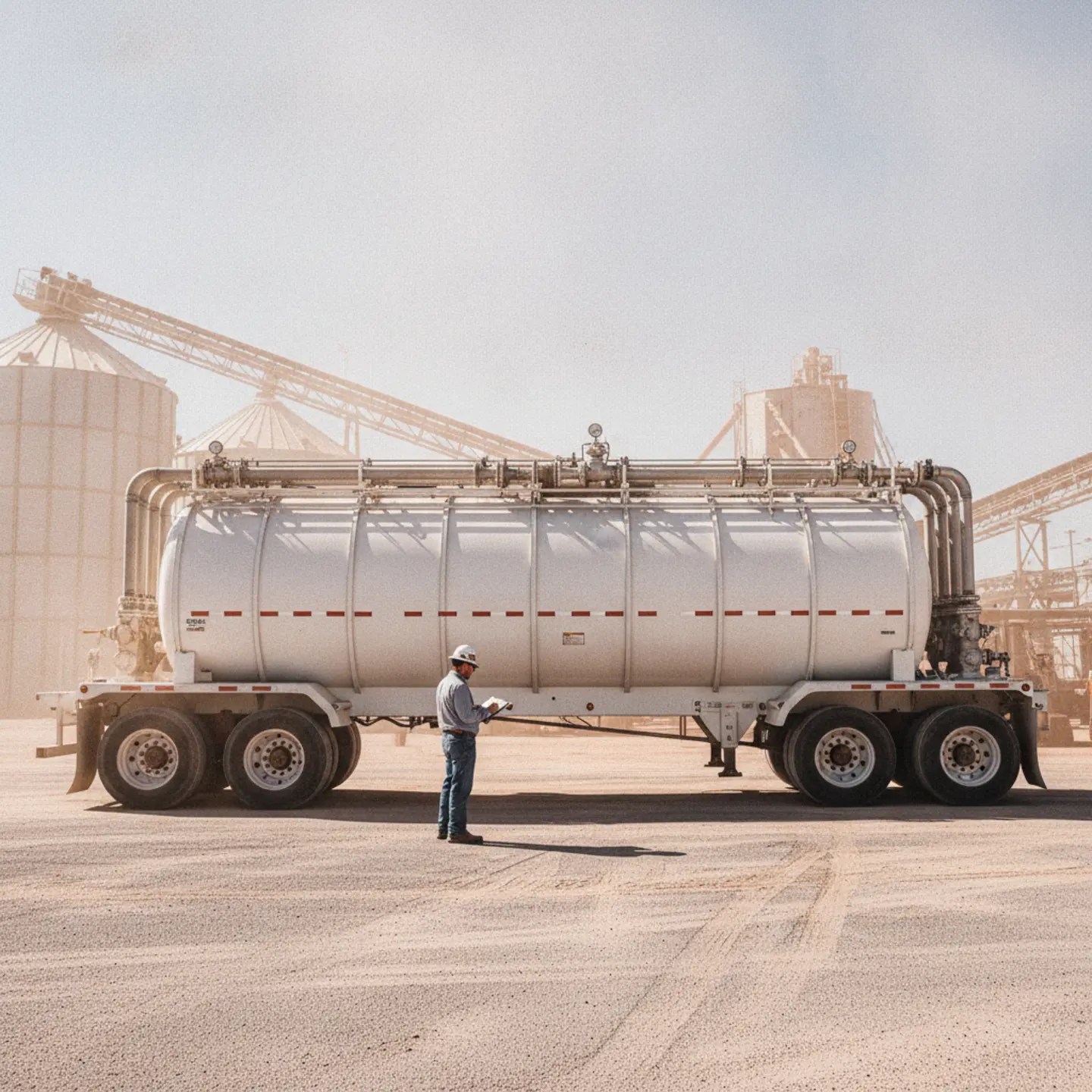
- Pneumatic Frac Sand Hauling for owner-operators running STX and PA/OH oilfield lanes
- Hopper Bottom Frac Sand Hauling for owner-operators across the Permian, West Texas, and South Texas
- Cement Hauling for owner-operators running Monday–Friday daytime lanes in North Texas and Houston
Why Choose Sisu Energy:
- ✓ 100% Owner-Operator fleet — you never compete with company trucks for loads
- ✓ 24/7 live human dispatch with a fair rotary load distribution system
- ✓ No escrow, no fuel card fees, and minimal deductions
- ✓ Weekly direct deposit, paid every Friday
- ✓ Fuel program with a 10–12% discount off market rate
- ✓ Fast, streamlined onboarding — no orientation required
Independent Contractor Status — Legal and Economic Context
Your IC status isn’t just paperwork — it’s the legal foundation your entire business sits on. Get it right, and you have the freedom to run your operation your way. Get it wrong, and you’re exposed to reclassification risk, back taxes, and penalties. Here’s what you need to understand before you sign a lease agreement with any carrier.
IRS Tests for Independent Contractor Classification
The IRS uses a three-part test to determine whether a worker is an employee or an independent contractor. All three factors should point toward independence in a properly structured Owner-Operator arrangement:
- Behavioral Control: You control how, when, and where you work within DOT regulations. Setting your own schedule and choosing your region are strong IC indicators.
- Financial Control: You own or lease your truck, pay all operating expenses, and have real opportunity for profit or loss. This is the strongest IC indicator in trucking.
- Type of Relationship: A written lease agreement that clearly defines the IC relationship — without language suggesting permanence or employee-like benefits — is essential documentation.
FMCSA Regulations and Lease Agreement Transparency
Under 49 CFR Part 376, the FMCSA mandates that lease agreements between carriers and Owner-Operators must be in writing, specify compensation and all deductions, and prohibit carriers from requiring drivers to purchase equipment or services from carrier-affiliated companies. Settlement statements must be detailed and itemized — showing gross revenue and every deduction line by line. Carriers that operate with no escrow accounts simplify cash flow and eliminate one of the most common friction points between drivers and carriers.
Recent Regulatory Developments (2024–2026)
The DOL’s 2024 Independent Contractor Rule introduced a six-factor economic reality test that makes it harder to classify workers as ICs under the Fair Labor Standards Act. Trucking has been a frequent battleground for these classification disputes. Carriers that maintain genuinely transparent IC models — with clear lease agreements, driver-controlled scheduling, and driver-owned equipment — are best positioned to comply. Stay informed through trade associations like OOIDA, which actively monitors court challenges and industry-specific developments. Texas state law aligns closely with federal guidelines; the Texas Workforce Commission uses a 20-factor test for unemployment tax purposes that examines similar control and independence factors.
One point that confuses new Owner-Operators: operating under a carrier’s DOT authority does not negate your IC status, provided the lease agreement clearly maintains your independence. This is standard practice in trucking and is well understood by regulators — as long as the underlying arrangement is genuine. For more context on how carrier selection affects your independence and income, see this breakdown of the best frac sand carriers in Texas and what separates them.
Tax Obligations, Deductions, and Business Financials for Frac Sand Owner-Operators
No employer withholds taxes from your settlement check. That’s a feature of IC status — but it also means you’re responsible for every dollar owed to the IRS. Understanding your obligations upfront prevents the painful surprise of owing a large tax bill with no reserves to cover it.
Federal Tax Obligations and Quarterly Estimated Payments
Self-employment tax covers both the employer and employee portions of Social Security and Medicare — 15.3% on net earnings up to the Social Security wage base ($168,600 for 2024, expected to increase for 2025/2026) and 2.9% for Medicare on all net earnings above that. Your business income and expenses flow through Schedule C on your Form 1040.
Quarterly estimated payments are due April 15, June 15, September 15, and January 15. Use Form 1040-ES to calculate. The safe harbor rule requires paying at least 90% of your current year tax liability or 100% of your prior year tax (110% if AGI exceeded $150,000) to avoid underpayment penalties. For Owner-Operators with variable weekly income — which describes most frac sand haulers — recalculate each quarter rather than dividing an annual estimate by four.
The #1 reason for audit disallowance is lack of substantiation. Keep receipts for all fuel, maintenance, insurance, and certification expenses. Without documentation, even legitimate deductions can be denied. Maintain detailed records of mileage, fuel purchases, and business expenses using accounting software or a dedicated trucking app.
Major Tax Deductions for Owner-Operators
Your deductions are where you take control of your tax burden. A well-managed Owner-Operator operation can deduct 50–70% of gross receipts — here are the major categories:
- Fuel — 100% deductible; your largest operating expense
- Maintenance & repairs — all costs to keep your truck and trailer operational
- Insurance — non-trucking liability, occupational accident, cargo, physical damage, all deductible
- Depreciation — Section 179 allows full deduction up to $1.22M in year placed in service; bonus depreciation is 60% in 2025, dropping to 40% in 2026
- Per diem — $74/day for meal and incidental expenses while away from your tax home (most of CONUS)
- Licenses, permits, certifications — PEC/Safeland, H2S, respiratory fit test, ELD/app costs, professional fees
Bonus depreciation is 60% in 2025 but drops to 40% in 2026. If you’re planning to purchase a new or used heavy truck or trailer, acquiring and placing it in service by December 31, 2025, allows you to deduct 60% of the cost in that year — a significant tax savings. This is a time-sensitive planning opportunity; consult a CPA to evaluate whether it makes sense for your business.
Section 199A QBI Deduction and Income Phase-Outs
The Section 199A Qualified Business Income deduction allows eligible sole proprietors and single-member LLCs to deduct up to 20% of qualified business income — a significant reduction in taxable income. For 2024, the deduction began to phase out for single filers with taxable income over $195,300 and married filing jointly over $390,700; these thresholds are expected to increase slightly for 2025. Transportation services generally qualify unless income reaches very high levels. Consult a CPA who specializes in trucking to calculate your specific benefit — the interaction between the QBI deduction and the deduction for one-half of self-employment taxes can meaningfully reduce your effective federal tax rate.
Business Structure Options and Regulatory Requirements for Owner-Operators
Choosing your business structure is one of the most consequential decisions you’ll make as a first-year Owner-Operator. It affects your liability exposure, your tax burden, and your long-term financial stability. Here’s a plain-English breakdown of your three main options.
Many first-year Owner-Operators underestimate expenses, fail to set aside funds for quarterly taxes, or don’t build an emergency reserve. This is a common challenge, but it’s preventable with planning. Budget for fuel, maintenance, insurance, truck payments, and taxes upfront. Build a cash reserve of 4–6 weeks of expenses before you start, and adjust your quarterly estimated tax payments as your income becomes clearer.
Sole Proprietor vs. LLC vs. S-Corp: Pros and Cons
| Structure | Liability Protection | SE Tax | Setup Cost (TX) | Best For |
|---|---|---|---|---|
| Sole Proprietor | None | Full 15.3% on all net income | $0 | Testing the waters; very low income |
| Single-Member LLC | Personal assets protected | Full 15.3% (by default) | $300 filing fee | Most Owner-Operators starting out |
| S-Corporation | Personal assets protected | Only on reasonable salary | $1,500–$3,000+/yr CPA costs | Net income consistently $80K–$100K+ |
S-Corp Election: When It Makes Financial Sense
The S-Corp election becomes financially worthwhile when your annual net income consistently exceeds $80,000–$100,000. Below that threshold, the administrative costs — payroll setup, quarterly Form 941 filings, W-2 for yourself, and CPA fees of $1,500–$3,000+ annually — typically outweigh the SE tax savings. The key mechanic: you pay yourself a “reasonable salary” (subject to SE tax), and remaining profits are taken as distributions not subject to SE tax. The IRS scrutinizes unreasonably low salaries, so work with a CPA to set a defensible number based on industry standards and your specific duties.
Texas State Filing Requirements and Compliance
Forming an LLC in Texas costs $300 with the Secretary of State and requires a registered agent with a physical Texas address. Texas franchise tax applies only if revenue exceeds $1.28 million (2025 threshold) — most single-truck Owner-Operators file a “No Tax Due Report” annually. For interstate hauling, IFTA (fuel tax) and IRP (apportioned plates) compliance is mandatory; maintain fuel receipts and mileage logs for at least four years. Drivers running Texas-to-Pennsylvania routes must track mileage across every state with meticulous accuracy to avoid audit triggers.
Market Landscape and Frac Sand Hauling Carrier Overview
The frac sand market isn’t slowing down. The global frac sand market is projected to grow at a CAGR of 6.82%–14.2% from 2026 to 2035, reaching values between USD $21.29 billion and $41.14 billion by 2035, driven by increasing hydraulic fracturing operations, longer laterals, and higher proppant intensity in shale production. The Permian Basin — with 241 active rigs as of May 2026, representing 44.4% of total U.S. drilling activity — remains the dominant North American frac sand market. New in-basin dry sand capacity is expanding in West Texas, which is reducing logistics costs and creating new hauling opportunities.
For a deeper look at how load rates and turn frequency affect your weekly earnings, the breakdown of load rates vs. turns in frac sand hauling is worth reading before you commit to a division or carrier.
Distinguishing Owner-Operator-Centric Carriers
Not every carrier that calls itself “Owner-Operator friendly” is built that way. Here’s what separates a genuinely driver-first carrier from one that uses the language without the substance:
- 100% Owner-Operator fleet with zero company trucks — no internal competition for loads
- Rotary dispatch system — fair, equitable load distribution to all drivers
- No escrow accounts — simplifies cash flow and eliminates a common dispute point
- Transparent, itemized settlement statements — gross revenue, every deduction, net pay — no surprises
- 24/7 live human dispatch — not an app-only system; real people solving real problems in real time
Evaluating Carrier Credentials and Contract Transparency
Before signing any lease agreement, check the carrier’s FMCSA safety rating on the SAFER system (safer.fmcsa.dot.gov). A “Satisfactory” rating is what you want; “Unsatisfactory” or “Conditional” is a hard stop. Verify adequate primary liability, cargo, and general liability coverage. Read the lease agreement carefully — look for clear definitions of compensation, deductions, responsibilities, and termination clauses. Vague language around chargebacks or administrative fees is a red flag. Industry revenue splits for pneumatic frac sand typically range 75/25 to 85/15; for hopper bottom, 80/20 to 85/15. Know the benchmarks before you negotiate.
Earnings, Expenses, and Financial Planning for Frac Sand Owner-Operators
The gross revenue numbers in frac sand hauling are real — but they’re only half the story. Understanding your full cost structure is what separates Owner-Operators who build lasting businesses from those who burn out in the first year. For a detailed breakdown of what drivers actually take home, the Owner-Operator frac sand hauling rates and pay guide breaks down real Permian Basin numbers.
Average Gross Revenue and Net Take-Home (Permian, 2026)
| Equipment Type | Weekly Gross | Weekly Net Take-Home | Annual Gross (Top Earners) |
|---|---|---|---|
| Pneumatic | $8,000–$11,000 | $2,900–$5,900 | $200,000–$380,000 |
| Hopper Bottom | $6,000–$9,000 | Proportional to gross | Lower due to per-ton rate differential |
| Detention Pay Add-On | $500–$1,000/wk | 10–20% of weekly gross | $50–$100/hr after 1–2 hrs free |
Typical Weekly Operating Expenses and Cash Flow Management
Fuel is your largest variable cost. With EIA projecting a Q2 2026 average of $5.36/gallon and a full-year 2026 average of $4.76/gallon for Gulf Coast diesel, a typical Permian driver burning roughly 412 gallons per week faces fuel costs of $1,830–$2,700 weekly (net, after carrier fuel card discounts). A $0.50/gallon price swing in either direction moves annual net income by approximately $10,300 — that’s real money. Build a cash reserve of 4–6 weeks of total expenses before you start, and treat that reserve as untouchable except for genuine emergencies.
Beyond fuel, budget weekly for insurance (~$279/week for a typical package including non-trucking liability, occupational accident, primary liability, and cargo), trailer lease ($210–$350/week depending on division), and a maintenance reserve of 10–15% of weekly gross. New Owner-Operators typically reach consistent profitability within 6–12 months; poor cash flow management and underestimated expenses are the leading causes of business failure in year one. For a realistic look at whether frac sand hauling makes financial sense for your situation, see frac sand hauling in 2026 — is it worth it?
Why Sisu Energy is the Right Choice for Owner-Operators in Frac Sand Hauling
Everything covered in this guide — IC classification, tax strategy, business structure, cash flow — matters more when your carrier partner is actually built around your success. Sisu Energy is a 100% Owner-Operator carrier with zero company trucks. That’s not a marketing line — it’s the entire business model. There’s no internal competition for loads. When Sisu wins, you win. When you win, Sisu wins. That alignment is the foundation of everything.
Sisu operates six hauling divisions across Texas and Pennsylvania/Ohio — STX Pneumatic, STX Hopper Bottom, WTX Hopper Bottom, NTX Pneumatic, cement hauling, and PA/OH lanes — giving you the ability to choose the hauling type, region, and schedule that fits your life. Competitive revenue splits start at 80/20 for pneumatic (bumping to 82% after one year plus incentives) and 85/15 for hopper bottom and cement, with transparent, itemized deductions and no hidden fees.
24/7 live human dispatch — not an app, not a chatbot, a real person — runs a rotary load distribution system that ensures every driver in The Pack gets fair access to loads. No escrow. Weekly Friday direct deposit. A fuel card program with a 10–12% discount off market rate. Fast, streamlined onboarding with no orientation required. Minimal deductions: non-trucking liability, occupational accident, physical damage, ELD/app costs, and trailer lease if applicable — that’s it.
“Sisu” is a Finnish word for grit, perseverance, and stoic resolve — the inner trait that keeps you moving when the road gets hard. The Pack is the outer belonging — a community of drivers who back each other up. That’s not a slogan. It’s how Sisu operates every day, from dispatch to settlement to the next load.
Frequently Asked Questions: Independent Contractor Frac Sand Hauling
How do I make sure I’m truly an independent contractor and not accidentally reclassified as an employee?
To maintain independent contractor status, ensure your lease agreement with the carrier clearly defines you as an IC. You should retain control over your work methods, bear the financial risk (owning your truck, paying expenses), and have the ability to work for multiple clients. Meticulously track your business expenses and avoid any appearance of being directed as an employee. The IRS uses a three-part test — behavioral control, financial control, and type of relationship — all of which should favor independence in your arrangement. The DOL’s 2024 rule adds a six-factor economic reality test; carriers that maintain genuinely transparent IC models with driver-owned equipment and flexible scheduling are best positioned to withstand scrutiny.
When are my quarterly estimated tax payments due, and what if my income changes a lot?
Federal estimated tax payments are due on April 15, June 15, September 15, and January 15 of the following year. For Owner-Operators with variable weekly income, recalculate your estimated tax liability each quarter — don’t just divide an annual estimate by four. If one quarter has significantly higher earnings, increase that quarter’s payment to avoid underpayment penalties even if your annual projection looks on track. The safe harbor rule requires paying at least 90% of your current year tax or 100% of your prior year tax (110% if AGI exceeded $150,000). Consult a tax professional who specializes in trucking to calibrate your payments throughout the year.
Should I form an LLC before I lease on with a carrier, and what’s the benefit?
Forming a Single-Member LLC before leasing on is highly recommended. The primary benefit is personal liability protection — it separates your personal assets from business debts and legal claims. It also adds a layer of professionalism and signals to carriers that you’re operating as a serious business. While your carrier provides primary liability insurance under dispatch, an LLC protects your personal finances from broader business risks. In Texas, formation costs only $300, and most single-truck Owner-Operators fall well below the $1.28 million franchise tax threshold, meaning you file a simple “No Tax Due Report” each year.
How do I handle the “two weeks in the hole” cash flow gap when starting with a new carrier?
The “two weeks in the hole” is a common reality when starting with a carrier that pays weekly after an initial settlement delay. To manage it, have sufficient cash reserves before you start — ideally 4–6 weeks of personal and business expenses, including truck payments, insurance, and living costs. Some Owner-Operators use short-term working capital loans or personal savings to bridge this initial period. Carriers that operate with no escrow and weekly direct deposit minimize this pain point significantly compared to carriers with longer settlement cycles or escrow holdbacks.
What makes Sisu Energy different from other frac sand hauling carriers?
Sisu Energy stands out as a 100% Owner-Operator carrier with zero company trucks — there’s no internal competition for loads, and your success is directly tied to the company’s success. Six hauling divisions across Texas and Pennsylvania/Ohio let you choose the hauling type, region, and schedule that fits your life. With 24/7 live human dispatch, rotary load distribution, no escrow, and weekly Friday direct deposit, Sisu prioritizes transparency and fair treatment at every step. Competitive revenue splits (80/20 pneumatic bumping to 82% after one year, 85/15 hopper bottom and cement), minimal transparent deductions, a fuel card program with 10–12% off market rate, and a driver-first culture rooted in the meaning of “Sisu” — grit and perseverance — set this carrier apart from the rest. Ready to join The Pack and maximize your take-home income? Apply Today.
Ready to Run Frac Sand as an Independent Contractor — and Keep More of What You Earn?
You’ve done the work — now you know the tax obligations, the business structure options, and what fair carrier terms actually look like. Sisu Energy is built from the ground up for Owner-Operators who want transparency, steady loads, and take-home income that reflects the grit they bring every day.
*Sisu Energy LLC contracts exclusively with independent Owner-Operators. Earnings vary by division, miles, fuel costs, and individual business factors, and no specific income is guaranteed. Programs, lease rates, and requirements are subject to change. Please contact Sisu Energy directly for current opportunities and division details.