Gross Revenue Ranges For Bottom Drop Frac Sand in Eagle Ford Shale: What You’ll Actually Haul In
- Most active hopper bottom drivers in the Eagle Ford Shale gross $6,000–$8,500 per week, with strong weeks reaching $11,000+ and slower weeks landing around $4,500 — turn frequency and haul distance are the two biggest levers.
- Per-load rates in the Eagle Ford run $300–$450 on short hauls (<50 miles), $450–$700 on mid hauls (50–150 miles), and $600–$1,000+ on longer runs — mid-haul lanes are the most common in the basin.
- Fuel burns 25–40% of gross revenue for oilfield hopper bottom work — especially on unpaved caliche lease roads — making a carrier’s fuel discount program one of the most important financial decisions you’ll make.
- The Eagle Ford Shale is running 45–60 active rigs and 15–25 frac spreads as of mid-2026, with core load density concentrated in Karnes, DeWitt, and Gonzales counties — consistent work exists for efficient Owner-Operators.
- Trust Sisu Energy for 100% Owner-Operator hauling, 24/7 live human dispatch, no escrow, and a fuel program that keeps more money in your pocket — visit Sisu Energy to learn what the Pack is built on.
What’s the Real Gross Revenue Range for Hopper Bottom Frac Sand Hauling in Eagle Ford Shale?
A realistic weekly gross for an active hopper bottom driver in the Eagle Ford Shale ranges from $4,500 on slower weeks to $11,000+ on strong weeks, with most drivers averaging $6,000–$8,500. This depends heavily on load availability, turn frequency, haul distance, and how well you manage fuel and maintenance costs. The key is understanding that gross revenue is only the starting point — what you actually take home depends on your carrier’s deductions, your operating expenses, and how efficiently you run your business.
Let’s break down exactly where those numbers come from, what factors drive them up or down, and what hidden costs compress gross revenue into actual take-home pay.
Sisu Energy
100% Owner-Operator — You Never Compete With Company Trucks
Core Service Programs:
- Pneumatic Frac Sand Hauling for owner-operators running STX and PA/OH oilfield lanes
- Hopper Bottom Frac Sand Hauling for owner-operators across the Permian, West Texas, and South Texas
- Cement Hauling for owner-operators running Monday–Friday daytime lanes in North Texas and Houston
Why Choose Sisu Energy:
- ✓ 100% Owner-Operator fleet — you never compete with company trucks for loads
- ✓ 24/7 live human dispatch with a fair rotary load distribution system
- ✓ No escrow, no fuel card fees, and minimal deductions
- ✓ Weekly direct deposit, paid every Friday
- ✓ Fuel program with a 10–12% discount off market rate
- ✓ Fast, streamlined onboarding — no orientation required
Eagle Ford Shale Market Activity: Current Rig Count and Frac Spread Demand
Before you can understand what you’ll earn, you need to understand what’s driving demand. The Eagle Ford Shale is running 45–60 active rigs as of May 2026, with 15–25 active frac spreads generating consistent sand demand across the basin. That’s not Permian-level volume — the Permian is running 241 rigs — but it’s a stable, working market with real load density in the right counties.
The highest load concentration sits in the core oil window: Karnes, DeWitt, and Gonzales counties. Significant activity also runs through Live Oak, Atascosa, and McMullen counties. If you’re hauling in the Karnes-DeWitt-Gonzales corridor, you’re in the heart of the action. The operators driving that demand — ConocoPhillips, EOG Resources, Marathon Oil, and Devon Energy — maintain aggressive completion programs that keep sand moving week after week.
The long-term picture supports staying in this market. The global frac sand market is projected to grow at a 6.82% CAGR through 2035, with the market valued at $12.47 billion in 2026. In-basin sand sourcing has reduced some long-haul requirements, but it’s created a consistent pipeline of short-to-mid haul work that suits hopper bottom operations well. For an Owner-Operator who runs efficiently, the Eagle Ford offers steady, predictable work — not boom-and-bust volatility.
Hopper Bottom Frac Sand Rates: Per-Ton and Per-Load Breakdown
Rates in the Eagle Ford are set by haul distance. Here’s what the market looks like for a standard 25-ton hopper bottom load in 2026:
| Haul Distance | Rate Per Ton | Rate Per 25-Ton Load | Frequency in Eagle Ford |
|---|---|---|---|
| Short Haul (<50 mi) | $15–$22 | $300–$450 | Common — mine-to-pad runs |
| Mid Haul (50–150 mi) | $20–$30 | $450–$700 | Most common Eagle Ford lane |
| Long Haul (>150 mi) | $25–$40+ | $600–$1,000+ | Less frequent for hopper bottoms |
One benchmark worth knowing: Eagle Ford rates typically run 5–15% lower than Permian Basin rates for comparable distances. The Permian’s sheer scale drives higher demand and slightly better per-ton pay. That said, the Eagle Ford’s shorter average lane lengths often allow for more turns per day — which can close that gap in weekly gross. If you want a direct comparison of how these two basins stack up for hopper bottom work, the 2026 frac sand hauling outlook breaks it down in detail.
Weekly Gross Revenue: Realistic Scenarios and Turn Frequency
Per-load rates only tell half the story. What you actually gross in a week comes down to how many turns you can run per shift. Here’s what realistic daily and weekly gross looks like across each haul tier:
| Scenario | Turns/Shift | Daily Gross | Weekly Gross (5 days) |
|---|---|---|---|
| Short Haul | 4–5 | $1,200–$2,250 | $6,000–$11,250 |
| Mid Haul | 2–3 | $900–$2,100 | $4,500–$10,500 |
| Long Haul | 1–2 | $600–$2,000 | $3,000–$10,000 |
The sweet spot for most Eagle Ford hopper bottom drivers is the mid-haul lane — 2–3 turns per shift at $450–$700 per load. A typical active week lands in the $6,000–$8,500 gross range. The ceiling of $11,000+ is real but requires strong load availability, efficient dispatch, and minimal detention. These are gross figures — before your carrier’s percentage split and your operating expenses. Understanding the difference between load rate and turns is critical; the load rates vs. turns breakdown explains how to optimize both.
Hidden Costs That Compress Gross Revenue Into Take-Home Pay
Gross revenue is what gets deposited before reality takes its cut. Here’s what compresses those numbers into actual take-home pay — and how much each cost category typically runs:
- Fuel — 25–40% of gross revenue. The single largest variable cost. Texas diesel is running $3.51/gallon as of mid-2026. Fuel economy on unpaved lease roads is brutal — expect significantly higher burn than highway driving.
- Carrier deductions — 20–35% of gross. Insurance, trailer lease, software fees, and fuel surcharges vary by carrier. Transparent settlement sheets are non-negotiable — you need to see every line item.
- Detention time losses. Uncompensated waiting at well sites can cost hundreds to over $1,000 per week depending on how aggressively your carrier enforces its detention policy.
- Deadhead miles. Empty miles between drops, pickups, and return trips burn fuel and incur wear with zero revenue generation. A carrier with smart dispatch minimizes this significantly.
- Accelerated tire wear. Caliche lease roads in the Eagle Ford are abrasive and hard on tires. Budget for more frequent replacements than you’d see on highway-only work.
Uncompensated waiting at well sites is one of the biggest revenue killers for hopper bottom drivers. A single day of poor detention handling can cost you $500–$1,000+ in lost gross revenue. Choosing a carrier with strong detention policy enforcement and real-time site communication is critical to protecting your earnings.
The real numbers on take-home pay for oilfield Owner-Operators are covered in depth in the real numbers behind frac sand Owner-Operator pay — worth reading before you commit to any carrier or lane.
Factors That Drive Eagle Ford Frac Sand Rates Up or Down
Rates aren’t static. They move with the market, and knowing what drives them helps you make smarter decisions about which lanes to take and when. WTI crude is sitting at $80.41/barrel as of June 2026 — down 23% over the past month — which puts some pressure on E&P budgets and drilling pace. That’s a number to watch. When oil drops, operators slow completions, and load availability tightens.
- Operator sand volumes. Higher completion activity from EOG, ConocoPhillips, and Devon means higher demand and stronger rates. When these operators accelerate their programs, you feel it immediately in load availability.
- Crude oil price. WTI directly influences E&P capital budgets. A sustained drop below $70 typically triggers activity reductions; a recovery above $85 opens the throttle.
- Diesel fuel price. Texas diesel at $3.51/gallon affects your cost basis and can trigger carrier fuel surcharge adjustments — either in your favor or against it, depending on your carrier’s structure.
- Local mine proximity. In-basin sand sourcing reduces long-haul demand but creates consistent short-to-mid haul work — the bread-and-butter for Eagle Ford hopper bottoms.
- Seasonal patterns. Peak demand runs in spring and fall. Summer heat and winter holidays typically see reduced activity and softer rates.
- Mine-direct fleet competition. Large sand producers like U.S. Silica, Hi-Crush, and Covia operate captive hauling fleets that can set rate floors or ceilings in specific lanes.
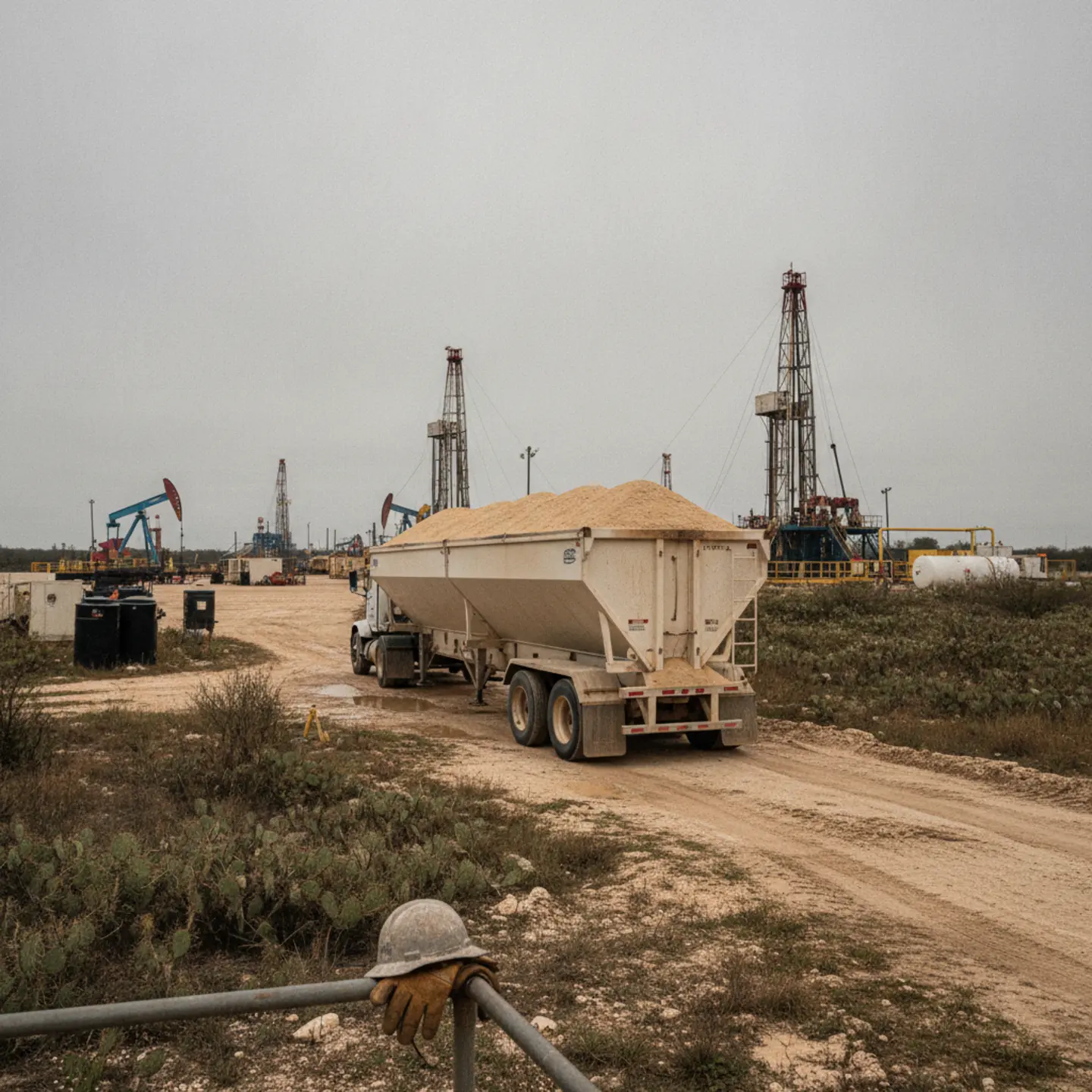
Unpaved caliche lease roads in the Eagle Ford can cut your fuel economy by 30–50% compared to highway driving. Factor this into your rate negotiations and load selection. A $500 load that requires 50 miles of rough lease road might net you less than a $450 load on paved highways. Know your actual fuel burn before committing to a lane.
Regulatory Requirements and Permitting for Eagle Ford Hopper Bottom Hauling
Operating legally in the Eagle Ford requires more than a CDL. Here’s the compliance landscape every hopper bottom Owner-Operator needs to understand before turning a wheel:
- Class A CDL is required. No Hazmat or Tanker endorsements are universally required for dry, non-hazardous frac sand. A standard Class A covers you for hopper bottom work.
- Texas overweight permits are essential. The standard legal gross limit is 80,000 lbs on interstate highways, but many Eagle Ford county roads — especially in Karnes, DeWitt, and McMullen — have limits as low as 58,000 lbs. Annual blanket permits run $300–$1,000+; single-trip permits cost $50–$200 each.
- PEC/Safeland certification is mandatory for all well site access. H2S Clear and Respiratory Fit Test are standard add-ons required by virtually every E&P operator in the basin.
- Short-haul ELD exemption often applies. The 150 air-mile radius rule frequently covers Eagle Ford hopper bottom work, potentially eliminating ELD requirements — a significant operational advantage.
- Leasing onto a carrier’s authority simplifies federal compliance considerably. The carrier manages FMCSA oversight, drug testing, and IFTA reporting — you focus on driving.
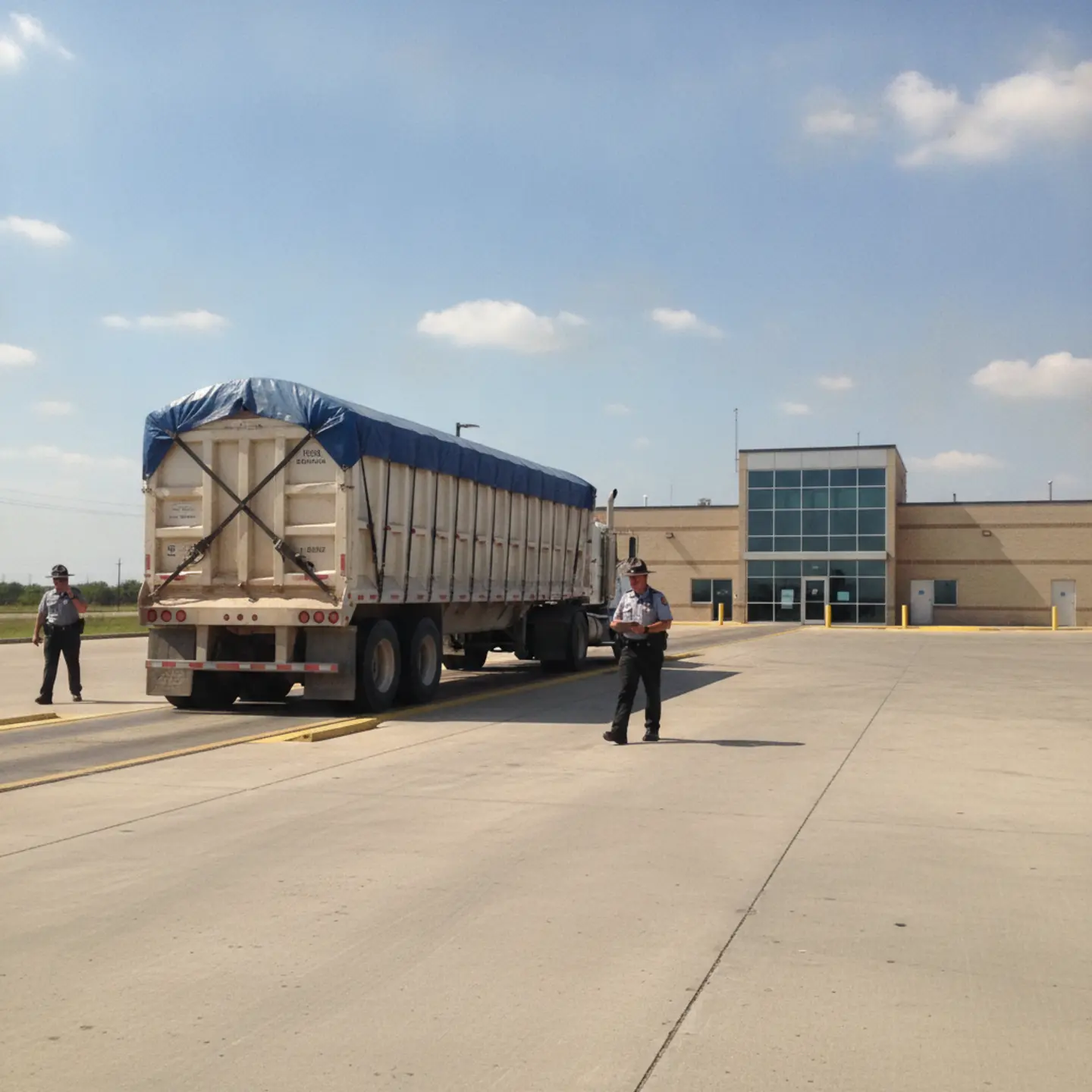
Many Eagle Ford county roads (especially in Karnes, DeWitt, and McMullen counties) have weight limits as low as 58,000 lbs gross — well below a full 25-ton hopper bottom load. Operating overweight without proper permits can result in fines, road damage liability, and lost loads. Always confirm the route and weight limits with your dispatcher before accepting a load.
For a complete breakdown of CDL requirements and what certifications you need to haul in Texas oilfields, the CDL requirements and licensing guide for frac sand hauling covers every detail.
Choosing the Right Carrier: What to Evaluate and Red Flags to Avoid
Your carrier choice is one of the highest-leverage decisions you’ll make as an Owner-Operator. The wrong carrier can cost you thousands per month in hidden fees, poor dispatch, and lost detention pay. Here’s what to evaluate before you sign anything:
- FMCSA safety rating. Verify the carrier’s MC/DOT authority is active and in good standing. Satisfactory is the rating you want to see.
- Transparent settlement sheets. Demand a sample settlement that clearly breaks down gross revenue, every deduction, and fuel surcharge calculations. Opaque “all-in” rates are a red flag.
- Dispatch model. 24/7 live human dispatch beats automated systems for oilfield work. Ask specifically about load distribution — a rotary system ensures fairness across all drivers.
- Detention pay policy in writing. Industry norms are 1–2 hours free, then $75–$100/hour. If a carrier can’t show you their enforcement record, assume it’s weak.
- Fuel program value. A 10–15% discount off market rates saves thousands annually. That’s real take-home, not a recruiting promise.
- Customer base diversification. A carrier with multiple E&P operator relationships keeps loads moving even when one operator slows down.
Red flags to walk away from: guaranteed high gross without detailing deductions, vague settlement structures, high upfront fees, escrow holds, lack of 24/7 support, and recruiting pitches that don’t mention your actual operating costs. The Texas frac sand Owner-Operator rates and pay guide has a detailed carrier vetting checklist worth reviewing before you commit.
Why Sisu Energy Is the Right Choice for Eagle Ford Hopper Bottom Owner-Operators
Sisu Energy operates as a 100% Owner-Operator carrier with zero company trucks. That’s not a marketing line — it’s the structural foundation of how the business works. When there are no company trucks competing for loads, every load in the system goes to an Owner-Operator. Your success is the only way Sisu succeeds. Six hauling divisions across Texas and Pennsylvania/Ohio mean the network is built for volume, but the STX Hopper Bottom division is purpose-built for Eagle Ford work.
The dispatch model matters more than most drivers realize before they’ve lost a week to poor load distribution. Sisu runs 24/7 live human dispatch with a rotary load distribution system — every driver gets fair, consistent access to the best-paying lanes in the basin. No favorites, no politics. When a site issue comes up at 2 a.m. on a caliche road in Karnes County, there’s a real person on the other end of the line who understands oilfield logistics.
The financial structure is built around protecting your take-home: no escrow, weekly Friday direct deposit, and transparent settlement sheets — every line item visible, no surprises. The STX Hopper Bottom division offers a $210/week trailer lease with flexible daily rental options, keeping your entry costs manageable. The fuel card program delivers 10–15% off market rates — at $3.51/gallon Texas diesel, that’s real money back in your pocket every single week. A diversified customer base across multiple E&P operators means steady load availability even when one operator pulls back on completions.
Apply Today — take control of your earnings and join a Pack that’s built around your business, not theirs.
FAQ: Your Top Questions About Eagle Ford Hopper Bottom Frac Sand Hauling
What’s a realistic weekly gross for a hopper bottom driver in the Eagle Ford, considering all the variable costs?
A realistic weekly gross for an active hopper bottom driver in the Eagle Ford Shale ranges from $4,500 on a slower week to $11,000+ on a strong week, with most drivers averaging $6,000–$8,500. This depends heavily on load availability, turn frequency, and managing costs like fuel and maintenance. These are gross figures — before your percentage split with the carrier and your operating expenses like fuel, tires, and truck payments.
Do I really need oilfield experience to haul frac sand with a hopper bottom in the Eagle Ford?
While some carriers prefer oilfield experience, many will hire Owner-Operators without prior oilfield background — especially for hopper bottom work, which is generally less complex than pneumatic operations. What’s non-negotiable is a solid CDL driving record and a willingness to complete site-specific safety training like PEC/Safeland certification before your first well site access. Hopper bottom is one of the more accessible entry points into oilfield hauling for drivers new to the industry.
What are the biggest challenges or “hidden costs” for hopper bottom drivers in the Eagle Ford?
The biggest challenges are managing detention time losses at well sites, minimizing deadhead miles between loads, dealing with accelerated tire wear from caliche lease roads, and accounting for significantly higher fuel burn on unpaved surfaces. A single day of poor detention handling can cost $500–$1,000 in lost revenue. Proper route planning, proactive maintenance budgeting, and choosing a carrier with strong detention enforcement are the three levers that separate profitable weeks from break-even ones.
How important is a good fuel program for maximizing my net pay in the Eagle Ford?
A good fuel program is critically important — fuel is your largest variable expense, consuming 25–40% of gross revenue in oilfield hopper bottom work. With Texas diesel at $3.51/gallon in mid-2026, a program offering 10–15% off market rates can save you thousands annually and directly boost your take-home. Every cent per gallon you save compounds across a full week of hauling — it’s one of the highest-ROI factors in your carrier selection decision.
What makes Sisu Energy different from other hopper bottom carriers in the Eagle Ford?
Sisu Energy is built 100% Owner-Operator-first with zero company trucks competing for your loads — that structural difference matters every single dispatch cycle. The 24/7 live human dispatch with fair rotary load distribution means you get consistent access to good lanes without playing politics. No escrow, weekly Friday direct deposit, and transparent settlement sheets mean you see exactly where every dollar goes. The fuel program saves you 10–15% off market rates, and the dedicated support team understands oilfield logistics, detention issues, and the real costs of doing business in the Eagle Ford. Apply Today to join a Pack that’s built around your success.
Ready to Start Hauling Frac Sand in the Eagle Ford?
You now have the real numbers — rates, turns, costs, and what it actually takes to maximize take-home in the Eagle Ford Shale. The next step is finding a carrier built to protect those earnings. Sisu’s STX Hopper Bottom division is open, the loads are moving, and the Pack has room for serious Owner-Operators who are ready to run.
*Sisu Energy LLC contracts exclusively with independent Owner-Operators. Earnings vary by division, miles, fuel costs, and individual business factors, and no specific income is guaranteed. Programs, lease rates, and requirements are subject to change. Please contact Sisu Energy directly for current opportunities and division details.