Odessa Frac Sand Transport Routes with Driver Training and Opportunities
- The Permian Basin runs 261 active rigs (July 2026) and consumes 25–30 million tons of frac sand annually — over 60% of total U.S. consumption — making Odessa the undisputed epicenter of frac sand logistics and driver demand.
- Hauling frac sand legally in the Permian requires a Class A CDL plus three oilfield certifications: PEC/Safeland (~$200), H2S Awareness (~$20, renewed annually), and a Respiratory Fit Test for a 3M Half Mask (~$30–$50) — total cost under $300, completable in 1–2 weeks.
- Owner-Operators in the Permian Basin typically gross $5,000–$9,000+ per week, with a median of $5,634/week (Indeed, March 2026); after operating costs, net take-home ranges from $1,000–$3,000+ weekly — fuel management and detention pay enforcement are the biggest levers on your bottom line.
- Before signing with any carrier, demand a sample settlement statement, verify the fuel discount percentage in writing, and confirm they run zero company trucks — carriers that compete with their own Owner-Operators for loads are the single biggest red flag in the Permian market.
- Trust Sisu Energy LLC for Owner-Operator-first frac sand hauling — 100% OO fleet, no escrow, 24/7 live human dispatch, and an industry-leading fuel discount — visit Sisu Energy LLC to learn more about the Pack.
What Does It Really Take to Haul Frac Sand in Odessa, TX — and What Can You Actually Earn?
Hauling frac sand in the Odessa area requires a Class A CDL, oilfield safety certifications (PEC/Safeland, H2S, respiratory fit test), and compliance with Texas overweight permits. Owner-Operators in the Permian Basin typically gross $5,000–$9,000+ per week, with net take-home ranging from $1,000–$3,000+ weekly after operating costs. Success depends on your division, load efficiency, fuel management, and choosing a carrier that prioritizes transparent pay and fair dispatch.
Understanding the full picture — from regulatory requirements and real cost breakdowns to market dynamics and what separates ethical carriers from predatory ones — is essential before you commit to frac sand hauling in West Texas.
Sisu Energy
100% Owner-Operator — You Never Compete With Company Trucks
Core Service Programs:
- Pneumatic Frac Sand Hauling for owner-operators running STX and PA/OH oilfield lanes
- Hopper Bottom Frac Sand Hauling for owner-operators across the Permian, West Texas, and South Texas
- Cement Hauling for owner-operators running Monday–Friday daytime lanes in North Texas and Houston
Why Choose Sisu Energy:
- ✓ 100% Owner-Operator fleet — you never compete with company trucks for loads
- ✓ 24/7 live human dispatch with a fair rotary load distribution system
- ✓ No escrow, no fuel card fees, and minimal deductions
- ✓ Weekly direct deposit, paid every Friday
- ✓ Fuel program with a 10–12% discount off market rate
- ✓ Fast, streamlined onboarding — no orientation required
Local Market Context — Odessa and the Permian Basin
The Midland-Odessa MSA carries a population of roughly 342,000, and that number swings with crude oil cycles. When WTI holds above $70/barrel — currently at $77.84 — the basin fills with workers chasing oilfield wages. When prices drop, the labor pool thins fast. That volatility cuts both ways: it creates real leverage for qualified Owner-Operators when demand surges, and it demands that you understand the cycle before betting your business on it.
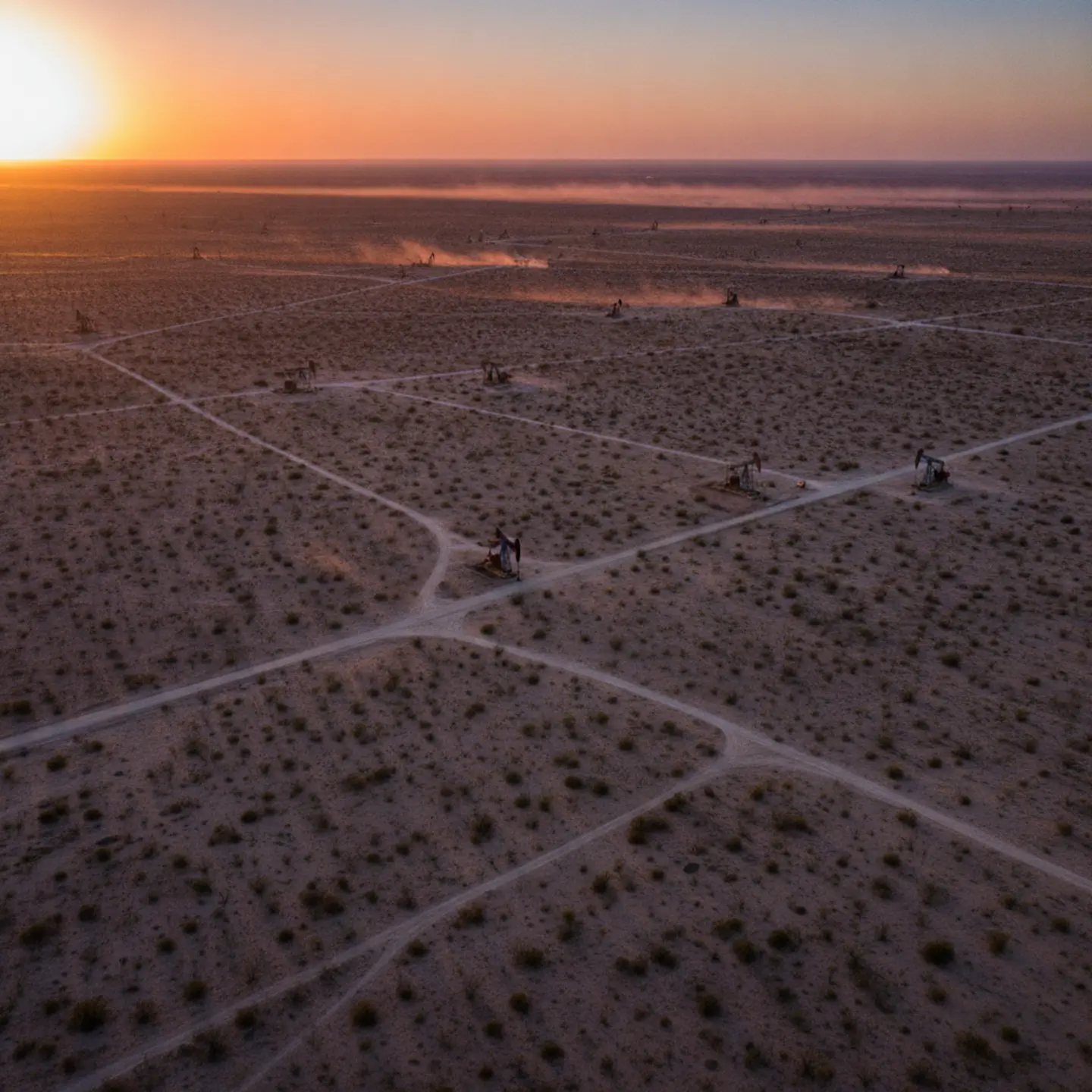
As of July 2, 2026, the Permian Basin has 261 active rigs (Baker Hughes). That’s up 3 from the prior week, though slightly off the 265 rigs running a year ago. The broader trend matters more than any single week: major E&P operators — ExxonMobil, Chevron, Occidental, ConocoPhillips — are expanding drilling programs, not pulling back. Approximately 35–40 active frac spreads are consuming 100,000–130,000 tons of sand every week. The frac sand hauling opportunity in 2026 is real and sustained, not a spike.
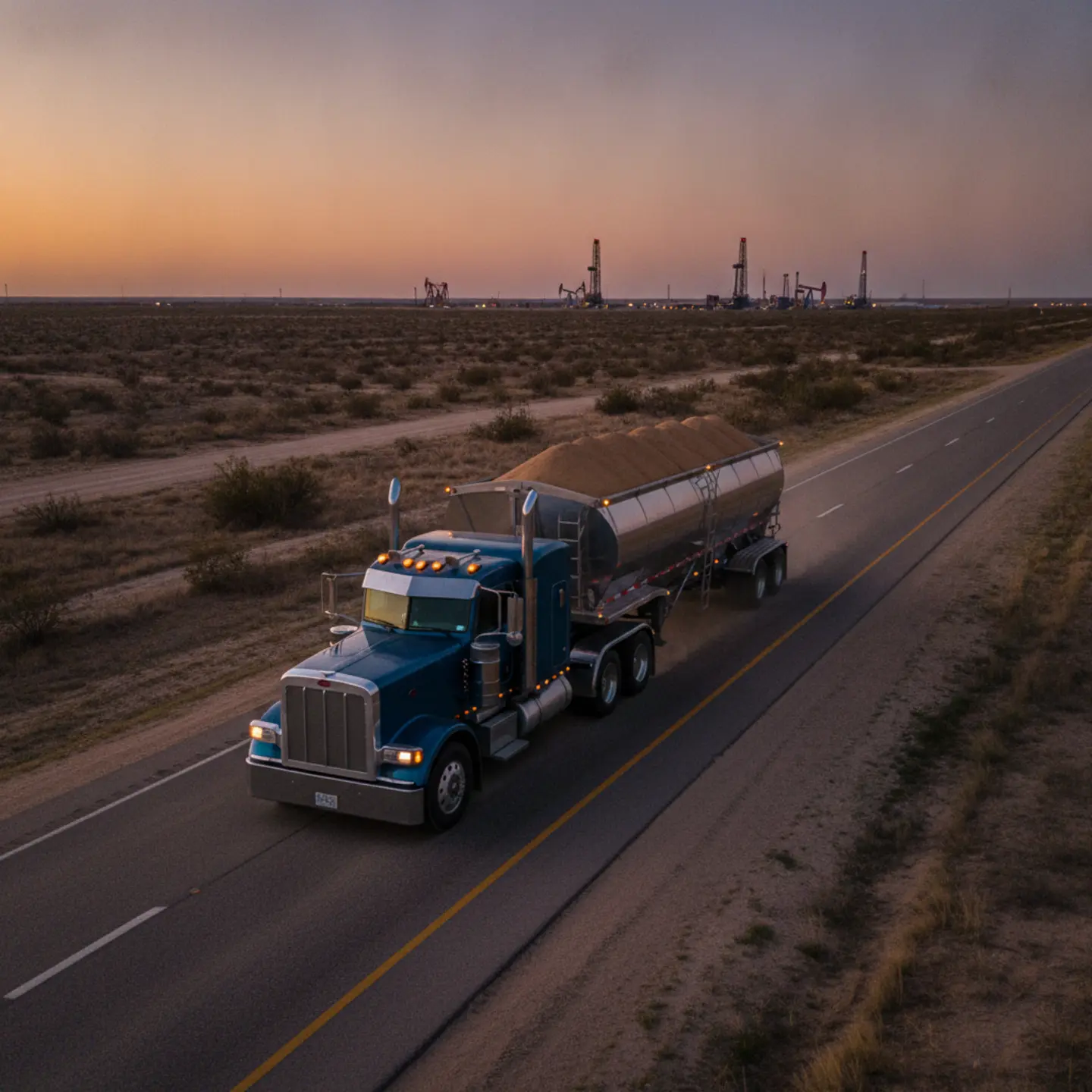
The Permian consumes 25–30 million tons of frac sand annually — more than 60% of total U.S. consumption. The shift to in-basin sand from mines in Kermit and Winkler County has fundamentally changed route structure. Haul distances have compressed to 20–100 miles, which means more turns per day, not long interstate runs. That’s a different business model than general freight, and it rewards drivers who can maximize load counts and minimize downtime.
The driver shortage in specialized frac sand hauling is consistent and real. No government agency publishes a precise deficit number, but every carrier in the Permian will tell you the same thing: qualified Owner-Operators with the right certifications and the right equipment have genuine negotiating power. That leverage is yours to use — if you walk in prepared.
Pricing and Costs — What Owner-Operators Actually Net in the Permian
The gross revenue numbers you see in recruiting ads are real. The net take-home depends entirely on how well you manage costs. Here’s how the math actually works in 2026.
Per-load rates by haul distance: Short haul (under 50 miles) pays $300–$450 per load with 4–5 turns per day. Mid haul (50–150 miles) runs $450–$700 per load with 2–3 turns. Long haul (over 150 miles) can reach $600–$1,000+ per load, but you’re only getting 1–2 turns daily. Pneumatic tankers command a $20–$25 per ton premium over hopper bottom — roughly $500–$625 extra per load on a standard 25-ton haul — reflecting the specialized equipment and skill required.
For a concrete example: 4 turns per day, 5 days, short-haul at $400/load = $8,000 gross. Subtract a 15% carrier fee ($1,200) and you’re at $6,800. Weekly operating costs with a fuel discount run approximately $2,625 — covering diesel, trailer rental ($350), truck payment ($600), maintenance reserves ($225), insurance ($150), and permits/PPE ($150). That leaves $4,175 net per week in this scenario. Actual results vary based on your division, lane rates, and efficiency. This is math, not a guarantee.
Diesel is your largest variable expense. At current Gulf Coast prices ($4.415/gallon as of June 23, 2026), a typical Permian Owner-Operator spends ~$1,471/week on fuel. A strong fuel discount program (like Sisu’s 11.5% average) saves you $171.74/week — that’s $8,900+ annually going straight to your bottom line.
Fair detention rates are $75–$100/hour after 1–2 free hours. Many Permian wellsites underpay or ignore detention entirely. Lost detention can cost you $375+/week ($17,000+ annually). Choose a carrier with a clear, enforced detention policy and the willingness to negotiate on your behalf. This single issue can make or break your profitability.
Hidden costs catch new-to-the-Permian operators off guard every time. Caliche roads accelerate tire wear far beyond what general freight drivers expect. Dust and abrasion hit air filters, seals, and bearings hard. For pneumatic operators, blower failures are the big one — repairs run $2,000–$5,000 and can sideline your truck for days. State and county overweight permits add administrative burden and fees that aren’t always obvious upfront. Budget for these before your first load, not after.
Regulatory and Licensing Requirements
Getting legal to haul frac sand in the Permian is straightforward if you know what’s required. There are no surprises here — just a checklist you need to complete before your first load.
Class A CDL is non-negotiable. There’s no federal endorsement unique to pneumatic tanker operation, but the specialized equipment demands real training — carriers that take this seriously will make sure you’re qualified before you go independent. Pair your CDL with a valid Medical Card and you’re cleared on the federal side. For more on the full licensing picture, the CDL requirements guide for frac sand hauling breaks it down step by step.
FMCSA short-haul exemption: Drivers operating within a 150 air-mile radius of their reporting location and returning within 14 hours can use timecards instead of ELDs. Most Permian short- and mid-haul routes qualify. For routes or divisions that fall outside this exemption, ELD compliance (Motive is standard) is mandatory. Understanding HOS exemptions for oilfield frac sand drivers before you start saves headaches at inspection.
Texas overweight permits are required for most loaded frac sand trucks, which routinely exceed the 80,000-pound state limit. Counties like Ector, Midland, Andrews, Ward, and Pecos have their own — often stricter — weight restrictions on caliche lease roads. Permits come through TxDMV or third-party permitting services. Know your route before you load.
Oilfield certifications — the three you need:
- PEC/Safeland: ~$200, 7–8 hours, no expiration. Covers wellsite hazard communication, confined space, fall protection, and lockout/tagout. Universally required for wellsite access across the Permian.
- H2S Awareness: ~$20, 45 minutes online, renewed annually. Hydrogen sulfide can be present at Permian wells — this training is non-negotiable for site access.
- Respiratory Fit Test (3M Half Mask): ~$30–$50. OSHA’s silica standard (29 CFR 1926.1153) sets a permissible exposure limit of 50 µg/m³. Prolonged silica exposure causes silicosis, lung cancer, COPD, and kidney disease. This test ensures your respirator actually seals. Get it done at an occupational health clinic in the Odessa/Midland area.
Texas DPS and FMCSA run frequent inspections on Permian sand routes. Common violations hit brakes, tires, lighting, load securement, and ELD compliance. Every violation affects your PSP score — and carriers check it. Stay clean from day one.
Market Landscape and Choosing the Right Carrier
The Permian carrier market is a mix of large regional logistics companies and Owner-Operator-based carriers. The ongoing consolidation wave in U.S. shale favors established carriers with strong local networks and adaptive logistics models. What that means for you: the carrier you choose has a bigger impact on your weekly take-home than almost any other variable.
The Owner-Operator vs. company driver decision in frac sand hauling comes down to risk tolerance and earning potential. Owner-Operators typically earn 80–90% splits but carry all operating costs. Company drivers get fixed wages with no business risk — and significantly lower upside. If you’re reading this, you’re probably already thinking like a business owner. The question is which carrier gives your business the best structure.
Dispatch models matter more than most drivers realize. Open load boards offer flexibility but unpredictable volume. Dedicated dispatch provides stable lanes but limits your options. Rotary systems — where loads are distributed fairly among Owner-Operators in sequence — combine predictability with fairness. Pair that with 24/7 live human dispatch and you have a model that actually works for your schedule and your income.
Before signing with any carrier, watch for: large escrow deposits, vague deductions, slow pay cycles, company trucks competing for loads, unrealistic income guarantees, and unpaid or underpaid detention. These are signs the carrier prioritizes its own margin over your take-home. Always ask for a sample settlement statement and verify their fuel discount percentage in writing.
Before you sign anything, get answers to these questions in writing: exact percentage split, full deductions list, fuel program discount percentage, ELD policy, dispatch fairness mechanism, detention pay terms, equipment age restrictions, certification support, plate fee handling, and onboarding timeline. Any carrier that won’t answer these clearly is telling you something. FMCSA Truth-in-Leasing regulations (49 CFR Part 376) require clear written contracts — know your rights before you sign. For a deeper look at how to evaluate carriers, the best frac sand carriers in Texas guide covers what to look for and what to avoid.
Statistics and Market Data — What the Numbers Tell You
The global frac sand market is valued at approximately USD $10.3 billion in 2026, with CAGR projections ranging from 6.3% to 9.7% across multiple forecast periods. North America — and the Permian specifically — dominates that market. U.S. annual consumption runs 65–75 million tons, with the Permian accounting for 25–30 million of those tons.
For Owner-Operators, the income data is consistent: median gross revenue of $5,634/week (Indeed, March 2026), extrapolating to roughly $292,968 annually. Net take-home after operating costs lands at $1,000–$3,000+ per week — $52,000–$156,000 annually — depending on division, efficiency, and how aggressively you manage costs. That range is wide because the variables are real. Fuel management, detention enforcement, and load efficiency are the levers that move you toward the top of that range.
FMCSA data from 2024 shows a national vehicle out-of-service rate of approximately 20–22% during inspections. Permian enforcement runs hot — the volume of heavy haul traffic draws consistent scrutiny from Texas DPS. Brakes, tires, lighting, and load securement are the most common violation categories. A clean PSP score is a business asset in this market.
On silica exposure: OSHA’s PEL is 50 µg/m³ as an 8-hour TWA. NIOSH research confirms that frac sand haulers can be exposed at levels exceeding that limit without proper respiratory protection. Silicosis, lung cancer, COPD, and kidney disease are the documented long-term risks. Your fit-tested respirator isn’t optional — it’s the difference between a long career and a shortened one.
Driver Training and Onboarding Opportunities
Most carriers want experienced frac sand haulers. That’s the honest answer. If you’re coming from general freight with a strong CDL background but no oilfield experience, you’re not locked out — but you need to find a carrier that has a structured path for you.
Reputable carriers offer onboarding that covers pneumatic tanker operation, blower systems, wellsite safety protocols, load securement, and equipment-specific maintenance. Some use a trainer fee model — typically $300–$500 — pairing you with an experienced driver for your first loads. That investment pays for itself fast when it keeps you from making costly mistakes on your first wellsite visit. For Owner-Operators considering the transition, understanding the difference between hopper bottom and pneumatic hauling is a good starting point before you commit to equipment.
Onboarding timeline is real: drug screen results, background check, and certification verification typically take 1–2 weeks. Plan for that window before your first load. Carriers that help you obtain or reimburse PEC/Safeland, H2S, and respiratory fit test costs are signaling something important — they’re invested in your success from day one, not just collecting a percentage.
Hands-on equipment familiarization before you go independent isn’t a luxury — it’s how you avoid a blower failure on your third load or a load securement violation that hits your PSP. The mentorship model works. Find a carrier that takes it seriously.
Why Sisu Energy LLC Is the Right Choice for Odessa Frac Sand Haulers
Everything covered in this guide — transparent economics, fair dispatch, certification support, fuel discounts, no predatory practices — describes exactly how Sisu Energy LLC is built. This isn’t a coincidence. Sisu was designed around the specific problems that Owner-Operators in the Permian face every week.
Sisu runs a 100% Owner-Operator fleet with zero company trucks. That means every load dispatched goes to an Owner-Operator — not to a company driver who costs the carrier less per mile. The rotary load distribution system ensures fair access, not algorithmic favoritism. Dispatch is live human, 24/7, backed by Motive ELD and Ditat load management for full transparency on every settlement.
The economics are built for your take-home, not the carrier’s margin: no escrow, weekly Friday direct deposit, minimal deductions, fuel card with no fees, and an industry-leading 11.5% average fuel discount that saves Owner-Operators $8,900+ annually at current diesel prices. Six hauling divisions across Texas and Pennsylvania/Ohio let you choose your region, your equipment type (pneumatic or hopper bottom), and your schedule — including Mon–Fri weekends-off options. Structured certification support and a $300 trainer fee option for experienced drivers new to oilfield work mean you don’t have to figure it out alone.
Join Our Pack today — take control of your business, your family, and your future with a carrier built Owner-Operator first.
Frequently Asked Questions
What certifications do I need to haul frac sand in the Permian Basin?
You’ll need a Class A CDL, a valid Medical Card, and three oilfield safety certifications: PEC/Safeland (or Basic Orientation, ~$200, 7–8 hours, no expiration), H2S Awareness training (~$20, 45 minutes online, renewed annually), and a Respiratory Fit Test for a 3M Half Mask (~$30–$50). These certifications ensure you meet the safety requirements for accessing Permian wellsite locations — no site access without them. Total cost runs under $300, and most drivers complete everything within 1–2 weeks.
How much can an Owner-Operator make hauling frac sand in Odessa, TX?
Owner-Operators in the Permian Basin typically gross $5,000–$9,000+ per week, with a median of $5,634/week reported by Indeed (March 2026). After operating costs — fuel, truck payment, trailer rental, insurance, maintenance, and permits — net take-home ranges from $1,000–$3,000+ weekly. Short-haul operations running 4–5 turns per day can push toward the higher end of that range if you minimize downtime, leverage fuel discounts, and enforce detention pay. Actual earnings depend on your division’s compensation split, load availability, and how efficiently you run your business.
Is pneumatic tanker hauling more profitable than hopper bottom for frac sand?
Pneumatic tanker hauling generally offers higher earning potential due to a $20–$25 per ton premium over hopper bottom rates — roughly $500–$625 extra per load on a standard 25-ton haul. That premium reflects the specialized equipment costs, additional skill required to operate blower systems, and specific wellsite demand for pneumatic delivery. Both divisions offer solid income, and hopper bottom is a strong entry point if you’re new to oilfield work. But if you have pneumatic experience or are willing to train, the per-load revenue advantage is consistent and meaningful over time.
What are the biggest hidden costs for Owner-Operators new to Permian frac sand hauling?
New Owner-Operators consistently underestimate four cost categories: accelerated tire wear from harsh caliche lease roads, elevated maintenance from dust and abrasion on all vehicle components, expensive blower repairs for pneumatic tankers ($2,000–$5,000 for a major failure), and the administrative burden and fees of state and county overweight permits. These costs are real and recurring — not one-time surprises. Building them into your weekly budget before your first load is the difference between a business that works and one that bleeds cash in the first 90 days.
What makes Sisu Energy LLC different from other frac sand carriers?
Sisu is built 100% Owner-Operator first — zero company trucks competing for your loads, no escrow, weekly Friday direct deposit, and an industry-leading fuel discount averaging 11.5% off market rate. The 24/7 live human dispatch runs a rotary load distribution system so loads go out fairly, not to whoever the algorithm favors. Six divisions across Texas and PA/OH let you choose your region, equipment type, and schedule. Structured onboarding support — including a $300 trainer fee option for experienced drivers new to oilfield work — means you’re not figuring it out alone. Apply Today to join a carrier that’s built around your success, not its own volume.
Ready to Haul Frac Sand in Odessa — on Your Terms?
You’ve done the work to understand the market, the certifications, and the real numbers. The next step is finding a carrier that’s actually built around your take-home — not their margin. Sisu Energy LLC runs 100% Owner-Operator, pays every Friday, and dispatches with real humans around the clock.
*Sisu Energy LLC contracts exclusively with independent Owner-Operators. Earnings vary by division, miles, fuel costs, and individual business factors, and no specific income is guaranteed. Programs, lease rates, and requirements are subject to change. Please contact Sisu Energy directly for current opportunities and division details.