Peterbilt vs. Kenworth Frac Sand Trucks for 2026: Specs, Performance & Owner-Operator ROI
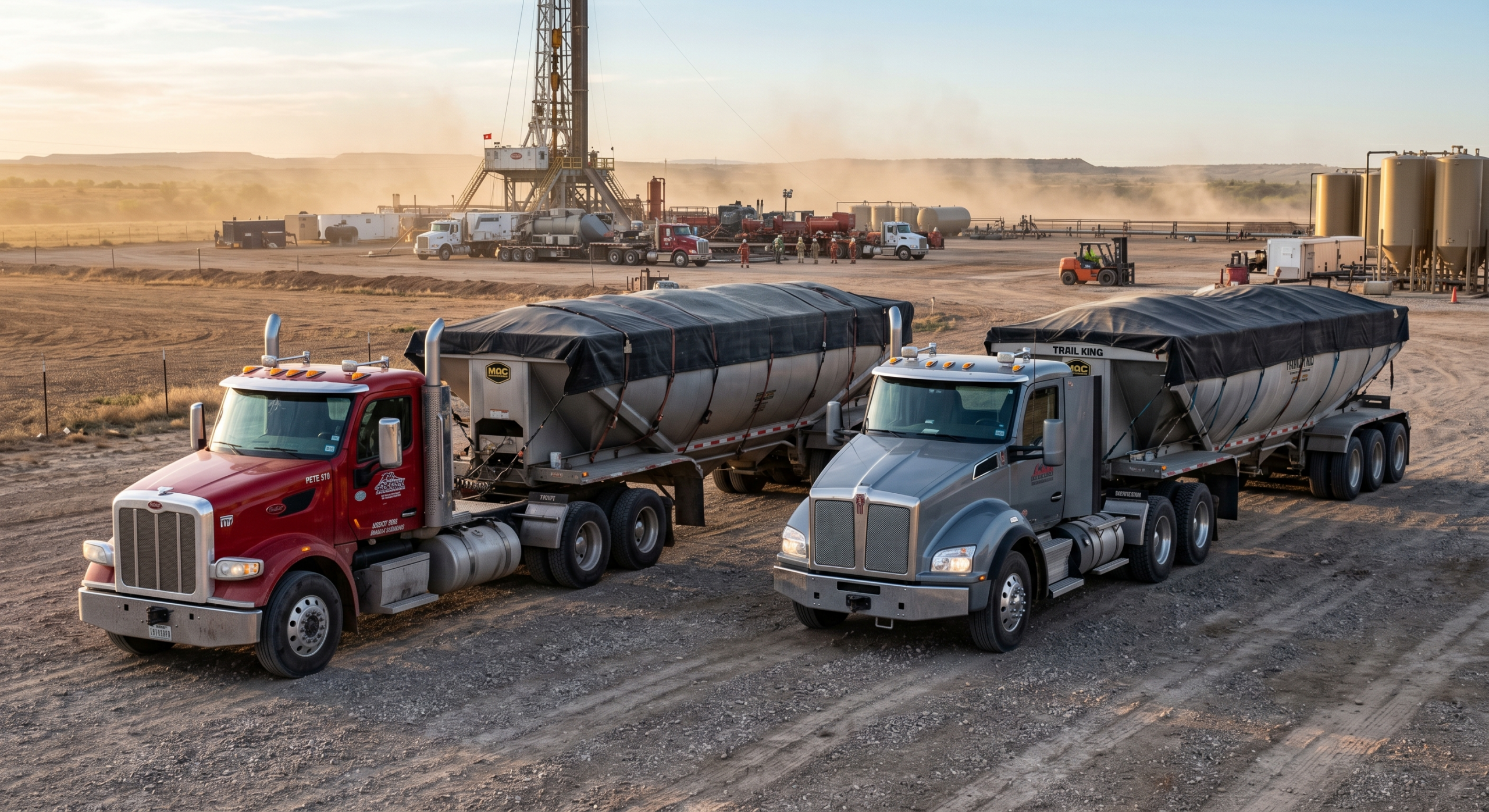
You’re standing in a dealership lot in Odessa, looking at a Peterbilt 567 and a Kenworth T880 parked side by side. Both are spec’d for frac sand. Both have the muscle to handle Permian lease roads. Both have dealer support within 30 miles of your primary haul routes. The salesman is giving you the pitch on each, and you’re nodding — but what you’re really thinking is: which one puts more money in my pocket over the next five years? That’s the right question. And it’s the one this post is built to answer.
This isn’t about brand loyalty. It’s not about which truck looks better or which one your uncle ran in 1998. This is a business decision — one of the biggest you’ll make as an Owner-Operator. Get it right, and you’re looking at lower operating costs, higher uptime, and a truck that holds its value when you’re ready to trade up. Get it wrong, and you’re eating the difference in fuel, maintenance, and downtime for years. Let’s go through the data.
Key Takeaways
- ✓ Peterbilt and Kenworth are both PACCAR subsidiaries — they share core components, and the brand gap is narrower than most drivers think
- ✓ A 0.5 MPG fuel economy difference equals approximately $6,900/year at 100,000 miles — spec matters more than brand for fuel economy
- ✓ The Peterbilt 567 and Kenworth T880 are the vocational benchmarks for frac sand hauling — both excel on rough Permian lease roads
- ✓ Kenworth’s Cummins X15 option offers peak torque up to 2,050 lb-ft — a genuine advantage for extreme terrain and load conditions
- ✓ 5-year total cost of ownership runs $350,000–$500,000+ for either brand — the deal you negotiate and the spec you choose matter more than the badge
- ✓ Dealer support in your specific operating region (Odessa, Midland, Abilene) is a critical decision factor — research before you buy
- ✓ Multi-axle configurations (tridem, pusher axles) on either brand can add 2–3 tons of legal payload per load — that’s $500–$1,000+/week in additional revenue
Why the Peterbilt vs. Kenworth Choice Matters for Your Bottom Line
This comparison exists because the stakes are real. Choosing between Peterbilt and Kenworth for frac sand hauling isn’t a lifestyle decision — it’s a financial one. When you’re trying to maximize your income potential as an Owner-Operator in the Permian or Eagle Ford, every dollar of operating cost matters. The truck you choose affects your fuel spend, your maintenance bills, your resale value, your uptime, and ultimately your take-home pay every single week.
Both Peterbilt and Kenworth dominate the oilfield vocational hauling market — combined, they likely account for more than 80% of frac sand trucks running in West Texas. But they’re not identical. Spec options differ. Dealer support networks differ. Engine availability differs. And those differences compound over 3–5 years of heavy oilfield use.
Consider the math on fuel alone: at 100,000 miles per year and a diesel price of $4.15/gallon (Permian average), a truck averaging 5.5 MPG costs approximately $75,500/year in fuel. A truck averaging 6.0 MPG — just a half-mile-per-gallon improvement — costs about $68,600/year. That’s nearly $6,900 back in your pocket annually, or roughly $34,500 over five years. That’s not a rounding error. That’s a truck payment.
Then add maintenance, resale value, and driver comfort — which directly affects your ability to run consistent miles without burning out — and the right choice becomes a foundational business decision. Your haul routes matter too. Short 50-mile in-basin runs from Permian sand mines favor different specs than 150–250 mile transload hauls. The truck that wins on a congested well pad might not be the same truck that wins on a long highway run to a transload facility in Pecos.
This post breaks it all down — model by model, spec by spec, cost by cost — so you can make the call with confidence.
2026 Frac Sand Demand & Market Context in Your Operating Region
Before you spec a truck, you need to understand the market you’re running in. Demand shapes utilization. Utilization shapes profitability. And in 2026, the Permian Basin and Eagle Ford Shale are running hot.
The Permian Basin is carrying 350–450+ active rigs across the Delaware and Midland sub-basins, with proppant intensity per well averaging 5,000–10,000+ tons per completion job. Multi-well pad completions are the norm, not the exception. That means sustained, high-volume sand demand — and sustained demand for qualified drivers who can run the loads efficiently. Round-trip cycle times on Permian hauls typically run 6–12 hours, depending on whether you’re pulling from an in-basin mine or a transload facility. That cycle time directly influences which truck spec makes the most sense for your operation.
The Eagle Ford Shale is running 60–90+ active rigs, with per-well sand volumes of 3,000–7,000+ tons. Activity is steady — not as explosive as the Permian, but consistent enough to support a strong Owner-Operator market, especially for drivers who know the South Texas logistics network.
The infrastructure landscape is shifting too. In-basin sand mines and transload facilities have expanded significantly in recent years, reducing the average haul distance for many Permian operators. That shift puts a premium on cycle time efficiency and payload capacity — which means the axle configuration and spec choices on your truck matter more than ever. Operators running all-pneumatic frac sand hauling are particularly well-positioned in this environment, given the growing preference for pneumatic delivery to wellsite silos over belly dump operations.
Owner-Operator demand remains elevated. During peak completion seasons — typically spring and early summer — demand can outpace the supply of qualified drivers, especially for pneumatic specialists. Experienced operators with well-spec’d trucks and clean compliance records are in a strong negotiating position. The truck you choose directly affects your ability to capitalize on that demand.
Bottom line: the market is there. The loads are moving. The question is whether your truck is spec’d to capture them efficiently.
Know Your Market Before You Spec Your Truck
Understanding your operating region and load types is the foundation of every smart truck decision. Experienced dispatch partners help you match your spec to your lanes — and keep your truck loaded once you’re on the road. Explore how Sisu Energy supports Owner-Operators across all truck brands and models.
Peterbilt Frac Sand Trucks: 2026 Models, Specs & Strengths
Peterbilt is a PACCAR subsidiary built in Denton, Texas — which means parts availability and dealer proximity are genuine advantages in West Texas. The brand has a loyal following in oilfield hauling, and for good reason: their vocational and conventional lineup is purpose-built for demanding applications. Here’s what matters for frac sand operators in 2026.
The primary models for frac sand service are the Model 567 (vocational, $145,000–$210,000+), the Model 389 (conventional, $150,000–$220,000+), and the Model 579 (aerodynamic conventional, $140,000–$200,000+). For pure oilfield vocational duty — rough lease roads, tight well pads, heavy loads — the 567 and 389 are the workhorses. The 579 is adaptable but less common in extreme oilfield applications.
Engine options center on the PACCAR MX-13 (400–500 HP, 1,450–1,850 lb-ft torque) — the oilfield standard for the platform. The MX-13 is well-regarded for its torque curve and efficiency under load. Cummins ISX15/X15 availability varies by dealer and model year. For most Permian operators, the MX-13 is the spec to default to unless you have a specific reason to go elsewhere.
Transmission choices break down to the PACCAR TX-18/TX-18 Pro automated (preferred for ease of use and fuel efficiency) or the Eaton Fuller manual (10, 13, or 18-speed — still favored by experienced operators who want precise control on rough terrain and steep grades). The automated option reduces driver fatigue on long hauls; the manual gives you more control when you’re crawling down a rutted lease road at 5 MPH with 80,000 lbs behind you.
Axle and suspension configurations are where Peterbilt earns its oilfield reputation. Tandem rear axles are standard, but tridem and pusher axle configurations are available — especially on the 567 — for maximizing legal payload. Peterbilt’s Low Leaf or Air Trac suspension options handle rough terrain well. Axle configuration is one of the most important spec decisions you’ll make for frac sand hauling, and Peterbilt gives you the flexibility to get it right.
Dealer network in West Texas: Peterbilt has strong dealer presence in Odessa, Midland, San Angelo, Fort Stockton, and Abilene. Parts availability is generally good, though service turnaround can lag during peak completion seasons — plan for 2–5 day waits on major repairs during spring and early summer. Having 24/7 live human dispatch support behind you helps minimize the revenue impact of those downtime windows by keeping your load schedule optimized around your availability.
Lead times for custom oilfield specs can run 6–10+ months during high-demand periods. If you’re planning a new purchase, start the process early.
Peterbilt 567: The Vocational Workhorse for Rough Terrain
The 567 is purpose-built for oilfield vocational work. Its set-forward axle design improves visibility and maneuverability on tight lease roads — a real advantage when you’re navigating a congested well pad with multiple trucks working the same site. The tight turning radius matters more than most operators realize until they’ve tried to swing a conventional long-nose around a crowded transload facility at 2 AM.
GVW capability reaches 80,000+ lbs GCW with tridem and pusher axle options, giving you the legal payload capacity you need for frac sand loads. Cab ergonomics are strong — visibility is excellent, the layout is practical, and the driver environment is designed for daily oilfield work rather than long-haul highway comfort. If your primary operation is short-cycle Permian Basin runs from in-basin mines to well pads, the 567 is hard to beat.
Peterbilt 389: The Classic Conventional with Staying Power
The 389 is the truck that drivers who grew up in the oilfield have a visceral attachment to — and the resale market reflects that loyalty. Conventional styling with a long hood, spacious cab, and long wheelbase options make it the preferred choice for operators running longer haul routes (150+ miles) where driver comfort compounds over a 10–12 hour day. The 389 often retains a 3–5% resale premium over vocational models, which matters when you’re calculating 5-year total cost of ownership.
Initial cost runs slightly higher than the 567 for comparable specs, but the resale value retention and driver satisfaction scores make it a strong choice for operators who prioritize long-haul comfort and brand legacy. Frame and GVW capability match the 567 — you’re not giving up payload capacity by choosing the conventional model.
Kenworth Frac Sand Trucks: 2026 Models, Specs & Strengths
Kenworth is Peterbilt’s sibling under the PACCAR umbrella — same parent company, same core engineering DNA, but a distinct product identity and loyal driver following. In the Permian Basin and Eagle Ford, Kenworth maintains a very strong presence, particularly with the T880 and W900 models. Here’s the breakdown for 2026.
The primary models for frac sand service are the T880 (vocational, $140,000–$210,000+), the W900 (conventional, $155,000–$225,000+), and the T680 (aerodynamic, $135,000–$190,000+). The T880 and W900 are the oilfield workhorses. The T680 is adaptable for bulk operations but less common in extreme vocational duty.
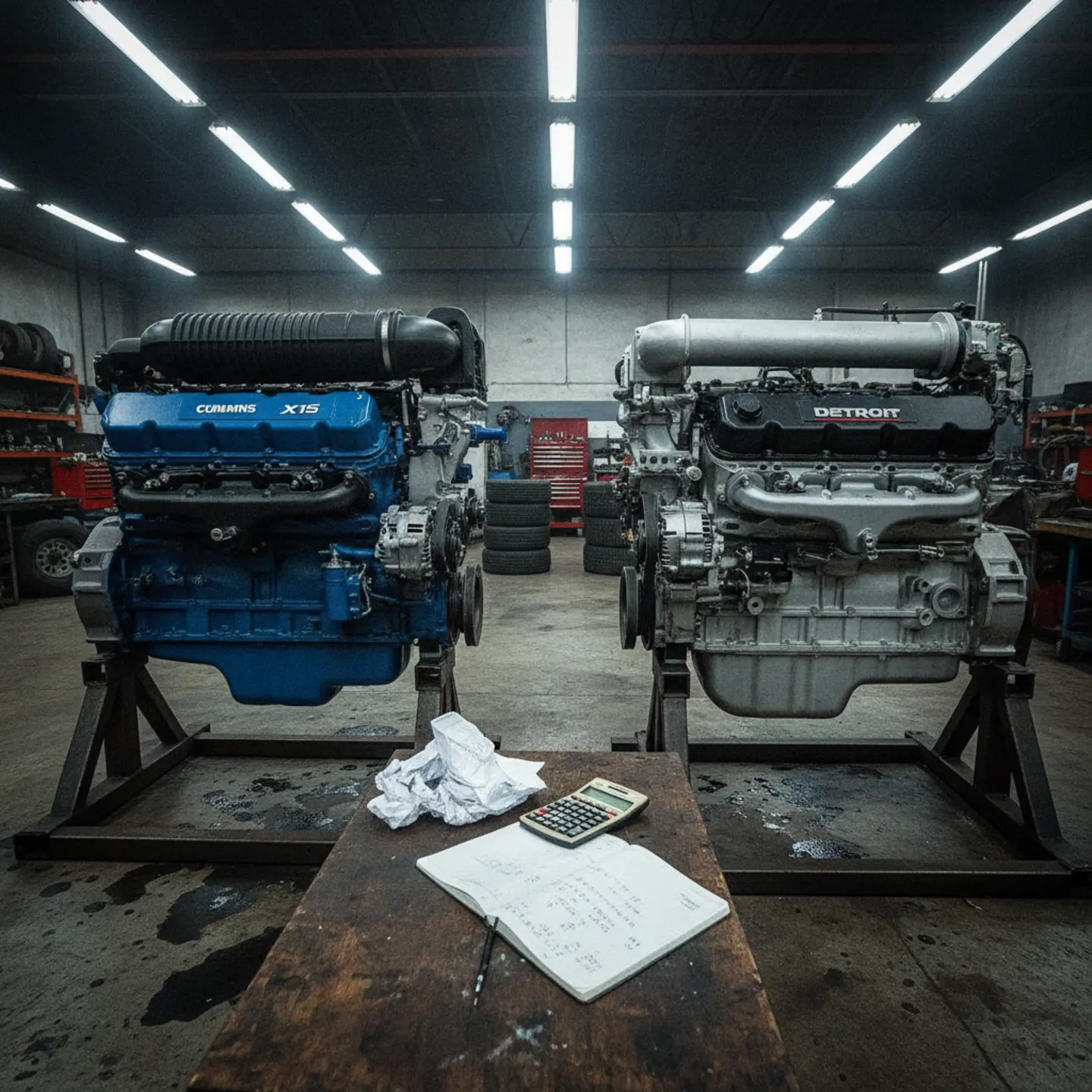
Engine options include the PACCAR MX-13 (400–500 HP, 1,450–1,850 lb-ft) — same as Peterbilt — and the Cummins X15 (400–605 HP, 1,450–2,050 lb-ft). That Cummins X15 option is a genuine differentiator. Peak torque of 2,050 lb-ft is a real advantage in extreme terrain and heavy load conditions — if you’re regularly running loaded on steep grades or navigating rough lease roads with maximum payload, the X15 gives you a torque cushion that the MX-13 doesn’t match at the top end.
Transmission options include Eaton Fuller manuals (still popular among experienced oilfield drivers for precise control), PACCAR TX-18/TX-18 Pro automated, and Allison automatics. The manual transmission remains a preference among operators who run rough terrain regularly — the ability to precisely manage gear selection on steep, uneven lease roads is a skill that automated systems are still catching up to in extreme conditions.
Suspension options include Kenworth’s Airglide or KW 46-40/8-bag configurations. Kenworth is frequently praised for ride quality — the Airglide suspension in particular is well-regarded for smoothing out the punishment of rough Permian roads while maintaining load capacity. Tandem, tridem, and pusher axle configurations are available on the T880 for maximum legal payload.
Dealer network in West Texas: Kenworth has strong dealer presence in Odessa, Midland, Abilene, and El Paso. Parts availability is comparable to Peterbilt, and service turnaround faces the same peak-season pressures. The Owner-Operator first approach to running your business means building a relationship with your local dealer regardless of brand — knowing the service manager by name and having a priority service agreement can be worth more than any spec difference between the two brands.
Kenworth T880: The Vocational Benchmark
The T880 is frequently cited as the gold standard for vocational visibility and durability in demanding oilfield service. Its set-forward axle option improves maneuverability on tight well pads; the set-back option suits longer haul routes where highway stability matters more. The cab is quieter than most vocational competitors — a detail that matters more than drivers admit until they’ve spent 12 hours a day in a loud cab for six consecutive days.
Pair the T880 with the Cummins X15 at 2,050 lb-ft of torque and you have a truck that handles extreme load and terrain conditions with a margin of power that builds driver confidence and reduces drivetrain stress. For operators running maximum payload loads on rough terrain regularly, this combination is worth serious consideration.
Kenworth W900: The Iconic Conventional
The W900 is Kenworth’s answer to the Peterbilt 389 — long-hood conventional styling, spacious cab, strong resale market following. Both trucks appeal to the same driver archetype: experienced, tradition-oriented, running longer routes where cab comfort compounds over a full day’s work. The W900 carries a slightly higher initial cost than the T880 but comparable resale value retention. Frame strength and GVW capability match the T880 — you’re not giving up payload capacity by choosing the conventional platform.
Head-to-Head: Fuel Economy, Maintenance & Total Cost of Ownership
This is where brand loyalty has to step aside and let the numbers talk. What does it actually cost to own and operate a Peterbilt versus a Kenworth over 3–5 years of heavy oilfield use? The answer is more nuanced than either brand’s marketing will tell you.
Fuel economy under loaded oilfield conditions runs 5.0–6.5 MPG for both brands. The difference is driven by engine choice, transmission, axle ratios, aerodynamics, and driving habits — not by the badge on the hood. A PACCAR MX-13 in a Peterbilt 567 and a PACCAR MX-13 in a Kenworth T880 will deliver comparable fuel economy under comparable conditions. The Cummins X15 in a Kenworth offers higher peak torque but similar real-world fuel economy to the MX-13 — the torque advantage shows up in performance, not necessarily in the fuel log.
At 100,000 miles/year, $4.15/gallon diesel, and 5.5 MPG average, your annual fuel spend is approximately $75,500. A 0.5 MPG improvement saves roughly $6,900/year. A full 1.0 MPG improvement — achievable by moving from a poorly-spec’d truck to a well-spec’d one — saves approximately $13,800/year. That’s the fuel economy story: spec matters far more than brand.
Maintenance and repair costs for heavy oilfield use run $8,000–$15,000+ annually for both brands. Costs depend more on the specific engine and transmission chosen, the severity of your duty cycle (rough lease roads vs. highway), and your maintenance discipline than on the brand itself. Both Peterbilt and Kenworth utilize high-quality components, and parts availability is strong at major dealer networks in Odessa and Midland. The operator who runs a strict preventative maintenance schedule — oil changes, filter replacements, suspension checks — will consistently outperform the operator who defers maintenance, regardless of brand.
Insurance runs approximately $10,000–$20,000+ annually for Owner-Operators in oilfield service. The brand of your truck has minimal impact on your premium — your driving record, truck age, operating radius, and carrier program matter far more. Budget ~$15,000/year as a baseline for planning purposes.
Resale value is strong for both brands, particularly for conventional models (389/W900) and vocational workhorses (567/T880) in Texas. Expect 3-year depreciation of approximately 30–40% and 5-year depreciation of approximately 50–60%. Well-maintained 3–5 year-old oilfield units in Texas regularly sell for $70,000–$130,000+ at auction. Conventional models (389/W900) often retain a 3–5% premium over vocational models due to broader buyer demand. Your take-home pay over five years is directly tied to how well you manage these cost variables — and both brands give you the tools to manage them well if you spec and maintain the truck correctly.
5-Year Total Cost of Ownership Estimate (Permian Owner-Operator)
| Cost Category | Annual Estimate | 5-Year Total |
|---|---|---|
| Purchase / Lease | $30k–$44k/yr | $150k–$220k |
| Fuel (100k mi @ 5.5 MPG) | ~$75,500/yr | ~$377,500 |
| Maintenance / Repair | ~$10,000/yr | ~$50,000 |
| Insurance | ~$15,000/yr | ~$75,000 |
| Downtime / Lost Revenue | $2k–$4k/yr | $10k–$20k+ |
| Total Estimated (5 Years) | $350k–$500k+ |
Note: Figures are estimates based on 2026 industry data. Actual costs vary by spec, duty cycle, operating region, and individual driver practices. Fuel calculation uses $4.15/gallon Permian diesel average.
✓ Field Validation: Fuel Economy
Your Fuel Economy Matters — But Spec Matters More Than Brand
Owner-Operators report 5.0–6.5 MPG for both Peterbilt and Kenworth under loaded oilfield conditions. The difference between a well-spec’d truck and a poorly-spec’d one is often 0.5–1.0 MPG — that’s $6,900–$13,800/year. Focus on engine choice (PACCAR MX-13 vs. Cummins X15), transmission (automated vs. manual), and axle ratios before you choose the brand. The spec sheet matters more than the nameplate.
Total Cost of Ownership Is the Real Metric
If you’re evaluating trucks, make sure you’re comparing apples to apples — and that you have dispatch support to maximize utilization of whatever truck you choose. Owner-Operators who work with experienced, transparent partners consistently outperform those who go it alone, regardless of truck brand. Find out how Sisu Energy is built around driver economics.
Peterbilt vs. Kenworth: Direct Comparison on Key Oilfield Metrics
Let’s put the two brands side by side on the metrics that actually drive Owner-Operator profitability. This is the comparison that matters — not styling, not heritage, not which truck your dispatcher prefers. The decision that protects your business, your family, your future is the one grounded in data.
| Metric | Peterbilt | Kenworth |
|---|---|---|
| Vocational Model | 567 ($145k–$210k+) | T880 ($140k–$210k+) |
| Conventional Model | 389 ($150k–$220k+) | W900 ($155k–$225k+) |
| Primary Engine | PACCAR MX-13 (1,850 lb-ft max) | PACCAR MX-13 or Cummins X15 (2,050 lb-ft max) |
| Fuel Economy (Loaded) | 5.0–6.5 MPG | 5.0–6.5 MPG |
| Payload Capacity | Comparable (axle config dependent) | Comparable (axle config dependent) |
| Cab Comfort (Long Haul) | Strong (389 excels) | Frequently praised (T880/W900) |
| Vocational Visibility | Excellent (567 set-forward) | Excellent (T880 benchmark) |
| Resale Value (5-Year) | Strong; 389 retains premium | Strong; W900 retains premium |
| West Texas Dealer Network | Odessa, Midland, San Angelo, Fort Stockton, Abilene | Odessa, Midland, Abilene, El Paso |
| 5-Year TCO | $350k–$500k+ | $350k–$500k+ |
Where Peterbilt Outperforms
Peterbilt offers slightly more spec flexibility for niche oilfield applications — a reflection of its Texas manufacturing roots and deep dealer relationships in the Permian. The 567 vocational model excels in tight, rough-terrain applications where visibility and maneuverability are daily requirements. The set-forward axle design gives drivers a genuine advantage on congested well pads and tight transload facilities. And the 389’s loyal following in the used truck market means stronger resale demand among traditionalist buyers — which translates to real dollars when you’re ready to move up.
Where Kenworth Outperforms
Kenworth’s T880 is frequently cited as the vocational benchmark for durability and visibility in demanding oilfield service — and that reputation is earned. The Cummins X15 engine option is a genuine differentiator: peak torque of 2,050 lb-ft gives you a power cushion that the PACCAR MX-13 doesn’t match at the top end. For operators running maximum payload on extreme terrain, that torque advantage is real and measurable. Kenworth’s cab comfort — particularly the quietness of the T880 and T680 — is also frequently praised by drivers on long hauls. Twelve hours in a quieter cab is a meaningful quality-of-life difference.
Where They’re Equivalent
Both brands are PACCAR subsidiaries sharing many core components — engines, transmissions, chassis elements. Both offer robust vocational platforms suitable for frac sand hauling. Dealer support networks in the Permian are comparable in quality and availability. Payload capacity, when properly spec’d with multi-axle configurations, is equivalent. The choice often comes down to specific spec availability at your local dealer, the relationship you have with that dealer, the price you negotiate, and individual driver preference. Neither brand has a structural cost-of-ownership advantage over the other when you’re comparing equivalent specs.
Regulatory, Compliance & Operational Considerations for 2026
Both Peterbilt and Kenworth operate within the same regulatory framework — the rules don’t change based on the badge on your hood. But understanding that framework is critical for making smart spec choices that keep you legal, loaded, and profitable.
Texas weight limits: Standard GVW is 80,000 lbs. Frac sand loads regularly exceed this, requiring overweight permits from TxDOT and county road authorities. The permit process is manageable but adds cost and route planning complexity. Multi-axle configurations — tandem, tridem, and pusher axles — are essential for maximizing your legal payload and reducing the frequency of overweight permit requirements. Pneumatic operations typically achieve 25–30 tons commodity weight; belly dump operations run 20–25 tons. The right axle spec can mean the difference between running legal and paying for permits on every load.
FMCSA Hours of Service: Standard 11-hour driving, 14-hour window, 10-hour off-duty rules apply to all Class 8 interstate commerce operations. The oilfield exemption under 49 CFR § 395.1(d) allows up to 70 hours/8 days within a 150-air-mile radius of your work site — a meaningful operational advantage for Permian Basin short-cycle operators who stay within that radius. But the exemption still requires record of duty status, and it doesn’t eliminate the need for careful log management. Platforms like Motive logs and ELD compliance tools simplify this process significantly for Owner-Operators who want to maximize their available drive time without compliance risk.
ELD mandate: All Class 8 trucks in interstate commerce must use Electronic Logging Devices. Short-haul exemptions rarely apply to the full scope of oilfield hauling. If you’re running loads across state lines — even occasionally — you need a compliant ELD setup. Both Peterbilt and Kenworth integrate with major ELD platforms, and this should be part of your spec conversation with the dealer.
Emissions compliance: Both Peterbilt (PACCAR MX engines) and Kenworth (PACCAR MX and Cummins X15) meet current EPA standards using Diesel Particulate Filters (DPF), Selective Catalytic Reduction (SCR/DEF), and Exhaust Gas Recirculation (EGR). Maintenance of these aftertreatment systems is non-negotiable — a neglected DPF or DEF system will take your truck off the road at the worst possible time. Budget for regular aftertreatment maintenance as part of your annual cost structure.
CDL endorsements: Class A CDL is the standard requirement. A Tank (T) endorsement may be required by some carriers for pneumatic operations, though it’s not universally mandated by FMCSA for dry bulk. Confirm requirements with your carrier before you start. Beyond the CDL, site-specific certifications — PEC SafeLand, H2S Alive, and wellsite operator certs — are common requirements for Permian and Eagle Ford operations, regardless of truck brand. Budget time and money for these certifications as part of your startup costs.
💡 Insider Tip: Payload Optimization
Maximize Your Payload Without Overweight Headaches
Frac sand loads often exceed the standard 80,000 lbs GVW. Both Peterbilt and Kenworth offer multi-axle configurations — tridem drive, pusher axles — that let you maximize legal payload and reduce the need for expensive overweight permits. The right spec can mean an extra 2–3 tons per load. At current commodity rates, that’s $500–$1,000+ per week in additional revenue. Get the axle configuration right before you sign the purchase order.
Dealer Support, Service Availability & Uptime in West Texas
Uptime is money. Every day your truck sits in a service bay is a day you’re not hauling loads. Dealer support quality in your primary operating region isn’t a secondary consideration — it’s a critical business variable that deserves the same research attention as engine specs and fuel economy.
Peterbilt dealer network in West Texas includes strong presence in Odessa, Midland, San Angelo, Fort Stockton, and Abilene. Parts availability is generally good for common maintenance items and most major components. The Denton, Texas manufacturing facility gives Peterbilt a geographic advantage for parts logistics in West Texas compared to brands with more distant manufacturing operations.
Kenworth dealer network in West Texas covers Odessa, Midland, Abilene, and El Paso — comparable coverage to Peterbilt, with strong parts availability at major locations. El Paso coverage is an advantage for operators running loads into New Mexico or far West Texas routes.
Service turnaround reality: Both brands experience slow turnaround during peak completion seasons — typically spring and early summer when completion activity in the Permian surges. Plan for 2–5 day waits on major repairs during these periods. That’s not a brand-specific problem; it’s a capacity problem driven by the sheer volume of heavy trucks running hard in a concentrated geographic area. Proactive preventative maintenance is your best defense against unplanned downtime — oil changes, filter replacements, suspension inspections, and aftertreatment system checks on a strict schedule reduce your exposure to the peak-season service crunch.
Dealer relationships matter more than most operators realize. Negotiating service priority, parts availability commitments, and warranty support terms with your local dealer before you buy is as important as the truck choice itself. A dealer who knows your name and your operation will prioritize your service ticket differently than a dealer who sees you as a one-time transaction. Build that relationship early — visit the service department, meet the service manager, and ask direct questions about their typical turnaround times and parts inventory for your specific model.
Some dealers offer mobile service for minor repairs — availability varies by location. Ask specifically about mobile service capability when you’re evaluating dealers, especially if your primary operating area is remote from major service centers. For Owner-Operators who run a tight schedule, having a dispatch and operational partner with an Owner-Operator first philosophy helps minimize the revenue impact of downtime by keeping your load schedule flexible and your utilization maximized around planned and unplanned maintenance windows.
Which Truck Should You Choose? A Decision Framework for Owner-Operators
After all the data, here’s the practical framework. Match your scenario to the recommendation — and remember that the spec you choose within either brand matters as much as the brand itself.
- →If you prioritize visibility and maneuverability on rough lease roads: Peterbilt 567 or Kenworth T880 — both vocational models excel here. The set-forward axle design on each gives you the sight lines and turning radius to navigate congested well pads efficiently.
- →If you value driver comfort on longer hauls (150+ miles): Kenworth T880 or W900 for cab quietness and ride quality; Peterbilt 389 for spacious cab and long wheelbase comfort. Both are strong choices — test drive both before you decide.
- →If you want classic styling and strong resale value: Peterbilt 389 or Kenworth W900 — both hold value exceptionally well, with conventional models often retaining a 3–5% premium over vocational models in the used truck market.
- →If you need maximum torque for extreme terrain and load conditions: Kenworth T880 with Cummins X15 — up to 2,050 lb-ft is a genuine advantage that the PACCAR MX-13 (available in both brands) doesn’t match at the top end.
- →If fuel economy is your primary optimization target: Compare specific engine, transmission, and axle ratio specs across both brands. The PACCAR MX-13 and Cummins X15 are comparable in real-world fuel economy — the automated transmission and optimized axle ratios will move the needle more than the brand choice.
- →If dealer support is critical to your operation: Research specific dealer ratings and service availability in your primary operating region. The dealer relationship — not the brand — is what determines your service experience. Visit both dealers, ask hard questions about turnaround times and parts inventory, and choose the dealer you trust before you choose the truck.
- →If you’re budget-conscious: Negotiate hard on both brands. Get written quotes from both Peterbilt and Kenworth dealers for equivalent specs. A $5,000 negotiation win — entirely achievable with competitive quotes in hand — is worth more than any marginal spec difference between the two brands.
The truck choice is the foundation — but it’s only the foundation. Owner-Operators who build sustainable businesses combine the right equipment with the right operational partner. If you’re ready to take that next step, Join Our Pack and see how Sisu Energy supports drivers across all truck brands and models with 24/7 live human dispatch, transparent pay, and a culture built around driver success. The truck gets you to the well pad. The partnership determines whether you’re profitable when you get there.
⚠ Warning: Brand Loyalty
Brand Loyalty Can Cost You Thousands
Many Owner-Operators choose Peterbilt or Kenworth based on tradition, driver preference, or dealer relationships — not on total cost of ownership. A 0.5 MPG difference, a $5,000 negotiation win, or a better warranty can be worth $10,000–$30,000+ over 5 years. Get quotes from both brands, compare specific specs side by side, and negotiate hard before you sign. The brand loyalty you feel at the dealership doesn’t pay your fuel bill on Tuesday.
The Truck Is the Tool. The Partner Is the Multiplier.
The truck you choose is a major business decision. But the dispatch partner you choose matters just as much. Owner-Operators who work with experienced, transparent partners consistently maximize their take-home pay regardless of brand. Read more about what it actually means to haul frac sand as an Owner-Operator in 2026.
FAQ: Peterbilt vs. Kenworth for Frac Sand Hauling
These are the questions Owner-Operators ask most when they’re working through this decision. Straight answers, no hedging.
Both Peterbilt and Kenworth offer excellent, highly capable trucks for frac sand hauling in the Permian Basin. The choice depends on specific model configurations — Peterbilt 567 vs. Kenworth T880 for vocational duty, or 389 vs. W900 for conventional style — engine preference (PACCAR MX-13 vs. Cummins X15), dealer support quality in your operating area, and personal driver comfort. Neither brand has a clear structural advantage over the other. The right choice is the one that fits your specific haul routes, load types, budget, and the dealer relationship you can build in Odessa or Midland. Get quotes from both, compare equivalent specs, and make the decision with numbers — not nostalgia.
Fuel economy under loaded oilfield conditions is determined by engine choice, transmission type, axle ratios, aerodynamics, and driving habits — not by the brand. Both Peterbilt and Kenworth offer configurations capable of achieving 5.0–6.5 MPG under demanding Permian Basin conditions. A PACCAR MX-13 in a Peterbilt 567 and a PACCAR MX-13 in a Kenworth T880 will deliver comparable real-world fuel economy under comparable conditions. The Cummins X15 (available in Kenworth) offers higher peak torque but similar fuel economy to the MX-13. Focus your optimization energy on specific engine, transmission, and axle spec choices — a 0.5 MPG improvement is worth approximately $6,900/year and is achievable through spec choices, not brand selection.
For comparable vocational specs — say, a Peterbilt 567 vs. a Kenworth T880 with similar engine and transmission choices — annual maintenance costs are generally very similar, running $8,000–$15,000+ for heavy oilfield use. Both brands utilize high-quality components and have strong parts availability in West Texas. The real cost drivers are the specific