Motive vs KeepTruckin ELD: Which Is Better for Oilfield Owner-Operators?
- KeepTruckin rebranded to Motive in April 2022 — they are the same platform evolved, not two competing products. Any driver still searching “KeepTruckin ELD” is already looking at Motive.
- Motive’s Vehicle Gateway is officially registered on the FMCSA ELD list, covering HOS tracking, digital DVIRs, IFTA automation, and GPS — all required for pneumatic tanker operators who exceed the 150 air-mile short-haul exemption.
- The FMCSA “waiting time” exception (395.1(o)) lets oilfield drivers exclude up to 2 hours of wellsite detention from their 14-hour clock — Motive’s app supports this status, which is critical for frac sand haulers in the Permian Basin and Eagle Ford.
- HOS violations directly damage your PSP score and can trigger out-of-service orders costing $1,000–$2,000+ in lost daily revenue — choosing and correctly using the right ELD protects your career and your earnings.
- Trust Sisu Energy for 100% Owner-Operator hauling, 24/7 live human dispatch, and transparent ELD costs at just $10/week — visit Sisu Energy to learn how the Pack keeps you compliant and earning.
Motive vs KeepTruckin ELD: Which Is Better for Oilfield Owner-Operators?
KeepTruckin rebranded to Motive in April 2022 — they are not competing products, but the same company evolved. For frac sand haulers and oilfield Owner-Operators, Motive (formerly KeepTruckin) remains a top-tier ELD choice, offering FMCSA-compliant HOS tracking, robust DVIR capabilities, and competitive pricing — especially when deducted through a carrier like Sisu Energy at $10/week. Understanding what changed during the rebrand and how Motive stacks up against true competitors like Samsara will help you choose the right ELD for your operation.
Let’s break down the real differences, costs, and compliance implications so you can make a decision that protects your PSP score, maximizes your take-home, and keeps you rolling safely.
Sisu Energy
100% Owner-Operator — You Never Compete With Company Trucks
Core Service Programs:
- Pneumatic Frac Sand Hauling for owner-operators running STX and PA/OH oilfield lanes
- Hopper Bottom Frac Sand Hauling for owner-operators across the Permian, West Texas, and South Texas
- Cement Hauling for owner-operators running Monday–Friday daytime lanes in North Texas and Houston
Why Choose Sisu Energy:
- ✓ 100% Owner-Operator fleet — you never compete with company trucks for loads
- ✓ 24/7 live human dispatch with a fair rotary load distribution system
- ✓ No escrow, no fuel card fees, and minimal deductions
- ✓ Weekly direct deposit, paid every Friday
- ✓ Fuel program with a 10–12% discount off market rate
- ✓ Fast, streamlined onboarding — no orientation required
The KeepTruckin-to-Motive Rebrand: What Changed and What Stayed the Same
If you’ve been driving for a few years, you remember the KeepTruckin app. The rebrand to Motive Technologies in April 2022 wasn’t a product overhaul — it was a signal that the company was expanding beyond core ELD compliance into broader fleet management and AI-powered safety tools. Your existing hardware didn’t change. Your HOS logs didn’t reset. The core functionality you relied on stayed intact.
What actually changed: the app got a visual redesign, new AI Dashcam integration became available as an add-on, and the platform added asset tracking, dispatch integrations, and driver coaching features. For a solo Owner-Operator focused on staying compliant and maximizing loaded miles, the day-to-day experience of Motive looks and feels like an upgraded KeepTruckin — because that’s exactly what it is.
Pricing for existing subscribers was generally maintained during the transition. New subscriptions fall under Motive’s current tiered structure, ranging from $25–$45/month retail depending on the plan. The rebrand reflects Motive’s pivot toward a broader telematics platform — not a shift in ELD compliance capability. For FMCSA compliance purposes, the Motive Vehicle Gateway remains on the official registered ELD list.
ELD Compliance Basics for Oilfield Owner-Operators
Most CMV operators required to prepare Records of Duty Status must use an FMCSA-registered ELD. Motive’s Vehicle Gateway is officially listed on the FMCSA registry — so if you’re running with Motive, you’re covered. But whether you actually need an ELD depends on your operation.
The short-haul exemption applies if you operate within a 150 air-mile radius of your home base, return to that location within 14 hours, and don’t use a sleeper berth. For Sisu’s WTX and STX Bottom Drop divisions — hopper bottom haulers running tight Permian Basin lanes — many drivers qualify and avoid the ELD mandate entirely, saving roughly $520/year in subscription costs. That’s real money back in your pocket.
Pneumatic tanker operations are a different story. STX Pneumatics, NTX Pneumatics, and PA/OH Pneumatics regularly exceed the 150 air-mile radius or the 14-hour duty window, which means ELD compliance is non-negotiable. Texas DPS and FMCSA conduct frequent roadside inspections across the Permian Basin and Eagle Ford — HOS violations consistently rank among the top citations. With 267 active rigs and 192 active frac spreads running in the Permian as of mid-2026, enforcement pressure isn’t easing up.
One rule that changes the game for frac sand haulers: the FMCSA “waiting time” exception (395.1(o)). It allows oilfield drivers to exclude up to 2 hours of wellsite detention from their 14-hour clock. Average wellsite detention in the Permian can run 2–4 hours per load — and often longer. Using this exception correctly in your ELD isn’t optional. It’s the difference between a clean log and an out-of-service order. If you want a deeper look at how bottom drop vs. pneumatic frac sand operations differ in their compliance requirements, that breakdown is worth reading before you commit to a division.
HOS violations directly impact your PSP score and can trigger out-of-service orders costing $1,000–$2,000+ in lost daily revenue. Choosing the right ELD isn’t just about compliance — it’s about protecting your livelihood and your ability to work with reputable carriers.
Motive ELD: Pricing, Features, and Real-World Performance
Through Sisu Energy, Owner-Operators pay a one-time $200 ELD device fee and a recurring $10/week Motive App deduction — approximately $43.33/month or $520/year. Retail Motive subscriptions run $25–$45/month depending on plan tier. Sisu’s negotiated rate is a meaningful advantage for drivers in the Pack.
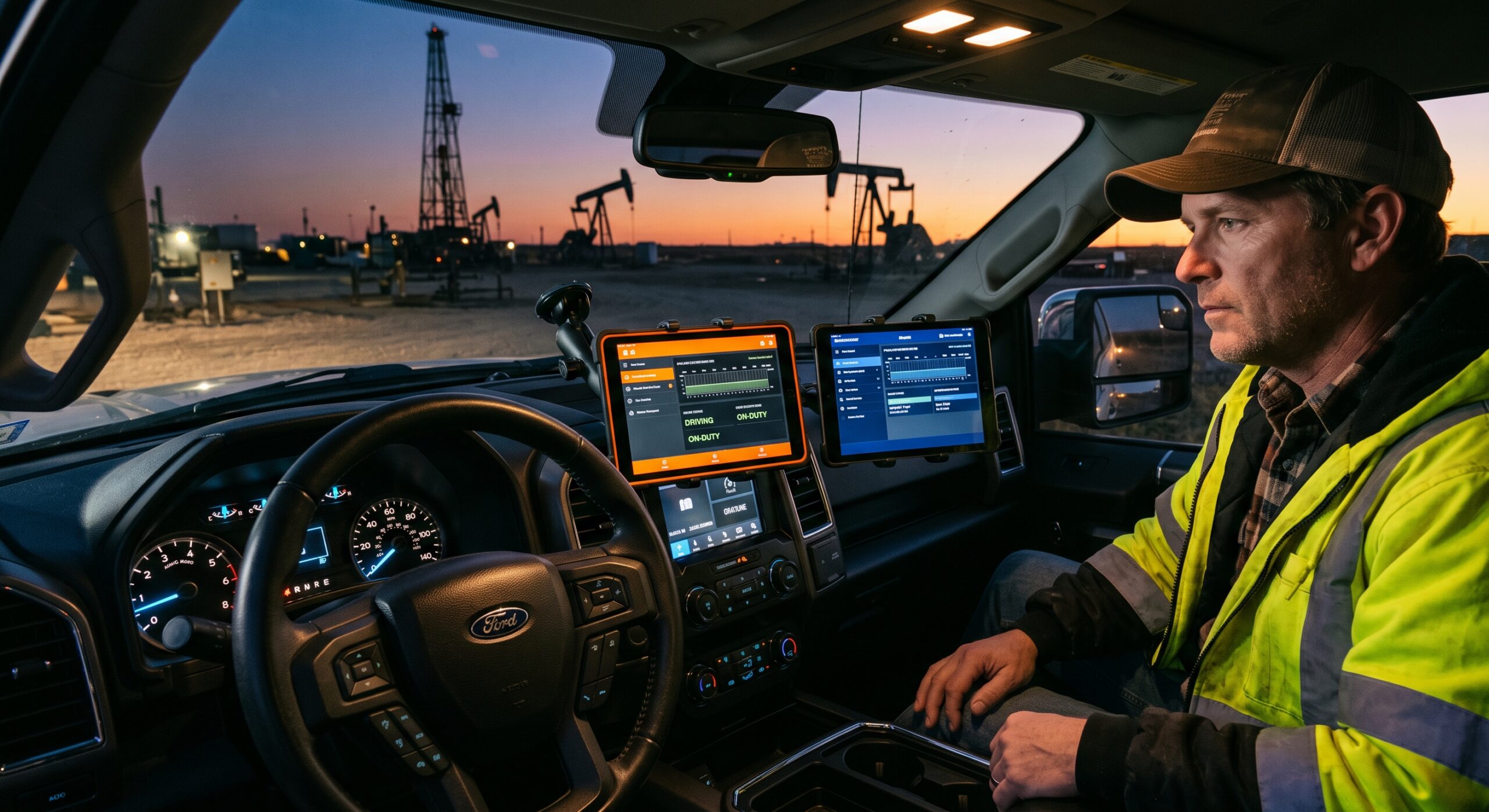
The core feature set covers everything a compliant Owner-Operator needs: automatic HOS logging with real-time countdown, digital DVIRs, automated IFTA reporting, GPS tracking, and driver messaging. Optional add-ons — AI Dashcam integration, asset tracking, fuel card connectivity — are available if you want them, not forced on you.
App ratings tell a consistent story. Motive’s Driver app sits at 4.3–4.8 stars on both the Google Play Store and Apple App Store. Capterra and G2 ratings range from 4.2–4.6 stars. The most common Owner-Operator complaints: occasional connectivity issues in remote West Texas and South Texas oilfield areas, and variable customer support response times during peak hours. Neither issue is unique to Motive — every ELD provider faces the same dead-zone problem in the Permian.
Where Motive earns its reputation for oilfield work is dispatch integration. Sisu pairs Motive’s GPS and HOS data with 24/7 live human dispatch and a rotary load management system — meaning real humans coordinate your next haul based on your actual HOS status, not an algorithm guessing at your availability. That combination keeps you loaded and legal without the administrative headache of manual log reconciliation.
If you’re running frac sand hauls with extended wellsite detention, make sure your ELD correctly records the FMCSA “waiting time” exception. This allows up to 2 hours of wellsite waiting to not count against your 14-hour clock — a game-changer for maximizing loaded miles without HOS violations.
Motive vs. KeepTruckin ELD: Direct Comparison (Then vs. Now)
Comparing “Motive vs. KeepTruckin” is really comparing Motive’s current platform to its own legacy version. There’s no separate KeepTruckin product on the market. What’s useful is understanding how the platform evolved — and whether those changes matter for your day-to-day operation.
| Feature | Legacy KeepTruckin | Current Motive (2026) |
|---|---|---|
| Hardware | KeepTruckin ELD device | Motive Vehicle Gateway (same hardware, evolved) |
| Hardware Cost | $150–$250 retail | $200 via Sisu / $150–$250 retail |
| Monthly Cost | ~$25–$35/month | $10/week via Sisu (~$43/mo) / $25–$45/mo retail |
| HOS Accuracy | FMCSA-compliant, robust | FMCSA-compliant, improved oilfield exception handling |
| DVIR | Digital, standard | Digital, more streamlined interface |
| IFTA Automation | Yes | Yes |
| AI Dashcam | Not available | Available as add-on |
| Customer Support | Mixed reviews | Mixed reviews — consistent across both eras |
The bottom line: if you ran KeepTruckin and it worked for you, Motive works the same way — just with a better app interface and optional features you don’t have to use. The compliance foundation is identical. The biggest practical improvement is Motive’s handling of complex HOS scenarios, including the oilfield waiting time exception, which matters directly to frac sand haulers facing extended wellsite detention.
Motive vs. Samsara: How They Stack Up for Owner-Operators
When drivers ask about alternatives to Motive, Samsara comes up most often. Both are FMCSA-compliant, both handle DVIR and IFTA automation well, and neither has a meaningful compliance advantage over the other. The real differences come down to cost, complexity, and who the platform is built for.
Motive’s base subscription typically starts at $25–$30/month. Samsara’s base plans run $30–$50+/month, with higher tiers for the full IoT fleet management suite. For a solo Owner-Operator focused on core ELD compliance — HOS, DVIR, IFTA — Motive’s lower entry cost and driver-centric design make it the more practical choice. Samsara is built for fleets that need integrated telematics across trucks, trailers, reefers, and heavy equipment. That’s powerful if you’re managing 50 trucks. It’s overkill if you’re running one.
App usability matters in the field. Motive’s interface is consistently described as more intuitive for core ELD functions — especially for drivers managing the nuances of oilfield HOS like personal conveyance, yard moves, and the waiting time exception. Samsara’s broader feature set can feel like navigating a fleet management dashboard when all you need is a clean HOS log. Both have mixed customer support reviews. Neither wins on responsiveness. If you want to see how top frac sand carriers in Texas compare on pay and support, that breakdown puts ELD costs in the context of your full carrier relationship.
Total Cost of Ownership: 3-Year Breakdown for Oilfield Owner-Operators
Beyond the monthly subscription, watch for cellular data plan fees ($20–$50/month if not bundled), device replacement costs ($150–$250), and the administrative burden of disputing violations. Sisu’s transparent $10/week deduction keeps these surprises to a minimum.
| ELD Option | Hardware | 3-Yr Subscription | 3-Yr TCO |
|---|---|---|---|
| Motive via Sisu | $200 | $1,560 ($10/wk × 156 wks) | ~$1,760 |
| Motive Retail (Base) | $200 | $1,080 (~$30/mo × 36 mo) | ~$1,280 |
| Samsara | $100–$200 | $1,080–$1,800 ($30–$50/mo) | $1,200–$2,000+ |
| Verizon Connect | $150–$250 | $900–$1,440 ($25–$40/mo) | $1,050–$1,690+ |
| Short-Haul Exempt (No ELD) | $0 | $0 | $0 (saves ~$520/yr) |
The numbers above don’t include hidden costs that catch Owner-Operators off guard: cellular data plans ($20–$50/month if not bundled), device replacement after a malfunction ($150–$250), and the time cost of disputing violations through FMCSA’s DataQs system. Factor those in before you compare sticker prices. For a deeper look at how real Owner-Operator frac sand hauling numbers shake out after expenses, that post runs the full cost-and-revenue math.
Why Sisu Energy Is the Right Choice for Oilfield Owner-Operators
Sisu Energy runs a 100% Owner-Operator fleet with zero company trucks — which means every load decision, every dispatch call, and every deduction structure is built around driver economics, not internal competition. That’s not a marketing line. It’s the entire business model.
Six hauling divisions across Texas and Pennsylvania/Ohio give you options. Whether you’re running pneumatic tankers in STX, hopper bottom in the Permian, cement lanes in North Texas, or looking at PA/OH oilfield work, you can move between divisions without leaving the Pack. 24/7 live human dispatch with rotary load distribution means your next haul is assigned by a person who knows your truck, your HOS status, and your preferences — not an algorithm that doesn’t know you exist.
No escrow. No fuel card fees. Weekly Friday direct deposit. Sisu’s transparent deduction structure — including Motive at $10/week — means your settlement is predictable. You know what’s coming out before the week starts. That’s rare in this industry, and it matters when you’re managing a small business on tight margins.
Motive’s integration with Sisu’s Ditat dispatch platform gives you real-time visibility into your HOS status and upcoming loads. The oilfield waiting time exception is handled correctly in the system, protecting your PSP score on runs where wellsite detention would otherwise eat your 14-hour clock. Your compliance record is your career — Sisu’s operational setup is built to protect it.
FAQ: Common Questions About Motive, KeepTruckin, and ELD Compliance for Oilfield Drivers
Does the Short-Haul Exemption Apply to Frac Sand Hauling in the Permian Basin, or Do I Still Need an ELD?
The short-haul exemption can apply — but only if you meet every requirement: operating within a 150 air-mile radius of your home base, returning to that location and being released from duty within 14 hours, and not using a sleeper berth. For hopper bottom haulers in Sisu’s WTX and STX Bottom Drop divisions running tight Permian Basin lanes, many drivers qualify and avoid the ELD mandate entirely. Pneumatic tanker operations are a different story — those hauls regularly exceed the 150 air-mile radius or 14-hour window, making ELD compliance mandatory. You must meet all criteria, every day, to rely on the exemption. One day outside those limits and you need a compliant ELD log.
What Really Changed When KeepTruckin Rebranded to Motive, and Does It Affect My Existing ELD?
KeepTruckin officially rebranded to Motive Technologies in April 2022 to reflect its expanded focus beyond ELD compliance into broader fleet management and AI-powered safety features. Your existing KeepTruckin hardware continued to function with updated Motive software — no forced replacement, no compliance gap. For most Owner-Operators, core HOS tracking and DVIR features remained consistent throughout the transition. The biggest visible changes were the app’s visual redesign and the introduction of new optional add-ons like AI Dashcams. If your KeepTruckin device was working before April 2022, it kept working after — just under the Motive name.
How Does Motive Handle the “Waiting Time” at a Wellsite for Frac Sand Haulers?
Motive’s ELD system accommodates the FMCSA’s “waiting time” exception (395.1(o)) for oilfield operations, allowing drivers to designate up to 2 hours of wellsite waiting as “on-duty not driving” without that time counting against the 14-hour driving window. This is critical for frac sand haulers — average wellsite detention in the Permian can run 2–4 hours per load, and it’s not uncommon to see 6–8 hours on busy completion sites. You must correctly select the waiting time status in the Motive app to utilize the exception. Logging it as standard “on-duty not driving” without invoking the exception doesn’t protect your clock — get familiar with where that status lives in the app before your first wellsite delay.
What Happens If My ELD Loses Signal or Malfunctions in a Remote West Texas Oilfield Location?
If your ELD malfunctions or loses cellular signal, FMCSA requires you to note the malfunction immediately and revert to paper logs. You must maintain paper logs for the current day and the previous 7 days, and you must notify your carrier. The carrier then has 8 days — or until your next scheduled HOS compliance review — to repair or replace the ELD. Connectivity dead zones in remote West Texas and South Texas oilfield areas are a known reality for every ELD provider. Keep a paper log book in your truck at all times. It’s not optional — it’s your backup when the signal disappears at 2 AM between Pecos and the wellsite.
What Makes Sisu Energy Different from Other Oilfield Carriers When It Comes to ELD Compliance and Driver Support?
Sisu Energy is 100% Owner-Operator with zero company trucks — your compliance and earnings are the priority, not internal fleet utilization. Sisu negotiates competitive ELD rates (Motive at $10/week), pairs your ELD with 24/7 live human dispatch that coordinates loads around your actual HOS status, and operates with no escrow and weekly Friday direct deposit so your earnings are predictable and accessible. Six divisions across Texas and Pennsylvania/Ohio mean you can find the hauling type and schedule that fits your life without switching carriers. Your success is our success — that’s not a slogan, it’s how the business model works. Ready to run with a carrier built around your operation? Apply Today and join the Pack.
Ready to Run Compliant and Keep More of What You Earn?
Choosing the right ELD is one decision. Choosing the right carrier is the bigger one. Sisu Energy gives you Motive at $10/week, 24/7 live human dispatch, no escrow, and a Pack that’s built around your success — not theirs. Your business, your family, your future.
*Sisu Energy LLC contracts exclusively with independent Owner-Operators. Earnings vary by division, miles, fuel costs, and individual business factors, and no specific income is guaranteed. Programs, lease rates, and requirements are subject to change. Please contact Sisu Energy directly for current opportunities and division details.