Pneumatic Blower System Pricing: Cost & Features for Frac Sand Trailers
Key Takeaways
- Putting a pneumatic blower on your truck is a tractor-side job: a PTO on the transmission, a driveshaft (or hydraulic drive), a frame-mounted blower, intake filter and silencer, relief and check valves, discharge piping, and in-cab controls.
- Expect roughly $10,000–$20,000 for a new blower installed, or about $7,000–$13,000 with a rebuilt blower package. The blower itself is the biggest line item.
- Plan on 16–20 shop hours for a complete install — about 2–3 days off the road — plus a few more hours if an old system has to come off first.
- Your transmission decides the PTO. Manual, automated manual, and Allison automatic trucks each need a different PTO setup, so get it quoted for your exact truck.
- Trust Sisu Energy for 100% Owner-Operator pneumatic hauling, 24/7 live human dispatch, no escrow, and weekly Friday direct deposit — so the blower you just bought gets to work.
How Much Does It Cost to Install a Pneumatic Blower on Your Truck?
A complete pneumatic blower installation on a Class 8 tractor runs roughly $10,000–$20,000 with a new blower, or about $7,000–$13,000 with a rebuilt blower package — parts, PTO, plumbing, and 16–20 hours of shop labor included. The final number depends on the blower you choose, your transmission, how the blower is driven, and your shop’s labor rate.
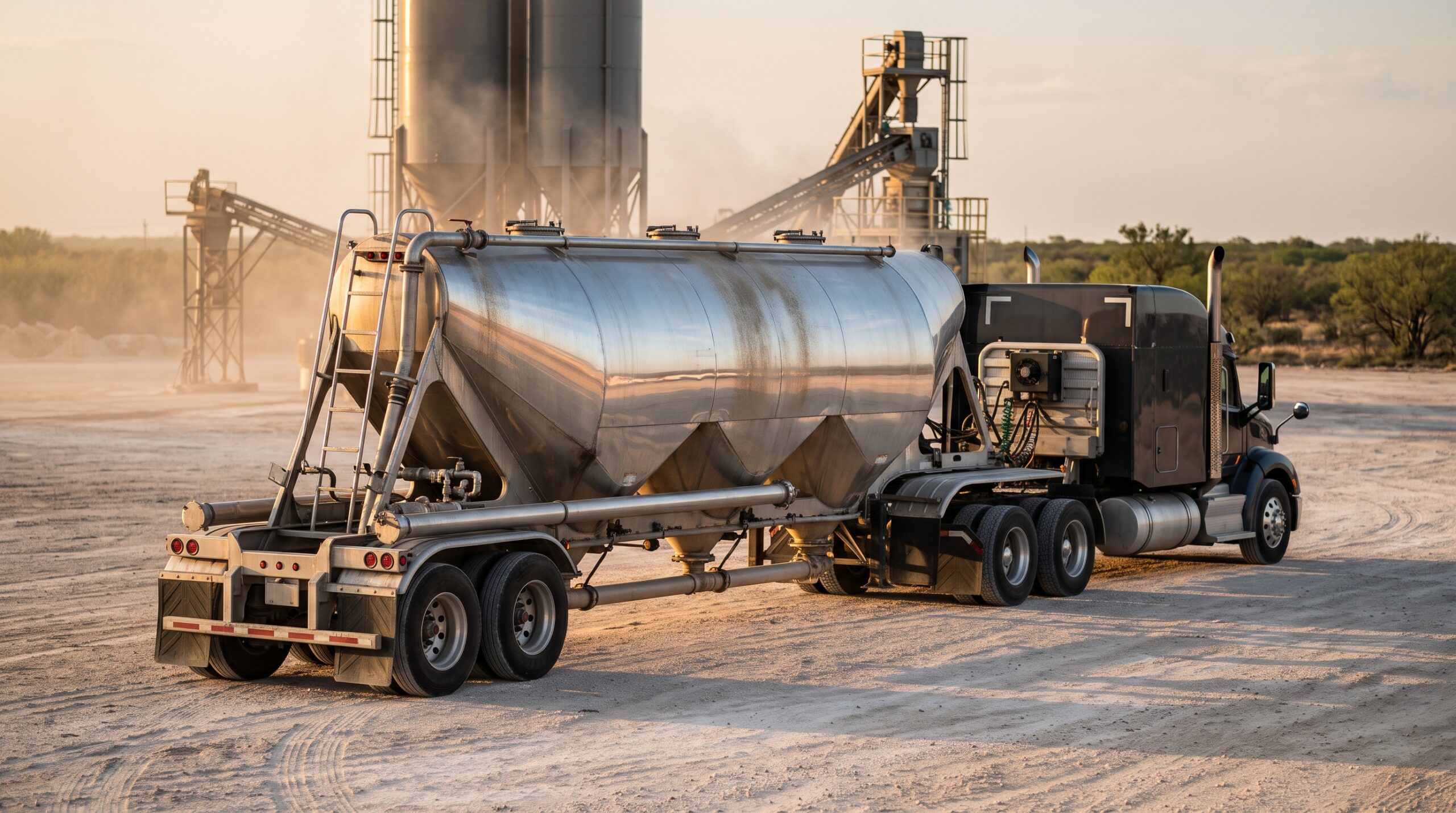
A pneumatic trailer doesn’t unload itself. The air that pushes sand or cement out of the tank comes from a blower mounted on your truck, powered by your engine. If you’re moving from bottom drop to pneumatic work, or switching carriers and trucks, this is the equipment you’ll be buying. Here’s exactly what goes on the truck, what each piece costs, and what to ask your shop before they start cutting brackets.
Sisu Energy
100% Owner-Operator — You Never Compete With Company Trucks
Core Service Programs:
- Pneumatic Frac Sand Hauling for owner-operators running STX and PA/OH oilfield lanes
- Hopper Bottom Frac Sand Hauling for owner-operators across the Permian, West Texas, and South Texas
- Cement Hauling for owner-operators running Monday–Friday daytime lanes in North Texas and Houston
Why Choose Sisu Energy:
- ✓ 100% Owner-Operator fleet — you never compete with company trucks for loads
- ✓ 24/7 live human dispatch with a fair rotary load distribution system
- ✓ No escrow, no fuel card fees, and minimal deductions
- ✓ Weekly direct deposit, paid every Friday
- ✓ Fuel program with a 10–12% discount off market rate
- ✓ Fast, streamlined onboarding — no orientation required
What Actually Gets Installed on the Truck
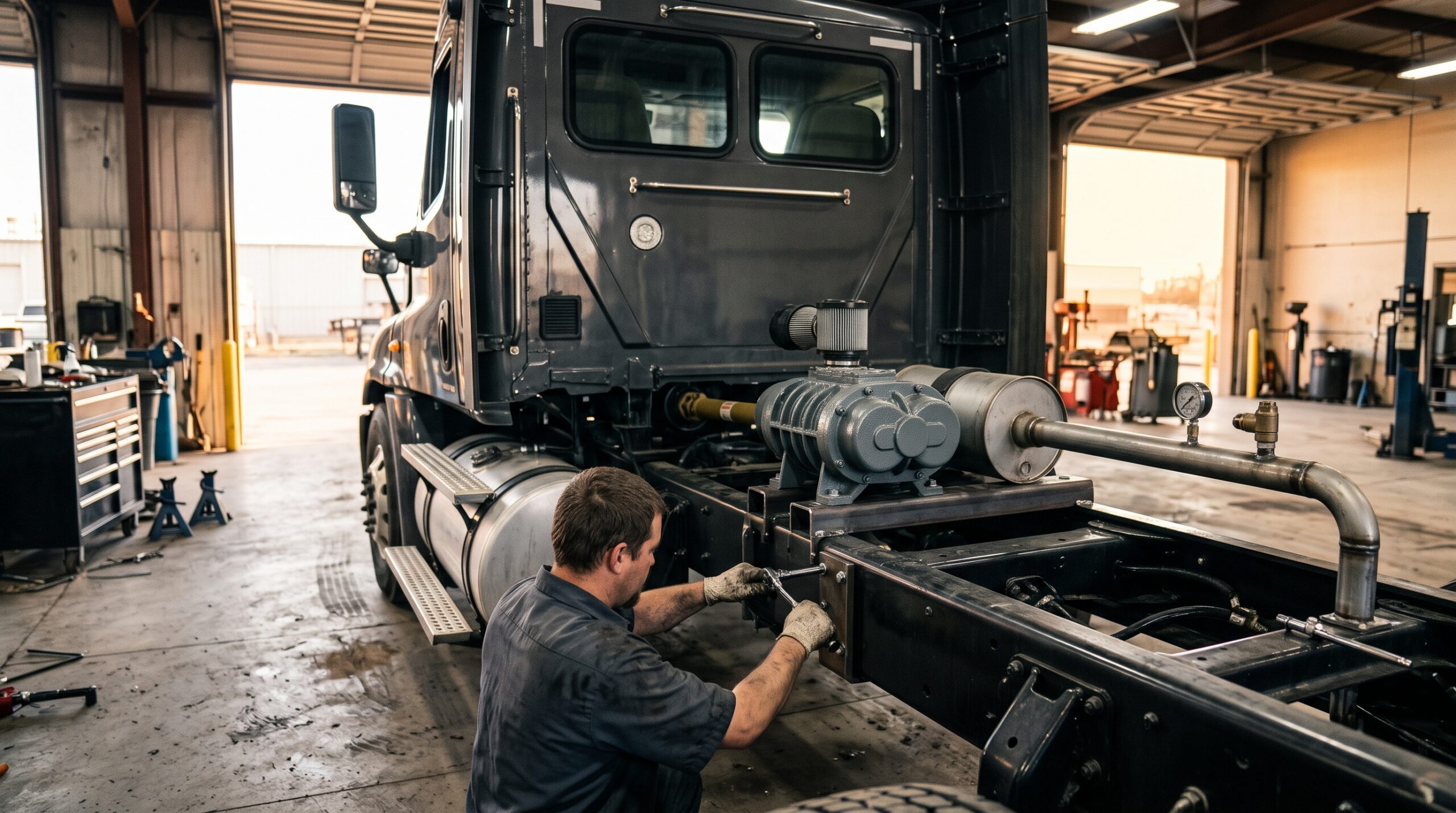
A blower install isn’t one part — it’s a small system bolted to your tractor. On a typical PTO-driven setup, here’s the scope of work from the transmission back:
- PTO (power take-off): Bolts to the PTO opening on your transmission and taps engine power. Usually air-shifted with a switch and indicator light in the cab.
- Driveshaft: Carries power from the PTO back to the blower. Length and angles depend on where the blower sits on your frame.
- Blower and mounting brackets: The blower is typically frame-mounted behind the cab on heavy-duty brackets built for your chassis. Common truck blowers include the Tuthill T-series (T850, T1050, T1055) and Gardner Denver units such as the T5 Cycloblower and Drum D-series.
- Intake air filter and silencer: Keeps dust out of the blower — critical on caliche roads and wellsite pads — and cuts noise.
- Discharge silencer, pressure relief valve, and check valve: The relief valve protects the blower and the tank from over-pressure. The check valve keeps product from backing up into the blower when you shut down.
- Gauges and controls: A pressure gauge (often a temperature gauge too) and a way to hold engine RPM steady while unloading.
- Discharge piping and hose connection: Hard piping from the blower to the back of the tractor, finished with a coupler and hose that connects to the trailer’s air inlet.
The alternative is a hydraulic drive: a PTO-driven hydraulic pump powers a hydraulic motor at the blower. That adds a pump, reservoir, and cooler, but it lets the blower mount where a driveshaft can’t reach. Some owner-operators also run a blower and a wet kit on the same truck so it can pull other trailers — ask your shop up front if that’s in your plans.
Don’t Undersize the Blower for Sand
Sand takes more air to unload than cement. A blower that’s too small for your trailer means longer unload times at every stop — and on short-haul lanes, unload time is turns. Size the blower and PTO ratio for the heaviest product you plan to haul, so the engine can run at a steady, moderate RPM while the blower does the work.
Installation Cost Breakdown
These ranges are built from current published parts prices and typical shop hours. Your quote will vary by truck, blower, and shop — use this to check whether a quote is in the right neighborhood.
| Item | Typical Cost | Notes |
|---|---|---|
| Blower — new | $5,700–$10,100 | Aftermarket replacements for Tuthill T850/T1050-size units start near $5,700; Gardner Denver and Drum truck blower packages run about $8,000–$10,100 |
| Blower — rebuilt/used | $3,000–$3,900 | Rebuilt Tuthill T1055 listings run about $3,000 bare, or $3,900 with muffler, intake, drive, and bracket |
| PTO | $600–$2,100 | Air-shift 8-bolt PTOs for Eaton Fuller manuals; automated and automatic transmissions may need a different unit |
| Driveshaft, brackets, filter, silencers, valves, gauges, piping, hose | $1,500–$4,000 (est.) | Partly covered if you buy a complete blower package; custom brackets add fabrication time |
| Shop labor | 16–20 hours | Multiply by your shop’s posted rate — about $2,000–$3,500 at $125–$175/hour. Add about 5 hours to remove an old system. |
| Total — new blower | ~$10,000–$20,000 | Top-end turnkey kits can list above $25,000 before labor |
| Total — rebuilt blower package | ~$7,000–$13,000 | Lower upfront, but ask for rebuild records and any warranty in writing |
Moving a blower from your old truck? It’s an option, but it isn’t free. You’re paying for removal, new brackets and a driveshaft sized for the new chassis, and possibly a different PTO if the transmission changed. Get it quoted side by side with a new install before you assume it’s the cheaper path.
Your Transmission Changes the Install
The PTO has to match your transmission, and that’s where installs on newer trucks get more complicated:
- Manual (Eaton Fuller 10/13/18-speed): The most common and most straightforward setup. An 8-bolt PTO bolts to the side or bottom opening.
- Automated manual (Eaton Endurant, Detroit DT12, etc.): Blowers can be run, but the PTO, its mounting position, and the engagement programming are specific to the transmission. Make sure the shop has done your exact model before.
- Allison automatic: Requires an Allison-compatible PTO and correct engagement settings. Common on day cabs used for cement work.
If you’re still choosing a truck for pneumatic work, the manual vs. automatic transmission guide for PTO and blower setups covers the tradeoffs in detail.
Downtime, Weight & Other Costs to Plan For
- Days off the road: 16–20 shop hours usually means 2–3 days in the bay, longer if brackets have to be fabricated or parts are back-ordered. Schedule the install before you lease on, not after.
- Added tractor weight: The blower, brackets, and piping add weight to your tractor, and every pound of tare is a pound of sand you can’t haul. Weigh the truck after the install so you know your real payload.
- Routine blower upkeep: Oil changes, intake filter changes (more often in dusty conditions), and checking the relief valve. Follow the blower manufacturer’s service schedule.
- ELD: If you’re running pneumatic at Sisu, an ELD is required for the STX Pneumatics and NTX Pneumatics divisions.
How Fast Does the Install Pay for Itself?
Frac sand pays by the ton. Industry ranges currently run about $27–$40 per ton for pneumatic and $18–$23 per ton for bottom drop, with a typical load of 23–25 tons. These are general market ranges, not Sisu rates — your lane and customer decide where you land.
Here’s a simple way to run your own payback math. On a 24-ton load, every $1 per ton you net above what you’d make on bottom drop is $24 per load. If pneumatic nets you $5 per ton more after the extra costs, that’s $120 a load. Run around 20 loads a week and that’s $2,400 a week — enough to cover a $15,000 install in a little over six weeks. If the difference on your lane is smaller, the payback is longer. Plug in your own numbers.
Net, Not Gross
Pneumatic’s higher per-ton rate doesn’t all reach your pocket. Count the blower upkeep, wash-outs when you switch between cement and frac sand, and the carrier split — at Sisu, pneumatic divisions run 80/20 while bottom drop runs 85/15. Fuel surcharges and detention can help, but not every customer pays them, so ask your carrier which ones do.
For a fuller look at how the two equipment types compare, see the bottom drop vs. pneumatic frac sand comparison.
Questions to Ask Your Shop Before the Install
- Can you give me an itemized quote — blower, PTO, driveshaft, brackets, filter, silencers, valves, piping, and labor hours?
- Have you installed a blower on my exact truck and transmission before?
- What blower size and PTO ratio do you recommend for sand, and what engine RPM will I unload at?
- Where will the blower mount, and will it interfere with my fuel tanks, steps, or fifth wheel?
- What’s the warranty on the blower, the PTO, and your labor — in writing?
- Will you test the system under pressure before I pick the truck up?
Why Sisu Energy Is the Right Choice Once Your Blower Is Installed
A blower is a real investment, and it only pays off when the truck is working. Sisu Energy is a 100% Owner-Operator carrier with zero company trucks — no internal fleet competing for loads, no escrow holds, and weekly Friday direct deposit.
Sisu runs four pneumatic divisions: frac sand in South Texas (south of San Antonio to Laredo) and Pennsylvania/Ohio, and cement in Dallas/Fort Worth and Houston. Cement work runs Monday–Friday daytime on paved roads, and day cabs are allowed for cement. STX Pneumatics requires oilfield experience (or a $300 trainer fee). Switching between cement and frac sand requires a wash-out first, so pick the division that matches how you want to run.
24/7 live human dispatch with rotary load distribution means a real person answers the phone and loads are distributed fairly. Fuel cards with no fees and a 10–12% fuel discount off market rate help protect the margin that pays for your equipment. For a full look at the economics, the owner-operator frac sand hauling real numbers guide walks through weekly costs and take-home.
Apply today and join a Pack that puts your success first.
Frequently Asked Questions About Blower Installation
How much does it cost to install a blower on a semi truck?
Roughly $10,000–$20,000 with a new blower and $7,000–$13,000 with a rebuilt blower package, including the PTO, driveshaft, brackets, intake and discharge components, piping, and 16–20 hours of labor. The blower is the biggest single cost. Always get an itemized quote for your specific truck.
How long does a blower install take?
A complete install typically takes 16–20 shop hours, or about 2–3 days off the road. Removing an old system adds about 5 hours. Custom brackets or back-ordered parts can stretch that out, so book the shop before you need the truck working.
Should my blower be PTO-driven or hydraulic-driven?
PTO with a driveshaft is the most common setup and has fewer parts. A hydraulic drive adds a pump, reservoir, and cooler, but lets the blower mount where a driveshaft can’t reach and can share hydraulics with a wet kit. Your chassis layout and what else the truck needs to pull usually decide it.
Can I put a blower on a truck with an automatic transmission?
Yes, but the PTO and engagement setup are specific to the transmission. Allison automatics and automated manuals like the Eaton Endurant each need a compatible PTO and the right programming. Choose a shop that has already done your exact transmission.
What makes Sisu Energy different for pneumatic owner-operators?
Sisu Energy is 100% Owner-Operator with zero company trucks — no internal competition for loads, no escrow holds, and weekly Friday direct deposit. Four pneumatic divisions cover frac sand in South Texas and PA/OH and cement in Dallas/Fort Worth and Houston, all backed by 24/7 live human dispatch with rotary load distribution and a 10–12% fuel discount. Apply today and join a Pack that respects your business.
Blower Installed? Put It to Work.
You’ve priced the install and planned the downtime. Now pair your truck with a carrier built around your take-home. Sisu Energy runs 100% Owner-Operator — no company trucks competing for your freight, no escrow, and a real human on dispatch 24/7.
*Sisu Energy LLC contracts exclusively with independent Owner-Operators. Earnings vary by division, miles, fuel costs, and individual business factors, and no specific income is guaranteed. Programs, lease rates, and requirements are subject to change. Please contact Sisu Energy directly for current opportunities and division details.