How to Understand Frac Sand Hauling Rates: Owner Operator Pricing South Texas Explained
Key Takeaways
- Frac sand hauling rates in South Texas are built from four components — base linehaul rate, fuel surcharge, detention pay, and accessorial charges — and current benchmarks range from $15–$22/ton on short hauls to $25–$40+/ton on long hauls (over 150 miles).
- Pneumatic tanker operations command a $20–$25/ton premium over hopper bottom in the Eagle Ford — roughly $500–$625 extra per load — due to specialized equipment and oilfield expertise requirements.
- A realistic weekly net take-home for a South Texas frac sand Owner-Operator in 2026 lands at $4,000–$5,000+ after carrier splits, fuel, insurance, truck payments, and maintenance — but only with consistent loads and a transparent carrier.
- Red flags in carrier agreements include large escrow requirements, vague detention policies, fuel surcharges that don’t cover deadhead miles, and carriers that run company trucks alongside Owner-Operators — all of which directly erode your take-home.
- Trust Sisu Energy for 100% Owner-Operator hauling, transparent deductions, 24/7 live human dispatch, and no escrow — built from the ground up to maximize your take-home in the Eagle Ford and Permian Basin.
How Are Frac Sand Hauling Rates Built, and What’s Your Real Take-Home Pay in South Texas?
Frac sand hauling rates in South Texas are built from four core components: base linehaul rate, fuel surcharge, detention pay, and accessorial charges — each of which directly impacts your weekly take-home. Understanding how these stack, how carrier splits work, and what costs come out of your settlement is the difference between a profitable operation and one that bleeds money. This guide breaks down the real economics of frac sand hauling in the Eagle Ford and Permian, so you can evaluate carrier offers with confidence and maximize your earnings.
Let’s walk through each component, the current rate landscape in South Texas, and how to calculate your true net income from a gross rate quote.
Sisu Energy
100% Owner-Operator — You Never Compete With Company Trucks
Core Service Programs:
- Pneumatic Frac Sand Hauling for owner-operators running STX and PA/OH oilfield lanes
- Hopper Bottom Frac Sand Hauling for owner-operators across the Permian, West Texas, and South Texas
- Cement Hauling for owner-operators running Monday–Friday daytime lanes in North Texas and Houston
Why Choose Sisu Energy:
- ✓ 100% Owner-Operator fleet — you never compete with company trucks for loads
- ✓ 24/7 live human dispatch with a fair rotary load distribution system
- ✓ No escrow, no fuel card fees, and minimal deductions
- ✓ Weekly direct deposit, paid every Friday
- ✓ Fuel program with a 10–12% discount off market rate
- ✓ Fast, streamlined onboarding — no orientation required
South Texas Frac Sand Hauling: Understanding the Local Market in 2026
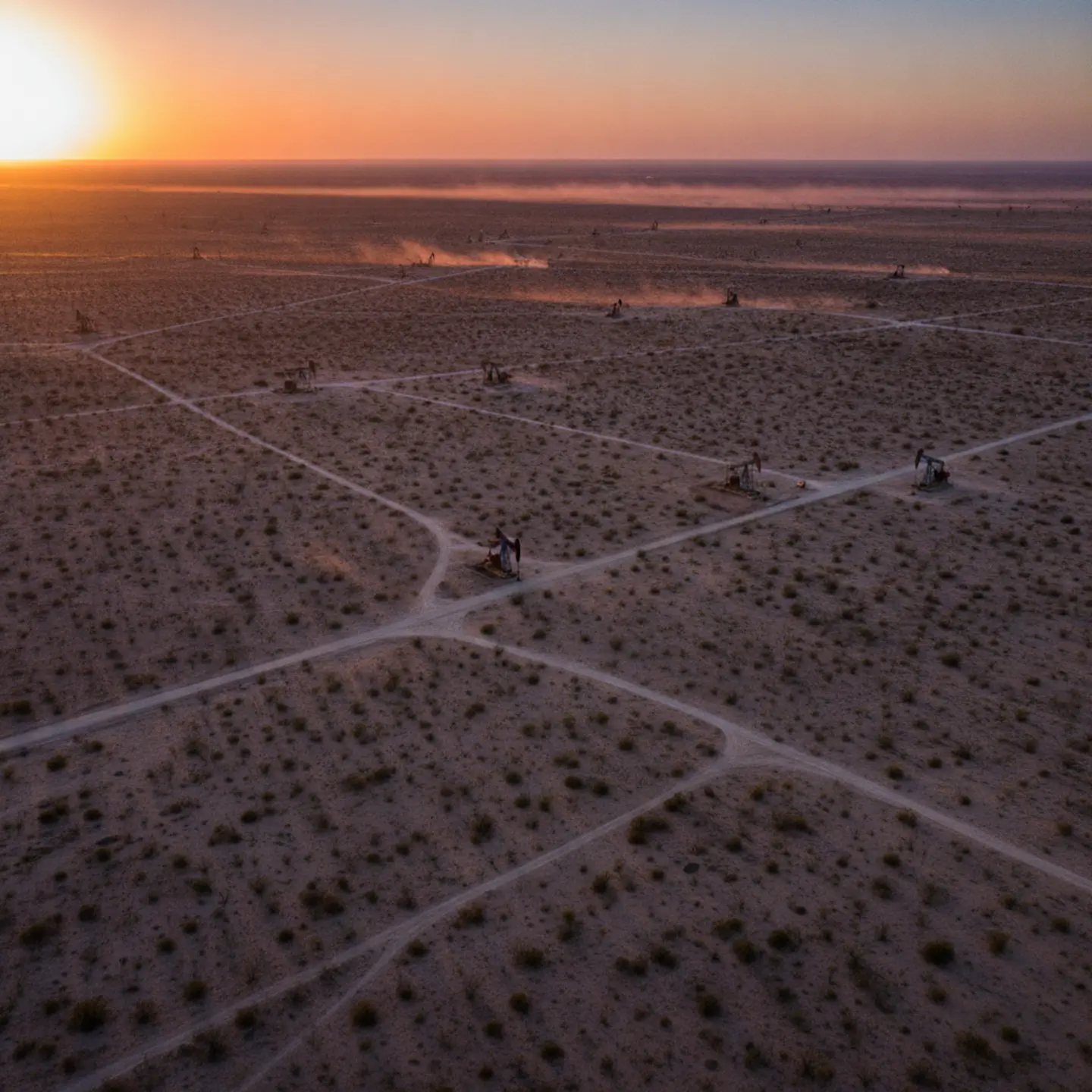
Before you can evaluate a rate, you need to understand the market generating it. The Eagle Ford Shale is running approximately 50–60 active rigs and 15–20 frac spreads in Q2 2026 — stable activity that supports consistent hauling demand. The Permian Basin dwarfs it with 310–330 active rigs and 130–140 frac spreads, consuming 70–90 million tons of frac sand annually versus the Eagle Ford’s 15–25 million tons. But for South Texas Owner-Operators, the Eagle Ford’s density is actually an advantage.
Well pad concentrations in Dimmit, La Salle, Karnes, and Gonzales counties create predominantly short-to-mid haul lanes — most under 150 miles. The growth of in-basin sand production has further compressed haul distances, shifting the economics toward turns-per-day rather than long-distance mileage. With WTI crude holding at $78–$82/barrel as of May 2026 (OilPrice.com), completion crews are running at full pace — and frac sand demand remains strong. That’s the environment you’re operating in. The question is whether your carrier agreement lets you capture it.
Rate Components: How Frac Sand Hauling Rates Are Built
Every rate quote you receive is made up of the same core building blocks. Knowing what each one covers — and how it flows through your settlement — is non-negotiable before you sign anything.
Base Linehaul Rate is the core transportation fee for moving a load from origin to destination, quoted per ton or per load. This is the number most carriers advertise. In South Texas, current benchmarks break down by haul distance:
| Haul Type | Distance | Rate Per Ton | Approx. Per Load |
|---|---|---|---|
| Short Haul | < 50 miles | $15–$22/ton | $300–$450 |
| Mid Haul | 50–150 miles | $20–$30/ton | $450–$700 |
| Long Haul | > 150 miles | $25–$40+/ton | $600–$1,000+ |
Fuel Surcharge (FSC) is a variable component tied to the EIA Gulf Coast diesel index, adjusting weekly to offset fuel cost fluctuations. With retail diesel running $4.10–$4.30/gallon in May 2026, the FSC is meaningful — but how much of it actually reaches your pocket depends entirely on your carrier’s split structure and fuel program.
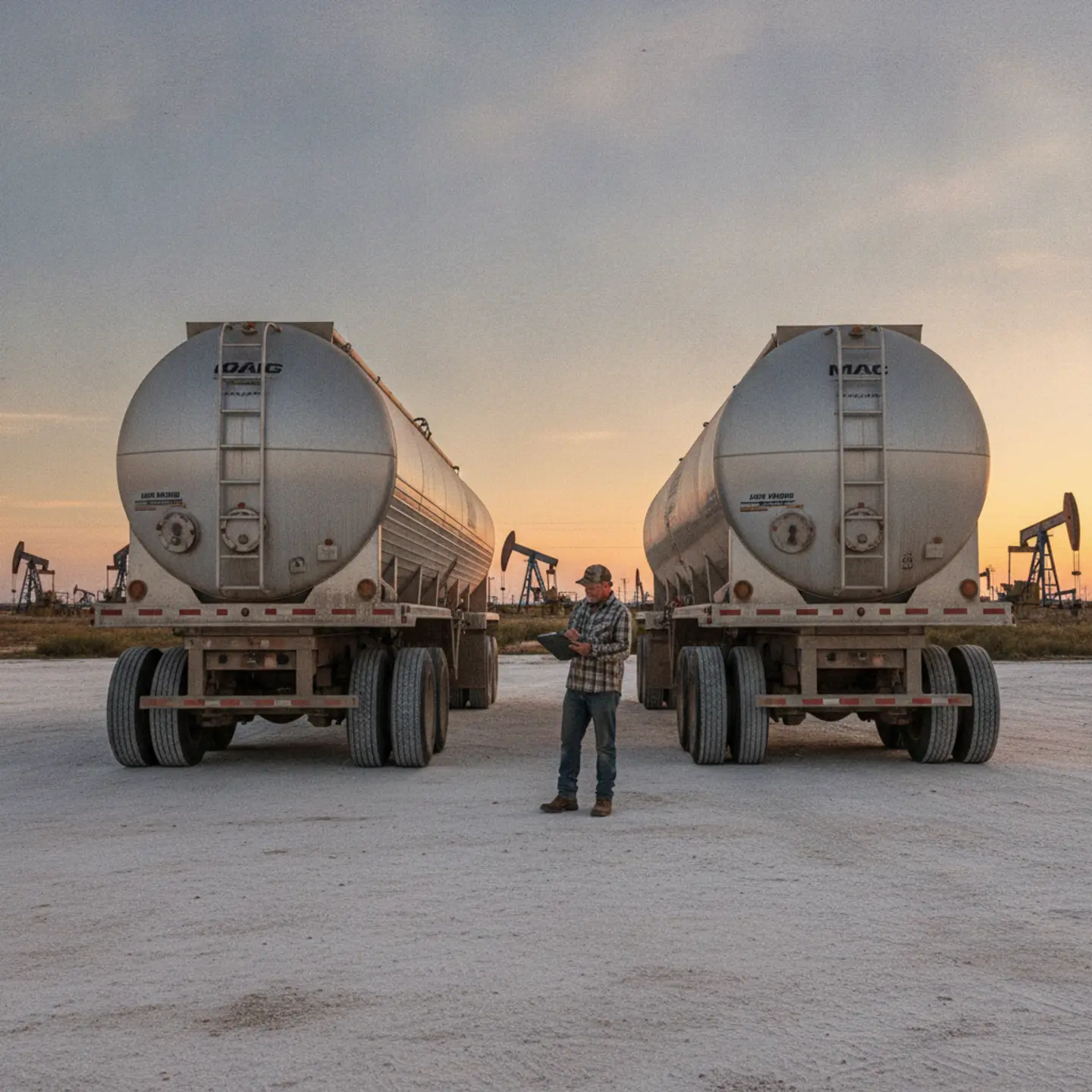
Detention Pay compensates you for excessive wait times at loading or unloading sites. Fair free time is 1–2 hours; after that, rates of $80+/hour should apply. If your carrier’s detention policy is vague, that’s money you’ll never see. Pneumatic tanker rates command a $20–$25/ton premium over hopper bottom — roughly $500–$625 extra per load on a standard 25-ton haul — reflecting specialized equipment, air compressor requirements, and the oilfield expertise the work demands. For a deeper breakdown of how these rate structures compare across equipment types, the Owner-Operator frac sand hauling rates guide covers the full picture.
True Cost Structure: Modeling Your Weekly Expenses
Gross rate quotes are marketing. Your net take-home is reality. Here’s how to build a realistic weekly cost model before you commit to any lane.
| Expense Category | Weekly Cost Estimate |
|---|---|
| Truck payment (financed) | ~$600 |
| Trailer rental (if leasing) | $210–$350 |
| Fuel (17–22 loads/week, with carrier discount) | $1,830–$2,700 |
| Maintenance (oilfield roads, $0.40–$0.70/mile) | $200–$250 |
| Insurance deductions (Liability, NTL, Cargo) | $245–$289 |
| Permits (plates, overweight — prorated) | $50–$100 |
| Miscellaneous (PPE, certifications, training) | ~$150 |
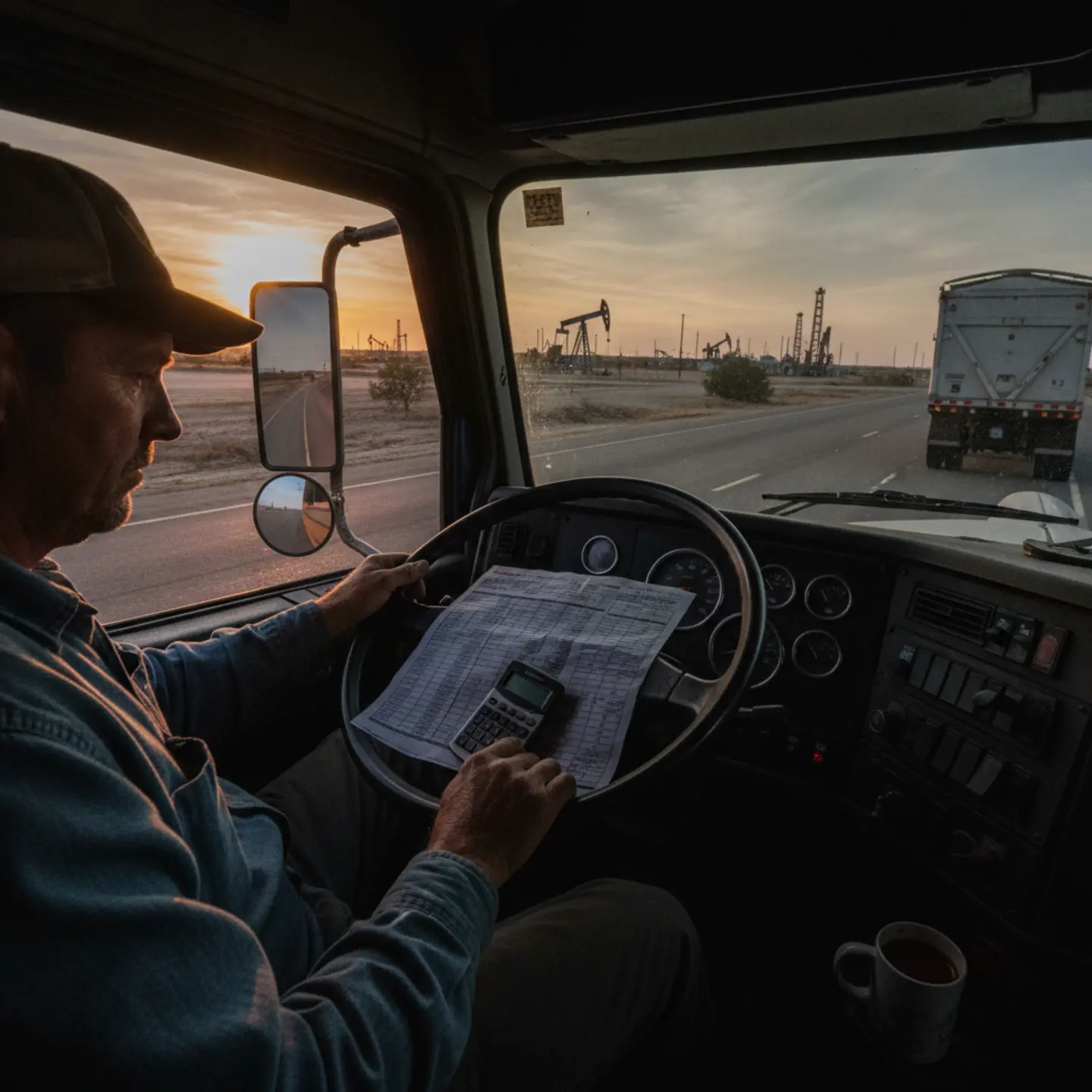
Running the numbers on a realistic example: 18 loads/week at $550/load gross = $9,900 gross revenue. After an 80% driver split ($7,920), subtract net fuel costs (~$2,160 with carrier discount), fixed carrier deductions (~$289), trailer rental ($350), truck payment ($600), and maintenance reserves ($250) — your realistic net take-home lands at approximately $4,000–$5,000/week. That’s real money, but it requires consistent loads, an efficient operation, and a carrier that doesn’t bleed you with hidden fees.
The Fuel Discount Advantage
A 10–15% fuel discount program directly reduces your per-load fuel cost by $10–$20, which compounds across 18–22 loads per week. Over a full year, that’s $9,000–$20,000 back in your pocket — more than most carriers’ total annual deductions combined.
Turns-Per-Day Economics and Load Strategy in the Eagle Ford
South Texas operations favor a high-turn, short-haul model — and understanding the math behind it is how you maximize weekly gross. Running 4–5 turns per day on short hauls generates more total load revenue even when per-load rates are lower, because volume compounds. The tradeoff is higher equipment wear — brakes and tires take a beating on oilfield caliche roads. Budget your maintenance accordingly.
Longer hauls (1–2 turns/day) maximize per-load revenue and fuel efficiency per mile, but a single unexpected delay — a wellsite shutdown, a wait at the blender — hits your daily total hard. Most successful Eagle Ford operators specialize in the high-turn model and optimize their equipment for frequent stop-and-go. For a detailed look at how load rates versus turn count affects your bottom line, the load rates vs. turns analysis breaks down the tradeoffs by lane type.
One factor that’s often overlooked: your carrier’s dispatch model directly determines whether you can execute your chosen strategy. A rotary dispatch system gives you consistent, predictable load flow. Cherry-picking or algorithm-driven dispatch means your turns-per-day depends on someone else’s priorities — not yours.
Regulatory, Licensing, and Certification Requirements for South Texas Oilfield Hauling
Operating legally and safely in the Eagle Ford is non-negotiable. Here’s what you need before you turn a wheel on a wellsite.
CDL Class A is required for both pneumatic tanker and hopper bottom operations. Pneumatic tanker adds a Tank (N) endorsement requirement — but does not require a Hazmat (H) endorsement, since frac sand is not classified as hazardous material. Most Owner-Operators lease on under an established carrier’s DOT and MC authority, which eliminates the cost and complexity of obtaining your own.
On Hours of Service: the FMCSA’s 150-air-mile short-haul exemption applies to some South Texas divisions — allowing flexibility without ELD requirements for drivers returning to their normal work reporting location within 14 hours. However, pneumatic divisions typically require ELDs due to the operational scope involved. Check your specific division’s requirements before assuming you qualify for the exemption.
Wellsite access requires three certifications:
- PEC/Safeland Certification — approximately $200, no expiration. Covers basic oilfield safety, hazard recognition, and emergency response. Mandatory for any wellsite entry.
- H2S Awareness Training — approximately $20, annual renewal. Required due to hydrogen sulfide gas hazards at well sites.
- Respiratory Fit Test — approximately $30–$50, annual renewal. Required by some operators if respiratory protection is a possibility on site.
Texas overweight permits are required for loads exceeding 80,000 lbs gross vehicle weight — standard for most frac sand configurations. Annual plates run approximately $900 prorated, with per-trip overweight permits varying by route and load. Drug and alcohol testing (pre-employment, random, post-accident) and FMCSA Clearinghouse registration are mandatory with no exceptions.
Evaluating Carrier Offers: Questions to Ask and Red Flags to Watch
A carrier’s pitch sounds good in every recruiting call. The settlement statement tells the truth. Before you sign a lease-on agreement, get specific answers to these questions — in writing:
- What is the exact compensation split, and how is the gross rate determined — per ton, per load, specific lane rates?
- What is the detention pay policy — free time allowance, hourly rate, and how is it tracked and collected?
- Which fuel index drives the FSC calculation, how much passes through to the driver, and does it cover empty miles?
- What are every recurring and one-time deduction from my settlement — itemized, not summarized?
- How is load distribution managed — rotary dispatch or cherry-picking — and what is the dispatcher-to-truck ratio?
- What is the carrier’s customer base, and how do they maintain consistent loads across economic cycles?
- What are the carrier’s FMCSA CSA scores, and what insurance minimums do they carry?
You’re Right to Question the Numbers
Most Owner-Operators discover hidden deductions or vague rate structures only after signing on. Asking detailed questions about splits, fuel surcharges, and detention pay isn’t paranoid — it’s smart business. Any carrier that resists answering these questions is telling you something important.
Escrow Holds Are a Red Flag
Some carriers require large, non-interest-bearing escrow accounts — often $5,000–$10,000 — as a “security deposit.” This ties up your capital and signals the carrier doesn’t trust its own business model. Legitimate carriers don’t need escrow. If a carrier asks for one, walk away and keep looking.
Additional red flags: fuel surcharges that don’t cover deadhead miles, forced dispatch with penalties, vague detention policies, and carriers that run company trucks alongside Owner-Operators — where company trucks get priority loads and you get what’s left. For a full breakdown of the Owner-Operator versus company driver dynamic in frac sand hauling, the Owner-Operator vs. company driver comparison lays out exactly what’s at stake. Verify any carrier’s safety record via FMCSA CSA scores and confirm they carry $1M+ liability — with $2M–$5M+ umbrella for oilfield operations.
Why Sisu Energy Is the Right Choice for South Texas Owner-Operators
Sisu Energy is a 100% Owner-Operator carrier — zero company trucks, zero internal competition for loads. That’s not a marketing line; it’s the entire business model. When every load goes to an Owner-Operator, dispatch has no reason to play favorites. Six hauling divisions across Texas and Pennsylvania/Ohio mean you can choose the hauling type, region, and schedule that fits your operation — without switching carriers when your needs change.
24/7 live human dispatch with rotary load distribution means your next run is assigned fairly — not by an algorithm optimizing for someone else’s metrics. No escrow holds and weekly Friday direct deposit mean your earnings land in your account on schedule, every week. The fuel card program delivers a 10–15% discount off market rate, which directly reduces your per-load fuel cost and protects your take-home when diesel prices move. Over a full year of consistent hauling, that fuel discount alone can put $9,000–$20,000 back in your pocket that a lesser carrier would leave on the table.
Transparent deduction structure, minimal fees, comprehensive safety and compliance support, and a driver-first culture built around one principle: your success is our success. To learn more about what Sisu offers across all divisions, the full services overview covers every hauling program in detail.
Apply Today to join Sisu Energy — and take control of your earnings with a carrier built Owner-Operator-first from day one.
Frequently Asked Questions
How Much Does a Typical Owner-Operator Actually Take Home Weekly Hauling Frac Sand in South Texas After All Expenses?
After accounting for carrier splits (80–90% driver share), fuel costs with discounts, fixed weekly deductions for insurance and ELD, trailer rental, and personal truck payments and maintenance, a realistic net take-home for a consistent South Texas frac sand Owner-Operator in 2026 ranges from $4,000–$5,000+ per week. That figure assumes consistent loads, an efficient operation, and a carrier with a genuine fuel discount program. Drivers running fewer loads or absorbing higher fuel costs without a carrier discount will land at the lower end of that range or below it.
What’s the Real Difference in Pay Between Hauling Frac Sand With a Pneumatic Tanker Versus a Hopper Bottom in the Eagle Ford?
Pneumatic tanker operations in the Eagle Ford command a $20–$25/ton premium over hopper bottom — equating to an extra $500–$625 per load on a standard 25-ton haul. That premium reflects the specialized equipment requirements (air compressor, enclosed delivery system), the oilfield expertise required for safe pneumatic operations, and the precision delivery demands of frac blender setups. Over 18 loads per week, that premium adds up to $9,000–$11,250 in additional weekly gross revenue compared to hopper bottom on the same lanes.
How Much Does Detention Time Actually Cost Me as an Owner-Operator If I’m Waiting 3–4 Hours at a Wellsite?
If a carrier provides 1–2 hours of free time before detention pay kicks in and you’re waiting 3–4 hours, you could be losing $150–$240+ in unrecovered revenue per incident at $75–$80/hour detention rates. Uncompensated detention doesn’t just cost you that hour’s pay — it costs you a turn. A missed turn on a short-haul operation is a missed $300–$450 load. That’s why a clear, enforceable detention policy with documented tracking isn’t optional — it’s a core part of your weekly economics.
How Do Fuel Surcharges Really Work in Frac Sand Hauling Agreements, and How Much of My Fuel Cost Am I Responsible For?
Fuel surcharges are added to the base rate and fluctuate weekly based on a public index — typically the EIA Gulf Coast diesel retail average. In most Owner-Operator split agreements, the driver is initially responsible for the full cost of fuel upfront. The FSC is included in the gross revenue that is then split between carrier and driver. This means your actual fuel exposure is the full retail cost minus whatever the FSC offsets — and if the FSC doesn’t cover deadhead miles, you absorb that difference entirely. A carrier’s fuel discount program is the most direct way to reduce this exposure: a 10–15% discount off market rate at current diesel prices saves $10–$20 per load in real cash.
What Makes Sisu Energy Different From Other Frac Sand Hauling Carriers in South Texas?
Sisu Energy is 100% Owner-Operator with zero company trucks — meaning no internal competition for loads, ever. The combination of 24/7 live human dispatch with rotary load distribution, no escrow requirements, weekly Friday direct deposit, a fuel card program with 10–15% off market rate, and transparent deductions with minimal fees is built around one goal: maximizing your take-home. Six hauling divisions across Texas and Pennsylvania/Ohio give you options without forcing you to leave the carrier when your situation changes. Sisu is built Owner-Operator-first — your success is genuinely the business model, not a tagline. Apply Today to join Sisu Energy and see exactly what your settlement looks like before you commit.
Ready to Maximize Your Take-Home Hauling Frac Sand in South Texas?
You now know exactly how frac sand hauling rates are built, what your real costs look like, and what questions to ask before signing with any carrier. Sisu Energy is 100% Owner-Operator — no company trucks, no hidden fees, no escrow. Just consistent loads, transparent pay, and 24/7 live human dispatch built around your success.
*Sisu Energy LLC contracts exclusively with independent Owner-Operators. Earnings vary by division, miles, fuel costs, and individual business factors, and no specific income is guaranteed. Programs, lease rates, and requirements are subject to change. Please contact Sisu Energy directly for current opportunities and division details.