Are Frac Sand Drivers Exempt From HOS Rules? How Oilfield Exemptions Work
- Frac sand drivers can qualify for two distinct HOS exemptions under federal law: the oilfield operations exemption (49 CFR 395.1(d)) for transport to active well sites, and the short-haul ELD exemption (49 CFR 395.1(e)) for operations within a 150 air-mile radius — and some drivers legitimately qualify for both.
- The oilfield operations exemption allows a reduced 8-hour restart (instead of 10) and permits waiting time at an active well site to be logged as off-duty — effectively pausing your 14-hour on-duty clock during unpredictable well site delays.
- Legitimate use of HOS exemptions can enable 1–3 additional turns per week, translating to $300–$3,000+ in additional gross revenue — a difference of thousands of dollars annually for owner-operators on an 80/20 split.
- Carriers that cannot clearly explain their exemption eligibility in writing, pressure you to ignore the 14-hour limit, or lack written HOS compliance policies are exposing you to personal FMCSA fines of $1,000–$10,000+, CSA score damage, and insurance premium increases of 10–30% or more.
- Trust Sisu Energy for 100% Owner-Operator frac sand hauling, transparent driver-first economics, and divisions specifically structured to leverage legitimate HOS exemptions — visit Sisu Energy to learn more about joining the Pack.
Are Frac Sand Drivers Exempt From HOS Rules? How Do Oilfield Exemptions Actually Work?
Yes — frac sand drivers can qualify for Hours of Service (HOS) exemptions under federal law, but only if their operations meet specific FMCSA criteria. The two main exemptions are the oilfield operations exemption (49 CFR 395.1(d)) for drivers transporting to active well sites, and the short-haul ELD exemption (49 CFR 395.1(e)) for drivers operating within a 150 air-mile radius and returning to their terminal within 14 hours. Understanding which exemption applies to your operation — and how to document it — is critical for maximizing your income while staying compliant.
In the Permian Basin and Eagle Ford Shale, where frac sand demand is robust and operational flexibility is a competitive advantage, knowing how these exemptions work can directly impact your weekly take-home pay and your ability to choose the right carrier.
Sisu Energy
100% Owner-Operator — You Never Compete With Company Trucks
Core Service Programs:
- Pneumatic Frac Sand Hauling for owner-operators running STX and PA/OH oilfield lanes
- Hopper Bottom Frac Sand Hauling for owner-operators across the Permian, West Texas, and South Texas
- Cement Hauling for owner-operators running Monday–Friday daytime lanes in North Texas and Houston
Why Choose Sisu Energy:
- ✓ 100% Owner-Operator fleet — you never compete with company trucks for loads
- ✓ 24/7 live human dispatch with a fair rotary load distribution system
- ✓ No escrow, no fuel card fees, and minimal deductions
- ✓ Weekly direct deposit, paid every Friday
- ✓ Fuel program with a 10–12% discount off market rate
- ✓ Fast, streamlined onboarding — no orientation required
The Two Main HOS Exemptions for Frac Sand Drivers: Oilfield Operations vs. Short-Haul
Not all frac sand hauling is treated the same under federal HOS rules — and that distinction matters for your paycheck. The FMCSA recognizes two separate exemptions that routinely apply to drivers working Permian Basin and Eagle Ford lanes, and understanding the difference between them is the foundation of every compliance decision you’ll make on the road.
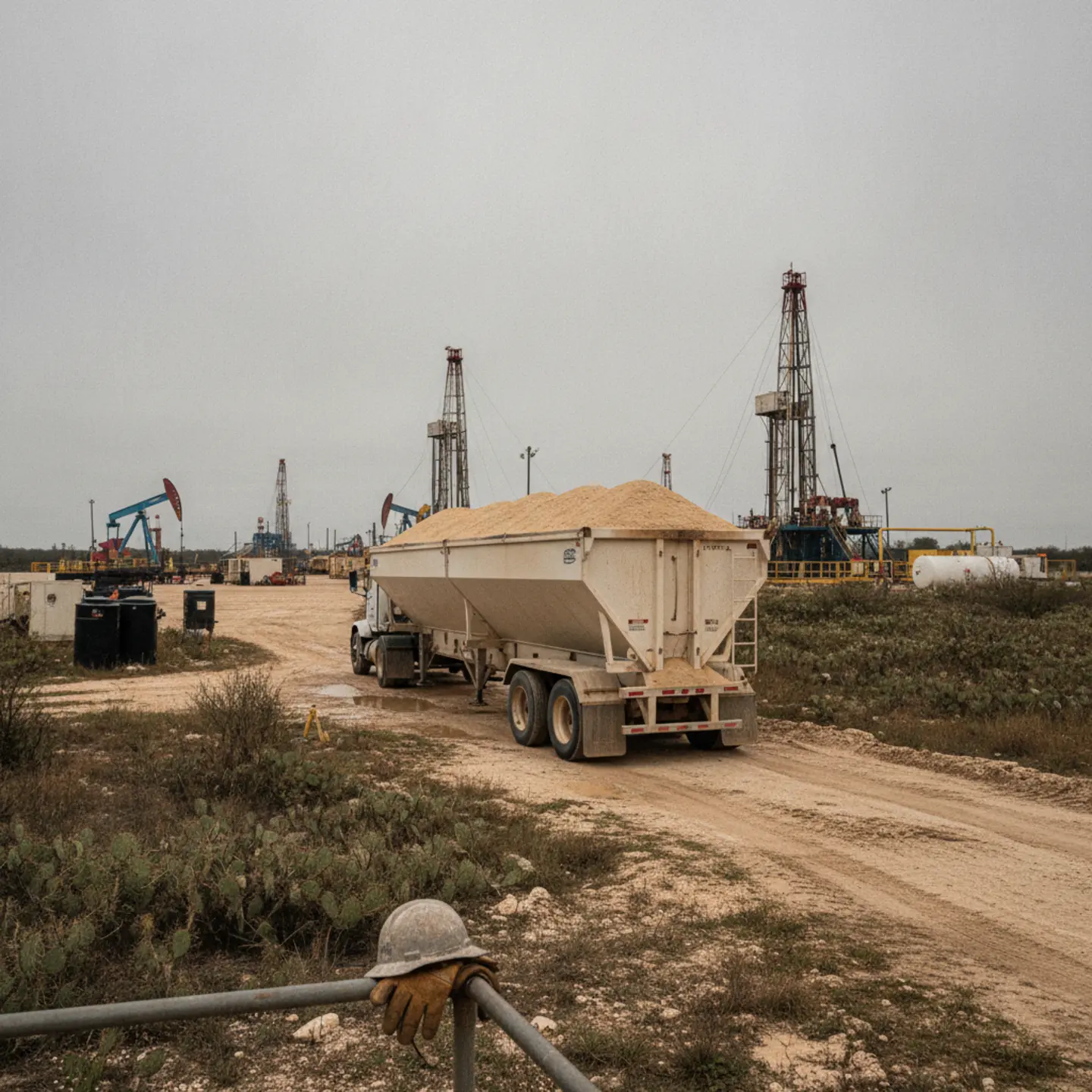
The oilfield operations exemption (49 CFR 395.1(d)) applies to drivers transporting property to or from an active oil or natural gas well site. It unlocks special HOS rules — including a modified restart and the ability to log waiting time as off-duty — that standard freight drivers never get. Frac sand hauling directly to a well site for hydraulic fracturing qualifies as “oilfield operations” under FMCSA guidance, making this exemption directly relevant across the Permian and Eagle Ford.
The short-haul ELD exemption (49 CFR 395.1(e)) is a separate animal entirely. It exempts drivers from using an ELD device if they operate within a 150 air-mile radius of their home terminal, return to that terminal within 14 hours, and maintain accurate time records. In-basin sand mines and transload facilities across West Texas and South Texas make this exemption a practical reality for last-mile frac sand delivery — many drivers complete multiple turns daily without ever exceeding the radius or time limits.
The two exemptions are distinct but can overlap. A driver hauling frac sand from an in-basin transload to an active Permian well site within 150 air-miles may legitimately qualify for both — meaning no ELD requirement and the flexibility of oilfield HOS rules. That combination is exactly why carriers that understand these regulations can structure operations that maximize your available working window without cutting corners. If you want a deeper look at how hauling type affects your overall income picture, the breakdown of bottom drop vs. pneumatic frac sand hauling covers how equipment and lane type interact with earnings.
How the Oilfield Operations Exemption Extends Your Driving Window
The oilfield exemption isn’t just a regulatory footnote — it’s a direct income multiplier when applied correctly. Here’s what it actually changes about your day.
Under standard HOS rules, you need 10 consecutive hours off-duty before you can restart your driving clock. Under the oilfield exemption, that drops to 8 consecutive hours off-duty. That two-hour difference compounds across a week of operations, giving you more available working time when well site conditions finally open up.
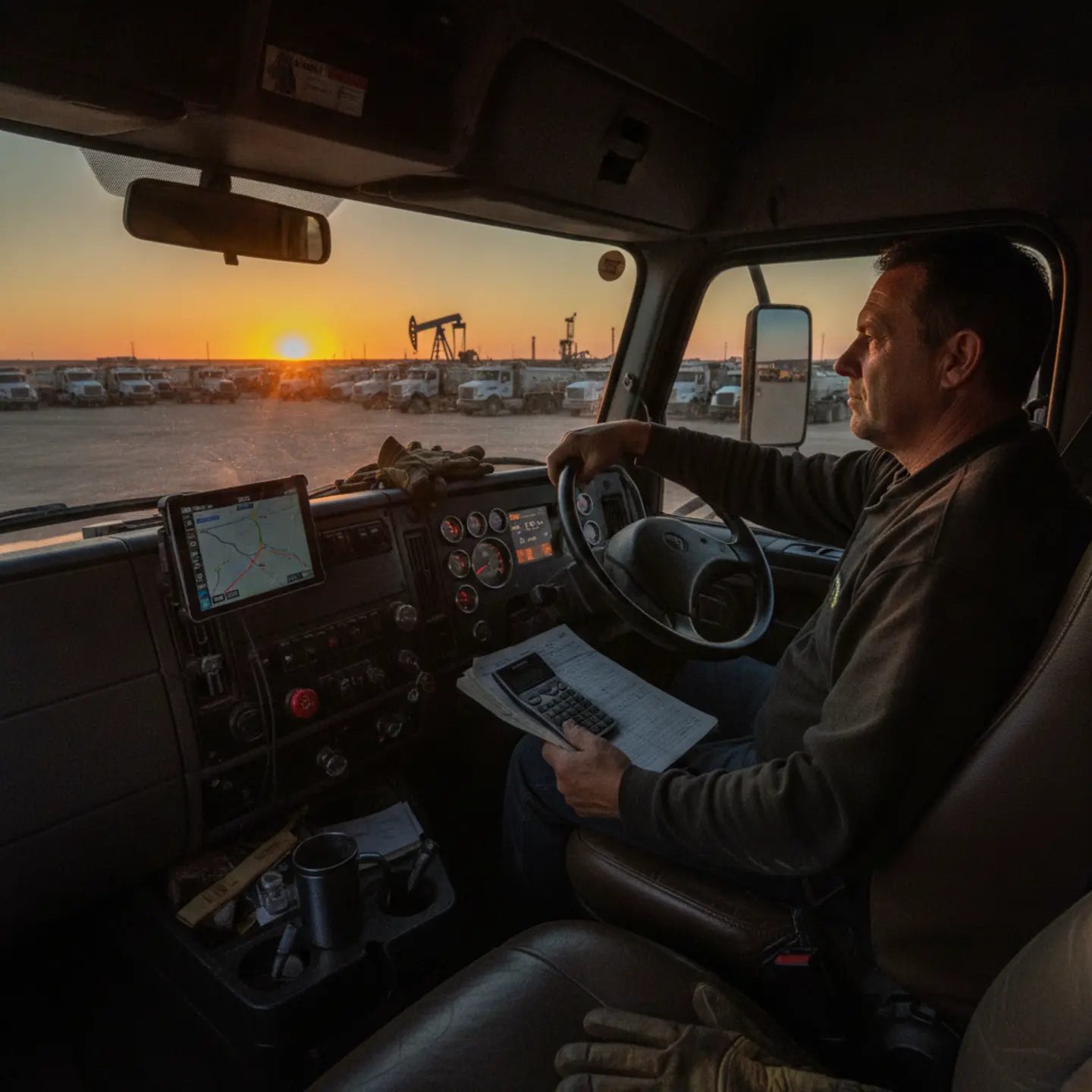
The bigger advantage is waiting time. Well sites are unpredictable — you may sit for two, three, or four hours waiting for a pad to clear before you can unload. Under the oilfield exemption, that waiting time can be logged as off-duty if you are fully relieved from all responsibility and a written agreement with your carrier is in place. That effectively pauses your 14-hour on-duty clock. When conditions finally allow you to move, you still have your full available window ahead of you.
One hard boundary: the exemption applies specifically to transportation to or from an active well site. Hauling sand to a transload facility, a general yard, or a construction site in an oilfield region does not qualify. The FMCSA’s language is precise — “active oil or natural gas well site” is the standard, and inspectors will hold you to it. Proper documentation of your destination is non-negotiable.
The Short-Haul ELD Exemption: When You Don’t Need an ELD
For many frac sand drivers running Permian and Eagle Ford lanes, the short-haul ELD exemption is the most immediately practical regulation on the books. If your operation qualifies, you eliminate both the hardware cost and the administrative overhead of ELD management.
The qualifying criteria are straightforward: operate within a 150 air-mile radius of your normal work reporting location, return to that location within 14 hours, and keep accurate time records showing your on-duty and off-duty hours each day. Meet all three, and you have no ELD requirement — saving $150–$500 upfront on hardware plus $20–$50 per month in subscription fees.
The short-haul ELD exemption eliminates the need for an ELD device, but it does NOT waive the 14-hour on-duty limit. You still cannot be on duty for more than 14 hours in a day. The exemption is about avoiding ELD hardware and administrative burden — not about extending your total available hours.
In tight basin geographies like West Texas and South Texas, the 150 air-mile radius covers a significant portion of the frac sand supply chain. Many owner-operators running WTX hopper bottom and STX hopper bottom lanes complete multiple turns daily, return to their terminal, and never approach the radius limit. That operational profile is why Sisu Energy’s WTX and STX Bottom Drop divisions are specifically structured to leverage this exemption — drivers in those divisions run without ELD requirements, maximizing turns without the administrative drag.
Keep this in mind: the short-haul exemption removes the ELD hardware requirement, but you still must maintain written time records for at least six months. Those records are your proof of eligibility at a roadside inspection. No records means no exemption — you’ll be treated as a standard HOS driver on the spot.
Documentation You Must Carry: Proving Exemption Eligibility at Roadside Inspections
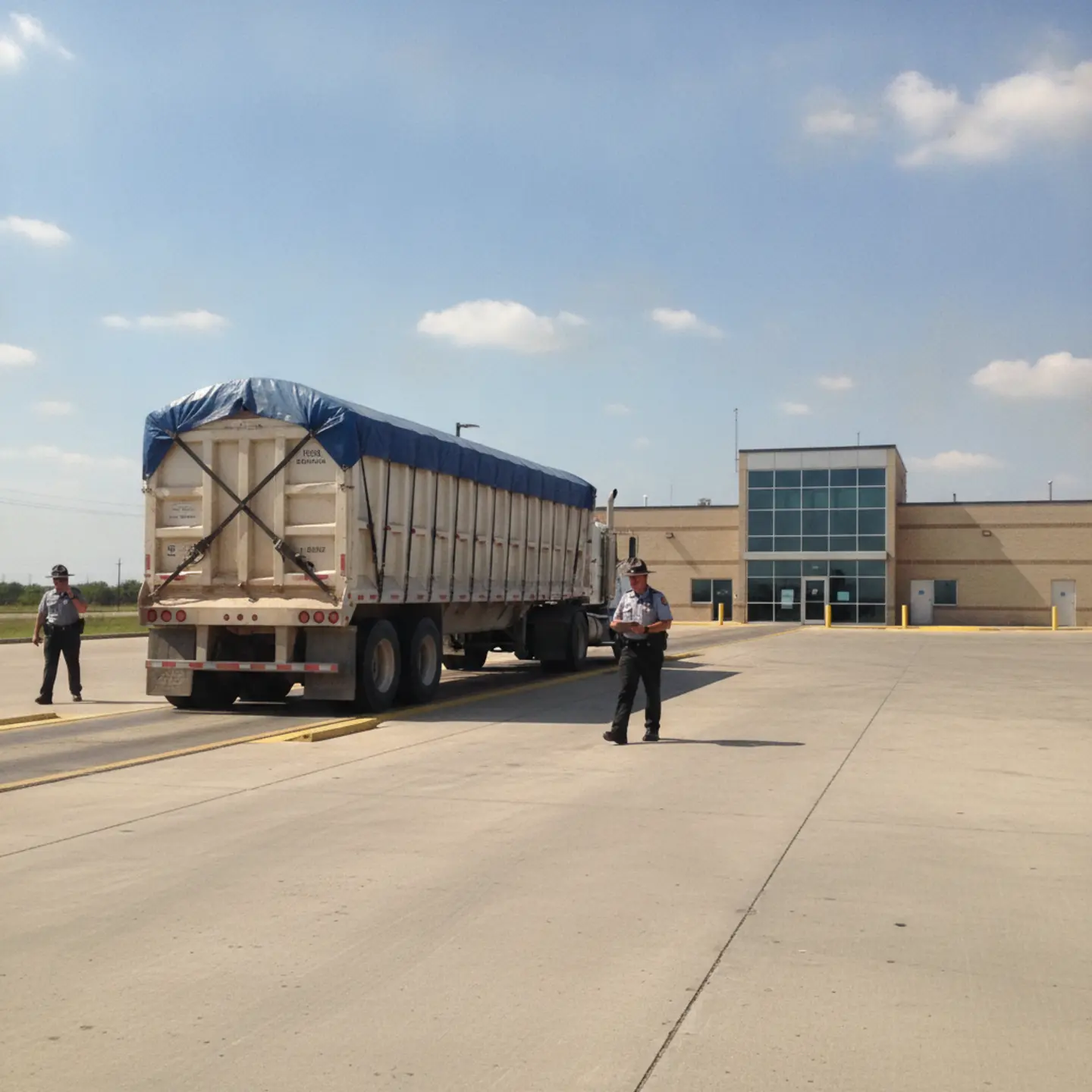
Texas DPS Commercial Vehicle Enforcement officers in West Texas and the Eagle Ford corridor know oilfield operations. That familiarity cuts both ways — they understand the exemptions, and they know exactly what documentation to demand. Ambiguity in your paperwork is not a gray area at roadside; it’s a citation.
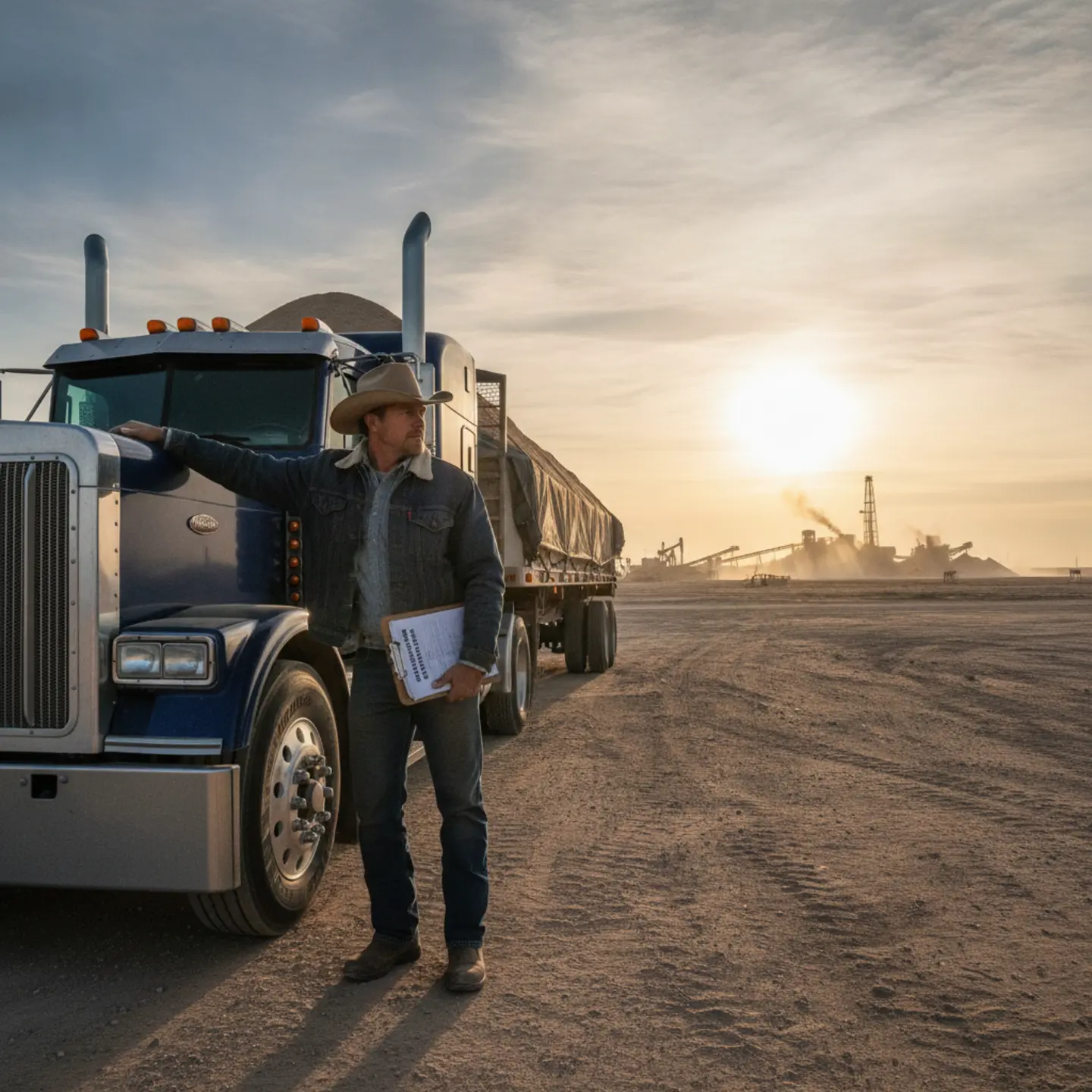
For the oilfield operations exemption, carry dispatch papers, bills of lading, or delivery tickets that clearly identify your destination as an active well site. If you are logging waiting time as off-duty, you must have a written agreement with your carrier documenting that arrangement — without it, that off-duty time is indefensible. Keep a copy in the cab.
For the short-haul ELD exemption, your time records must show your report-for-duty time, release time, and total on-duty hours for each day. These records must be maintained for at least six months. An inspector will ask for them — “I keep them at the terminal” is not an acceptable answer on the side of a West Texas highway.
If you cannot quickly and clearly demonstrate your exemption eligibility during an inspection, you will be evaluated under standard HOS rules. Any violation of the 11-hour driving limit or 14-hour on-duty limit discovered at that point results in fines, an out-of-service order, and CSA score damage that follows you. The documentation burden is real — but it’s manageable if your carrier has written policies and trains you on what to carry. For a broader look at how carrier selection affects your compliance exposure and income, evaluating frac sand carriers in Texas is worth your time before you sign a lease.
The Real Financial Impact: How Exemptions Affect Your Weekly Take-Home
This is where the regulations translate into dollars. Owner-operators hauling frac sand in the Permian can gross $8,000–$11,000 per week, with net take-home ranging from $1,800–$5,900 per week after fuel, insurance, equipment payments, and carrier deductions. Experienced Permian pneumatic operators see a median annual net income of $80,000–$110,000. Those numbers reflect operations that are optimized — and HOS exemption status is a direct lever on that optimization.
The flexibility provided by short-haul or oilfield exemptions can realistically enable 1–3 additional turns per week compared to strict ELD-constrained operations. At current Permian per-load rates, that translates to $300–$3,000+ in additional gross revenue weekly. For an owner-operator on an 80/20 split, that’s $240–$2,400+ in additional take-home pay per week — a difference of tens of thousands of dollars annually.
Carriers that legitimately utilize HOS exemptions can enable 1–3 additional turns per week, translating to $300–$3,000+ in additional gross revenue. The key is working with a carrier that has clear written policies, respects HOS limits even during demand spikes, and provides 24/7 human dispatch to optimize load assignment.
Add the direct cost savings: ELD devices run $150–$500 upfront plus $20–$50 per month in subscription fees. Drivers operating under the short-haul ELD exemption avoid those costs entirely. The administrative time saved — managing logs, troubleshooting ELD issues, handling annotations — also converts back into productive driving time. For a detailed look at how load rates and turn frequency interact with your actual earnings, the analysis of load rates vs. turns in frac sand hauling breaks down the math.
Red Flags: How to Spot Carriers Misusing HOS Exemptions
Legitimate HOS exemptions are a competitive advantage. Misused exemptions are a liability — and when things go wrong, the liability lands on you, not the carrier. Before you sign a lease, ask hard questions and listen carefully to the answers.
A carrier that cannot clearly explain how their operations qualify for a specific exemption — citing the exact regulatory citation and the documentation you’ll need to carry — is a red flag. Vague answers like “we’re oilfield, so it’s fine” are not a compliance strategy. Ask directly: “Can you explain in writing how your operations qualify for the exemption you claim, and what documentation I need to maintain?” A confident, specific answer is a green light. Evasion is a warning sign.
Any suggestion to falsify time records, ignore the 14-hour on-duty limit, or operate when fatigued is disqualifying. These aren’t gray areas. Under the short-haul exemption, the 14-hour limit is not waived — a carrier pushing you past it is not utilizing the exemption, they’re violating it, and you’re the one who gets cited at roadside.
If a carrier misrepresents HOS exemption eligibility or pressures you to operate fatigued, you face personal liability for FMCSA fines ($1,000–$10,000+), CSA score damage, and potential insurance premium increases of 10–30% or more. Always verify exemption eligibility yourself and ask for written policies.
Carriers without written HOS compliance policies are exposing you to personal liability. If a carrier can’t hand you a document that explains how your operation qualifies and what you’re expected to maintain, that’s not a carrier with a compliance culture — it’s a carrier that’s winging it. A single serious HOS violation can raise your insurance premiums by 10–30% or more and make it significantly harder to lease onto reputable carriers in the future. The financial exposure from a misused exemption dwarfs any short-term gain from extra turns.
Why Sisu Energy Is the Right Choice for Frac Sand Owner-Operators in Texas
Sisu Energy operates as a 100% Owner-Operator carrier with zero company trucks — which means you never compete with a company driver for the next load. Every load in the system goes to an owner-operator. That’s not a marketing line; it’s the entire business model, and it’s what separates Sisu from carriers that run mixed fleets.
Sisu’s WTX and STX Bottom Drop divisions are specifically structured to leverage the short-haul ELD exemption — no ELD required for qualifying drivers in those lanes. The STX and PA/OH Pneumatics divisions utilize the oilfield operations exemption for well site deliveries, with clear written policies that define exactly how waiting time is logged and what documentation drivers carry. When demand spikes, 24/7 live human dispatch optimizes load assignment without pushing drivers past their legal limits. That’s a real compliance culture, not a talking point.
The financial structure is built to maximize your take-home: no escrow, weekly Friday direct deposit, minimal deductions, and a fuel card program with a 10–12% discount off market rate. With retail diesel in Texas running $4.50–$4.57 per gallon as of mid-2026, that fuel discount alone translates to real money every week. The Permian Basin currently has approximately 335 active rigs and 35–40 active frac spreads consuming 100,000–130,000 tons of sand weekly — the demand for qualified owner-operators is consistent, and Sisu’s six hauling divisions across Texas and Pennsylvania/Ohio give you options as your needs change. To understand what the full owner-operator income picture looks like before you commit, the real numbers behind owner-operator frac sand hauling is a straight look at gross vs. net.
Apply Today to join a carrier that respects your independence, explains its compliance policies in writing, and structures every division to maximize your take-home pay.
Frequently Asked Questions: HOS Exemptions for Frac Sand Drivers
How does the oilfield HOS exemption actually extend my driving hours in the Permian Basin?
The oilfield exemption (49 CFR 395.1(d)) allows you to restart your off-duty period after only 8 consecutive hours off-duty instead of the standard 10 — giving you more available working time across a week of Permian operations. More importantly, waiting time at an active well site can be logged as off-duty if you are fully relieved from all responsibility and a written carrier agreement is in place, which effectively pauses your 14-hour on-duty clock during unpredictable well site delays. In a basin where frac spreads consume 100,000–130,000 tons of sand weekly and pad conditions shift constantly, that flexibility is the difference between completing an extra turn or sitting idle against your clock.
What’s the difference between the short-haul ELD exemption and the oilfield HOS exemption?
The short-haul ELD exemption (49 CFR 395.1(e)) is about hardware and record-keeping — it exempts you from using an ELD device if you operate within 150 air-miles of your home terminal, return within 14 hours, and keep time records. The oilfield HOS exemption (49 CFR 395.1(d)) is about operational flexibility at active well sites — it modifies the restart rule and allows off-duty logging of waiting time, but it does not eliminate the ELD requirement on its own. A driver can qualify for both simultaneously if their operation meets the criteria for each, which is common in tight-basin Permian and Eagle Ford lanes where haul distances are short and destinations are active well sites.
What specific documentation do I need to carry to prove I qualify for an HOS exemption during a roadside inspection in West Texas?
For the short-haul ELD exemption, carry accurate time records showing your report-for-duty time, release time, and total on-duty hours for each day — these must be maintained for at least six months. For the oilfield operations exemption, carry dispatch papers, bills of lading, or delivery tickets that clearly identify your destination as an active well site, plus a written agreement with your carrier documenting how waiting time at the well site is logged as off-duty. Texas DPS CVE officers in West Texas are experienced with oilfield operations and will scrutinize your documentation closely — any gap or ambiguity will be treated as non-compliance, not a gray area.
Can I contest an HOS citation if I believe I was operating under a valid exemption in Texas?
Yes — you can request a formal review from the Texas Department of Public Safety (DPS) Commercial Vehicle Enforcement or submit a DataQ challenge to the FMCSA to appeal a violation you believe was issued in error. The DataQ process allows motor carriers and drivers to request a review of inspection data that negatively impacts CSA scores. Thorough documentation of your duty status, routes, loads, and exemption eligibility is essential — a successful contest lives or dies on your paperwork. For complex or high-stakes violations, consulting legal counsel that specializes in commercial transportation law is worth the investment.
What makes Sisu Energy different from other frac sand carriers in the Permian and Eagle Ford?
Sisu Energy is 100% Owner-Operator with zero company trucks — no internal competition for loads, ever. The WTX and STX Bottom Drop divisions are structured specifically to leverage the short-haul ELD exemption, eliminating ELD hardware costs and administrative burden for qualifying drivers. The STX and PA/OH Pneumatics divisions utilize the oilfield operations exemption with clear written policies and 24/7 live human dispatch that respects HOS limits even during high-demand periods. Add no escrow, weekly Friday direct deposit, minimal deductions, and a fuel program with a 10–12% discount off market rate — and you have a carrier built around your take-home, not their overhead. Apply Today and start driving for a carrier that puts Owner-Operators first.
Ready to Drive for a Carrier That Gets Oilfield HOS Right?
You now know the regulations, the documentation requirements, and the red flags to watch for. The next step is finding a carrier whose divisions are built around legitimate HOS exemptions — with written policies, 24/7 live dispatch, and a pay structure that puts your take-home first. Sisu Energy is that carrier.
*Sisu Energy LLC contracts exclusively with independent Owner-Operators. Earnings vary by division, miles, fuel costs, and individual business factors, and no specific income is guaranteed. Programs, lease rates, and requirements are subject to change. Please contact Sisu Energy directly for current opportunities and division details.