Finance vs. Lease a Semi Truck for Oilfield Hauling: Which Path Maximizes Your Income in 2026?
Key Takeaways
- For Owner-Operators running 100,000–130,000 miles annually in the Permian Basin or Eagle Ford Shale, financing a Class 8 truck typically delivers better long-term ROI than leasing — primarily because mileage overages and wear-and-tear penalties can add $10,000–$20,000+ to total lease cost over five years.
- Financing a new or late-model truck (priced $120,000–$220,000 in Texas) at 6.5%–10.5% APR for prime borrowers builds equity and unlocks powerful first-year tax deductions via Section 179 expensing and bonus depreciation — benefits leasing cannot match.
- Leasing offers lower barriers to entry ($0–$5,000 down, $2,500–$4,500+/month) and 100% deductible payments, but oilfield operators frequently exceed mileage caps, and wear-and-tear penalties at lease end are especially steep given harsh caliche-road conditions.
- FMCSA regulations (49 CFR Part 376) require transparent lease agreements with itemized deductions — always have an independent attorney review any lease before signing, and avoid predatory carrier-affiliated lease-purchase programs with inflated truck prices and opaque charges.
- Trust Sisu Energy LLC for a 100% Owner-Operator fleet, 24/7 live human dispatch, no escrow, and weekly Friday direct deposit — the carrier partner built to support your equipment financing decision and maximize your take-home pay.
Finance vs. Lease a Semi Truck for Oilfield Hauling: Which Is Better for Your Bottom Line?
For high-mileage oilfield operations in the Permian Basin and Eagle Ford Shale, financing typically delivers better long-term ROI and wealth-building potential than leasing. While leasing offers lower upfront costs and flexibility, the cumulative cost of mileage overages, wear-and-tear penalties, and lack of equity build-up often makes financing the smarter financial choice for Owner-Operators running 100,000–130,000 miles annually. The decision ultimately hinges on your credit profile, available capital, risk tolerance, and long-term business goals.
Understanding the full financial, regulatory, and operational implications of each path is essential to maximizing your take-home pay and protecting your business.
Sisu Energy
100% Owner-Operator — You Never Compete With Company Trucks
Core Service Programs:
- Pneumatic Frac Sand Hauling for owner-operators running STX and PA/OH oilfield lanes
- Hopper Bottom Frac Sand Hauling for owner-operators across the Permian, West Texas, and South Texas
- Cement Hauling for owner-operators running Monday–Friday daytime lanes in North Texas and Houston
Why Choose Sisu Energy:
- ✓ 100% Owner-Operator fleet — you never compete with company trucks for loads
- ✓ 24/7 live human dispatch with a fair rotary load distribution system
- ✓ No escrow, no fuel card fees, and minimal deductions
- ✓ Weekly direct deposit, paid every Friday
- ✓ Fuel program with a 10–12% discount off market rate
- ✓ Fast, streamlined onboarding — no orientation required
Financing a Semi Truck: Upfront Costs, Long-Term Equity, and Tax Advantages
For Owner-Operators committed to building a real business — not just driving someone else’s asset — financing is the path that creates lasting wealth. When you finance a Class 8 truck for Permian Basin frac sand hauling operations, every payment chips away at a loan tied to an asset you’ll eventually own outright.
In Texas, new Class 8 trucks run $160,000–$220,000 for current model-year equipment. Late-model used trucks from 2023–2025 come in at $120,000–$180,000 — a meaningful discount with modern technology still intact. Prime borrowers with 2+ years of Owner-Operator experience and a 680+ FICO score can expect APRs of 6.5%–10.5% from captive lenders like Daimler Truck Financial, PACCAR Financial, and Navistar Financial. Subprime rates can exceed 25% — which is why credit health matters before you sign anything.
Down payments typically range from 10–25% of the purchase price. On a $150,000 truck, that’s $15,000–$37,500 at closing. Newer businesses or lower credit scores may face 25–40% requirements. That’s real capital — which is why having operating reserves before you finance is non-negotiable.
The tax story is where financing separates itself decisively. When you own the truck, you can use Section 179 expensing — which allows you to deduct a substantial portion (potentially the full purchase price) of qualifying equipment in the year it’s placed in service. Bonus depreciation, which was at 60% for property placed in service in 2024 and phases down through 2026, adds another layer of first-year relief. Combined with the interest deduction on your loan, a financed truck can reduce your taxable income by $30,000–$50,000 in year one alone. Consult a tax professional to structure your purchase for maximum benefit — these deductions are real money back in your pocket.
Tip: Maximize Year-One Tax Deductions with Section 179 and Bonus Depreciation
If you finance a truck, you can deduct a substantial portion (or even the full purchase price) in the first year using Section 179 expensing and bonus depreciation. Consult a tax professional to structure your purchase for maximum tax relief and improved cash flow.
At the end of a 5-year financing term, you hold an asset worth $40,000–$60,000 — capital you can sell, trade, or leverage. That’s equity no lease will ever hand you.
Leasing a Semi Truck: Lower Barriers to Entry, Predictable Payments, and Hidden Risks
Leasing gets Owner-Operators into a truck faster and with less upfront capital. Operating leases typically require $0–$5,000 down and monthly payments of $2,500–$4,500+ — a lower barrier that appeals to newer drivers or those rebuilding their financial position. Lease payments are 100% tax-deductible as a business expense, which simplifies your bookkeeping even if it lacks the firepower of depreciation deductions.
The problem for oilfield haulers is structural. Leases come with annual mileage caps — typically 100,000–120,000 miles. Exceed that cap and you’re paying overage charges of $0.10–$0.25 per mile. For a driver running 120,000 miles on a 100,000-mile cap, that’s 20,000 overage miles per year — potentially $3,000–$5,000 annually in penalties before you even account for wear-and-tear charges at lease end.
Oilfield environments — unpaved lease roads, caliche, constant sand infiltration, heavy loads — accelerate wear at a rate no lease agreement is designed to accommodate generously. When you return that truck, the lessor will assess it against highway-use standards. The gap between oilfield reality and lease-return expectations is where thousands of dollars disappear. Early termination fees compound the risk: if work slows or you need to switch carriers, exiting a lease early is expensive and often contractually painful.
Warning: Beware of Predatory Lease-Purchase Programs
Some carriers offer lease-purchase programs with inflated truck prices, high interest rates disguised as lease payments, opaque maintenance deductions, and terms that make it nearly impossible to build equity. Always have any lease agreement reviewed by an independent attorney before signing.
Sisu Energy LLC explicitly does not offer lease-to-purchase programs — a deliberate choice that reflects their commitment to genuine Owner-Operator partnerships rather than arrangements that trap drivers in unfavorable financial structures.
Financing vs. Leasing: Side-by-Side Cost Comparison for Oilfield Haulers
| Cost Factor | Financed Truck (5-Year Scenario) | Leased Truck (5-Year Scenario) |
|---|---|---|
| Truck Cost / Structure | $150,000 purchase; $20,000 down; 7-yr loan at 8.5% APR | $3,500/month; 100,000-mile annual cap |
| Annual Mileage | 120,000 miles/year — no cap penalty | 120,000 miles/year — 20,000 overage miles @ $0.15/mile = $3,000/year overage |
| Maintenance Reserve | $200–$250/week ($10,400–$13,000/yr) | Varies; wear-and-tear penalties at lease end |
| Estimated 5-Year Total Cost | $95,000–$110,000 (payments + maintenance + insurance) | $115,000–$135,000 (payments + overages + penalties + insurance) |
| Asset Value at Year 5 | $40,000–$60,000 owned asset | $0 — no equity retained |
| Year-One Tax Advantage | Section 179 + bonus depreciation: potential $30,000–$50,000 taxable income reduction | Lease payments 100% deductible — no depreciation benefit |
| Flexibility to Switch Carriers | Full — truck is your property, loan is separate from carrier contract | Limited — may require lessor approval; early termination fees apply |
Regulatory, Tax, and Insurance Considerations for Owner-Operators
The regulatory framework governing commercial truck ownership and leasing is detailed — and understanding it protects your money. FMCSA 49 CFR Part 376 mandates that any lease agreement between a carrier and an Owner-Operator must clearly identify all parties, specify duration, outline compensation, and itemize every deduction from your settlement. If a carrier can’t hand you a transparent, attorney-reviewable lease agreement, walk away.
In Texas, owned trucks are subject to personal property tax assessed by local appraisal districts — a cost you deduct as a business expense. With a leased truck, the lessor typically owns the asset and files the property tax, but those costs are usually passed through to you in the lease payment or as a separate line item. Either way, you’re paying — the difference is transparency.
Both owned and leased commercial trucks operating across state lines require IRP (International Registration Plan) apportioned plates and an IFTA (International Fuel Tax Agreement) account. Budget approximately $900 annually for IRP plates. Sisu Energy prorates this across three weekly payments to ease cash flow.
Insurance requirements are consistent regardless of whether you finance or lease: liability under dispatch (carrier-provided), non-trucking liability (bobtail), cargo/trailer interchange, physical damage coverage, and occupational accidental insurance. At Sisu Energy, these deductions are fully transparent — $225/week for liability under dispatch, $10/week for non-trucking liability, $10/week for cargo/trailer interchange, and $34/week for occupational accidental insurance. Compare any carrier’s deduction structure against these benchmarks before you sign.
For more on how fuel pricing structures affect Owner-Operator take-home, the difference between retail-minus and cost-plus programs can meaningfully impact your weekly net — another variable to evaluate alongside your financing or lease decision.
Market Landscape: Lenders, Lessors, and Financing Options for Owner-Operators in 2026
Your financing options in 2026 range from highly competitive to predatory — and knowing the difference is the difference between building wealth and getting buried.
Captive lenders — Daimler Truck Financial, PACCAR Financial, and Navistar Financial — offer the most competitive rates (6.5%–10.5% APR) but require 2+ years in business and strong credit (680+ FICO). If you qualify, these are your first call. Independent lenders and finance brokers serve Owner-Operators with thinner credit files or less experience, but rates climb fast — 15%–25%+ APR — and down payment requirements jump to 25–40%.
OOIDA (Owner-Operator Independent Drivers Association) offers financing programs to members with more driver-friendly terms than mainstream lenders. SBA 7(a) and 504 loans can provide favorable rates but require extensive documentation and a longer approval timeline — not ideal if you need to get moving quickly. Credit unions are worth exploring for newer Owner-Operators willing to put in the legwork.
One factor that’s often overlooked: your carrier partner affects your lender’s confidence. Being leased onto a stable, growing operation like Sisu Energy LLC’s all-pneumatic frac sand hauling divisions signals consistent, verifiable income to underwriters — which can translate to better financing terms when you apply for a truck loan. Lenders want to see steady earning potential, and a reputable carrier in a high-demand sector delivers exactly that.
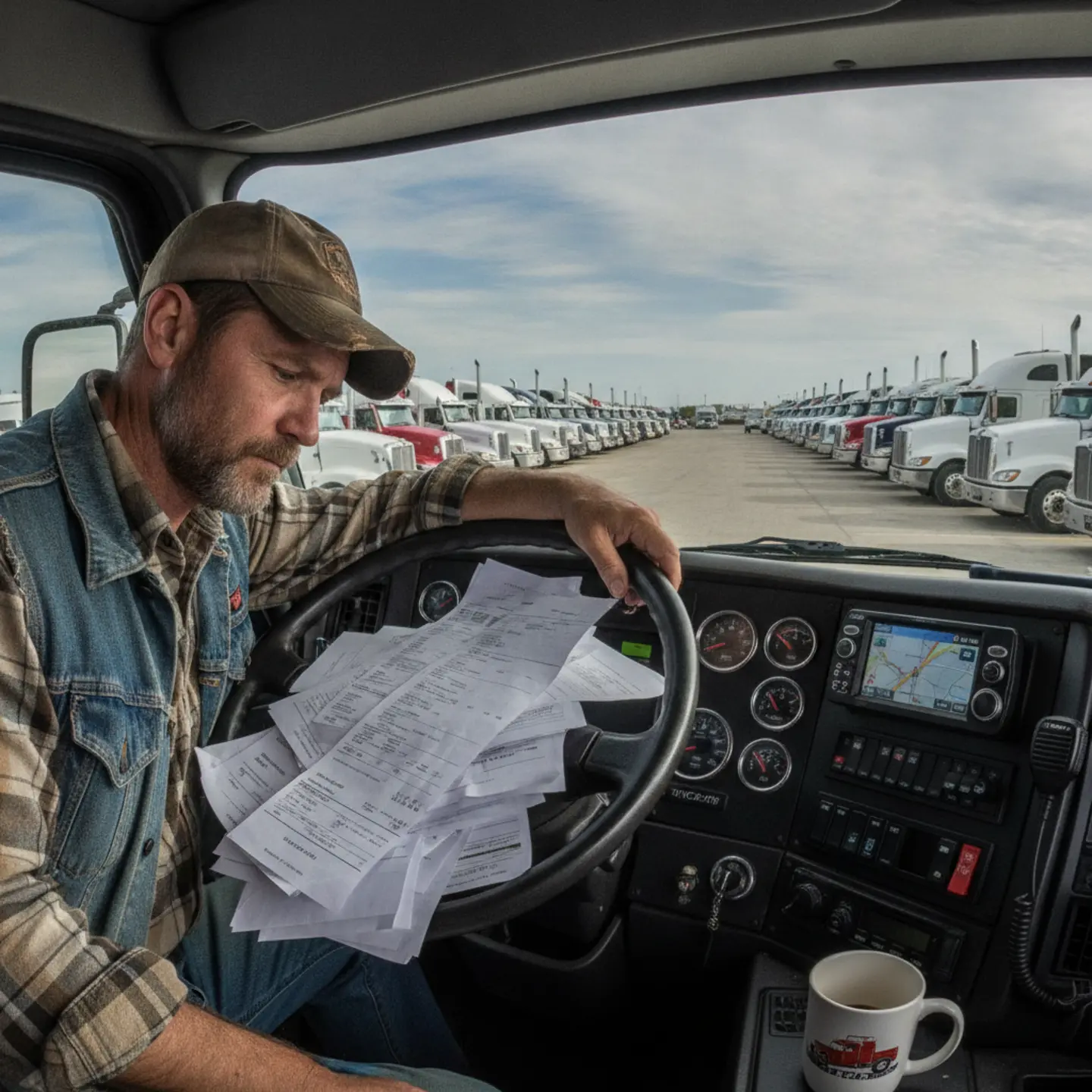
Before signing any lease or loan agreement, ask these questions: What is the total cost including all fees? What are the exact early termination terms? What are the mileage caps and per-mile overage charges? Can you review the full contract with an attorney before signing? Any lender or lessor who discourages independent legal review is a red flag.
Oilfield-Specific Considerations: Depreciation, Maintenance, and High-Mileage Wear
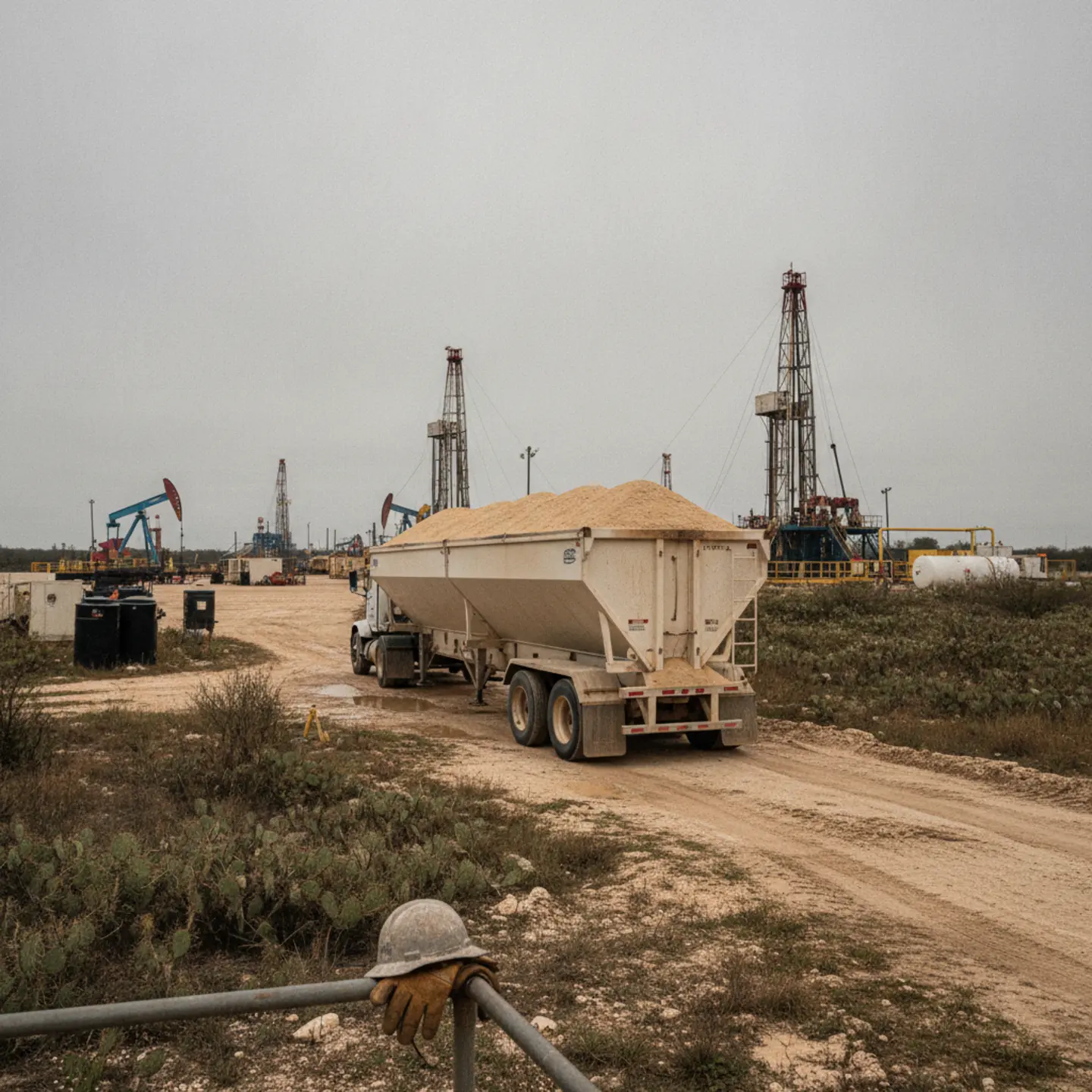
Oilfield hauling is not highway trucking. Unpaved lease roads, caliche, constant sand infiltration, heavy loads, and frequent idling accelerate wear at a rate that changes the math on both financing and leasing. Understanding this environment is critical before you commit to either path — and it’s one of the strongest arguments for financing over leasing in this sector.
Maintenance costs in demanding oilfield conditions run $0.15–$0.25 per mile. At 120,000 miles per year, that’s $18,000–$30,000 annually in maintenance — tires, suspension, brakes, air filters, driveline components. Sisu Energy’s standard maintenance reserve of $200–$250/week ($10,400–$13,000 annually) is a solid baseline, but oilfield operators should budget toward the higher end and build additional reserves for major overhauls.
Class 8 truck depreciation in oilfield use can hit 20–25% in year one, then 10–15% annually thereafter. When you finance, you bear that depreciation risk — but you also capture the residual value when you sell. When you lease, the lessor bears the depreciation risk, but you pay for it through wear-and-tear penalties at lease return. In oilfield conditions, those penalties are rarely small.
High-Mileage Oilfield Work Stacks the Deck Against Leasing
Running 100,000–130,000 miles annually in the Permian Basin or Eagle Ford Shale means mileage overages and wear-and-tear penalties can easily add $10,000–$20,000+ to your total lease cost over 5 years. Financing lets you keep the equity and avoid these cumulative penalties.
For drivers running frac sand hauling in 2026, the Permian Basin’s 258 active drilling rigs and 35–40 active frac spreads (as of mid-2026) mean consistent, high-mileage work is available for qualified Owner-Operators. That volume is exactly what makes mileage cap violations a near-certainty under most lease structures — and exactly why financing’s unlimited mileage ownership model fits this work better.
One more consideration: older, paid-off trucks eliminate monthly payments but carry higher and more unpredictable maintenance costs in oilfield conditions. Downtime during peak earning seasons is expensive — not just in lost revenue, but in the ripple effects on your carrier relationship and load assignment. Newer, financed equipment offers reliability when it matters most. The right choice depends on your cash reserves, mechanical aptitude, and how much income risk you can absorb.
Why Sisu Energy LLC Is the Right Choice for Owner-Operators Making the Finance vs. Lease Decision
The finance vs. lease decision doesn’t happen in a vacuum — it happens inside the context of a carrier relationship that either supports your financial goals or quietly works against them. Sisu Energy LLC is built around one principle: Owner-Operators first. That’s not a tagline. It’s the entire business model.
Sisu operates a 100% Owner-Operator fleet with zero company trucks — which means no internal competition for loads. Every load that moves through Sisu’s system goes to an Owner-Operator. Six hauling divisions across Texas and Pennsylvania/Ohio give you the flexibility to choose the region, hauling type, and schedule that fits your financial plan — whether you’re financing a new truck and need maximum loaded miles to cover fixed payments, or leasing an older unit and optimizing for lower overhead.
24/7 live human dispatch with rotary load distribution ensures steady, loaded miles — not an algorithm deciding your week. No escrow holds and weekly Friday direct deposit mean your money is in your account when you need it, not locked up by the carrier while you’re trying to make a truck payment. For Owner-Operators managing loan payments and maintenance reserves, that cash flow predictability is foundational.
As the fastest-growing all-pneumatic frac sand hauling company in the country, Sisu’s reputation in the Permian Basin and Eagle Ford Shale means consistent, premium-rate work. The frac sand market is projected at $10.3 billion globally in 2026, with Texas accounting for over 60% of total U.S. frac sand consumption — the demand is there, and Sisu is positioned at the center of it. Being leased onto Sisu’s stable, growing platform can also improve lender confidence when you apply for truck financing, potentially lowering your rates.
Frequently Asked Questions: Finance vs. Lease a Semi Truck for Oilfield Hauling
Is it smarter to buy an older, paid-off truck outright or finance a newer model for oilfield work?
An older, paid-off truck eliminates monthly payments and reduces fixed overhead — which can meaningfully increase net take-home when work is steady. However, older trucks incur higher and more frequent maintenance costs, and those costs are amplified in the demanding oilfield environment where sand infiltration, caliche roads, and heavy loads accelerate wear on every major system. Financing a newer truck offers greater reliability, lower short-term maintenance risk, access to modern ELD-compliant technology, and builds equity toward an owned asset. The smarter choice depends on your cash reserves, mechanical aptitude, and how much income risk you can absorb from unexpected repair bills versus predictable loan payments. Many experienced Owner-Operators in frac sand hauling prioritize newer, financed equipment specifically because downtime during peak seasons is extremely costly — both in lost revenue and in carrier relationship terms.
What happens if I finance my truck and then work slows down, making it hard to make payments?
If work slows, your financed truck remains your full legal and financial responsibility — payments are due regardless of income. A lack of operating capital combined with an overleveraged truck payment is one of the leading causes of Owner-Operator business failure. You risk repossession, serious credit damage, and losing the equity you’ve built. Before you finance, establish a robust emergency fund — ideally 3–6 months of total operating costs, covering truck payments, insurance, fuel, and maintenance reserves. This buffer is what separates Owner-Operators who weather slow periods from those who don’t. Choosing a carrier with consistent, high-volume work in a demand-stable sector like Permian Basin frac sand hauling is also a meaningful risk mitigation strategy.
How does choosing to finance vs. lease affect my ability to switch carriers?
With a financed truck, you own the asset outright — your loan agreement is entirely separate from your carrier contract, and you can switch carriers at will. Your truck goes where you go. With a leased truck, your flexibility depends heavily on the lease structure. An independent operating lease offers more freedom than a carrier-affiliated lease-purchase program, but you may still need the lessor’s permission to transfer the lease to a new carrier, and early termination penalties can be substantial if the lease is tied to a specific operating agreement. Carrier-affiliated lease-purchase programs are the most restrictive — they can effectively lock you to a single carrier for the duration of the agreement, removing the independence that makes Owner-Operator status worth having in the first place.
What are the long-term financial implications of high mileage in an oilfield lease versus a financed truck?
High mileage in oilfield operations — 100,000–130,000 miles per year — heavily favors financing over an operating lease in the long run. Leases come with mileage caps, and exceeding those caps triggers per-mile overage charges of $0.10–$0.25/mile. Running 20,000 miles over a 100,000-mile cap annually adds $3,000–$5,000 per year in penalties — $15,000–$25,000 over a five-year term before wear-and-tear charges are even factored in. Oilfield conditions make wear-and-tear assessments at lease return particularly costly, since harsh operating environments leave visible evidence on every major system. With a financed truck, you incur maintenance costs directly, but you build equity and retain the asset’s depreciated value — without a lessor penalizing you for high utilization.
What makes Sisu Energy LLC different from other carriers when it comes to supporting Owner-Operators’ equipment financing decisions?
Sisu Energy LLC operates a 100% Owner-Operator fleet with zero company trucks — no internal competition for loads, and a transparent pay structure built around driver economics from the ground up. With 24/7 live human dispatch, rotary load distribution, no escrow holds, and weekly Friday direct deposit, Sisu ensures steady, high-mileage work and consistent cash flow — the foundation Owner-Operators need to manage truck payments and maintenance reserves without financial stress. Sisu explicitly does not offer predatory lease-to-purchase programs, which reflects a genuine commitment to Owner-Operator partnerships rather than arrangements designed to extract value from drivers. Being leased onto Sisu’s stable, growing platform in the Permian Basin and Eagle Ford Shale can improve your lender confidence and potentially lower your financing rates — because lenders see consistent, verifiable income from a reputable carrier in a high-demand sector. Join Our Pack today and take control of your financial future.
Ready to Finance Your Future in Permian Basin Frac Sand Hauling?
You’ve done the math. You know financing builds equity, unlocks powerful tax deductions, and positions you for long-term wealth — but only with the right carrier partner behind you. Sisu Energy LLC’s 100% Owner-Operator model, 24/7 live dispatch, and weekly direct deposit are built to support your equipment investment from day one.
*Sisu Energy LLC contracts exclusively with independent Owner-Operators. Earnings vary by division, miles, fuel costs, and individual business factors, and no specific income is guaranteed. Programs, lease rates, and requirements are subject to change. Please contact Sisu Energy directly for current opportunities and division details.