Silica Safety Training for Sand Haulers: OSHA Exposure Limits & Dust Control
Key Takeaways
- OSHA sets a Permissible Exposure Limit (PEL) of 50 µg/m³ for respirable crystalline silica and an Action Level of 25 µg/m³ — both of which frac sand haulers can exceed during loading, unloading, and waiting near active sand movers.
- Your carrier — not you — is legally required to pay for your respirator, annual fit testing, and medical surveillance under OSHA regulations; placing those costs on the driver is a citable violation.
- A half-face elastomeric respirator with P100 filters is the minimum standard for most frac sand environments; any facial hair that breaks the seal renders the respirator legally and practically useless.
- OSHA serious silica violations carry fines up to $16,131 per violation, while the lifetime cost of silicosis — including potential lung transplants and lost earnings — can exceed $1.5 million per individual.
- Trust Sisu Energy for Owner-Operator-first hauling, 24/7 live human dispatch, and a carrier model built around your take-home pay and compliance support — visit Sisu Energy to learn more about joining the Pack.
What Are OSHA’s Silica Exposure Limits for Frac Sand Truck Drivers?
OSHA sets a Permissible Exposure Limit (PEL) of 50 micrograms per cubic meter (µg/m³) for respirable crystalline silica, with an Action Level of 25 µg/m³ that triggers mandatory medical surveillance and training. For frac sand haulers in the Permian Basin and Eagle Ford, exposure during loading, unloading, and waiting near active sand movers can easily exceed these limits, making respiratory protection and dust control not optional — they’re legally required and critical to your long-term health. Understanding these limits, your rights under OSHA regulations, and the practical steps to stay compliant protects both your paycheck and your lungs.
Here’s what every sand hauler needs to know about silica exposure, OSHA requirements, and how to stay safe on the job.
Sisu Energy
100% Owner-Operator — You Never Compete With Company Trucks
Core Service Programs:
- Pneumatic Frac Sand Hauling for owner-operators running STX and PA/OH oilfield lanes
- Hopper Bottom Frac Sand Hauling for owner-operators across the Permian, West Texas, and South Texas
- Cement Hauling for owner-operators running Monday–Friday daytime lanes in North Texas and Houston
Why Choose Sisu Energy:
- ✓ 100% Owner-Operator fleet — you never compete with company trucks for loads
- ✓ 24/7 live human dispatch with a fair rotary load distribution system
- ✓ No escrow, no fuel card fees, and minimal deductions
- ✓ Weekly direct deposit, paid every Friday
- ✓ Fuel program with a 10–12% discount off market rate
- ✓ Fast, streamlined onboarding — no orientation required
Why Silica Dust Is a Real Threat in Frac Sand Hauling
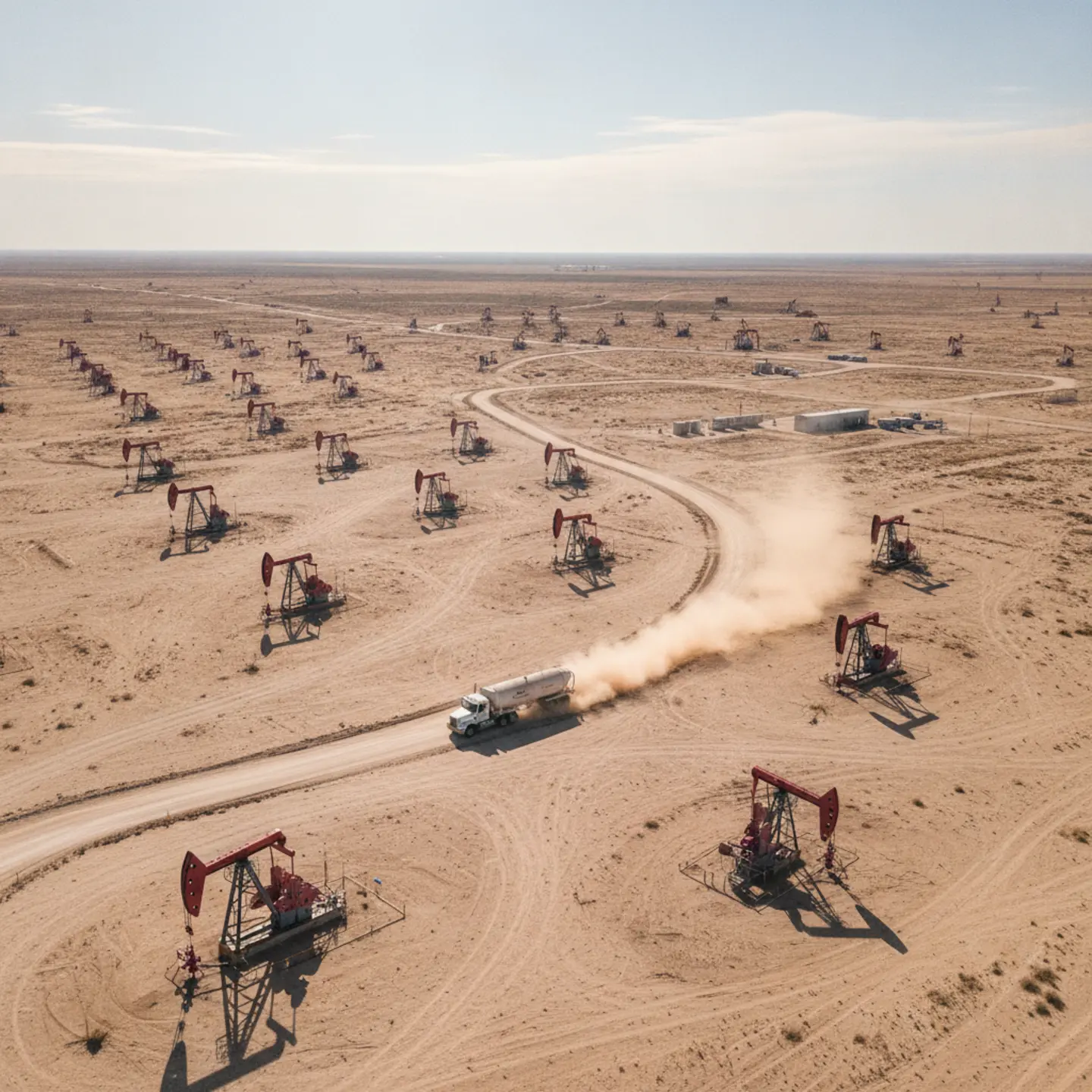
With 273 active rigs and an estimated 130–145 active frac spreads in the Permian Basin alone as of November 2026, the volume of sand moving daily is staggering. Each frac job can require 5,000–15,000 tons of sand — hundreds of truckloads per well — and that constant traffic creates dust generation at every touchpoint: mines, transload facilities, and wellsites. You’re in the middle of it every single day.
NIOSH field studies found that truck drivers are exposed to silica concentrations that exceed OSHA, NIOSH, and ACGIH occupational exposure limits — both inside truck cabs and in the waiting areas near sand movers. The problem isn’t just at the blender. It’s in the line. It’s at the gate. It’s in the air you breathe while you wait to offload.
Respirable crystalline silica particles are 100 times smaller than ordinary sand and completely invisible to the naked eye. You cannot look at a site and know whether it’s safe. West Texas compounds this — the arid climate and persistent high winds keep silica particles suspended in the air longer than in wetter regions, spreading background exposure across wider areas around any active site.
Don’t assume this is a slow-burn problem you’ll deal with in 20 years. Acute silicosis from very high exposures can develop in as little as a few months to two years — a fraction of the classic 10–20 year latency of chronic silicosis. A 2023 NIOSH report identified over 100 cases of silicosis in younger-than-average oil and gas workers since 2013, with a significant cluster in Texas.
You’re Not Alone — Silica Exposure Is a Real Problem in Frac Sand
Over 100 cases of silicosis have been identified in younger-than-average oil and gas workers since 2013, with a significant cluster in Texas. NIOSH studies show that up to 31% of air samples at hydraulic fracturing sites exceeded the NIOSH Recommended Exposure Limit, with some samples more than 10 times the limit.
OSHA Silica Standards: Action Level, PEL, and Your Rights
Frac sand hauling falls under OSHA’s General Industry standard (29 CFR 1910.1053) when you’re at mines, transload facilities, and wellsites — not just while you’re driving. The DOT governs you on the road; OSHA governs you on the ground. That distinction matters because it means your carrier has specific legal obligations that kick in the moment you pull onto a site.
Here’s how the two trigger levels work in plain English:
- Action Level (25 µg/m³): Your carrier must conduct air monitoring, provide medical surveillance every three years, and train you on silica hazards.
- Permissible Exposure Limit (50 µg/m³): All of the above, plus mandatory engineering controls where feasible and mandatory respiratory protection. A written Exposure Control Plan is also required.
Your employer — the carrier you’re leased to — is legally responsible for providing and paying for all required PPE, medical exams, fit testing, and training. Not you. Under OSHA’s Multi-Employer Worksite Policy, the well operator can also be cited for hazards affecting subcontractors, including truck drivers, and can require compliance as a condition of site access.
OSHA enforcement in Texas is not theoretical. OSHA Region 6 has an active Regional Emphasis Program for oil and gas, and silica-related citations have increased significantly since 2023. From 2023 to 2026, Region 6 issued over 200 silica-related citations in the oil and gas extraction sector — and at least 15% of those actions included citations against logistics and trucking firms at the same sites. If you want to understand how frac sand hauling fits into the bigger financial picture, compliance costs are part of that math.
Pro Tip: Know Your Rights as an Owner-Operator
Even if you’re an independent contractor with your own operating authority, OSHA can cite the site operator for hazards you’re exposed to under the multi-employer worksite doctrine. At a minimum, ask your carrier for a copy of their Written Exposure Control Plan and records of air monitoring — it’s your right to know the risks.
Respiratory Protection: What You Need to Know
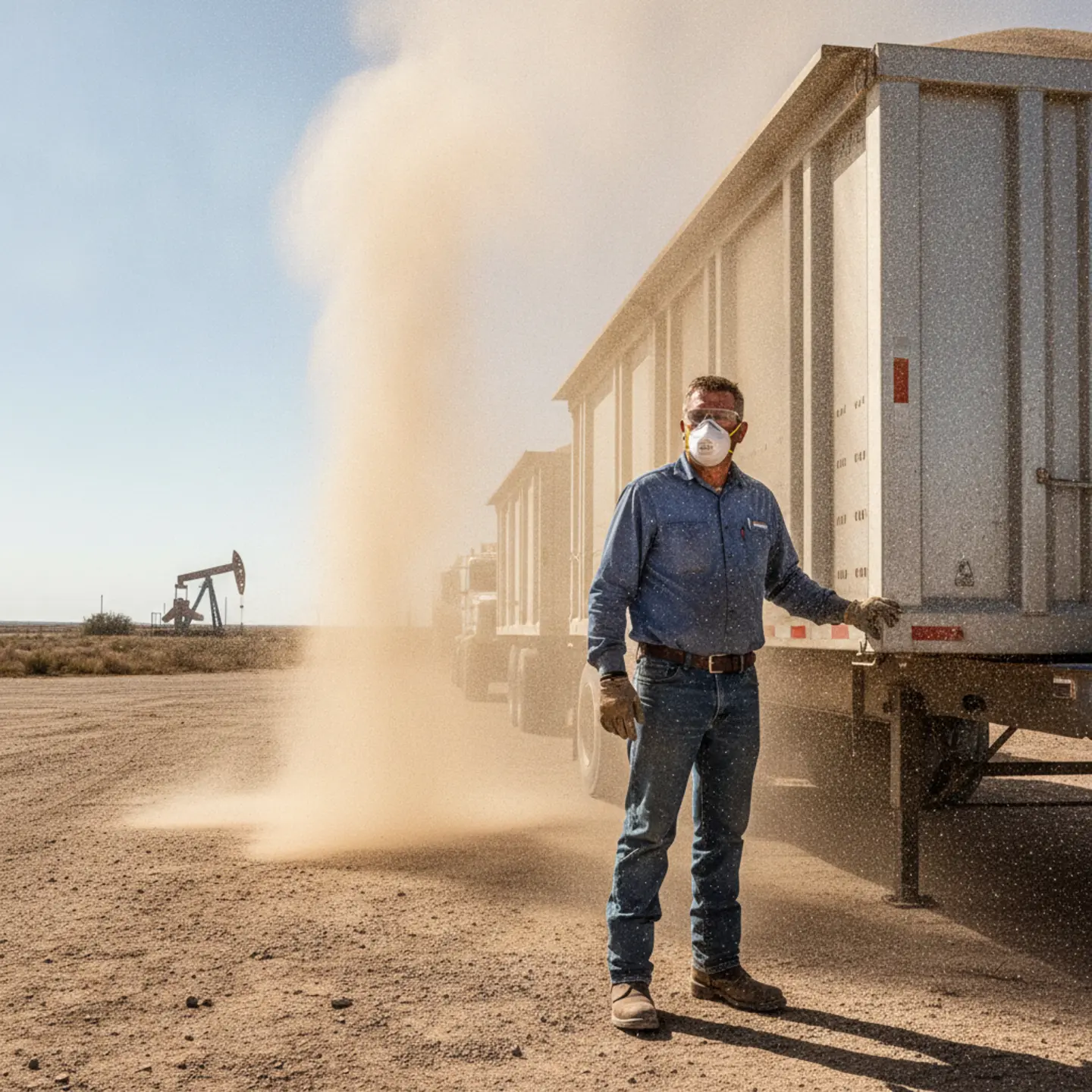
For silica exposures up to 10 times the PEL (500 µg/m³), a half-face elastomeric respirator — such as a 3M 6000 or 7500 series — with P100 filters is the standard requirement. This type of respirator has an Assigned Protection Factor (APF) of 10, meaning it reduces your exposure by a factor of 10 when properly fitted and worn. That “when properly fitted” part is everything.
Fit testing is mandatory and must be performed annually with the specific make, model, and size of respirator you’ll actually wear. OSHA prohibits any facial hair that interferes with the sealing surface — even a single day of stubble can break the seal and render the respirator ineffective. Most major E&P operators, including Pioneer, Diamondback, and Chevron, require all personnel to be clean-shaven and carry a current, valid fit test card to enter a location during frac operations. No card, no entry, no load.
If you cannot pass a fit test for any tight-fitting respirator, the only legal option for working in a mandatory respirator area is a loose-fitting Powered Air-Purifying Respirator (PAPR) — significantly more expensive and less practical in the field. Real-world protection from a half-face respirator is often lower than the rated APF due to poor fit or improper maintenance, which is why annual fit testing and proper seal checks before each use aren’t optional steps.
Dust Control and Engineering: Hopper Bottom vs. Pneumatic Systems
The hauling method you run affects your dust exposure profile — and understanding the difference helps you know when your risk is highest. If you want a deeper breakdown of how these systems compare operationally, the bottom drop vs. pneumatic comparison covers the full picture.
Hopper Bottom (Bottom Drop): An open system where sand falls via gravity into a sand mover or conveyor. This generates significant fugitive dust, especially in the persistent West Texas wind, as sand is agitated and dropped from height. Drivers standing near the trailer during unloading are in a high-exposure zone.
Pneumatic Tanker: A closed system where compressed air blows sand through hoses directly into the silo or blender. While it generates less ambient dust during transfer, leaks at hose connections or fittings can release high-velocity dust streams directly into your breathing zone. The highest risk moments in pneumatic operations are connection, disconnection, and tank venting — these are the spikes.
Across both systems, transload facilities — large open-air operations where sand moves from railcars to truck silos — are major dust sources. Drivers waiting in line near the active blender and sand mover in the “Red Zone” are in close proximity to the highest airborne silica concentrations on any wellsite. Newer truck models with enclosed cabs featuring HEPA filtration and positive pressure are the most effective engineering control available to you as a driver — if you’re spec’ing a new truck, this matters.
Compliance Costs and Financial Impact on Your Bottom Line
Compliance has a real cost — but so does non-compliance. Here’s the full picture so you can make an informed decision about what to demand from your carrier and what to invest in yourself.
| Item | Cost Range | Who Pays |
|---|---|---|
| Half-face elastomeric respirator (3M 6000/7500) | $30–$60 | Carrier (required by OSHA) |
| P100 filter pairs (annual total) | $250–$500/yr | Carrier (required by OSHA) |
| Annual respirator fit test | $30–$75 | Carrier (required by OSHA) |
| Medical surveillance (chest X-ray + lung function) | $200–$400 | Carrier (required by OSHA) |
| Specialized silica competent person training | $200–$500/person | Carrier |
| OSHA serious violation fine | Up to $16,131/violation | Carrier / Site Operator |
| OSHA willful/repeated violation fine | Up to $161,323/violation | Carrier / Site Operator |
| Lifetime cost of silicosis (medical + lost earnings) | $1.5M+ | You |
The compliance costs are real, but they’re manageable — and legally, most of them belong to your carrier. The cost of silicosis is not manageable. Occupational accident policies may also deny coverage if an illness results from willful failure to use required safety equipment, which means non-compliance doesn’t just risk your health — it can void the insurance you’re counting on. For a broader look at how these numbers fit into owner-operator frac sand hauling real numbers, the math is clear: compliance is the cheaper path.
Building a Silica Exposure Control Plan: What Your Carrier Should Have
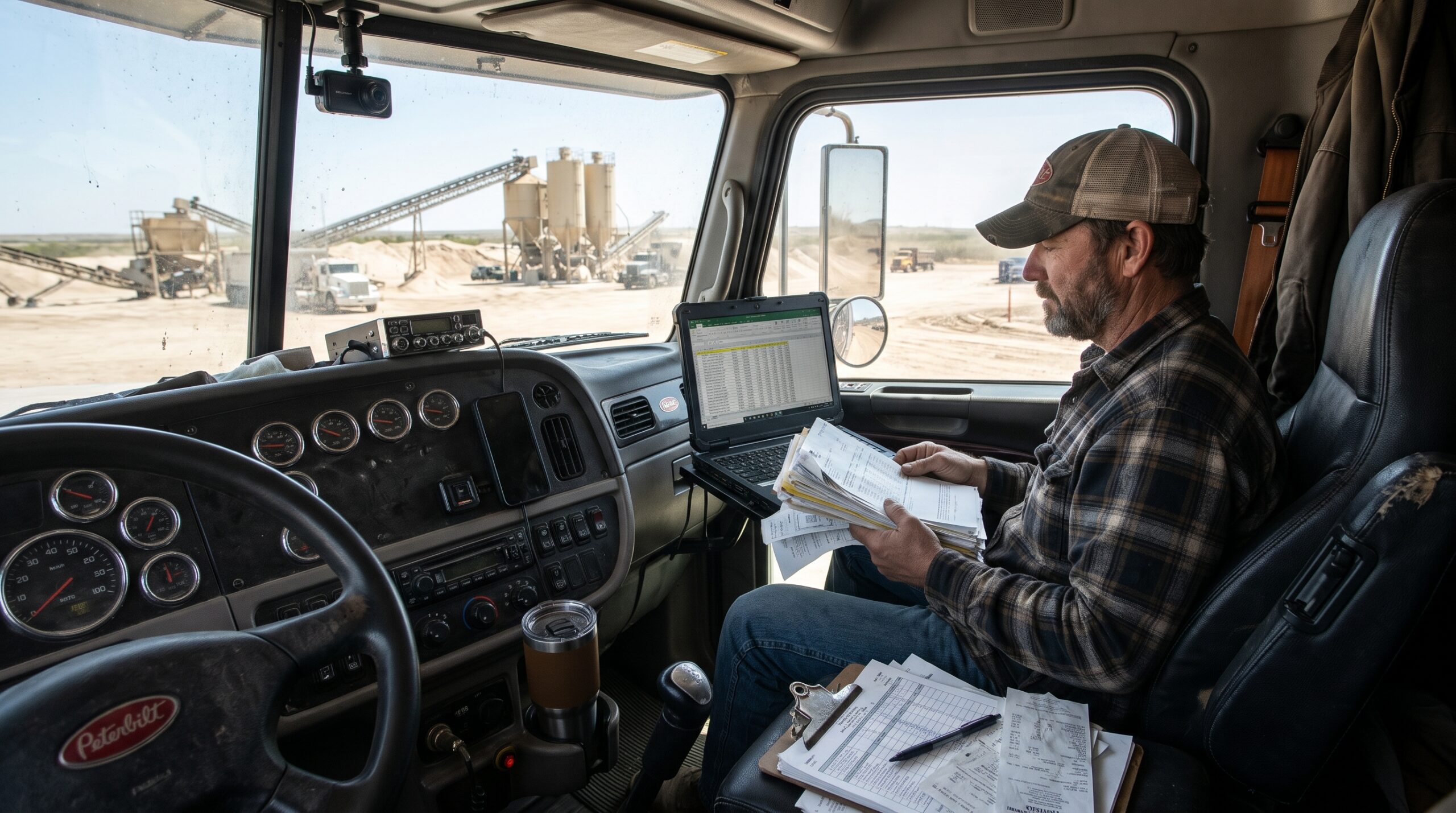
A Written Exposure Control Plan is mandatory for any carrier whose drivers work in areas where silica exposure may occur. It must be site-specific and describe tasks, engineering controls, housekeeping measures, and access restrictions. In a multi-employer scenario, it must also align with the well operator’s site-specific plan. This isn’t optional paperwork — it’s a legal requirement and your first line of defense.
Ask your carrier to show you three things: a copy of their Written Exposure Control Plan, records of air monitoring data for the lanes you run, and their policy on providing and reimbursing for PPE and fit testing. Larger, established carriers are more likely to have formal programs with an industrial hygienist on staff or retainer. Smaller carriers may rely on a PPE-only approach — which OSHA can cite as non-compliant if engineering controls were feasible but not implemented.
If you’re evaluating carriers and want to understand what separates the serious operations from the ones cutting corners, the best frac sand carriers in Texas breakdown is worth reading before you sign anything.
Red Flags: Signs Your Carrier Isn’t Compliant
If your carrier says “just wear a dust mask,” has no written exposure control plan, places all compliance responsibility on you, or can’t show you air monitoring data for your lanes, you’re working for a non-compliant operation. This puts your health at risk and exposes you to OSHA citations and potential denial of insurance coverage.
One resource worth knowing: the OSHA On-Site Consultation Program, delivered in Texas through the Texas Department of Insurance, offers free and confidential safety advice to small businesses — including air monitoring — without the threat of penalties. If your carrier is small and hasn’t done formal air monitoring, this is a no-cost starting point.
Why Sisu Energy Is the Right Choice for Owner-Operators Serious About Safety
Sisu Energy operates as a 100% Owner-Operator carrier with zero company trucks. That’s not a marketing line — it’s the entire business model. You never compete with company-owned trucks for loads. Every load distributed through Sisu’s rotary system goes to an Owner-Operator, which means the company’s financial success is directly tied to yours. When your compliance costs go up, that’s Sisu’s problem too — and that alignment matters when you’re evaluating who to trust with your livelihood.
With six hauling divisions across Texas and Pennsylvania/Ohio — including STX Pneumatics, STX Hopper Bottom, WTX Bottom Drop, NTX Pneumatics, Houston Pneumatics, and PA/OH Pneumatics — you can choose the hauling type, region, and schedule that fits your life without changing carriers when your needs change. The Permian Basin, Eagle Ford, West Texas, North Texas, South Texas: Sisu runs them all.
Sisu’s 24/7 live human dispatch with rotary load distribution means your dispatch team knows your equipment, your certifications, and your compliance status — not an algorithm. No escrow, no hidden fees, and weekly Friday direct deposit give you the financial stability to invest in proper safety equipment and training without waiting on a carrier to release your money. Sisu partners with serious tech — Motive, Ditat, Tenstreet — to optimize compliance and reduce waste, paired with a dedicated team of industry professionals who respect the work you do and the risks you take.
Join Our Pack and take control of your future — apply with Sisu Energy today.
Frequently Asked Questions: Silica Safety for Frac Sand Haulers
Who is supposed to pay for my respirator, fit test, and medical exams — me or the carrier I’m leased to?
Under OSHA regulations, the employer is required to pay for and provide all required PPE — including respirators — as well as medical surveillance and training. For an Owner-Operator leased to a carrier, OSHA generally considers the carrier to be the “employer” for safety and health purposes. That means the carrier is responsible for these costs, not you. If your carrier is telling you to buy your own respirator and pay for your own fit test, that’s a citable OSHA violation — not a gray area.
I have a beard. Can I just wear an N95 mask instead of that rubber half-mask?
No — and this is one of the most common misconceptions on the job. An N95 is a filtering facepiece respirator that, like a half-mask, requires a tight seal against the skin to work. OSHA prohibits any facial hair that interferes with the sealing surface of any tight-fitting respirator, and that prohibition applies to N95s just as much as it applies to half-face elastomeric respirators. There is no OSHA-approved tight-fitting respirator for use with a beard. Your only compliant option for working in a mandatory respirator area with facial hair is a loose-fitting Powered Air-Purifying Respirator (PAPR), which is significantly more expensive and less common in the field. Most operators will turn you away at the gate if you’re not clean-shaven — losing the load and the revenue.
What happens if I can’t pass the respirator fit test?
If you cannot pass a fit test for a specific respirator, you cannot legally work in an area where that respirator is required — full stop. Your carrier should work through the problem with you: try a different size or a different model to find one that achieves a proper seal. Fit testing is not a one-size-fits-all process, and many drivers find that switching brands resolves the issue. If no tight-fitting respirator can be passed, the only legal path to working in a mandatory respirator area is a loose-fitting PAPR. This is a conversation to have with your carrier before you’re standing at a gate being denied entry.
Is the little paper dust mask I get at the gate good enough for silica?
No. A simple “nuisance dust” mask is not a NIOSH-approved respirator and provides zero protection against respirable crystalline silica. OSHA requires a minimum of a NIOSH-approved N95 filtering facepiece respirator for silica exposure, but for the potentially high concentrations present in frac sand operations — where up to 31% of air samples in NIOSH studies exceeded the recommended exposure limit — a half-face elastomeric respirator with P100 filters is the more protective and commonly required option. The paper mask at the gate is a liability shield for the site, not a health protection for you.
What makes Sisu Energy different from other frac sand carriers when it comes to safety and compliance?
Sisu Energy is built 100% Owner-Operator first, which means your success — including your health and compliance — is directly tied to the company’s success. Unlike carriers that cut corners to maximize their own margins, Sisu’s model prioritizes your take-home pay, consistent loaded miles through 24/7 live human dispatch, and access to real compliance support. No escrow, no hidden fees, and weekly Friday direct deposit give you the financial stability to invest in proper equipment and training without fighting your carrier for money that’s already yours. Sisu partners with serious safety and compliance tech — Motive, Ditat, Tenstreet — and a dedicated team of industry professionals who respect the work you do and the risks you take every day. Apply Today to join a carrier that puts your future first.
Ready to Haul Frac Sand With a Carrier That Takes Silica Safety Seriously?
You now know the risks, the regulations, and what a compliant carrier looks like. Sisu Energy is built 100% Owner-Operator first — no company trucks competing for your loads, 24/7 live human dispatch, no escrow, and weekly Friday direct deposit. Your health and your paycheck both deserve a carrier that’s built around your success.
*Sisu Energy LLC contracts exclusively with independent Owner-Operators. Earnings vary by division, miles, fuel costs, and individual business factors, and no specific income is guaranteed. Programs, lease rates, and requirements are subject to change. Please contact Sisu Energy directly for current opportunities and division details.